
KPIs That Matter: Measuring AI Agent Impact Beyond Handle Time (Effort, Experience, Trust)
For years, contact centers have lived and died by one metric: Average Handle Time (AHT). The goal was simple — shorten calls, move faster, reduce cost. But in today’s customer-first world, speed alone doesn’t equal satisfaction. A customer whose issue was resolved in four minutes but left feeling unheard is still a customer at risk.
That’s why modern contact centers are shifting from “efficiency KPIs” to experience-driven performance indicators. And with the rise of AI agents — capable of automating workflows, understanding context, and personalizing conversations — the old metrics no longer tell the full story. The new question is not “How fast?” but “How effortless, consistent, and trustworthy is this experience?”
Organisations that expand their KPI framework beyond AHT consistently see higher CSAT, stronger loyalty, and measurable revenue lift. Shopify brands using AI agents, for example, automate up to 80% of customer inquiries while improving overall experience quality — proving that smarter KPIs lead to smarter outcomes.
🔗 https://www.klink.cloud/post/how-shopify-stores-use-kai-ai-agent-to-automate-80-of-customer-inquiries
Why Handle Time Is No Longer Enough
Traditional metrics like AHT, occupancy, or call volume were built for a world of voice-only, human-only operations. But modern customer expectations have evolved dramatically:
- 72% of customers expect personalized, seamless support across every channel.
- Consumers value effortlessness more than speed — a quick answer that doesn’t solve the problem still counts as a bad experience.
- Automation, AI, and self-service have reshaped the entire service workflow, making old KPIs incomplete or misleading.
AI agents don’t simply replace tasks; they change the nature of the work. They automate repetitive issues, orchestrate experiences, and ensure every handover is context-rich. That means businesses need new ways to measure impact — KPIs that reflect experience, trust, and real outcomes.
The New KPI Framework for AI-Enabled Contact Centers
Brands that want to measure AI agent performance accurately need to go beyond speed and volume. Below are the KPIs that matter most in AI-augmented environments.
1. Customer Effort Score (CES)
This is becoming the North Star for modern CX.
Why it matters:
Customers don’t just want speed — they want ease. CES measures friction across interactions:
- How many steps did it take to solve the problem?
- Did the customer repeat information?
- Was the issue resolved without switching channels?
AI agents excel here because they remove friction, fill context gaps, and automate repetitive steps.
Example:
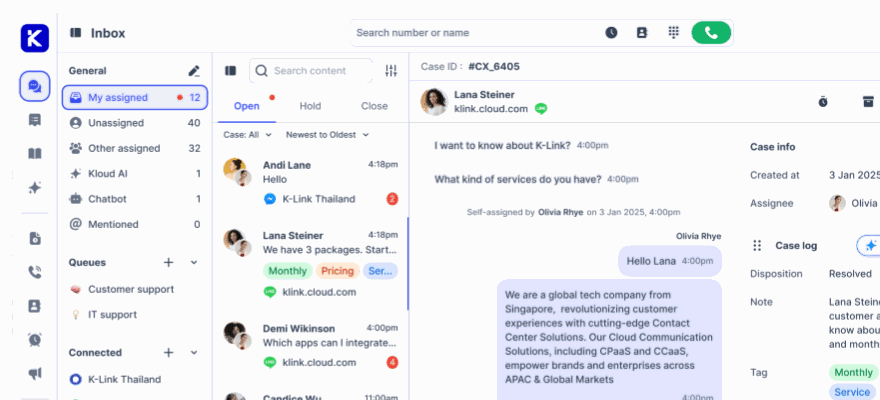
If a customer chats about a billing issue, an AI agent can:
- Pull their billing history
- Validate payment
- Detect anomalies
- Provide resolution
All without requiring customer explanation.
2. Experience Quality Score (XQS)
This measures the emotional experience, not just functional performance.
AI agents improving tone awareness, sentiment detection, response accuracy, and consistency directly boost XQS. A scripted bot can frustrate customers; an AI agent that adapts its conversation style builds trust.
3. Trust Score (TS)
Trust is now a measurable KPI — especially in AI interactions.
This captures:
- Whether customers feel confident in automated resolutions
- If responses feel accurate and human-grade
- Whether customers willingly choose AI over human channels
Trust is critical because AI agent adoption depends on customer confidence. A trusted AI agent increases automation rates — free savings for the business.
4. Automation Rate / Containment Rate
The percentage of inquiries fully resolved by AI without human handover.
High-performing AI systems resolve 50–80% of standard queries.
See how brands do this in action:
🔗 https://www.klink.cloud/post/from-chatbot-to-revenue-engine-kai-ai-agent-for-shopify-explained
5. Resolution Accuracy (RA)
Speed without correctness is meaningless.
This KPI tracks:
- Accuracy of information
- Confirmed resolution outcomes
- Follow-ups needed after the conversation
A high RA means trust, lower cost, and fewer repeat contacts.
6. Successful Handover Rate
AI isn’t meant to handle everything.
This KPI tracks whether escalations include:
- Full context
- Prior messages
- Customer sentiment
- Customer history
- Suggested next actions
When done well, agents can solve issues faster with less cognitive load.
7. Revenue Influence Metrics
AI agents aren’t just support tools — they’re revenue engines.
Metrics include:
- AI-driven upsell conversions
- Cart recovery impact
- Subscription renewals triggered by AI
- Cross-sell acceptance
- Proactive outreach success rates
Real-world example: Shopify merchants using AI agents report higher repeat purchases due to faster, more personalised CX flows.
What Great AI Agent Performance Looks Like
When contact centers measure the right KPIs, the results compound:
- Lower customer effort = less churn
- Higher trust = higher automation use
- Higher experience quality = higher CSAT
- Better accuracy = fewer repeat contacts
- Consistent interactions = improved brand perception
- Smarter handovers = happier human agents
- Proactive workflows = increased revenue
This creates a service ecosystem where AI and humans complement each other — not compete.
How to Implement a KPI Shift in Your Organisation
A practical blueprint for evolving your KPI model:
Step 1 — Audit your current KPIs
Identify which metrics no longer reflect actual experience quality.
Step 2 — Align KPIs with customer outcomes
Use metrics like CES, trust score, experience quality, and resolution accuracy.
Step 3 — Integrate AI across target journeys
Start with billing queries, product status checks, FAQ-heavy flows, and logistics inquiries.
Step 4 — Track impact monthly
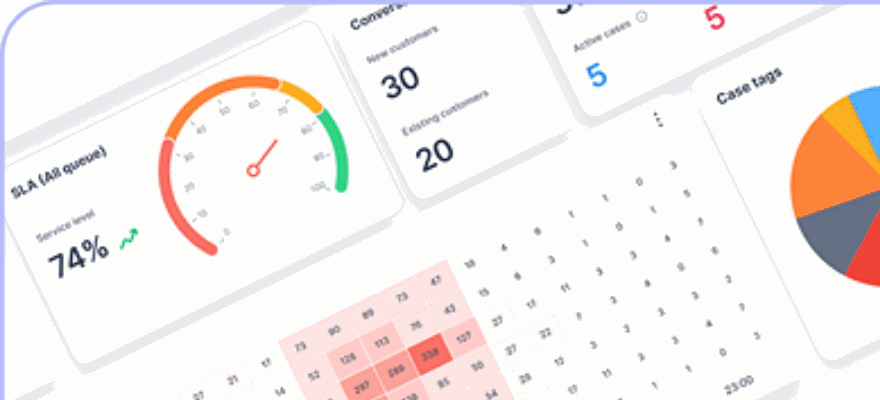
Use dashboards for:
- Automation rate
- Experience score
- Accuracy score
- AI-assisted conversions
- Customer effort
Step 5 — Optimize based on real data
AI agents improve continuously. Use feedback loops to refine:
- Knowledge base
- Response logic
- Tone models
- Escalation thresholds
Step 6 — Expand organization-wide
Once the new KPI framework proves ROI, scale across departments and channels.
To explore how high-performing AI agents deliver measurable improvements, request a personalised walkthrough:
👉 https://www.klink.cloud/book-demo
The Bottom Line
AHT still matters — but it’s just one piece of a much bigger picture.
The contact centers that win today prioritize effortlessness, emotional quality, and trust.
AI agents deliver on all three.
When you measure the right things, you unlock the real value of AI:
- Deeper personalization
- Seamless workflows
- Lower operational cost
- Higher customer loyalty
- More revenue without needing more staff
Shift your KPIs and you'll shift your entire customer-experience trajectory.
FAQs
Are traditional KPIs like AHT still relevant?
Yes, but they only measure efficiency — not experience, accuracy, or trust. They should complement modern KPIs, not replace them.
How do I measure trust in AI?
Use customer feedback, adoption rates, re-engagement behaviour, and accuracy of automated resolutions.
What is a good automation rate for AI agents?
High-performing teams aim for 50–80% automation on predictable workloads.
Can AI agents improve revenue?
Absolutely. AI agents can recover abandoned carts, increase upsells, or offer personalised recommendations — boosting conversion and retention.