
Balancing AI Automation & Human Empathy in Customer Interactions
Customer expectations are shifting faster than ever. People want instant answers, personalized support, and genuinely human care — all at the same time. Research shows that 73% of customers expect companies to understand their unique needs, while 70% say they leave brands after repeated poor experiences. The pressure to respond quickly, consistently, and empathetically has never been higher.
This growing demand creates a dilemma for modern customer-focused businesses:
How do you automate efficiently without losing the human touch people still crave?
AI automation is now capable of handling nearly 80% of repetitive support tasks, dramatically reducing workload and speeding up resolutions. But the true magic happens when AI and humans work together — not as replacements, but as partners delivering fast, context-rich, emotionally intelligent experiences.
Where Automation Works — and Where It Doesn’t
AI agents excel at predictable, information-driven tasks such as:
- Order tracking
- Refund and return status
- Reservation changes
- Account updates
- Billing questions
- Troubleshooting steps
- FAQs and policy explanations
These interactions don’t require emotional nuances. Customers simply want answers — fast. Platforms like klink.cloud and its AI agent solutions handle such queries at scale, enabling brands to automate up to 80% of customer inquiries.
👉 Related case study: How Shopify Stores Use KAI AI Agent to Automate 80% of Customer Inquiries
https://www.klink.cloud/post/how-shopify-stores-use-kai-ai-agent-to-automate-80-of-customer-inquiries
However, automation has limits. Some interactions need human empathy, such as:
- Sensitive billing errors
- Emotional or high-stress complaints
- Product or service failures
- Disruptions affecting many customers
- Cases involving fear, frustration, urgency, or distress
This is where the human touch matters most — and where human agents shine with compassion, patience, and listening skills.
The Power of the Hybrid Model: AI + Human Empathy
Successful companies don’t choose between AI and humans — they combine their strengths to deliver:
1. Speed + Understanding
AI clears backlogs, reduces waiting time, and handles repetitive tasks.
Humans step in when emotional intelligence or complex decision-making is required.
2. Consistency + Compassion
AI ensures accuracy and policy alignment.
Humans provide nuance, reassurance, and personalized care.
3. Efficiency + Trust
AI lowers operational cost.
Humans build brand loyalty through meaningful interactions.
This “hybrid support model” is now the gold standard for scalable, empathetic customer experience.
How Modern AI Agents Complement Human Agents
Today’s AI agents are not basic chatbots. They perform real tasks:
- Pull account history and past conversations
- Recognise tone and urgency
- Provide structured solutions
- Escalate to humans with full context
- Update CRM and internal systems
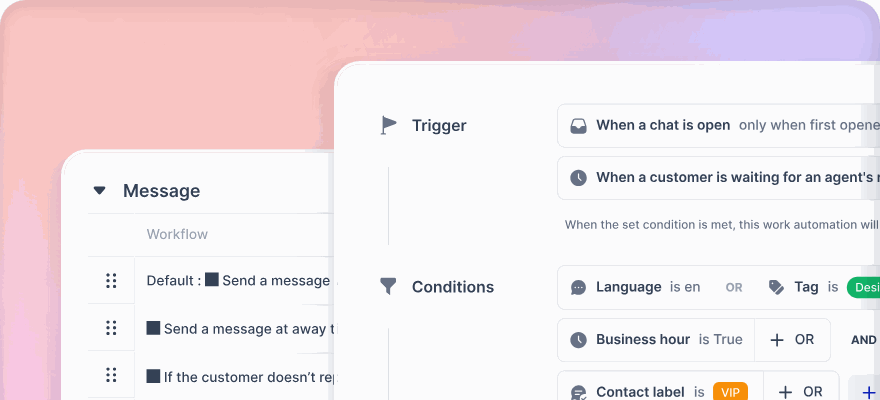
- Trigger automated workflows
- Follow up with the customer
They don’t just respond — they work.
A customer might start in chat with the AI agent to confirm order details, then the system automatically passes the case to a human agent with the customer’s tone, sentiment, and frustration level attached.
This dramatically improves the agent’s ability to respond with empathy and solve the issue quickly.
To understand how advanced AI workflows work in modern CX, see:
👉 From Chatbot to Revenue Engine: KAI AI Agent for Shopify Explained
https://www.klink.cloud/post/from-chatbot-to-revenue-engine-kai-ai-agent-for-shopify-explained
Creating a Seamless Human–AI Hand-Off
The transition between AI and human agents should feel smooth, natural, and invisible to the customer. Here’s how top-performing CX teams achieve this:
- Context carried over automatically — no repeated explanations
- Sentiment and urgency tagging
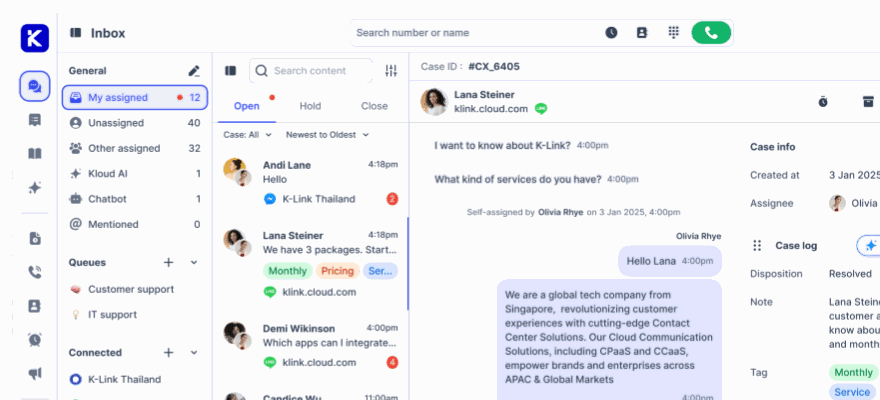
- Instant summarization for human agents
- Clear escalation triggers (frustration, repeated queries, emotional keywords)
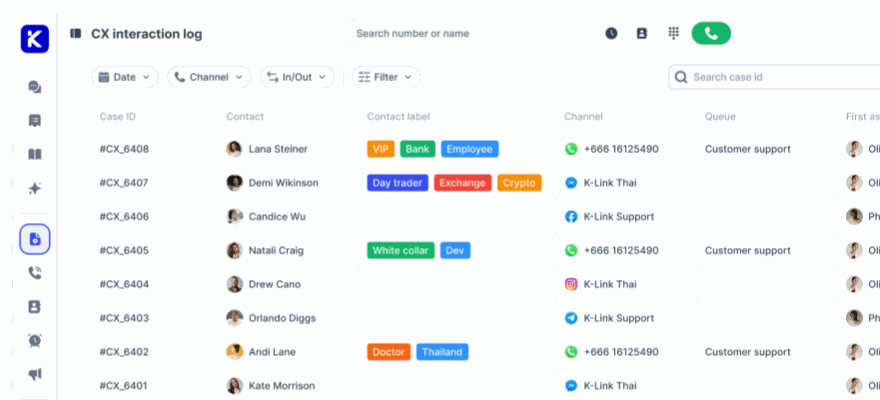
- Unified omnichannel history visible in one screen
- Personalised human entry with empathy cues
This prevents the notorious “I already told you this…” frustration — one of the biggest customer pain points.
Training Human Agents for the AI-Enhanced Era
AI does not replace humans — it elevates them by removing the repetitive load. Human agents step into a more meaningful role:
- Empathy-based support
- Complex problem-solving
- Relationship-building
- Retention and loyalty conversations
- Revenue-driving interactions
Human agents must be trained in:
- Active listening
- Emotional intelligence
- De-escalation skills
- Personalization techniques
- Reading AI-provided sentiment cues
- Navigating blended AI + human workflows
AI becomes the assistant.
The human becomes the hero.
Measuring Balance: KPIs That Show You’re Doing It Right
To ensure harmony between automation and empathy, track metrics from both sides:
Automation Effectiveness
- % of inquiries automated
- Self-service success rate
- Cost per interaction
- AI resolution accuracy
Human Experience Metrics
- CSAT after human escalations
- Emotional tone shift after agent involvement
- Net Promoter Score (NPS)
- First-contact resolution on emotional cases
Hybrid Model Strength
- Average handling time with AI context
- Reduction in agent workload
- Seamlessness of channel transitions
- Customer feedback on “feeling understood”
When all three sets improve together — you’ve found the perfect balance.
The Future of Customer Experience: Emotionally Intelligent Automation
Tomorrow’s AI agents won’t just recognise intent — they will interpret emotion, recommend the best empathetic human response, and personalise experiences based on behavioural patterns.
Brands that embrace this now will lead the next era of CX:
Fast, emotionally aware, and deeply human — powered by AI.
Ready to Build Your AI + Human Support Strategy?
If you want to explore real implementations of automated CX that don’t remove human empathy, check these:
- How Shopify Stores Automate 80% of Customer Inquiries with AI
https://www.klink.cloud/post/how-shopify-stores-use-kai-ai-agent-to-automate-80-of-customer-inquiries - From Chatbot to Revenue Engine — How AI Agents Work Behind the Scenes
https://www.klink.cloud/post/from-chatbot-to-revenue-engine-kai-ai-agent-for-shopify-explained - Book a Demo with Klink.Cloud
https://www.klink.cloud/book-demo
See how your organisation can balance automation and empathy — and deliver the customer experience your audience truly deserves.
FAQ
Will AI replace customer service agents?
No. AI handles repetitive tasks, while humans handle emotional, complex, and relationship-driven interactions.
Is AI safe for handling sensitive cases?
Yes — if escalation triggers are set correctly. High-emotion messages should always route to humans.
What’s the right mix of AI vs. human?
Most organisations aim for 60–80% automation, with humans leading all high-impact conversations.
How fast can we see results?
Many teams experience reduced workloads and improved CSAT within the first 60–90 days.