AI Helpdesk vs Traditional Helpdesk Software
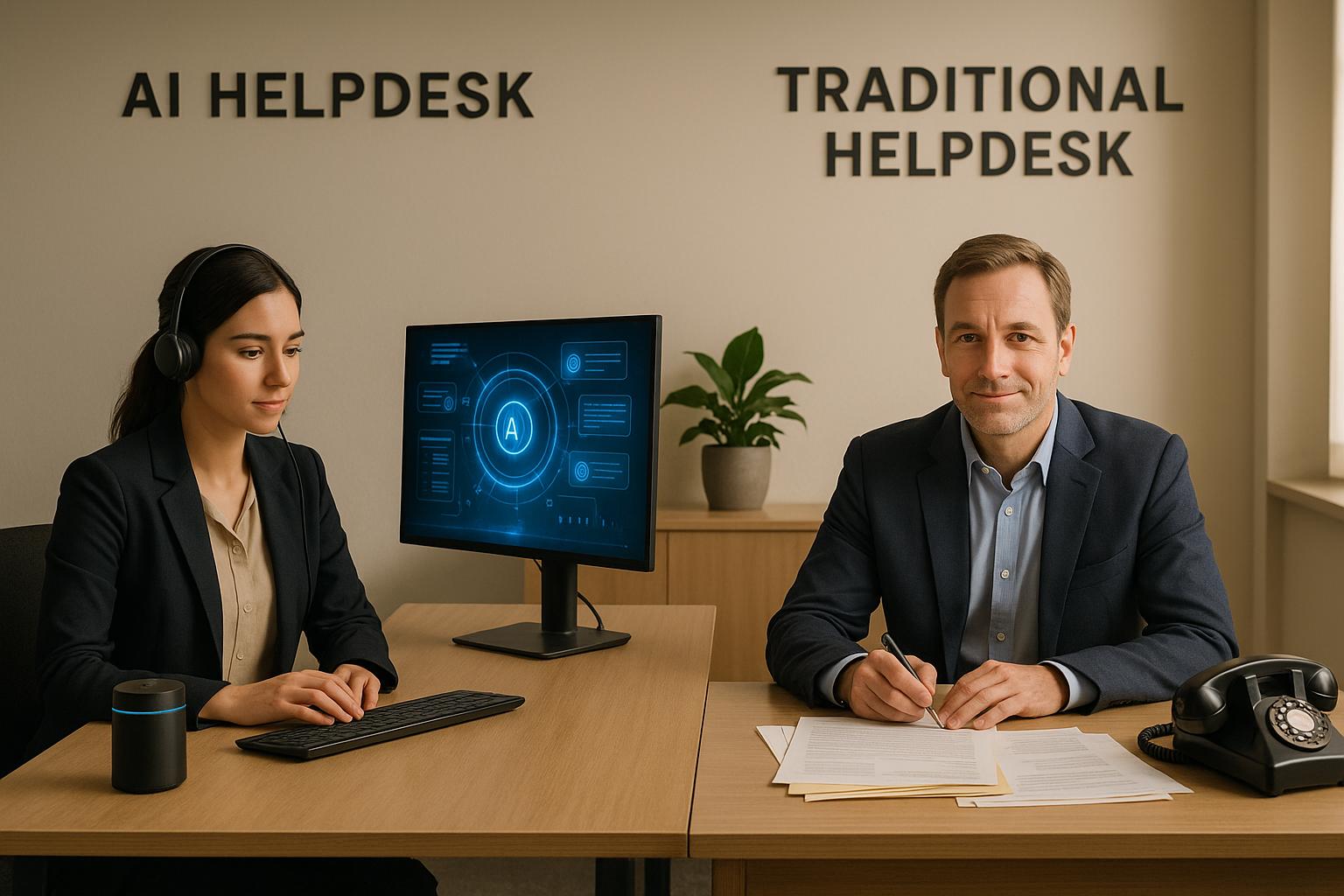
AI helpdesks cost less, work 24/7, and handle routine tasks faster. Traditional helpdesks rely on human agents for complex, empathetic support during business hours. Many businesses in the U.S. are opting for hybrid models to combine the strengths of both.
- AI Helpdesks: Handle repetitive queries like password resets and order tracking at $3 per interaction. They use automation, machine learning, and analytics to provide instant responses and reduce ticket volume by 40–60%.
- Traditional Helpdesks: Focus on complex, nuanced issues like billing disputes, offering a human touch. They operate during standard hours and cost $15–$17 per ticket.
- Hybrid Models: AI manages simple tasks, while human agents address more involved cases, ensuring efficiency and personalized service.
Quick Comparison
| Feature | AI Helpdesk | Traditional Helpdesk |
|---|---|---|
| Availability | 24/7 | Standard business hours |
| Cost per Interaction | ~$3 | $15–$17 |
| Response Time | Instant | Queue-dependent |
| Task Focus | Routine tasks | Complex issues |
| Scalability | High | Limited by staffing |
| Empathy | Limited | Strong |
| Analytics | Real-time insights | Historical reports |
AI is ideal for high-volume, simple tasks, while human agents excel in handling sensitive or intricate issues. A hybrid approach balances efficiency with empathy, meeting the diverse needs of U.S. businesses.
AI Customer Support VS Human Support. Which is Better for Business?
AI vs Traditional Helpdesk: Feature Comparison
Now that we've covered the basics, let’s dive into how AI and traditional helpdesks compare across the features that matter most to U.S. businesses.
Automation and Workflow Management
AI helpdesks excel at automating repetitive tasks using machine learning. They can route tickets, categorize issues, and trigger responses in seconds. For instance, if a customer emails about a refund, the AI can identify the intent, pull up order details, check the refund policy, and either process the request or escalate it to the right team. These systems also automatically tag tickets, prioritize them based on sentiment, and suggest relevant articles from the knowledge base.
On the other hand, traditional helpdesks rely on rule-based automation. You can set up specific triggers, like flagging emails with the word “urgent” as high priority, but these rules are static. They require manual updates to keep up with changing customer needs. This means agents often spend more time manually sorting and triaging tickets, which can slow things down, especially during busy periods.
Now, let’s look at how these systems perform in terms of response speed and availability.
Response Speed and Availability
AI helpdesks shine when it comes to speed. They’re available 24/7, ready to assist customers no matter the time of day. Whether it’s midnight or early morning, AI systems can respond immediately. They’re also built to handle a high volume of conversations at once, making them particularly useful during busy times like product launches or service outages.
Traditional helpdesks, however, are usually limited to standard business hours. This can lead to slower responses during off-hours. Even during regular hours, factors like long queues and limited staffing can delay replies.
These differences naturally lead to the question of how each system balances consistency with personalized support.
Accuracy, Consistency, and Empathy
AI helpdesks are highly consistent, delivering responses based on predefined knowledge bases and protocols. This makes them great for straightforward queries like return policies or password resets. However, they can struggle to interpret emotional nuances or handle more complex customer interactions.
In contrast, human agents bring empathy and contextual understanding to the table. They can pick up on subtle cues in tone or phrasing, tailoring their responses to sensitive situations like billing disputes or technical problems. The downside is that the quality of support can vary depending on the agent’s experience and workload.
Analytics and Insights
AI helpdesks provide real-time, predictive analytics that track trends and alert managers to potential issues. By monitoring metrics like resolution times, customer satisfaction, and traffic patterns, these systems help businesses allocate resources more effectively and plan ahead to meet demand. This is especially helpful for U.S. businesses looking to manage costs and improve efficiency.
Traditional helpdesks, by comparison, typically offer static reports and dashboards that summarize past performance. While these can be helpful, they lack the forward-looking insights that AI systems provide.
Let’s summarize these comparisons in a side-by-side table for clarity.
Side-by-Side Comparison Table
| Feature | AI Helpdesk | Traditional Helpdesk |
|---|---|---|
| Availability | 24/7/365 with instant responses | Limited to business hours (e.g., 9:00 AM–5:00 PM) |
| Scalability | Handles high volumes of inquiries | Limited by agent availability and shifts |
| Response Time | Near-instant | Varies based on queue length |
| Cost per Interaction | Lower due to automation | Higher due to manual handling |
| Automation | Intelligent routing, auto-categorization, self-learning | Rule-based with manual updates |
| Consistency | Uniform responses | Varies by agent expertise |
| Empathy & Judgment | Limited in emotional nuance | Strong in personalized, empathetic support |
| Complex Issue Handling | Delegates to human agents | Excels in managing complex issues |
| Analytics | Real-time, predictive insights | Static, historical reports |
| Setup Complexity | Requires more initial configuration and training | Straightforward ticketing setup |
| Staffing Requirements | Minimal human oversight | Requires large agent teams and shift management |
| Best For | Routine, high-volume tasks and off-hours support | Complex issues needing human judgment |
| Typical Use Cases | Password resets, order tracking, basic troubleshooting | Billing disputes, technical escalations |
| Ongoing Costs | Software licensing and maintenance | Salaries, benefits, and operational expenses |
This comparison highlights the strengths of each approach. AI helpdesks stand out for speed, scalability, and advanced analytics, while traditional helpdesks excel in providing empathetic, nuanced support for complex issues. Choosing the right option depends on your business needs and customer service goals.
AI in an Omnichannel CX Platform
Integrating AI into an omnichannel customer experience (CX) platform does more than streamline operations - it enhances the synergy between automation and human expertise, addressing the modern demand for seamless, multi-channel support. Customers today expect consistent service whether they’re on the phone, sending an email, or messaging through social media.
Omnichannel Support with AI
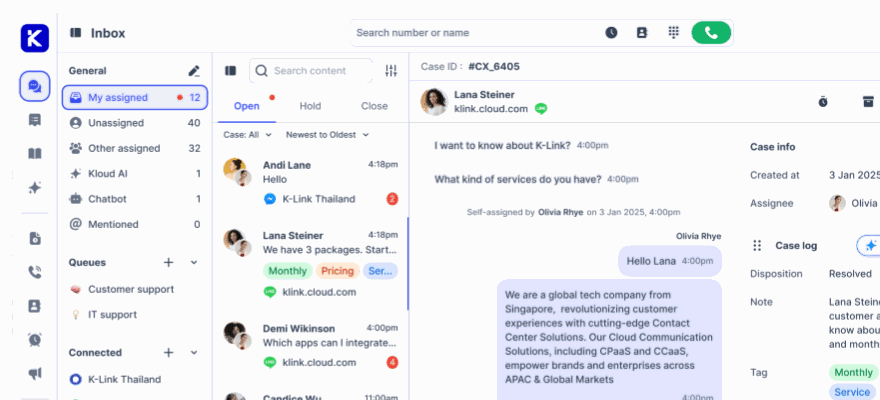
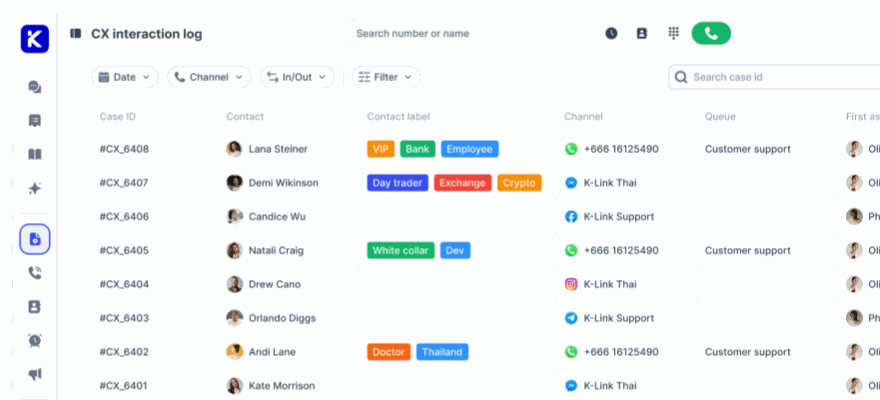
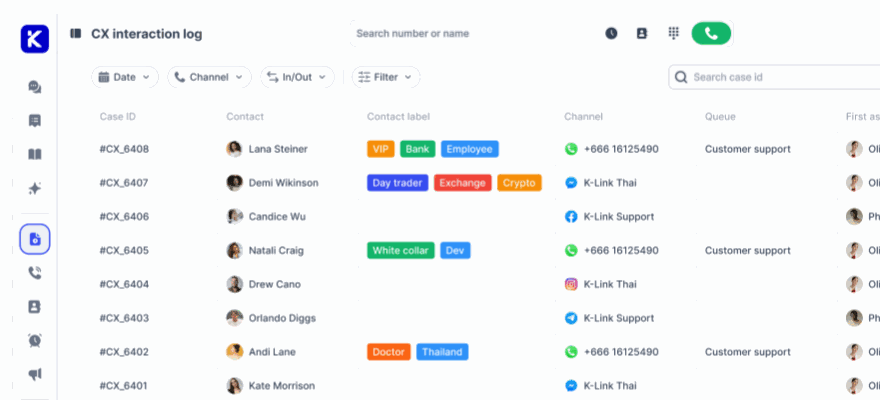
An AI-powered helpdesk within an omnichannel platform, such as klink.cloud, acts as a central hub for all communication channels. Whether a conversation begins on Instagram, continues via email, and ends with a phone call, the AI ensures all interactions are unified into a single case. This shared history is accessible to both automated systems and human agents, creating a seamless experience for the customer.
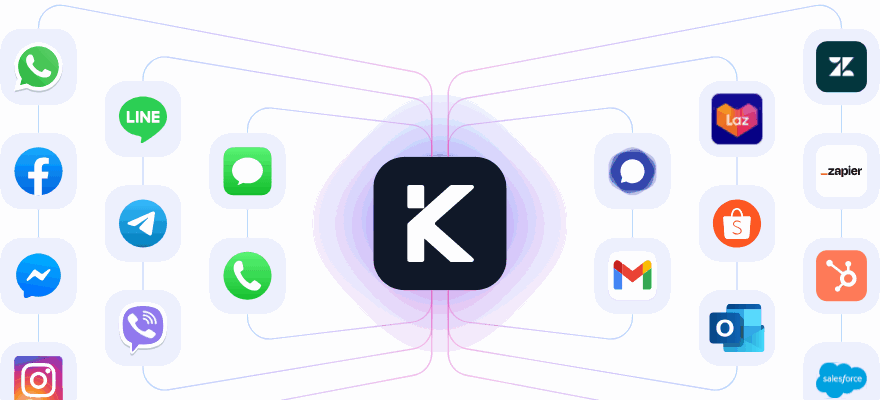
The system achieves this through robust API integrations and built-in platform connections. For instance, klink.cloud consolidates messages from phone calls, WhatsApp, Facebook Messenger, Telegram, email, and live chat into a single inbox. It then automatically links these messages to the correct customer profile and ticket, ensuring nothing gets lost in translation.
One standout feature is intelligent routing. Using natural language processing (NLP), the AI identifies intent and sentiment, assigning cases to the most suitable queue or agent. Factors like agent skill, workload, and service-level agreements (SLAs) are considered. For example, in the U.S., where businesses often handle urgent issues like service outages or billing disputes, the AI can escalate critical cases - such as those with negative sentiment or high-value customers - directly to senior agents.
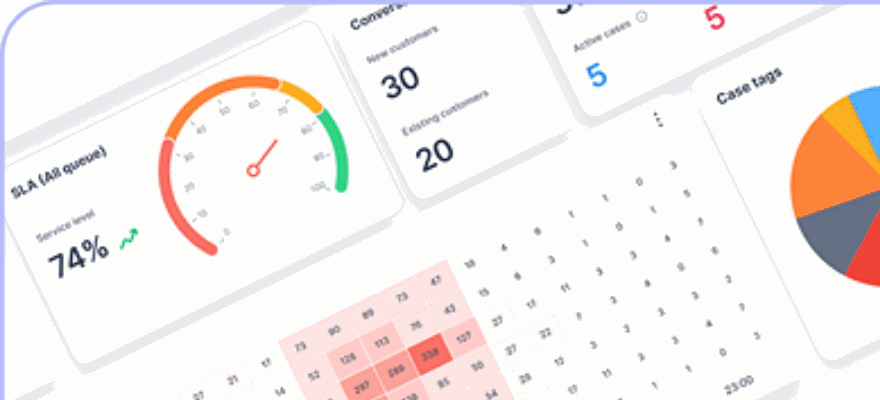
The platform also brings together essential metrics like first response time, SLA adherence, resolution time, sentiment analysis, and customer satisfaction into a single dashboard. This unified approach ensures that business rules are applied consistently across all channels.
Self-service capabilities powered by AI extend across platforms, maintaining a consistent brand voice whether responding to web chat, SMS, or social media inquiries. If the AI reaches its limit or detects customer frustration, it seamlessly transfers the conversation - along with a detailed summary and collected data - to a live agent. This minimizes repetition for the customer and reduces handling time.
Organizations using AI alongside traditional helpdesk tools report significant benefits, such as a 40–60% drop in ticket volume for routine queries and a 14% boost in agent productivity.
"Since adopting klink.cloud, we've seen a massive improvement in our response times. Our customers are happier, and our agents are more efficient than ever." – Sarah Lee, Head of Contact Center, Horizon Solutions
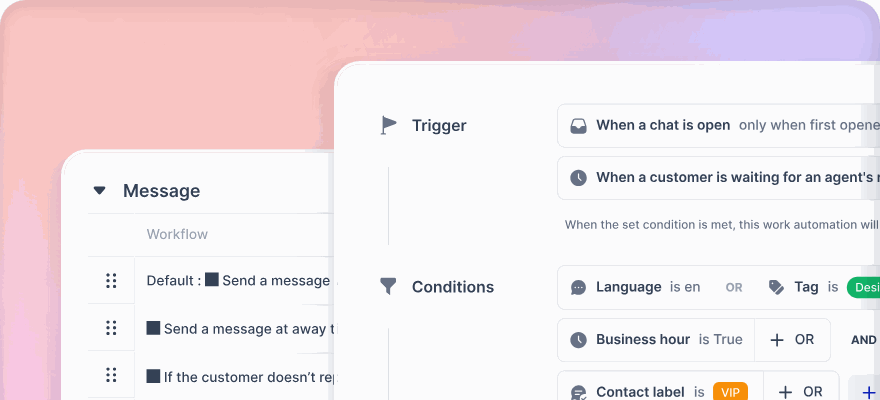
Common AI-driven workflows include automated triage, where inbound cases from various channels are classified, prioritized, and assigned with minimal human intervention. Additionally, proactive notifications can alert customers to order delays or outages via their preferred channel, routing replies into an incident-specific queue for fast, context-aware responses.
These efficiencies are crucial for meeting the specific demands of U.S. businesses.
Meeting U.S. Business Requirements
For U.S. companies, deploying AI in an omnichannel helpdesk involves more than just technical integration. Compliance, service-level targets, and local communication expectations must also be addressed.
Compliance and Data Privacy: U.S. businesses must navigate regulations like HIPAA for healthcare, the Gramm-Leach-Bliley Act (GLBA) for financial services, and state laws such as the California Consumer Privacy Act (CCPA). To stay compliant, AI systems often use role-based access controls, mask or redact sensitive data in transcripts, and implement clear consent and opt-out mechanisms. For handling payment data, PCI-DSS compliance is essential, requiring detailed logging, reporting, and audit trails.
Service-Level Agreements (SLAs): AI systems help ensure SLA compliance by monitoring queues in real time, re-prioritizing or re-routing conversations as needed. For example, they can ensure high-priority tickets are addressed within minutes during standard business hours (e.g., 9:00 AM–5:00 PM). Features like knowledge suggestions and auto-drafted replies enable agents to resolve issues faster without sacrificing accuracy or empathy.
Telephony Integration: For U.S. operations, telephony integration is critical. AI platforms like klink.cloud work with telephony and SMS providers compliant with regulations such as the Telephone Consumer Protection Act (TCPA). They also support virtual phone numbers and allow businesses to connect their existing numbers or SIP trunks through a bring-your-own-carrier (BYOC) model, offering flexibility while meeting legal requirements.
Cultural and Communication Expectations: U.S. customers expect clear, courteous communication. AI should adapt its tone based on the channel - slightly formal for email but more conversational for chat or SMS. Local spelling conventions (e.g., "color" instead of "colour") and inclusive language are important for accessibility and customer satisfaction.
Many platforms now offer no-code or low-code tools, enabling CX leaders to configure workflows - like routing rules and escalation logic - without needing extensive engineering support. This allows businesses to adapt quickly to changing customer needs.
To measure success, U.S. companies should track metrics like first response time, resolution time, and first-contact resolution rates, segmented by interactions handled by AI versus human agents. Other key metrics include channel-specific deflection rates (e.g., shifting from voice to digital channels), AI containment (issues fully resolved by AI), customer satisfaction scores by channel, and SLA compliance.
A practical approach for implementation is to start with one or two channels and focus on high-volume, low-risk tasks like password resets or order updates. As workflows are refined, businesses can expand to additional channels and more complex processes. Establishing a feedback loop with agents and forming a governance group ensures continuous improvement.
klink.cloud users have reported a 5x increase in productivity and a 2x boost in customer satisfaction, with the platform maintaining 99% uptime.
"klink.cloud has made a huge difference for our contact center! Our agents can easily manage conversations across different channels, helping us respond faster and keep our clients happy. We've seen big improvements in both productivity and customer satisfaction since we started using it." – James Carter, Operations Manager, MPG BPO
sbb-itb-204ca50
Choosing the Right Helpdesk Model
The best helpdesk model for your business depends on factors like ticket volume, issue complexity, team size, budget, and compliance needs. Start by analyzing average and peak ticket volumes, the proportion of repetitive versus complex issues, and the cost per ticket. This evaluation helps you decide whether automation, human support, or a mix of both is the right fit for your needs.
When to Use a Traditional Helpdesk
A traditional helpdesk works best when ticket volumes are manageable, and issues require detailed troubleshooting, multi-step solutions, or deep product expertise. This approach is particularly effective in high-touch B2B relationships and industries like enterprise software, professional services, and those with strict regulatory requirements, where personalized and empathetic support is non-negotiable.
For example, industries like healthcare, finance, or legal services often deal with emotionally sensitive issues. In these cases, human agents bring the empathy and judgment necessary to handle patient concerns, account problems, or client queries effectively. Regulated industries also benefit from the oversight that comes with human-managed customer interactions, ensuring compliance and accurate documentation.
Traditional helpdesks also shine when customers frequently request voice or video support for complex problems or when uncommon issues arise that demand creative problem-solving. This model ensures flexibility and thoroughness in addressing customer needs.
When to Use an AI Helpdesk
AI helpdesks are a game-changer for managing high volumes of repetitive inquiries. If your team spends too much time answering questions about password resets, order statuses, shipping policies, or basic product details, AI can step in to handle these tasks instantly. By doing so, AI can reduce routine ticket volumes by 40–60% and provide around-the-clock support.
Companies experiencing rapid growth, like SaaS startups or e-commerce businesses dealing with seasonal demand spikes, benefit greatly from AI. It scales effortlessly to handle surges in tickets, ensuring response times stay efficient even during busy periods.
AI works best when supported by a well-organized knowledge base and historical ticket data. With detailed documentation, FAQs, and help articles, AI tools can resolve common issues with impressive accuracy. Additionally, businesses tracking support costs often see AI boosting agent productivity by about 14%, as it automates repetitive tasks and allows agents to focus on more complex challenges.
When to Use a Hybrid Model
A hybrid helpdesk combines the strengths of AI and human agents, making it possible to handle simple tasks efficiently while reserving complex or sensitive cases for human expertise. In this setup, AI acts as the first line of support - authenticating users, gathering context, and resolving straightforward issues - while escalating more challenging cases to human agents equipped with the full conversation history.
This model works well in omnichannel environments where customers reach out via web chat, email, SMS, social media, or phone. For instance, platforms like klink.cloud use AI to classify issues, provide instant answers, and escalate complex cases to human agents when necessary. This ensures seamless support tailored to the complexity of each situation.
A hybrid model is also ideal for businesses looking to gradually integrate AI. Start by using AI internally to assist agents - suggesting knowledge articles, drafting replies, or enriching tickets with relevant data. Over time, as your team becomes more comfortable, expand AI's role to customer-facing tasks.
Compliance and governance are easier to manage with a hybrid approach. Human agents remain involved in sensitive or regulated interactions, ensuring oversight, while AI handles high-volume, low-risk tasks. For example, U.S. companies often set clear rules: AI might handle password resets, billing inquiries under $100, and basic "how-to" questions, while routing disputes over $500, technical issues affecting multiple users, or conversations with negative sentiment to human agents.
When designing a hybrid system, consider factors like agent skills, workload, and service-level agreements (SLAs). AI should monitor queues in real time, reprioritizing tickets to ensure high-priority issues are addressed promptly.
Track metrics such as deflection rates, customer satisfaction (CSAT), average handle time, and cost per ticket to refine your strategy. Compare performance across AI and human-handled interactions to identify areas for improvement. If you notice bottlenecks, high escalation rates, or declining satisfaction in certain channels, it may be time to adjust - whether by expanding AI capabilities, increasing human support, or fine-tuning routing rules.
Many businesses find that hybrid models not only cut costs but also improve customer experiences. By using AI to resolve simple issues instantly and allowing human agents to focus on complex problems, companies strike a balance between efficiency and personalized service.
Conclusion
Deciding between an AI helpdesk and a traditional helpdesk isn’t about picking one as the "better" option - it’s about finding what fits your business needs. Traditional helpdesks shine when it comes to handling complex, compliance-heavy issues. On the other hand, AI helpdesks are great for managing high volumes of routine queries and providing round-the-clock support.
A hybrid model offers the best of both worlds. It uses AI for simple, repetitive tasks while leaving more complex or sensitive issues to human agents. This approach is particularly effective in omnichannel setups, where customers expect seamless support across various platforms. Plus, it makes transitioning to AI-driven solutions much smoother.
To choose the right support model, align it with your operational goals. Start by analyzing your ticket volumes, identifying repetitive versus complex issues, calculating your cost per ticket, and factoring in any compliance needs. Keep an eye on metrics like deflection rates, customer satisfaction scores, and average handle time to gauge performance and refine your strategy.
A hybrid approach ensures a balance between efficiency and personal service. The goal is simple: provide quick, accurate, and effective support that meets customers wherever they are.
FAQs
What are the key benefits of a hybrid helpdesk model for businesses in the U.S.?
A hybrid helpdesk model blends the speed and efficiency of AI with the empathy and problem-solving skills of human agents. Here's how it works: AI takes care of repetitive tasks, such as answering FAQs or directing tickets to the right department, while human agents step in to handle complex or sensitive issues that require a personal touch.
For businesses in the U.S., this approach offers some clear advantages. It can significantly cut response times, lower operational costs, and provide a more customized experience for customers. By combining the strengths of AI and human expertise, companies are better equipped to meet a variety of customer needs without compromising on quality.
How does AI-powered helpdesk software address compliance and data privacy requirements in regulated industries like healthcare and finance?
AI-powered helpdesk software comes equipped with advanced compliance and data privacy features, making it ideal for industries with strict regulations like healthcare and finance. These systems often incorporate data encryption, access controls, and audit trails, ensuring sensitive data remains secure and traceable at all times.
Many of these AI tools are specifically designed to align with regulations such as HIPAA in healthcare or PCI-DSS in financial services. By automating compliance tasks and reducing the chance of human error, they not only bolster security but also help organizations avoid costly non-compliance penalties. It's crucial to verify that your software provider offers certifications or documentation proving their adherence to relevant industry standards.
When might a traditional helpdesk be a better choice than an AI-powered helpdesk?
Traditional helpdesks shine in scenarios where human empathy and a personal approach are crucial. For example, they excel at managing sensitive or emotionally delicate customer concerns. They’re also better equipped to tackle complex and nuanced problems that demand critical thinking or creative solutions - areas where AI tools still have limitations.
Moreover, for businesses without access to advanced technology or those catering to customers who value direct interaction with a human, traditional helpdesks can be a more practical choice.