
Why Every Modern Business Needs an AI Agent Strategy in 2025

AI agents are no longer optional for businesses in 2025. Customers expect instant, personalized, and seamless interactions across all channels, and AI agents deliver this while reducing costs and improving efficiency. Unlike basic chatbots, AI agents handle complex tasks, maintain context, and collaborate with human agents for better service.
Key reasons businesses need an AI agent strategy:
- 24/7 availability: AI agents provide instant support across live chat, email, SMS, and phone.
- Personalized service: They analyze customer data to tailor responses and streamline interactions.
- Efficiency: Routine tasks like order tracking, refunds, and FAQs are automated, freeing human agents for complex issues.
- Omnichannel support: AI agents ensure a unified experience across platforms, maintaining conversation context.
- Scalability: Handle high volumes without additional costs, ideal for peak seasons or growth.
AI agent strategies also address privacy, compliance, and performance monitoring, ensuring systems are secure, effective, and continuously improving. Businesses using platforms like klink.cloud can integrate AI seamlessly into their operations, improving customer satisfaction and driving measurable results.
How AI agents will impact your business (Google DeepMind explains)
What Are AI Agents and AI Agent Strategies?
AI agents are advanced systems designed to do much more than simple automation. Unlike basic chatbots that stick to pre-written scripts, AI agents can understand context, analyze situations, make decisions, and take actions with minimal human input. They learn from interactions and can handle tasks that once required human expertise.
Here’s an example to paint the picture: A basic chatbot might recognize the word "refund" and direct a customer to a help article. An AI agent, on the other hand, could review the customer’s purchase history, check if the item is eligible for a return, evaluate the reason provided, and either process the refund on the spot or escalate the case to a human agent - complete with all the details already gathered. This combination of analysis, decision-making, and action makes AI agents incredibly effective at solving customer needs.
AI agent strategies are the plans businesses use to integrate these systems into their operations. They outline how AI agents will fit into existing workflows, what tasks they’ll manage, how they’ll collaborate with human teams, and how their performance will be assessed. A well-thought-out strategy ensures AI agents improve operations without causing disruptions.
Skipping this planning step can lead to disjointed systems that frustrate customers and waste resources. A solid strategy is the foundation for successfully using AI agents to enhance customer experiences.
How AI Agents Work in Customer Experience
AI agents are transforming customer service by making interactions smoother and faster. They use natural language processing (NLP) to understand what customers mean, even when their phrasing is unclear. For instance, if someone says, "I can’t log in", the AI agent can figure out whether they’re locked out of an account, dealing with a technical issue, or facing another problem, all by analyzing the context of the conversation.
These agents connect directly to communication channels like live chat, email, SMS, social media messaging, or phone systems. When a customer reaches out, the AI agent pulls up relevant data - like purchase history or past interactions - eliminating the delays typical of traditional customer service.
But they don’t just answer questions. AI agents can handle tasks like updating account details, scheduling appointments, processing transactions, or routing more complex issues to the right department. They work around the clock, managing hundreds of conversations at once without compromising quality.
What makes modern AI agents stand out is their ability to recognize their limits. If a situation becomes too complex, they seamlessly hand off the case to a human agent, providing a detailed summary of the interaction so far. This ensures the human agent can pick up where the AI left off, creating a smooth experience for the customer.
Core Components of an AI Agent Strategy
Building an effective AI agent strategy requires integrating several essential elements. These components work together to deliver a seamless, omnichannel customer experience.
- Multi-channel integration is key. AI agents must function consistently across all platforms, whether it’s Facebook Messenger, email, or live chat. For example, a conversation started on one platform should continue on another without the customer needing to repeat themselves. The AI agent keeps track of the context across these touchpoints.
- Decision-making systems and personalization engines allow AI agents to take autonomous actions while tailoring interactions to individual customers. This means setting clear rules for sensitive tasks like financial transactions or policy exceptions while leveraging customer data to adjust responses based on preferences and history. For instance, refunds under a certain amount might be approved automatically, while larger amounts get flagged for human review. VIP customers could also receive more personalized and nuanced responses.
- Knowledge management ensures AI agents have access to accurate, up-to-date information, such as product details, troubleshooting guides, and company policies. As products and policies change, the knowledge base must be updated regularly to keep the system relevant.
- Human-AI collaboration frameworks are becoming more dynamic. These systems allow human agents to provide real-time feedback during live interactions, helping the AI learn and improve on the spot. This creates a partnership where AI handles repetitive tasks while humans address more complex issues.
- Performance monitoring now goes beyond basic metrics like response time or resolution rates. Advanced tools track emotional cues, conversation quality, and even the long-term impact on customer relationships. This data helps businesses make proactive adjustments to improve the customer experience.
- Data privacy and security are critical. AI agents often access sensitive customer information, so clear protocols for data handling, storage, and compliance with privacy laws are essential. As regulations evolve, businesses must stay ahead to ensure compliance.
- Continuous improvement processes keep AI agents effective over time. Regular training, performance reviews, and updates based on real conversation data and customer feedback ensure the system adapts to changing business needs.
Why Businesses Need AI Agent Strategies in 2025
As we move toward 2025, businesses are increasingly recognizing the advantages of integrating AI agent strategies into their operations. These strategies are no longer optional but essential for meeting modern customer demands and improving operational workflows. With consumers expecting faster, more personalized service, AI agents are helping companies stay ahead in a rapidly evolving market.
Meeting Customer Expectations
Today’s customers want support that’s available 24/7. Traditional customer service models often struggle to meet these demands without overextending resources. This is where AI agents shine - they provide instant support across multiple channels, whether it’s live chat, email, or SMS. For instance, if a customer asks about product availability outside of business hours, an AI agent can not only provide an immediate answer but even guide them through the purchase process.
AI agents also excel at personalizing interactions. By analyzing customer profiles, past purchases, and previous conversations, they can tailor responses to each individual. This ensures that every interaction feels relevant and meaningful, whether it’s a first-time inquiry or a follow-up. Plus, customers now expect a seamless experience when switching between communication channels, and AI agents help deliver that consistency.
Speed is another critical factor. In today’s fast-paced market, even a slight delay in response can lead to frustration or lost sales. AI agents eliminate these delays by handling routine questions instantly, ensuring customers get the support they need without waiting. Beyond improving customer satisfaction, these strategies also address operational challenges that many businesses face.
Solving Operational Problems
Businesses today are dealing with labor shortages and a flood of repetitive customer inquiries. AI agents are perfectly suited to take on routine tasks like resetting passwords or tracking orders. By automating these processes, human support staff can focus on more complex issues that require a personal touch, fostering stronger customer relationships and a more engaged workforce.
Another major benefit is scalability. Unlike traditional support systems that require hiring more staff and expanding infrastructure as demand grows, AI agents can handle a surge in interactions without significant additional costs. This flexibility is especially valuable during busy seasons or unexpected spikes in activity.
AI agents also ensure consistent service quality by strictly following established protocols. This reliability reduces errors and delivers a uniform experience across all customer interactions. As operational challenges are minimized, businesses start to see measurable improvements in performance metrics.
Improving Business Metrics
Implementing AI agent strategies can lead to noticeable gains in key business metrics. By providing accurate and timely responses, AI agents enhance customer retention and even uncover opportunities for upselling or cross-selling during routine interactions. Resolving issues on the first contact reduces the need for follow-ups, which not only saves resources but also boosts customer satisfaction.
Shifting repetitive tasks to AI agents also improves employee morale. With mundane tasks off their plates, support staff can focus on more engaging and rewarding responsibilities. In a competitive business environment, adopting AI agent strategies is a smart way to meet rising customer expectations while gaining a clear operational edge.
Adding AI Agents to Omnichannel CX Platforms
To truly enhance customer experience (CX), integrating AI agents into an omnichannel platform goes far beyond simply adding a chatbot. It’s about creating a connected system where AI agents work effortlessly across every channel your customers use. From email to social media to phone calls, these agents ensure continuity and context throughout the customer journey. The result? Every interaction feels seamless, setting the stage for smooth collaboration between AI and human agents.
Connecting All Communication Channels
Today’s customers jump between communication channels. They might start with a live chat, follow up with an email, and then make a phone call for urgent help - all within hours. AI agents need to keep up by tracking these interactions across every touchpoint, creating a unified and consistent experience.
Integrated AI agents can access full interaction histories. For instance, if a customer checks their order status on Facebook Messenger and later follows up via email, the AI agent retains the context, saving the customer from repeating themselves.
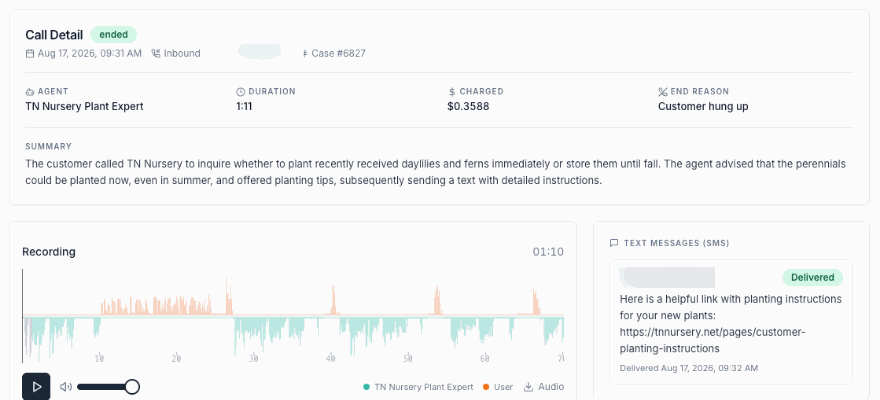
Voice channels are another area where AI agents shine. They can handle initial call routing, verify identities, and even resolve straightforward issues before looping in a human agent. During phone support, AI agents can listen to requests and pull up relevant account details in real time, cutting down on hold times.
For asynchronous communication - like email, SMS, WhatsApp, or social media - AI agents are equally effective. They can send automated updates, answer FAQs, and handle routine inquiries. Even outside business hours, AI agents can respond promptly, ensuring customers never feel left waiting.
Live chat and video support also benefit from AI. These agents provide real-time assistance during website visits, offering proactive help based on browsing behavior. If needed, they can escalate to video calls for visual demonstrations, all while maintaining the conversation's context.
The backbone of this connectivity is a centralized customer data system. This system logs every interaction, complete with timestamps, channel details, and resolution status, ensuring a consistent and informed experience no matter when or how customers reach out.
How AI and Human Agents Work Together
AI and human agents working hand-in-hand can transform the customer experience. While AI agents excel at speed and consistency, human agents bring empathy, creativity, and the ability to tackle complex problems. Together, they create a balanced and effective support system.
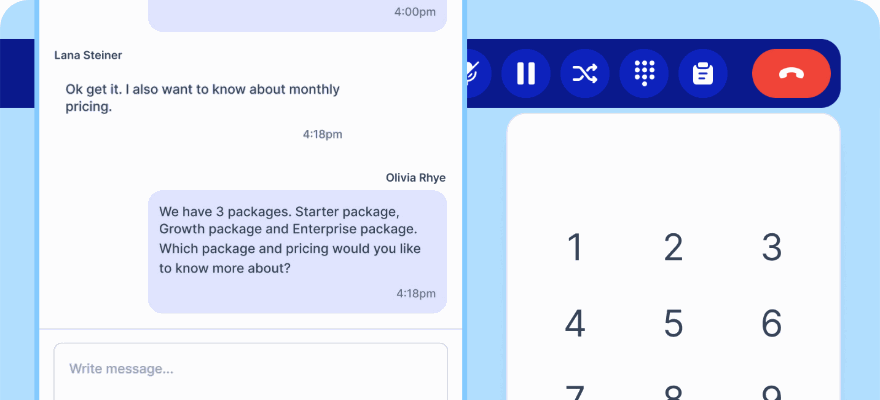
Smart routing is a key example of this collaboration. AI agents can handle straightforward requests - like business hours or password resets - while directing complex issues, such as billing disputes or technical troubleshooting, to human specialists. When transferring a case, AI agents pass along complete context, including interaction history and customer profiles, so customers don’t have to repeat themselves.
Human agents can also oversee AI interactions in real time. If an AI encounters a tricky question, it can flag a human for guidance before responding. This ensures accurate and thoughtful answers.
Shared knowledge bases further strengthen this partnership. When human agents discover new solutions or update processes, those insights are fed back into the AI system, creating a continuous feedback loop. This setup not only improves efficiency but also allows human agents to focus on more meaningful, complex tasks, boosting job satisfaction.
Common AI Agent Use Cases
To maximize the benefits of AI agents, it’s important to focus on use cases where they deliver the most value. Here are a few proven applications across industries:
- Customer triage: AI agents can quickly gather essential details - like account information, issue type, and urgency - when customers first reach out. This ensures requests are routed to the right place, avoiding frustrating delays.
- Order tracking and updates: E-commerce businesses can reduce ticket volumes by using AI agents to provide real-time tracking details and delivery updates.
- Routine account management: Tasks like password resets, address changes, and subscription updates are perfect for automation. AI agents can verify identities and process these requests quickly and securely.
- Automated notifications: From purchase confirmations to appointment reminders and follow-up surveys, AI agents handle these tasks effortlessly, keeping customers informed without manual effort.
- Product recommendations: By analyzing purchase history and browsing behavior, AI agents suggest relevant items, making upselling feel natural and helpful.
- Appointment scheduling: AI agents streamline booking by accessing calendars, offering available slots, and sending reminders.
- FAQ management: Instead of having customers search through lengthy documentation, AI agents can retrieve precise answers from knowledge bases in seconds.
Starting small - perhaps with one or two high-impact applications - can help businesses build confidence in AI technology. This gradual approach ensures measurable improvements while paving the way for broader adoption.
sbb-itb-204ca50
Building AI Agent Strategies with klink.cloud
AI agents have proven their value, but to truly harness their potential, you need the right platform. That’s where klink.cloud comes in. This AI-ready customer experience platform connects voice, email, messaging apps, and web chat, ensuring consistent performance across every customer interaction. By combining contact center tools, workflow automation, and CRM-style data in one place, klink.cloud allows U.S. businesses to design and implement AI-driven customer service strategies without requiring extensive engineering resources.
klink.cloud Features for AI Agent Strategies
Creating an effective AI agent strategy isn’t as simple as adding a chatbot to your website. You need a platform that integrates with your existing tools, connects communication channels, and automates workflows - while keeping human agents involved when necessary. klink.cloud checks all these boxes with features designed to support successful AI agent deployment.
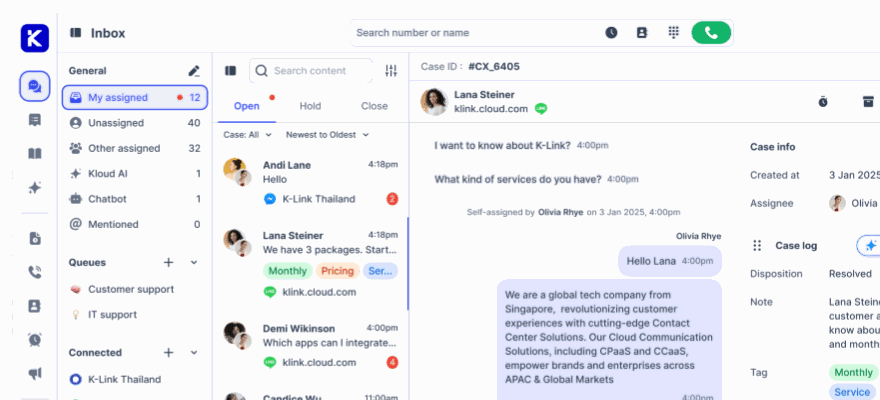
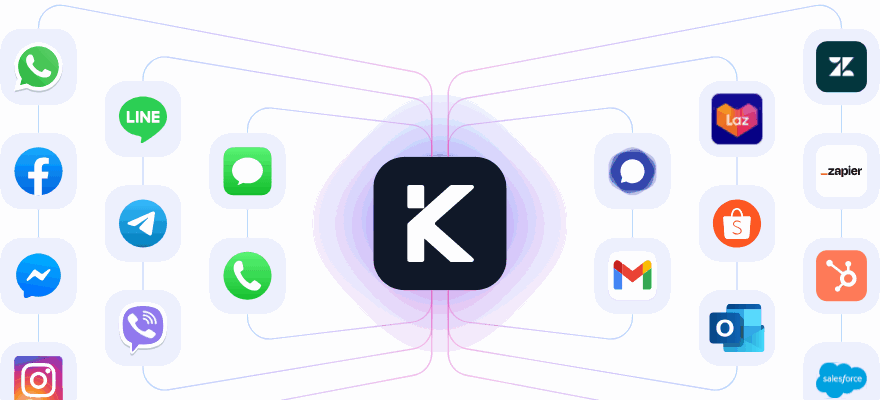
The Unified Inbox brings all customer conversations together in one place. Whether customers contact you via phone, WhatsApp, Facebook Messenger, Telegram, email, or live chat, AI agents can access the full conversation history and customer context, no matter the channel.
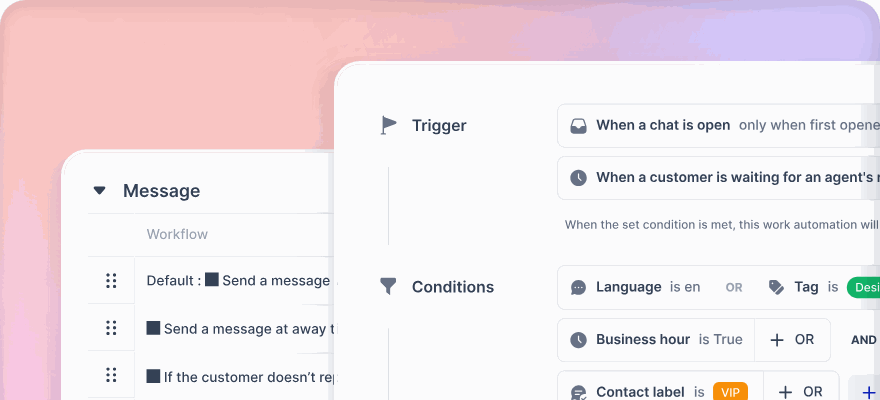
Automated conversation assignment is another standout feature. Conversations can be routed based on keywords, customer type, language, or even VIP status. For example, AI agents can handle password resets, order tracking, or basic product questions, while more complex issues are directed to human specialists. This smart routing ensures AI agents focus on tasks they’re best equipped to handle.
Integration is seamless with CRMs, helpdesk tools, e-commerce platforms, and billing systems. klink.cloud works with popular tools like Salesforce, HubSpot, Shopify, and more. This means AI agents can access live customer data to provide personalized resolutions - whether it’s checking an order status, updating account details, or processing transactions. Plus, for U.S. businesses, the platform automatically adjusts for local time zones and displays prices in USD.
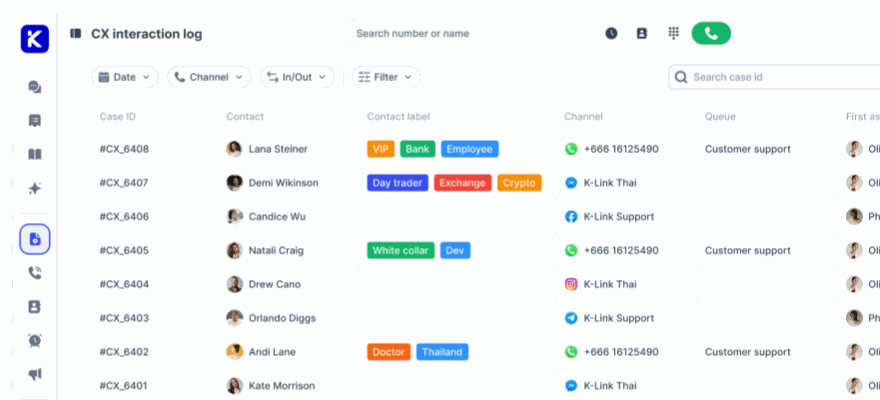
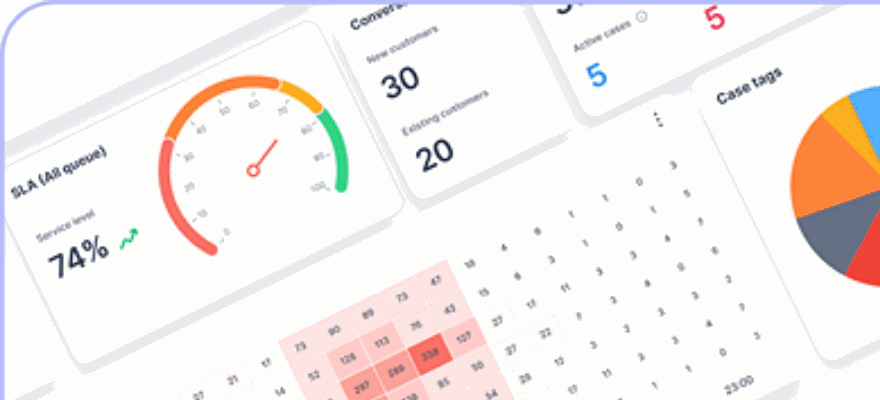
Case management tools track every customer interaction across channels. Metrics like first response time, SLA compliance, resolution time, and sentiment scores are logged under a single customer profile. This gives both AI and human agents a complete view of the customer’s journey, making it easier to evaluate performance and refine processes.
For voice channels, IVR and intelligent call routing allow AI agents to verify caller identities, handle straightforward issues, or route calls to the right human agent. With custom business hours and multi-level SLAs, businesses operating across U.S. time zones can ensure AI agents follow proper escalation rules.
What’s more, klink.cloud uses low-code/no-code tools, enabling business users to tweak AI workflows, conversation flows, and routing rules without waiting on developers. This flexibility allows teams to quickly adapt based on real-world feedback, ensuring their AI strategies stay effective.
Plans for Different Business Sizes
klink.cloud offers flexible plans tailored to businesses of all sizes. Whether you’re just testing AI agents or managing thousands of interactions daily, there’s a plan designed to meet your needs. Here’s a breakdown of the available tiers:
- Free plan: Ideal for small teams experimenting with AI agents. It includes a Unified Inbox, support for up to 100 CRM contacts, and access to channels like Facebook Messenger, Instagram DM, Telegram, and live chat. This plan is perfect for testing simple use cases, such as answering FAQs or handling basic inquiries.
- Starter plan ($23 per user/month): Designed for small teams managing sales and support. It expands CRM contacts to 10,000 and adds features like outbound/inbound calling, call notes, and custom case tracking. This plan is great for automating tasks like appointment reminders or order updates.
- Growth plan ($69 per user/month): Built for scaling AI strategies. It offers unlimited CRM contacts, advanced workflow automations, IVR with rules-based routing, and multi-level SLAs. With real-time dashboards and analytics, this plan supports teams handling higher volumes and more complex AI deployments.
- Enterprise plan (custom pricing): Tailored for large organizations needing advanced security and governance. It includes everything in the Growth plan, plus custom API integrations, advanced telephony features, SSO authentication, and dedicated support. This plan is ideal for businesses managing thousands of daily interactions, ensuring compliance and reliability.
Adopting AI agents can lead to measurable benefits. Reports show that 66% of organizations see productivity gains, 57% reduce costs, 55% make faster decisions, and 54% improve customer satisfaction. Some companies have saved up to 120 seconds per contact and generated $2 million in additional revenue through better routing and automation. Matching the right plan to your needs can help you optimize costs, improve service levels, and boost revenue through upsell opportunities.
Practical Examples and Results
Let’s see how klink.cloud’s tools translate into real-world success:
- A retail e-commerce brand could use AI agents for order tracking, returns, and FAQs across web chat, WhatsApp, and email. By integrating with Shopify, AI agents can access real-time order and shipping details, resolving customer inquiries instantly without human intervention. This reduces ticket volumes and allows human agents to focus on complex issues.
- A healthcare provider might deploy AI agents for appointment reminders and basic intake questions via SMS or phone. Using IVR and intelligent routing, the AI agent can verify patient identities, confirm appointments, and collect pre-visit details like insurance information. This setup frees up staff to handle urgent issues, reduces no-shows, and improves response times.
- A financial services firm could rely on AI agents to handle balance inquiries and transaction details. By integrating klink.cloud with their CRM and transaction systems, AI agents can authenticate callers, provide account balances, and explain recent transactions. Complex issues, such as fraud alerts, are routed to human specialists. This reduces average handle time while improving customer satisfaction.
These examples show how klink.cloud can streamline operations and enhance customer engagement across industries, making it a powerful tool for businesses looking to implement AI-driven strategies effectively.
Managing and Measuring AI Agent Performance
Deploying AI agents is just the beginning. To ensure they deliver value, you need to monitor their behavior, maintain compliance, and refine their capabilities over time. Without regular oversight, AI agents risk straying from their intended purpose, failing to meet legal standards, or missing opportunities for optimization. This section breaks down how to manage AI agents effectively and measure their performance, while also addressing compliance and risk management to keep your systems secure and aligned with regulations.
Compliance and Risk Management
Operating AI agents in the U.S. comes with a set of legal and regulatory obligations. Data privacy and security laws directly impact how businesses handle AI interactions, making compliance not just a legal requirement but a safeguard for both customers and organizations.
For example, data privacy laws like the California Consumer Privacy Act (CCPA) and the California Privacy Rights Act (CPRA) mandate transparency in how customer data is collected and used. These laws also require businesses to provide clear mechanisms for managing customer data. Other states have similar rules, emphasizing consent and data minimization.
In regulated industries, compliance becomes even more complex. Healthcare organizations, for instance, must ensure that AI agents handling sensitive health information comply with HIPAA standards by implementing encryption and strict access controls. In financial services, firms need to protect customer data in line with the Gramm-Leach-Bliley Act (GLBA), while businesses processing payment data must meet PCI DSS requirements. Ensuring compliance while monitoring AI performance is critical for building a legally sound system.
Ethics also play a crucial role. AI agents should always disclose their non-human nature so customers are aware they’re interacting with automation. Avoid using AI for deceptive purposes, and implement safeguards to minimize bias by regularly reviewing the decisions made by these systems. Detailed documentation of AI governance policies - including roles, decision-making processes, and escalation procedures - is essential, especially during audits or legal reviews. Training your team on these requirements ensures everyone knows their responsibilities in maintaining compliance.
Key Performance Indicators to Track
To evaluate how well your AI agents are performing, track a mix of operational metrics and customer experience indicators. These KPIs can highlight strengths, expose weaknesses, and guide improvement efforts.
- CSAT (Customer Satisfaction): Use post-interaction surveys to measure how satisfied customers are with the AI. Compare satisfaction levels between interactions handled solely by AI and those requiring human assistance.
- NPS (Net Promoter Score): Assess customer loyalty by asking how likely they are to recommend your business. Monitoring NPS alongside AI deployment helps determine if automation is strengthening customer relationships.
- FCR (First Contact Resolution): Measure the percentage of issues resolved in a single interaction. High FCR rates suggest the AI is effectively addressing customer needs, while low rates might indicate gaps in training data or system integration.
- AHT (Average Handle Time): Track how long each interaction lasts. While AI can reduce handle times by providing quick responses, it’s important to balance speed with quality.
- Cost per Contact: Evaluate the cost of handling each interaction, factoring in technology and agent time. AI can significantly lower costs, contributing to your return on investment.
- ASA (Average Speed of Answer): Measure how quickly customers receive assistance. Fast response times, especially during busy periods, improve the overall customer experience.
- Containment Rate: This metric shows the percentage of interactions resolved entirely by AI without human involvement. A higher containment rate indicates the AI is effectively managing inquiries, freeing human agents for more complex tasks.
- Sentiment Analysis: Leverage natural language processing to gauge customer emotions during interactions. This can help identify areas where AI responses need improvement.
Real-time dashboards are invaluable for spotting trends and comparing performance across communication channels.
Using Feedback to Improve AI Agents
Tracking KPIs is just the start - using that data to refine your AI agents is where the real progress happens. Continuous feedback loops are essential for keeping AI systems effective and aligned with business goals.
- A/B Testing and Gradual Rollouts: Test different conversation flows, response styles, or routing logic across customer segments. Start small by directing a portion of interactions to AI agents while closely monitoring performance. Gradual rollouts reduce risk and allow for adjustments based on meaningful trends.
- Insights from Human Agents: Your team’s observations can reveal where AI is excelling or falling short. Regularly review AI performance with your staff to uncover practical improvement opportunities.
- Conversation Reviews: Analyze a sample of interactions to identify unclear or incomplete responses. These reviews can pinpoint specific areas where the AI needs refinement.
- Customer Feedback Loops: Simple tools like a “Was this helpful?” button at the end of interactions provide direct insights into customer satisfaction and areas for improvement.
- Knowledge Base Updates: Regularly refresh the AI’s knowledge base to ensure it stays accurate and relevant.
- Performance Benchmarking: Compare current performance against baseline metrics to set goals and track the impact of improvements over time.
Conclusion
The move from experimental AI prototypes to fully integrated AI agents is shaping the business landscape for 2025. These systems are no longer optional add-ons for tech-savvy companies - they’ve become a core part of the infrastructure for businesses aiming to stay competitive. AI agents are revolutionizing operations by transforming static tools into dynamic systems that analyze data, make decisions autonomously, and streamline processes. This shift doesn’t just redefine efficiency - it drives measurable improvements across the board.
With 99% of developers and 88% of organizations adopting AI agents, businesses are seeing tangible results: workflows are improving by 30%–50%, low-value tasks are reduced by 25%–40%, and customer satisfaction, along with market share, is climbing. These results align with the omnichannel strategies discussed earlier, where AI plays a key role in delivering seamless, cross-platform customer experiences.
The financial outlook is equally compelling. The AI agents market is expected to grow from $5.1 billion in 2024 to $47.1 billion by 2030, reflecting the increasing recognition of their value. Companies that have embraced AI early report workflow cycles speeding up by 20%–30%, along with substantial savings in back-office operations. In customer service, some organizations have cut claim processing times by 40% and improved net promoter scores by 15 points.
These outcomes highlight the urgency for businesses to integrate AI agents into their operations. But success requires more than just adopting the technology - it demands a well-thought-out strategy. This includes embedding AI into omnichannel communication platforms, setting up governance frameworks, and creating feedback systems to continually refine performance. The best strategies combine automation for routine tasks with human expertise for addressing complex challenges, ensuring both efficiency and empathy.
For businesses still hesitating, the window to gain a competitive edge is closing. With 62% of organizations already experimenting with AI agents and 64% reporting that AI is driving their innovation, waiting risks falling behind. Now is the time to act - adopting AI not only protects customer data and scales operations but also positions businesses to lead in their industries.
FAQs
How can businesses ensure their AI agents protect customer privacy and follow data protection laws?
To protect customer privacy and adhere to data protection laws, businesses need to establish strong data governance policies. This means gathering only the data that's absolutely required, safeguarding it with reliable encryption methods, and restricting access to authorized personnel only.
It's also crucial for companies to stay informed about regulations like GDPR and CCPA, ensuring their AI systems are designed to meet these legal standards. Regular audits, comprehensive employee training, and clear communication with customers about how their data is being used are essential steps for building trust and staying compliant.
What are the first steps to creating a successful AI agent strategy for your business?
To create a winning strategy for AI agents, it's essential to shift your perspective. Instead of treating AI as a series of isolated experiments, think bigger - focus on integrating AI across your entire organization. Tie your AI projects directly to core business processes and goals, ensuring they solve real-world challenges and meet customer expectations.
Collaboration is key. Assemble cross-functional teams that bring together expertise from various departments like IT, customer service, and operations. This teamwork ensures AI solutions are practical, effective, and aligned with your organization's needs.
Lastly, think beyond small-scale pilots. Invest in tools and systems that can scale as your business grows. By laying this strong foundation, you're setting your organization up to use AI agents successfully over the long haul.
How do AI agents ensure a smooth balance between automation and human support in customer service?
AI agents are built to manage routine and straightforward questions on their own, freeing up human agents to tackle more intricate or sensitive matters. By analyzing the specifics of each customer interaction, these AI systems can determine when to pass cases to human representatives who can provide the necessary expertise or empathy.
This smooth teamwork speeds up responses for basic inquiries while preserving the personal connection needed for more nuanced situations, boosting both efficiency and the overall customer experience.