HowAI Agents Improve CX Metrics: CSAT, AHT, FCR, NPS
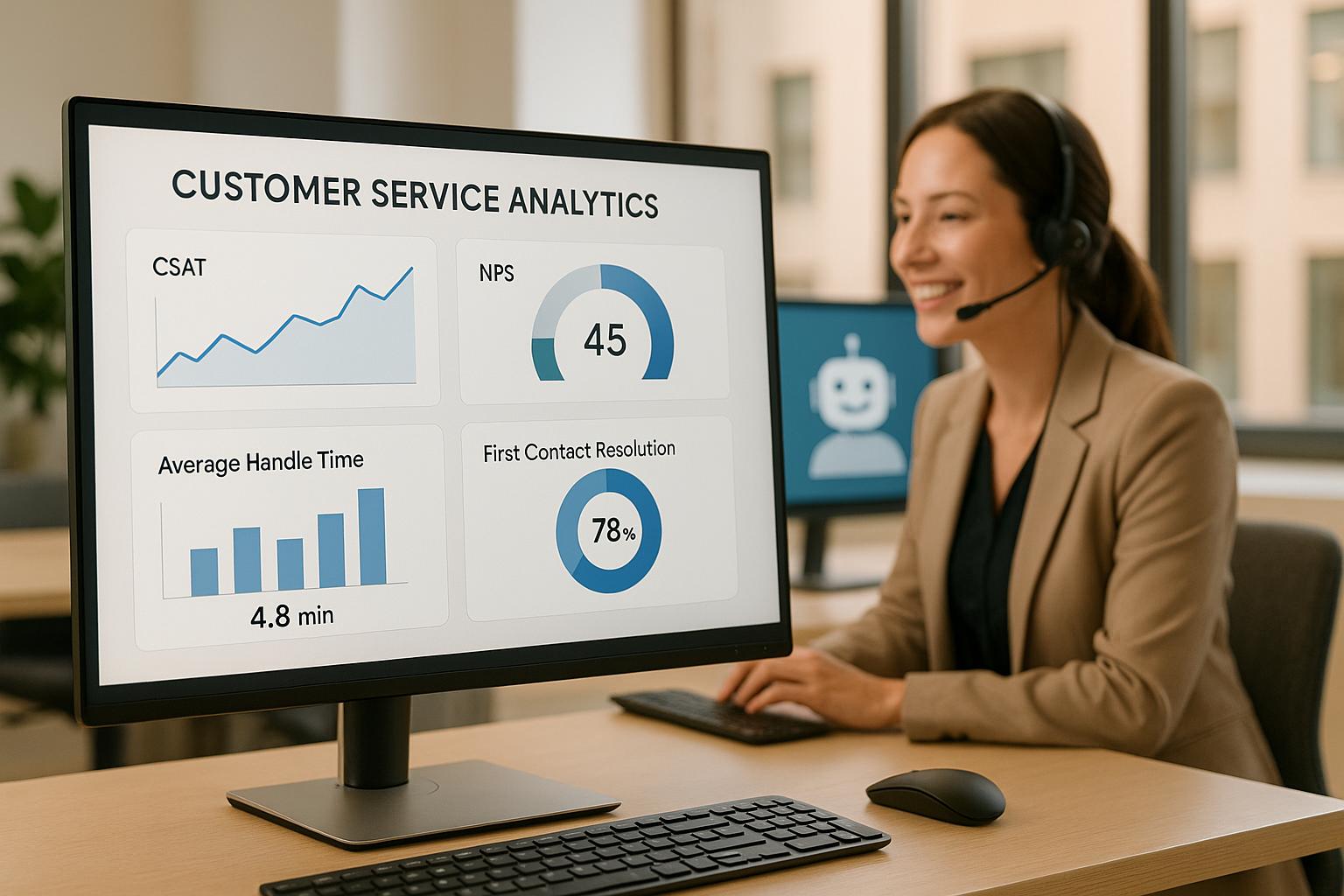
AI agents are transforming customer service by improving key metrics like Customer Satisfaction Score (CSAT), Average Handle Time (AHT), First Contact Resolution (FCR), and Net Promoter Score (NPS). Here's how:
- CSAT and NPS: AI provides fast, personalized support and uses tools like sentiment analysis to enhance customer satisfaction and loyalty.
- AHT: AI automates routine tasks, reduces wait times, and equips agents with pre-collected information for faster resolutions.
- FCR: AI ensures accurate answers on the first try through smart workflows, context preservation, and proactive problem-solving.
Adopting AI tools like klink.cloud helps businesses achieve measurable improvements in these metrics by automating simple tasks, assisting agents in real time, and delivering consistent support across channels. Companies report faster response times, reduced costs, and higher satisfaction rates with AI integration.
To start, focus on automating high-volume, simple tasks like password resets or order tracking. Track metrics like CSAT, AHT, and FCR before and after implementation to measure success. Over time, expand automation while monitoring performance to maintain long-term results.
AI agents in action: Practical use cases for Support and CX teams
What Are CSAT, AHT, FCR, and NPS?
For anyone managing a contact center, understanding these four metrics is key to evaluating and improving customer experience. Each metric provides a different perspective, and together, they paint a clear picture of support team performance.
Metric Definitions and Calculations
Customer Satisfaction Score (CSAT) reflects how satisfied customers are with a specific interaction or service. After a support interaction, customers are asked to rate their experience on a scale, such as 1 to 5 or 1 to 10. To calculate CSAT, divide the number of satisfied customers (those who rate 4 or 5 on a 5-point scale) by the total number of survey responses, then multiply by 100 to get a percentage.
For example, if 850 out of 1,000 customers rate their experience as 4 or 5, the CSAT score is 85%. This metric provides quick feedback on customer sentiment and can highlight problem areas, whether tied to processes or specific agents.
Average Handle Time (AHT) measures the average time spent on customer interactions, including talk time, hold time, and after-call tasks. The formula is simple: add these three components and divide by the total number of interactions within a given time frame.
For instance, if 2,000 calls take a total of 14,000 minutes, the AHT is 7 minutes. While AHT is critical for managing staffing costs and minimizing wait times, focusing too much on reducing it can backfire. Rushing through calls often leads to unresolved issues, repeat contacts, and lower satisfaction.
First Contact Resolution (FCR) tracks the percentage of issues resolved during the first interaction, without the need for follow-ups. Calculate FCR by dividing the number of issues resolved on the first try by the total number of initial contacts, then multiply by 100.
For example, resolving 720 out of 900 issues on the first attempt results in an 80% FCR. This metric is vital because customers value quick resolutions. Repeat contacts not only frustrate customers but also increase costs and hurt brand loyalty.
Net Promoter Score (NPS) measures customer loyalty and their willingness to recommend your company. Customers answer a single question: "On a scale of 0 to 10, how likely are you to recommend us to a friend or colleague?" Responses are grouped into Promoters (9–10), Passives (7–8), and Detractors (0–6).
To calculate NPS, subtract the percentage of Detractors from the percentage of Promoters. For example, if 60% of respondents are Promoters and 15% are Detractors, the NPS is 45. Unlike CSAT, which focuses on specific interactions, NPS reflects the overall relationship customers have with your brand and serves as a reliable indicator of future growth.
These calculations are the foundation for the U.S. benchmarks discussed next.
U.S. Benchmarks and Applications
Armed with these metrics, U.S. contact centers set service standards and monitor performance. Knowing industry benchmarks helps identify areas for improvement and set realistic goals.
CSAT scores in the U.S. typically range from 75% to 85% for top-performing organizations. Scores below 70% often signal serious service quality issues, while scores above 90% are rare and may indicate survey bias, where only highly satisfied customers respond. Many companies tie agent bonuses and team incentives to maintaining CSAT scores of 80% or higher.
AHT benchmarks vary widely depending on the industry and channel. For example:
- Financial services phone support averages 6 to 8 minutes per call.
- Technical support for software products takes 12 to 18 minutes.
- Chat interactions tend to be shorter - around 10 to 12 minutes - since agents can handle multiple chats at once.
FCR rates for high-performing U.S. contact centers fall between 70% and 75%. Rates below 65% may point to issues like inadequate agent training, poor knowledge resources, or ineffective escalation processes. Companies often measure FCR through post-interaction surveys, quality assurance checks, and repeat contact analysis, using it as a key component in service-level agreements.
NPS scores vary significantly by industry. For example:
- Retail companies in the U.S. average NPS scores between 40 and 50.
- Telecommunications and cable providers often struggle, with scores in the single digits or even negative.
- Financial services firms typically score between 30 and 40.
NPS is frequently featured in board meetings and investor reports because it ties directly to customer retention and revenue growth.
Contact centers rarely look at these metrics in isolation. A balanced dashboard shows how they interact. For instance, cutting AHT too aggressively can lower FCR, which may, in turn, hurt both CSAT and NPS. The best-performing contact centers aim to balance all four metrics by addressing root causes of customer issues rather than focusing on optimizing just one.
These benchmarks are crucial as AI tools increasingly assist in improving these metrics behind the scenes.
How AI Agents Improve CX Metrics
AI agents are reshaping customer experience by tackling the key challenges that impact metrics like CSAT (Customer Satisfaction Score), AHT (Average Handle Time), FCR (First Contact Resolution), and NPS (Net Promoter Score). These tools go beyond mere task automation; they redefine how contact centers operate across every customer touchpoint - whether it’s phone, chat, email, or social media. The result? Noticeable improvements in both customer satisfaction and operational performance.
According to recent data, 54% of companies have seen better customer experience metrics thanks to AI agents. Leading companies using AI reported a 92% boost in CSAT through self-service options, compared to less than 50% for organizations lagging behind.
Let’s dive into how AI specifically enhances CSAT, NPS, AHT, and FCR, transforming each stage of customer interaction.
Increasing CSAT and NPS
AI agents improve satisfaction by simplifying the customer journey. No more navigating confusing menus or repeating personal details - customers get fast, tailored assistance.
By leveraging customer history and preferences, AI acts like a personalized assistant, equipping agents with relevant information before the conversation even begins. This eliminates the need for repetitive verifications and speeds up resolutions.
Real-time sentiment analysis is another game-changer. AI can detect customer emotions as they unfold, adjusting its approach or escalating issues to a human agent when needed. This proactive approach prevents small concerns from turning into major complaints.
The numbers back this up. Among companies leading in AI adoption, 70% of customers reported being extremely satisfied, compared to just 2% for those struggling with AI implementation. Similarly, AI leaders saw their NPS climb to 70, far outpacing the score of 43 reported by lagging organizations.
Lowering AHT with Automation
AI doesn’t just boost satisfaction - it also makes interactions faster. Reducing AHT without compromising quality is one of AI’s standout contributions. By handling routine inquiries 24/7, AI frees up human agents to focus on more complex issues. This dramatically cuts wait times for customers.
For cases requiring human involvement, AI gathers relevant information ahead of time, streamlining the process. Features like pre-written responses generated by AI further reduce response times and after-call work. In chat scenarios, AI can handle multiple conversations simultaneously, ensuring quicker, consistent support.
AI also automates post-call tasks by summarizing interactions, categorizing issues, and updating customer records. This allows agents to concentrate on interactions that require human insight and empathy, improving both service quality and efficiency.
Improving FCR with Smart Workflows
First Contact Resolution improves significantly when AI ensures customers get the right answers from the start. Smart routing, context preservation, and agent guidance work together to minimize follow-ups.
AI-powered virtual agents help customers resolve issues via self-service while summarizing past interactions and suggesting solutions for human agents. When customers describe their problems, AI searches knowledge bases and previous interactions to find accurate answers. If escalation is necessary, the groundwork is already done, enabling human agents to focus on resolution.
Another key advantage is AI’s ability to maintain context across different channels - whether it’s chat, email, or phone. This continuity eliminates the frustration of having to repeat information and increases the likelihood of resolving issues on the first try.
AI also integrates with tools like CRMs to pull critical data, giving agents the details they need to address billing questions or technical problems efficiently. Proactive outreach is another strength: 61% of AI leaders use AI to reach out about potential issues - like service disruptions - before customers even notice, compared to just 6% of laggards.
Finally, smart workflows provide agents with step-by-step guidance for resolving complex problems. This reduces errors and increases the chances of resolving issues during the initial interaction, avoiding the need for follow-ups or callbacks.
sbb-itb-204ca50
Using klink.cloud to Improve CX Metrics
When it comes to improving CX metrics like CSAT, AHT, FCR, and NPS, klink.cloud uses AI to deliver measurable results. By leveraging the capabilities of AI agents, the platform provides a unified solution to address challenges that impact these metrics. The key to success? Start with small, focused implementations and expand as results are achieved.
Start Small and Build Momentum
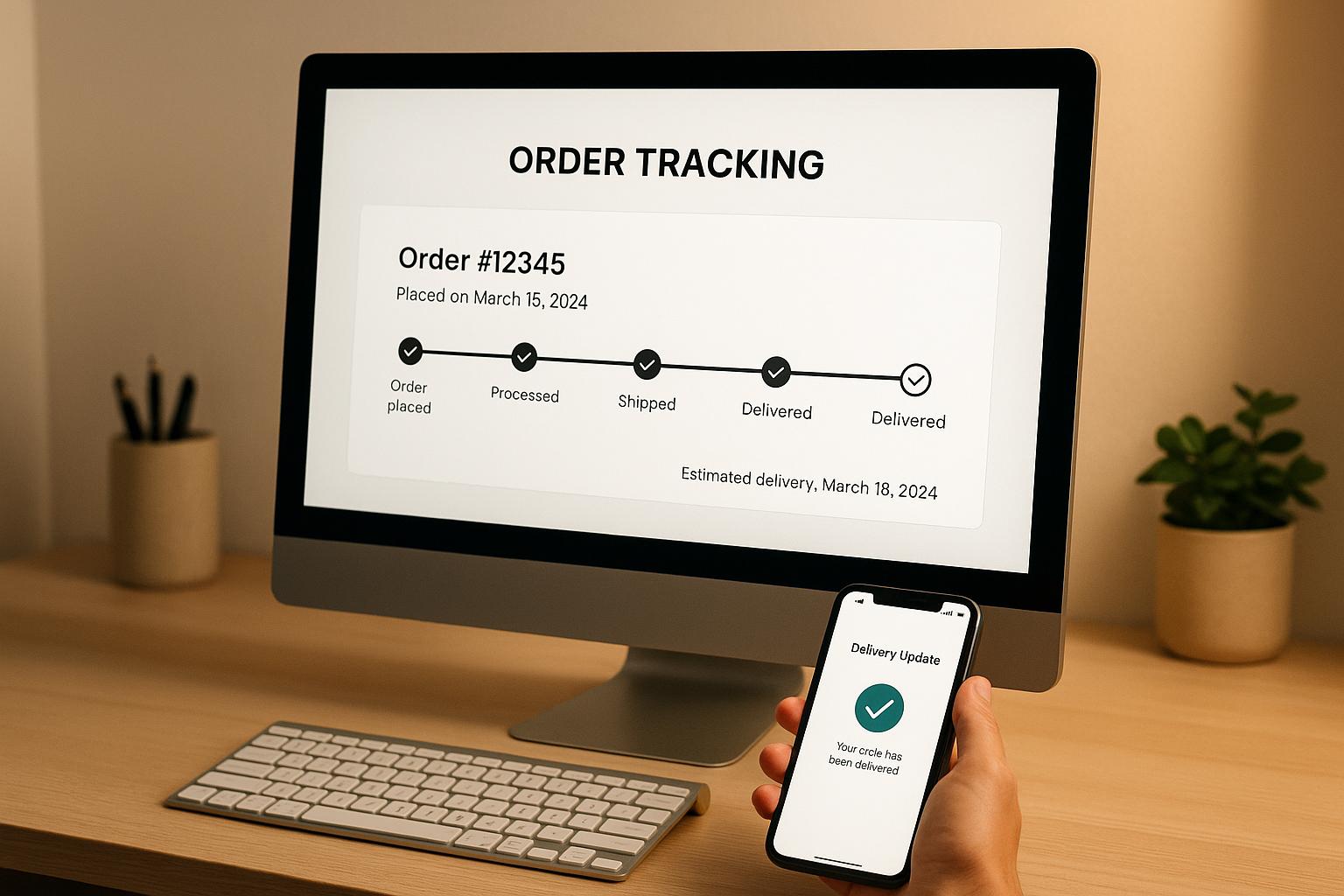
Begin with high-volume, low-complexity tasks such as resetting passwords, unlocking accounts, checking order statuses, handling basic billing inquiries, or managing appointments. Automating these interactions not only reduces AHT but also improves FCR by resolving issues through self-service or streamlined agent support. Plus, shorter queues for more complex queries mean better CSAT and NPS.
The process is simple. Identify one to three common intents (e.g., "Reset password" or "Check order status") and create decision trees that integrate with necessary APIs. Configure the system to let AI handle straightforward cases while transferring exceptions - complete with context - to human agents. This ensures that changes in metrics like CSAT, AHT, and FCR can be directly tied to specific workflows.
Once the basics are in place, you can chain multiple intents into "micro-journeys" - for example, combining troubleshooting steps with part replacement and appointment booking. Monitor where customers drop off or escalate, and implement governance practices like version-controlled workflows, change approvals, and regular reviews of automation performance. This approach ensures steady improvements in CX metrics as automation expands.
Now, let’s explore the features that make klink.cloud a game-changer for CX.
klink.cloud Features That Drive Better Metrics
Once you’ve laid the groundwork, klink.cloud’s features take CX improvements to the next level.
Intelligent routing analyzes customer history, issue type, sentiment, and current queue conditions to determine whether an AI agent or a specific human skill group is best suited for the task. High-priority customers are fast-tracked, and interactions are matched to the right handler on the first attempt, reducing transfers and cutting handle times. This directly improves AHT and first-contact resolution rates.
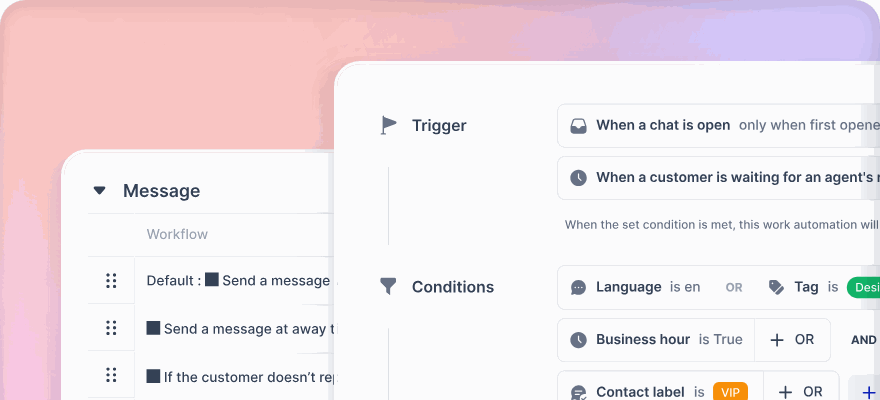
Workflow automation eliminates repetitive tasks that slow down agents and frustrate customers. Automated processes handle customer authentication, ID collection, and detail confirmation before an agent even joins the conversation. Back-office tasks like ticket creation, refunds within policy limits, and plan changes are managed without manual intervention. Follow-up actions - like notifications and survey requests - are triggered automatically. By implementing these reusable workflows, businesses can reduce AHT, minimize errors, and maintain consistent CSAT and NPS.
AI-powered agent assistance listens to live conversations (voice or chat) and provides next-best actions, relevant knowledge base entries, and pre-drafted responses - all tailored to U.S. language and compliance standards. Teams can refine these models to ensure they meet internal quality and policy requirements, helping agents respond faster while maintaining accuracy and empathy.
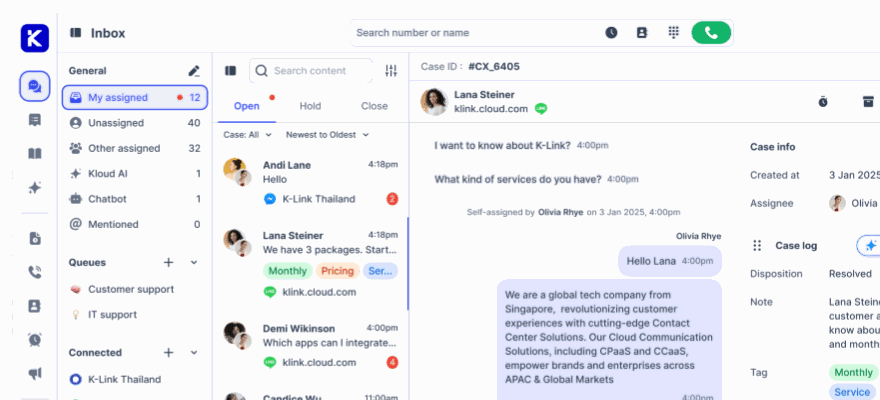
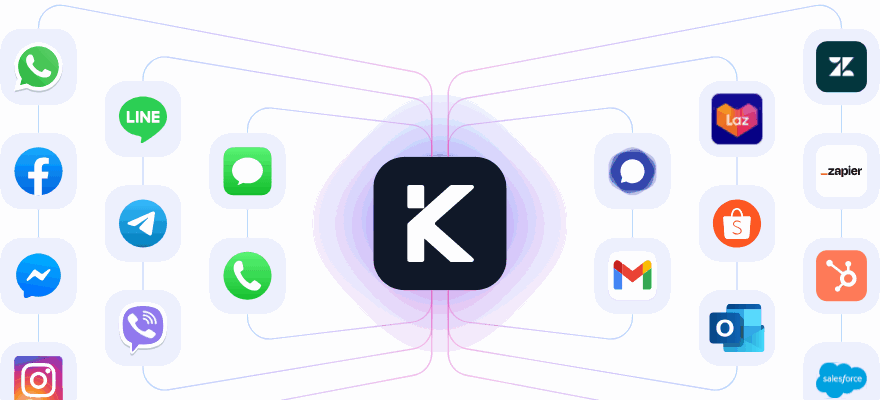
The Unified Inbox consolidates all customer communications - whether through phone, WhatsApp, Facebook, Telegram, email, or live chat - into one dashboard, enabling faster and more consistent responses.
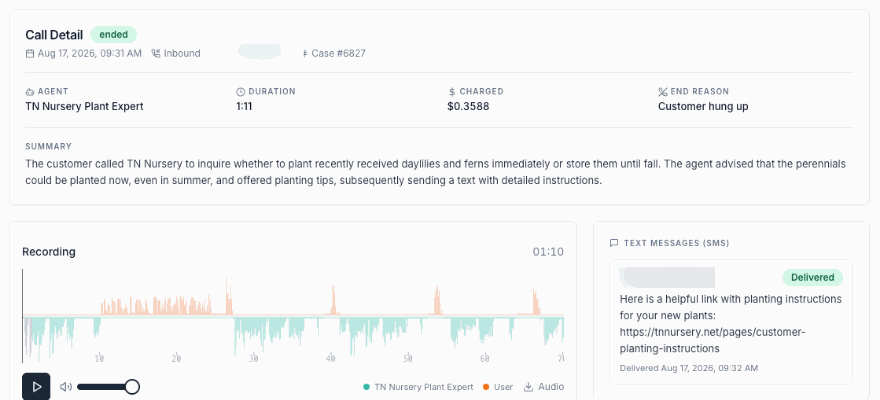
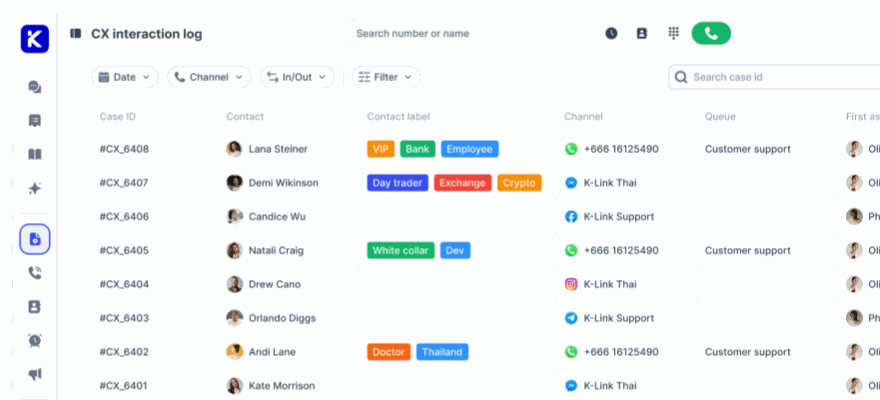
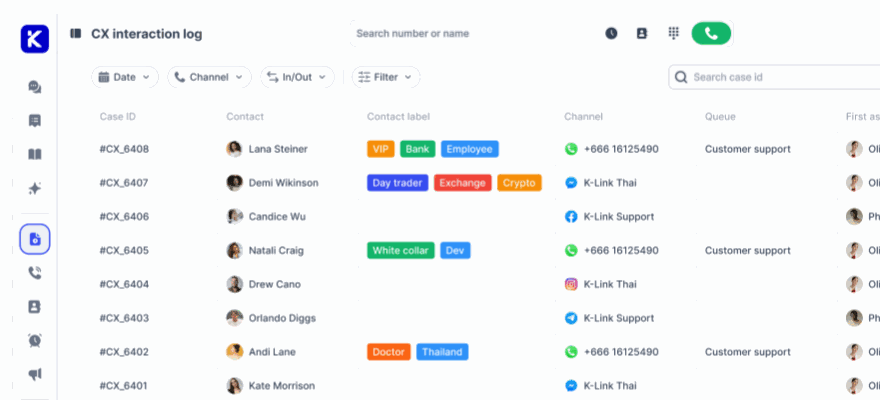
Case management keeps track of every customer interaction across all channels, linking them to a single profile. Metrics like first response time, SLA adherence, resolution time, and CSAT are monitored to ensure nothing is overlooked. This unified view provides the insights needed to fine-tune your CX strategy.
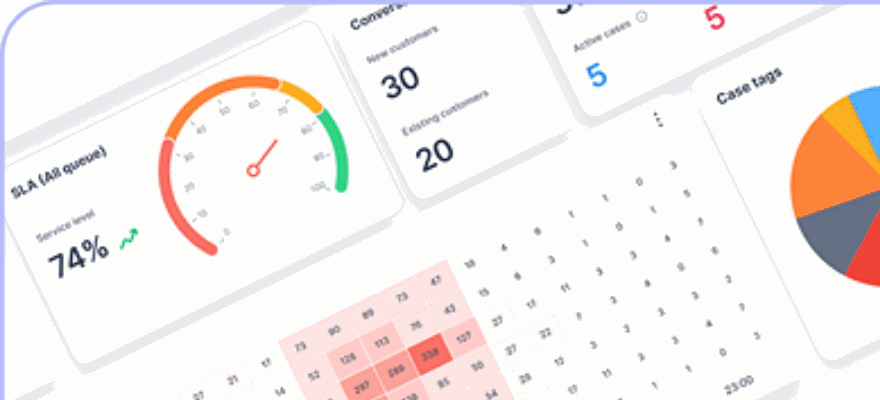
Real-time dashboards display trends before and after implementation, including metrics like containment rate, escalation rate, and queue lengths. This visibility helps teams connect AI use cases to observed improvements and identify areas that need adjustments or additional training data.
To maximize CX improvements, klink.cloud integrates seamlessly with core systems like CRMs, ticketing platforms, billing gateways, and scheduling tools. It also connects with popular apps like WhatsApp, Messenger, Gmail, Shopify, and helpdesks, ensuring smooth conversation flows and access to critical customer data. By prioritizing integrations that support high-impact interactions, AI agents can handle entire tasks - like issuing refunds, rescheduling appointments, or updating contact details - rather than offering partial solutions.
Companies using klink.cloud have seen impressive results, including a 2x increase in customer satisfaction, a 5x boost in productivity, and 99% uptime. Sarah Lee, Head of Contact Center at Horizon Solutions, shared:
"Since adopting klink.cloud, we've seen a significant improvement in our response times. Our customers are happier, and our agents are more efficient than ever."
James Carter, Operations Manager at MPG BPO, added:
"klink.cloud has made a huge difference for our contact center! Our agents can easily manage conversations across different channels, helping us respond faster and keep our clients happy. We've seen big improvements in both productivity and customer satisfaction since we started using it."
klink.cloud offers flexible pricing to fit businesses at any stage. The Free plan includes basic omnichannel features for initial testing. The Starter plan, priced at $23/user/month, adds telephony and call management for small teams. The Growth plan, at $69/user/month, includes unlimited CRM contacts, workflow automation, IVR, and rules-based routing for high-volume teams. Enterprise plans offer advanced features like custom API integrations, ecommerce tools, SSO authentication, and dedicated support for more complex needs.
Tracking and Maintaining Results
Getting AI agents up and running is just the beginning. To ensure they deliver value, you need to track their performance closely. Without proper monitoring, it’s impossible to know if your AI efforts are working or where adjustments are needed. Keeping a close eye on metrics helps sustain the customer experience (CX) improvements achieved with AI.
Setting Baselines and Collecting Data
Start by establishing baseline metrics. Review 60–90 days of historical data to account for seasonal trends. Break down this data by channel (phone, chat, email), time of day, issue type, and agent skill group. This level of detail gives you a clear picture of where you’re starting.
From day one, structure your data collection to differentiate between AI-handled and human-handled interactions. Tag conversations as AI-handled, partially assisted, or human-handled, and include key details like intent type, resolution status, escalation reasons, and customer sentiment scores.
To gauge AI effectiveness, run A/B tests for 2–4 weeks. Split traffic evenly between AI workflows and human agents, then compare metrics like Average Handle Time (AHT), First Contact Resolution (FCR), and Customer Satisfaction (CSAT). For example, if testing an AI-powered password reset process, route 50% of those requests to AI and the other 50% to human agents, then analyze the outcomes.
Use cohort analysis to track specific customer groups over time. For instance, group customers based on account age, subscription tier, or purchase history, and measure how their experiences change after AI implementation. You might find that newer customers adapt quickly to AI self-service, while long-term customers prefer human interaction for more complex issues.
Pay close attention to leading indicators that may signal potential problems before they impact major metrics. Look for trends like higher escalation rates, repeat contacts within 24 hours, or declining containment rates. If customers abandon AI conversations, analyze drop-off points to identify and fix failing intents.
Set up automated daily and weekly reports for stakeholders, comparing current metrics to baseline figures and highlighting month-over-month trends. Real-time dashboards should display key data like queue lengths, active AI sessions, and live CSAT scores, enabling teams to respond quickly to any emerging issues.
By establishing strong baselines and a structured approach to data collection, you can effectively manage and improve performance over time.
Managing Performance Over Time
Once your baselines are in place, the focus shifts to ongoing performance management. Set alert thresholds to catch early signs of trouble. For example, flag metrics like a 15% rise in AHT or a CSAT score dropping below 4.0 for three consecutive days. These alerts should go directly to the team responsible for that workflow, ensuring quick action.
Perform regular model reviews to ensure your AI agents stay relevant and accurate. Customer language evolves, new products are introduced, and policies change - all of which can affect AI performance. Review transcripts monthly to identify misclassified intents, outdated responses, or knowledge gaps. Spot patterns in escalations or failed resolutions, and update training data and decision trees as needed.
Test updates in a staging environment before rolling them out live. This prevents disruptions to customer interactions and helps maintain consistent CSAT and Net Promoter Scores (NPS).
Stay compliant with U.S. industry regulations like HIPAA and TCPA by maintaining audit trails and updating AI responses when necessary. Make sure your processes for collecting, storing, and using customer data are well-documented.
Implement quality assurance (QA) processes to evaluate both AI and human interactions. Randomly sample conversations weekly and score them based on accuracy, tone, and compliance. Compare AI performance to human benchmarks, identifying areas where training or workflow adjustments are needed. For instance, if AI struggles with empathy or complex problem-solving, consider routing those interactions to human agents.
Keep your team aligned with AI capabilities through continuous training. As you add new intents or expand automation, update training materials and run refresher sessions. Agents need to know what the AI can handle, when to let it work, and how to seamlessly take over when escalation is needed. This coordination directly impacts FCR and AHT metrics.
Track ROI metrics alongside CX metrics to showcase the business value of your AI initiatives. Calculate cost savings from reduced handle times, increased containment rates, and improved agent productivity. Measure revenue impact from higher NPS scores and better customer retention. Present these insights quarterly to leadership to justify AI investments and explore opportunities for growth.
Plan for scalability by monitoring how your system performs under increasing workloads. As you automate more intents and handle higher volumes, ensure response times remain fast and accuracy doesn’t slip. Load testing can help you identify bottlenecks before they affect the customer experience.
Finally, establish a feedback loop between customer insights and AI improvements. When surveys or conversations reveal recurring pain points, prioritize those areas for automation or workflow refinement. For example, if multiple customers report struggling with a specific issue, update your AI responses or add new self-service options. This proactive approach helps maintain the positive impact of your AI systems while preventing metric declines.
Conclusion
AI agents are transforming customer service by boosting key performance metrics like CSAT (Customer Satisfaction Score), AHT (Average Handle Time), FCR (First Contact Resolution), and NPS (Net Promoter Score). By handling routine inquiries, offering 24/7 support, and assisting human agents in real time, AI shifts customer service from a cost center to a strategic advantage. Companies that adopt AI with clear goals, consistent monitoring, and ongoing refinement see gains in efficiency and customer loyalty - both of which contribute to revenue growth.
The numbers speak for themselves: AI-enabled systems show 10–25% increases in CSAT, up to 80–85% reductions in resolution time, 20–30% FCR improvements, and a more than 50% drop in cost per ticket. Additionally, some businesses handle up to 80% of routine customer inquiries with AI chatbots, freeing up human agents to focus on complex situations that require empathy and problem-solving skills.
Building on these advancements, klink.cloud offers a suite of tools that integrate AI chat and voice agents, agent assistance, and workflow automation. These tools are paired with real-time reporting on metrics like CSAT, AHT, FCR, and NPS. With omnichannel support - including web chat, SMS, voice, and social media - customers receive consistent, high-quality service no matter how they interact. Features like no-code workflow builders, AI-powered knowledge searches, and real-time dashboards make it easy for U.S. teams to deploy AI, monitor progress, and expand as results are validated. Seamless integration with CRMs, ticketing systems, and order management tools ensures smooth workflows that resolve issues on the first contact, improving FCR and minimizing customer effort.
To ensure long-term success, start small with targeted pilots. Test AI agents on a specific channel or use case, such as handling FAQs or offering after-hours support. Closely track metrics like CSAT, AHT, FCR, and NPS before and after implementation. A/B testing can help confirm that efficiency gains don’t come at the cost of customer satisfaction. Regularly review transcripts, set alert thresholds, and update training data to adapt to changing customer needs and language. This careful, data-driven approach builds confidence in AI’s value and lays the foundation for scaling across multiple channels.
AI adoption meets both customer demands and business goals. By managing routine inquiries and reducing handle times, AI allows agents to focus on personalized support that turns satisfied customers into loyal advocates. This drives higher NPS, better retention, and sustainable growth.
If your CSAT, AHT, FCR, or NPS metrics need improvement, now is the time to evaluate AI agents. Start by establishing baselines, setting achievable goals, and exploring how klink.cloud can help you create a more efficient, customer-focused operation. Whether your priority is cutting queue times, improving satisfaction scores, or scaling support without ballooning costs, AI provides a practical solution - one that turns data into action and delivers measurable outcomes for your business.
FAQs
How do AI agents help improve key customer service metrics like CSAT and NPS?
AI agents play a powerful role in boosting Customer Satisfaction Score (CSAT) by diving into customer feedback, spotting recurring issues, and delivering actionable advice to enhance service quality. They also make interactions smoother with tools like real-time support and automated responses, which lead to quicker and more precise problem-solving.
When it comes to Net Promoter Score (NPS), AI tools analyze customer behavior patterns to uncover what influences loyalty or dissatisfaction. Acting on these insights allows businesses to build deeper connections with their customers and inspire more positive word-of-mouth referrals. In short, AI equips teams to provide outstanding service while addressing customer needs effectively.
What are the first steps a company should take to successfully implement AI tools like klink.cloud to enhance CX metrics?
To make the most of AI tools like klink.cloud and improve your customer experience (CX) metrics, it’s important to start with a clear plan. Begin by identifying the specific metrics you want to enhance - whether it’s CSAT (Customer Satisfaction Score), AHT (Average Handle Time), FCR (First Contact Resolution), or NPS (Net Promoter Score). Setting measurable goals ensures your AI efforts align with your business priorities.
Once your goals are defined, take a close look at your existing workflows and customer interactions. This will help you uncover where AI can have the biggest impact. For instance, you could use AI to handle repetitive tasks, deliver instant responses to common questions, or analyze customer feedback to uncover actionable insights.
Lastly, don’t overlook the importance of training your team. Equip them with the knowledge and skills to use these tools effectively. When you combine a well-trained team with the right AI solutions, you can achieve smoother operations, happier customers, and a more productive workforce.
How can businesses successfully integrate AI to improve customer experience metrics over the long term?
To achieve lasting success when integrating AI, businesses need a well-thought-out deployment plan and a strategy for scaling AI-driven agents effectively. A crucial part of this process involves implementing strict compliance protocols to safeguard data security and privacy. Regular testing and updates are also key to keeping AI interactions accurate and relevant.
Tracking performance metrics such as CSAT (Customer Satisfaction Score), AHT (Average Handle Time), FCR (First Call Resolution), and NPS (Net Promoter Score) can provide valuable insights into how AI solutions are performing. These metrics help businesses identify areas for improvement and make informed adjustments.
Equally important is investing in employee training and encouraging collaboration between AI systems and human agents. By doing so, businesses can ensure a smooth, efficient customer experience that combines the strengths of both technology and human touch.