AI Agents vs Human Agents: What Businesses Should Really Know

AI agents and human agents each bring unique strengths to customer service. AI excels in speed, availability, and handling repetitive tasks like FAQs or order tracking, responding in just 1–2 seconds and managing tens of thousands of interactions simultaneously. On the other hand, human agents offer empathy, problem-solving, and the ability to manage complex or emotionally charged situations, which 74% of customers prefer for intricate issues.
The best approach combines both: AI handles routine inquiries efficiently, while human agents focus on nuanced cases requiring judgment and emotional intelligence. This hybrid model improves customer satisfaction, reduces costs, and ensures a balanced workload.
Key Takeaways:
- AI Strengths: Speed, 24/7 availability, scalability, cost savings.
- Human Strengths: Emotional intelligence, complex problem-solving, personalized care.
- Hybrid Benefits: Faster resolutions, higher satisfaction, and better resource allocation.
Quick Comparison:
| Factor | AI Agents | Human Agents |
|---|---|---|
| Response Time | 1–2 seconds | Minutes |
| Scalability | 50,000+ interactions | Limited by staffing |
| Availability | 24/7/365 | Shift-based |
| Empathy | Simulated | Genuine |
| Complexity Handling | Limited to structured tasks | Excels in ambiguity |
| Cost Efficiency | Low marginal cost | Higher ongoing costs |
This balance ensures businesses meet customer expectations while optimizing efficiency. Platforms like klink.cloud simplify this integration, enabling seamless transitions between AI and human agents for a better overall experience.
When AI Works Better Than Humans in Customer Service
AI Agents: What They Can and Can't Do
AI agents bring speed, scale, and consistency to customer service, but they are not a universal solution. Understanding their strengths and limitations is key to using them effectively, ensuring they enhance customer experiences rather than create frustration.
What AI Agents Do Well
AI agents shine when it comes to repetitive, high-volume, rule-based tasks. They can respond to customer inquiries in just 0.2–2 seconds on certain channels, which is 10–20 times faster than a typical human response. This speed is especially important, as around 85% of customers expect instant replies. Their ability to work 24/7, including nights, weekends, and holidays, makes them invaluable during peak shopping periods in the U.S.
Scalability is another standout feature. A single AI system can handle tens of thousands of conversations simultaneously - some systems have managed over 52,000 calls at once. This capability eliminates traditional bottlenecks, reducing abandoned chats or calls. Businesses using AI agents report a 37% decrease in first response times and a 52% faster resolution of tickets. During busy seasons, these agents can absorb spikes in volume, cutting staffing needs by up to 68% without requiring temporary hires.
Consistency is another major advantage. AI agents deliver responses that are always aligned with company policies and brand tone. Unlike human agents, who may be affected by fatigue or stress, AI systems provide uniform replies every time, ensuring compliance with regulatory standards.
Platforms like klink.cloud take AI agents beyond simple question-answering. These systems can authenticate users, gather information upfront, route tickets to the right queues, and update CRM or order systems after a conversation. By automating these workflows, human agents are freed up to tackle more complex issues.
Cost savings are another clear benefit. Some contact centers have reported cutting the cost per call by roughly 50% after implementing AI agents, all while maintaining or even improving customer satisfaction.
But while AI agents excel in many areas, they do have their limitations.
Where AI Agents Fall Short
AI agents, while great at routine tasks, often struggle with complexity and emotional interactions.
When faced with complex or ambiguous issues, AI agents can falter. If a customer changes topics, uses sarcasm, or phrases a question in an unclear way, the AI may misinterpret the intent and provide irrelevant or repetitive responses. This can lead to frustrating loops where customers are forced to rephrase their concerns.
Another limitation is their inability to grasp emotional nuance. AI struggles to detect subtle emotions like frustration, fear, or sarcasm. In sensitive situations - such as billing disputes, service outages, or personal emergencies - this lack of emotional understanding can leave customers feeling ignored. Unsurprisingly, most customers prefer human agents for handling intricate or emotionally charged matters.
AI performance also hinges on quality training data and regular updates. Without accurate, current data and smooth CRM integrations, AI agents risk delivering incorrect or unhelpful responses. If not carefully calibrated, they may respond too quickly with shallow answers. To address this, businesses should set confidence thresholds and implement fallback protocols, such as escalating unclear queries to human agents.
Finally, deploying AI agents requires significant initial investment and ongoing maintenance. Businesses need proper infrastructure, system integrations, monitoring tools, and regular reviews of conversation samples to ensure accuracy and compliance. This is not a "set it and forget it" solution; it demands continuous effort to stay effective.
Best Uses for AI Agents
Given their strengths and limitations, AI agents are best suited for well-defined, high-volume tasks. Some ideal applications include:
- Password resets and account authentication: AI can verify identities, send reset links, and confirm completion with ease.
- Order status checks and shipping updates: Quickly accessing shipping data, AI provides accurate tracking information in seconds.
- Appointment scheduling and changes: AI can review available time slots, apply business rules, and confirm details efficiently.
- FAQs and simple product inquiries: For questions about store hours, return policies, or basic troubleshooting, well-configured AI agents can achieve 90–95% accuracy.
- Automated routing and triage: In platforms like klink.cloud, AI can identify customer intent, gather key details, and direct conversations to the right queue, cutting down handling times.
- Simple transactional updates: Routine tasks like changing addresses, updating subscriptions, or modifying account settings are easily managed by AI.
Human Agents: What They Can and Can't Do
Human agents shine in areas where empathy, creativity, and complex problem-solving are essential. While AI can handle large volumes of tasks with speed and consistency, human agents bring the personal connection needed in emotionally charged or intricate situations. Recognizing their strengths and limitations allows businesses to deploy them where they’re needed most.
What Human Agents Do Well
Human agents excel in emotionally sensitive or complicated scenarios. They can interpret tone, pick up on subtle cues, and respond with empathy - qualities that build trust and loyalty. For example, when a customer is upset, a human agent can recognize their frustration and patiently work toward a resolution.
Research backs this up: 93.4% of consumers prefer interacting with humans over AI, with 52% valuing human interaction specifically for empathy and understanding. Human agents are also skilled at solving complex problems. In fact, 71.0% of consumers have faced situations where AI struggled with more complicated issues. Whether it’s navigating multi-system challenges or dealing with ambiguous concerns, human agents use critical thinking and judgment to adjust standard procedures when needed.
Additionally, studies reveal that 78.3% of consumers believe humans resolve customer service issues faster, and 84.0% trust humans to provide more accurate solutions.
Despite these strengths, human agents do have their limitations, particularly when it comes to scalability and consistency.
Where Human Agents Fall Short
While human agents are invaluable for their empathetic and problem-solving abilities, they face natural constraints. They can’t match the 24/7 availability of AI and require breaks, making it harder to maintain consistent service during peak demand. This variability can lead to challenges in ensuring uniform service levels.
These limitations highlight the importance of using human agents strategically, focusing on situations where emotional intelligence is critical.
When to Use Human Agents
In a hybrid approach, human agents should be reserved for scenarios that require empathy and nuanced decision-making. They’re especially effective in handling emotionally sensitive or complex situations where a personal touch makes all the difference. Notably, 88.8% of consumers believe companies should always provide the option to speak with a human.
sbb-itb-204ca50
AI Agents vs Human Agents: Side-by-Side Comparison
Expanding on the earlier discussion of AI's speed and human empathy, this side-by-side comparison highlights key metrics that can shape your customer experience (CX) strategy.
Comparing Performance Across Key Factors
Response time is where AI agents shine the most. AI can respond within 1–2 seconds in chat and 200–500 milliseconds on voice channels, offering a 10–20× speed advantage over human agents. In contrast, human agents often require minutes of queue time and an additional 2–5 seconds to respond. This difference becomes especially critical during high-traffic events like Black Friday or tax season.
When it comes to scalability, AI is leagues ahead. It can handle thousands to over 50,000 interactions simultaneously without any performance dip. Human agents, however, can only manage one phone call or a limited number of chat conversations at a time. Scaling human support to meet demand requires hiring more staff, making AI an efficient solution for handling spikes during product launches, holiday sales, or major events without the need for costly overstaffing.
Availability is another area where AI has a clear edge. AI runs 24/7/365 with no breaks, overtime, or scheduling challenges. For businesses catering to customers across U.S. time zones or supporting early risers and night-shift workers, AI ensures uninterrupted service. Human agents, on the other hand, work in shifts and are bound by labor regulations, making off-hours support more expensive and harder to maintain.
On the subject of empathy, tone, and relationship-building, human agents are unmatched. They can sense frustration, adapt their tone, and offer goodwill gestures like credits or exceptions to policies - actions that demonstrate genuine care. While AI can mimic empathy using sentiment detection and language patterns, it often risks sounding scripted, especially in emotionally charged situations like billing disputes or service outages. In a market like the U.S., where customers frequently voice grievances on social media and review platforms, authentic human interaction can be the difference between retaining a customer and facing public criticism.
Complexity handling is where the distinction between structured and ambiguous tasks becomes crucial. AI excels at rule-based, repetitive tasks like FAQs, order lookups, and simple troubleshooting, achieving 90–95% accuracy on standardized queries. However, human agents are better equipped to handle complex, multi-layered issues that require judgment, such as investigating cross-system problems or interpreting vague customer descriptions. The best strategy is to categorize tickets into "simple and structured" versus "complex or emotionally sensitive" and route them accordingly.
Consistency is an often-overlooked strength of AI. Unlike humans, AI follows the same workflows and policies every time, reducing errors caused by fatigue, mood, or inconsistent training. Human performance, however, can fluctuate based on workload, experience, and burnout, which might affect service quality during peak times.
Finally, cost efficiency highlights AI's long-term benefits. While human agents in the U.S. incur ongoing costs like wages, benefits, training, and management, AI carries higher upfront expenses for licensing and integration but offers near-zero marginal costs per additional interaction. Some contact centers have reported up to a 50% reduction in cost per call after adopting AI. The real value often lies in AI reducing routine tasks, freeing human agents to focus on high-value interactions that drive revenue or improve retention.
Here’s how these factors compare:
| Factor | AI Agents | Human Agents |
|---|---|---|
| Response Time | 1–2 seconds in chat; 200–500 milliseconds in voice | Minutes of queue time plus 2–5 seconds to respond |
| Scalability | Thousands to 50,000+ simultaneous interactions | One call or a few chats per agent |
| Availability | 24/7/365 with no breaks | Shift-based; off-hours require premium staffing |
| Empathy & Tone | Can simulate empathy but may sound scripted | Detects emotion, adjusts tone, builds trust |
| Complexity Handling | Strong on structured tasks; 90–95% accuracy on FAQs | Excels at ambiguous, multi-factor problems requiring judgment |
| Consistency | Highly consistent; follows same flows every time | Varies with experience, training, and fatigue |
| Cost Efficiency | Low marginal cost; up to 50% reduction in cost per call | Higher ongoing labor, benefits, and training costs |
What This Means for CX Teams
These differences provide a clear blueprint for building efficient hybrid workflows. Assign straightforward tasks to AI while reserving complex or emotionally sensitive cases for human agents. Establish clear routing rules and escalation triggers based on the comparison above. For instance, if AI detects signs of frustration, repeated intent failures, or emotionally charged language, the interaction should immediately transfer to a human agent with full context.
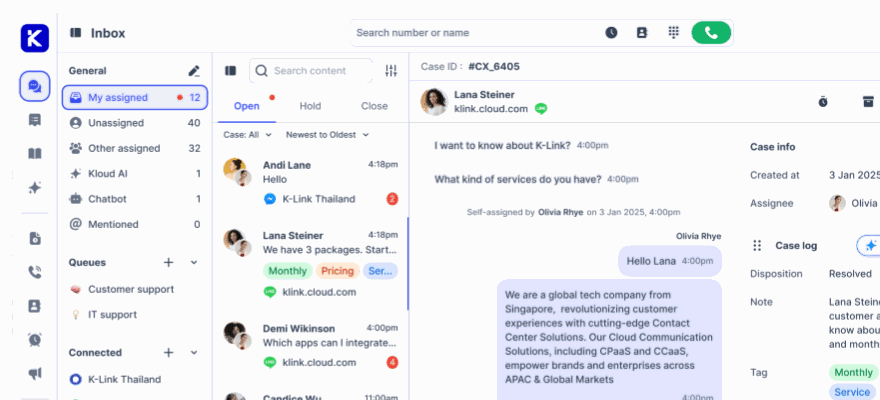
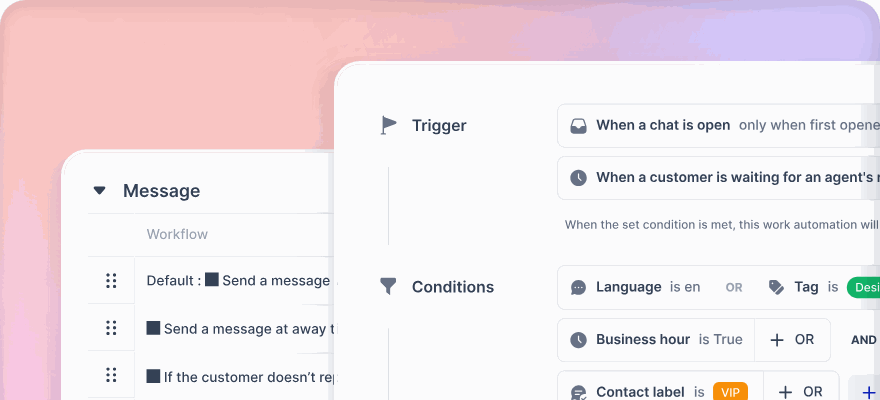
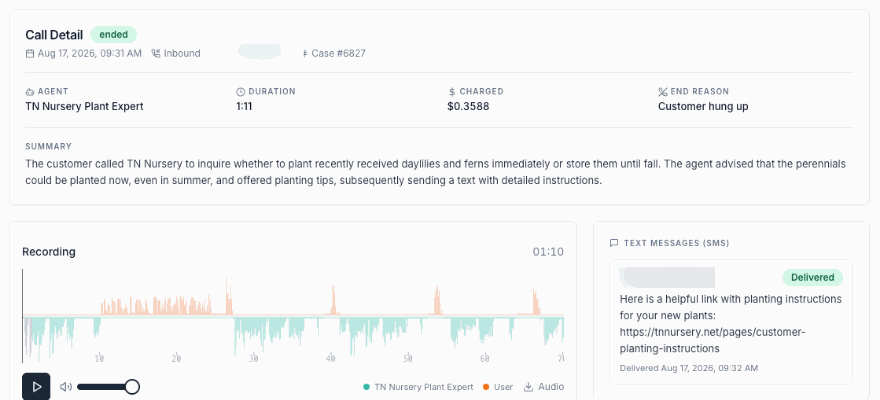
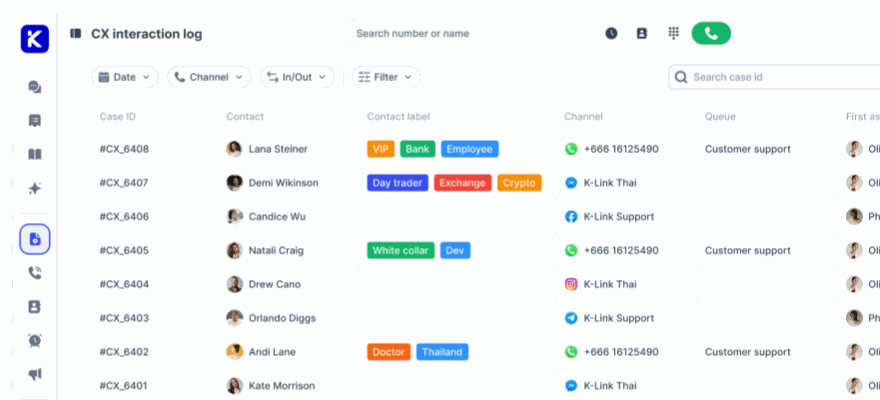
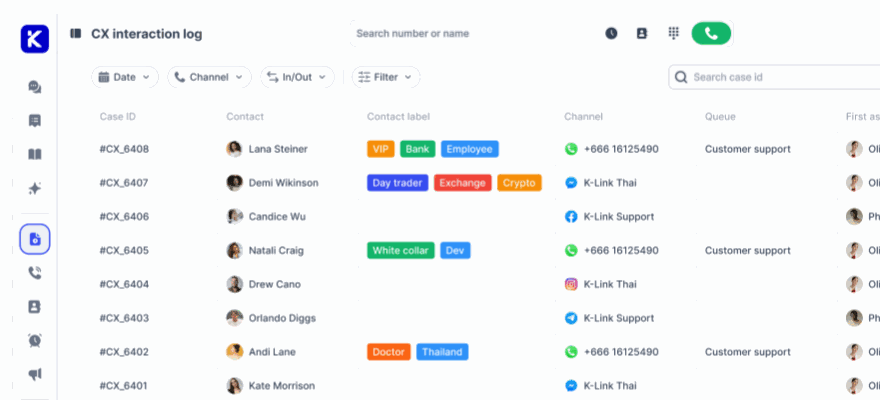
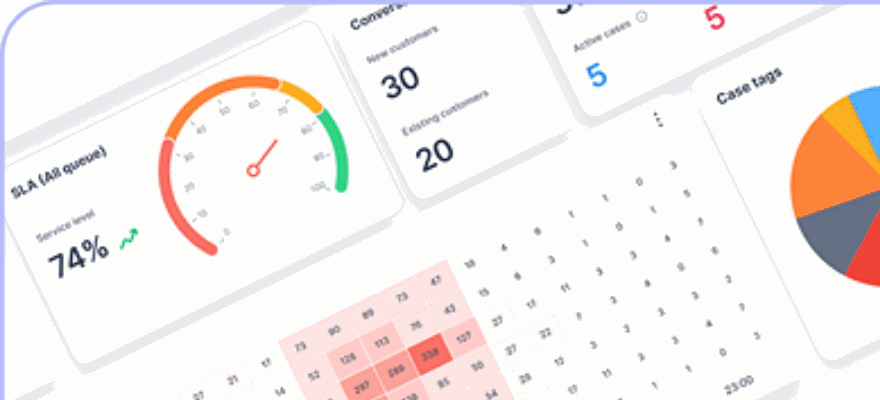
Platforms like klink.cloud make it easier to implement these strategies by enabling intelligent routing. Interactions can start with AI and escalate to a human agent when necessary, guided by triggers like sentiment analysis or unresolved issues. AI-generated summaries and unified interaction histories ensure human agents have all the context they need, reducing repetition and improving resolution times. Centralized dashboards can further track performance metrics - response times, resolution rates, and customer satisfaction scores - broken down by AI and human contributions, helping teams fine-tune their approach.
Position AI as a "digital teammate" that handles repetitive tasks, reduces queue times, and provides context, rather than as a replacement for human expertise. Interestingly, despite the rapid adoption of AI, most service leaders have not reduced human headcount as a result. Instead, automation is typically used to complement human agents. Engage frontline staff in defining when and how AI should hand off tasks, and invest in training programs that prepare agents to collaborate with AI - whether by reviewing its suggestions, managing escalations, or focusing on high-value customer interactions.
How to Combine AI and Human Agents with klink.cloud
A unified CX platform like klink.cloud brings together the strengths of AI and human agents seamlessly. AI can handle repetitive, high-volume tasks, while human agents focus on more complex, emotionally sensitive interactions that require judgment and empathy. To make this partnership work, workflows must allow smooth transitions, maintain complete context, and provide the right tools for both AI and human agents to excel. Let’s explore how to integrate and balance these roles effectively.
Using AI to Help Human Agents
AI isn’t here to replace human agents - it’s here to make them more efficient. On klink.cloud, when an interaction escalates from AI to a human, the platform provides real-time reply suggestions. These are based on resolved tickets, customer history, and the current conversation, helping agents respond faster without compromising on quality.
The platform’s knowledge base integration is another game-changer. It automatically pulls up relevant articles, policy details, or troubleshooting steps as the conversation unfolds. This ensures agents always have the right information at their fingertips, cutting down response times and improving accuracy.
AI also monitors customer sentiment and intent in real time. If it detects frustration or negative tones, it alerts the agent, allowing them to adjust their approach, offer a goodwill gesture, or escalate the issue. This helps agents handle emotionally charged situations more effectively.
Automation takes care of tedious after-call tasks, such as summarizing cases, updating ticket statuses, triggering follow-ups, and logging call notes. For U.S. businesses, especially during peak times like tax season or holiday sales, these efficiencies help meet service-level goals.
AI also supports training and upskilling by analyzing thousands of past interactions. It identifies effective responses, common mistakes, and best practices, turning these insights into in-line guidance and templates for new agents. Supervisors can also use dashboards to track trends in escalations or repeated AI handoffs, refining strategies as needed.
Steps to Integrate AI and Human Agents
To make the most of AI and human agents on klink.cloud, follow a phased approach that ensures smooth implementation, gathers feedback, and scales effectively.
1. Map your customer journeys. Break down key journeys like onboarding, billing inquiries, technical support, and cancellations into touchpoints such as first contact, verification, resolution, and follow-up. Rate the complexity, emotional sensitivity, and data needs of each step, then tag them as "AI-first", "human-first", or "hybrid" in klink.cloud’s workflow settings. For instance, AI can handle simple tasks like password resets, while humans manage more nuanced issues like billing disputes.
2. Start with low-risk use cases. Begin by deploying an AI chatbot for straightforward tasks, such as order tracking inquiries. Set clear success metrics, like average handle time and customer satisfaction (CSAT), and train a small group of agents to work with AI suggestions and escalation processes. This controlled rollout minimizes risks and builds internal confidence.
3. Configure automation rules and escalation triggers. Set thresholds for AI confidence levels. For example, AI can fully resolve issues when it’s confident in the answer and no exceptions are detected. For ambiguous intents or negative sentiment, the system should automatically escalate to human agents. Klink.cloud’s sentiment analysis and routing tools ensure these escalations are seamless, with pre-populated customer data ready for agents.
4. Gradually expand coverage. Once the initial rollout shows positive results, extend AI to more channels and customer journeys. Update training materials and scripts, and monitor performance metrics like response time and abandonment rates. Segment results by handler type (AI-only, human-only, hybrid) to identify where the blended model performs best.
5. Regularly review and refine. Customer needs and priorities change over time. Revisit journey maps and automation rules quarterly. Use analytics to identify misrouted or escalated cases and adjust workflows accordingly. If AI frequently hands off a specific inquiry, refine its training or reassign the task to human agents. A/B testing different approaches can also help fine-tune your strategy.
Deciding Who Handles What
Assigning tasks effectively between AI and human agents is key to operational success. The table below outlines common interaction types, the best handler for each, and the klink.cloud features that make it possible.
| Interaction Type | Best Handler | Rationale | Key klink.cloud Features |
|---|---|---|---|
| FAQs (hours, policies, basic product info) | AI agent | High volume, repetitive, and rules-based tasks handled with high accuracy | AI chatbots, self-service portals, knowledge base search |
| Order status, shipping updates, balance checks | AI agent | Quick, structured data lookups requiring 24/7 availability | API-integrated AI flows, automated notifications |
| Account changes within clear policy | AI, then human if needed | Standard workflows with occasional edge cases | Workflow automation, escalation routing |
| Billing disputes, refunds above thresholds | Human agent | Requires discretion and negotiation; impacts customer loyalty | Skills-based routing, policy lookup, approval workflows |
| Technical troubleshooting | Human with AI assist | Complex diagnosis with AI suggesting steps | Real-time agent assist, integrated knowledge base |
| Emotionally charged complaints | Human agent | Needs empathy and active listening | Sentiment detection, priority routing |
| Plan upgrades or product recommendations | Hybrid | AI qualifies leads; humans personalize and close | AI-led qualification flows, CRM integration |
| Account cancellations or downgrades | Human agent | High retention value; requires negotiation | Guided retention flows, supervisor escalation paths |
This matrix can be tailored to your business needs and included in internal playbooks to guide agents and administrators on workflow configurations.
For U.S. businesses, transparency is crucial. Customers expect clear disclosures when interacting with AI and appreciate an easy path to a human agent for complex issues. Simple prompts like, "I’m an AI assistant, but I can connect you to a person anytime", build trust and reduce frustration.
Finally, governance and ethics should never be overlooked. Establish clear policies on when customers interact with AI versus humans, how data is used, and how AI decisions are supervised - especially in regulated industries like healthcare or finance. Regularly review AI training data, escalation rules, and audit logs to ensure fairness and maintain customer trust. Leadership should also monitor patterns of bias, errors, and complaints, making adjustments as needed to uphold high standards.
Conclusion
Main Takeaways for Business Leaders
The decision between AI and human agents isn't an either-or scenario - it's about understanding their strengths and creating workflows that leverage both. AI agents excel in speed and availability, handling high-volume, straightforward tasks with precision and cost savings. For simpler queries, AI ensures efficiency without sacrificing accuracy.
However, empathy and critical thinking remain irreplaceable. Human agents shine in emotionally sensitive situations - billing disputes, cancellations, or complex troubleshooting - where customers expect understanding and tailored solutions. In fact, about 74% of customers still prefer a human touch for intricate issues, and that preference significantly influences satisfaction, loyalty, and long-term value.
The most successful businesses embrace a "right-task, right-agent" approach. AI takes on the initial workload, managing tasks like inquiry triage, customer authentication, and simple resolutions. When circumstances demand deeper understanding, emotional intelligence, or involve high-value accounts, the interaction transitions to a human agent equipped with the context to deliver a personalized experience. This hybrid strategy not only boosts metrics like response time and first-contact resolution but also preserves the meaningful, human interactions that define your brand.
It's also important to view AI as a tool to enhance, not replace, the workforce. Despite the swift adoption of AI, only about 20% of customer service leaders report reducing staff as a direct result. Instead, AI handles repetitive, low-value tasks, alleviating burnout and allowing human agents to focus on impactful conversations that drive sales, retention, and referrals. When success is measured beyond cost per contact - factoring in metrics like CSAT, NPS, and customer loyalty - the benefits of combining AI with human expertise become undeniable.
Transparency is another key element. U.S. customers value the speed of AI for simple queries but expect clear communication when interacting with a bot and easy access to a human for complex issues. Businesses that obscure AI use or make escalation difficult risk losing trust and increasing churn, especially in regulated sectors like finance and healthcare.
These principles highlight how a platform like klink.cloud supports this balanced approach.
Using klink.cloud for a Combined Approach
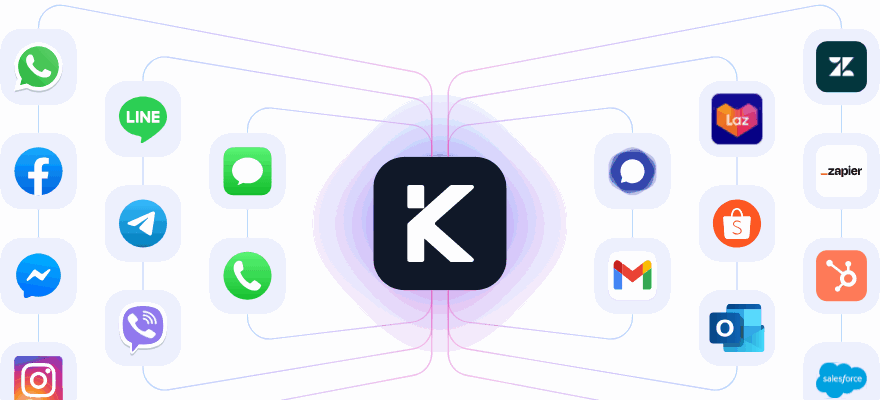
Platforms like klink.cloud are specifically designed to coordinate AI and human agents across all customer channels - voice, chat, email, and social messaging - while maintaining a unified view of each customer. As mentioned earlier, this hybrid model ensures both efficiency and empathy, a balance enabled by klink.cloud’s features.
For U.S. companies dealing with seasonal surges, after-hours queries, or high-demand operations, klink.cloud’s smart automation ensures smooth routing, freeing human agents to focus on cases that require emotional intelligence and expertise. Its unified inbox provides complete interaction histories when escalations occur, removing the need for customers to repeat themselves.
Real-time dashboards allow businesses to track performance across AI-only, human-only, and blended interactions. Metrics such as average response time, cost per contact, CSAT, and NPS are easily monitored, enabling businesses to refine routing rules and escalation triggers for optimal results. Automated workflows handle post-call tasks - summarizing cases, updating tickets, and scheduling follow-ups - so agents can dedicate their time to solving customer issues.
Klink.cloud also supports gradual implementation, starting with low-risk tasks like FAQs or order tracking before expanding AI’s role as feedback and performance data confirm its effectiveness. Configurable rules ensure that ambiguous queries, negative sentiment, or high-value accounts are immediately routed to human agents, while straightforward requests are resolved by AI in seconds.
FAQs
How can businesses strike the right balance between AI and human agents to improve customer service?
Businesses can strike the right balance by using AI agents to manage simple, repetitive tasks like answering FAQs or handling routine requests. This not only speeds up response times but also boosts overall efficiency.
When it comes to more complex or sensitive matters - those that demand empathy, critical thinking, or tailored solutions - human agents play an essential role. By blending the strengths of both AI and human teams, businesses can create a customer experience that's both efficient and genuinely engaging.
To get the most out of this approach, integrate AI into workflows to support human agents. For example, AI can provide real-time suggestions or automate data collection, freeing up human agents to focus on delivering thoughtful, personalized interactions. This partnership ensures customers benefit from the speed of AI and the care of human connection.
How can businesses start integrating AI agents into their customer service operations?
To start incorporating AI agents into customer service, businesses should pinpoint areas where AI can enhance efficiency. This might include managing repetitive questions or offering round-the-clock support. Once these needs are clear, choose AI tools that match your objectives and work well with your current systems.
From there, develop a solid implementation plan. This should involve training your team and running tests to ensure AI and human agents can work together effectively. Strive for a balance between automation and personalized service to deliver the best possible customer experience.
How can AI agents help businesses lower customer service costs compared to using only human agents?
AI agents are perfect for handling repetitive and straightforward tasks, like responding to frequently asked questions or processing basic requests. By automating these processes, businesses can cut down on labor expenses and boost efficiency. Some companies have reported saving up to 30% on costs after integrating AI into their customer service workflows.
Another advantage is that AI agents are available around the clock. This means businesses can assist customers outside of regular hours without the need for overtime pay or hiring extra staff. This round-the-clock availability ensures steady support while keeping expenses in check.