How AI Agents Help E-commerce Businesses Grow Revenue Instantly
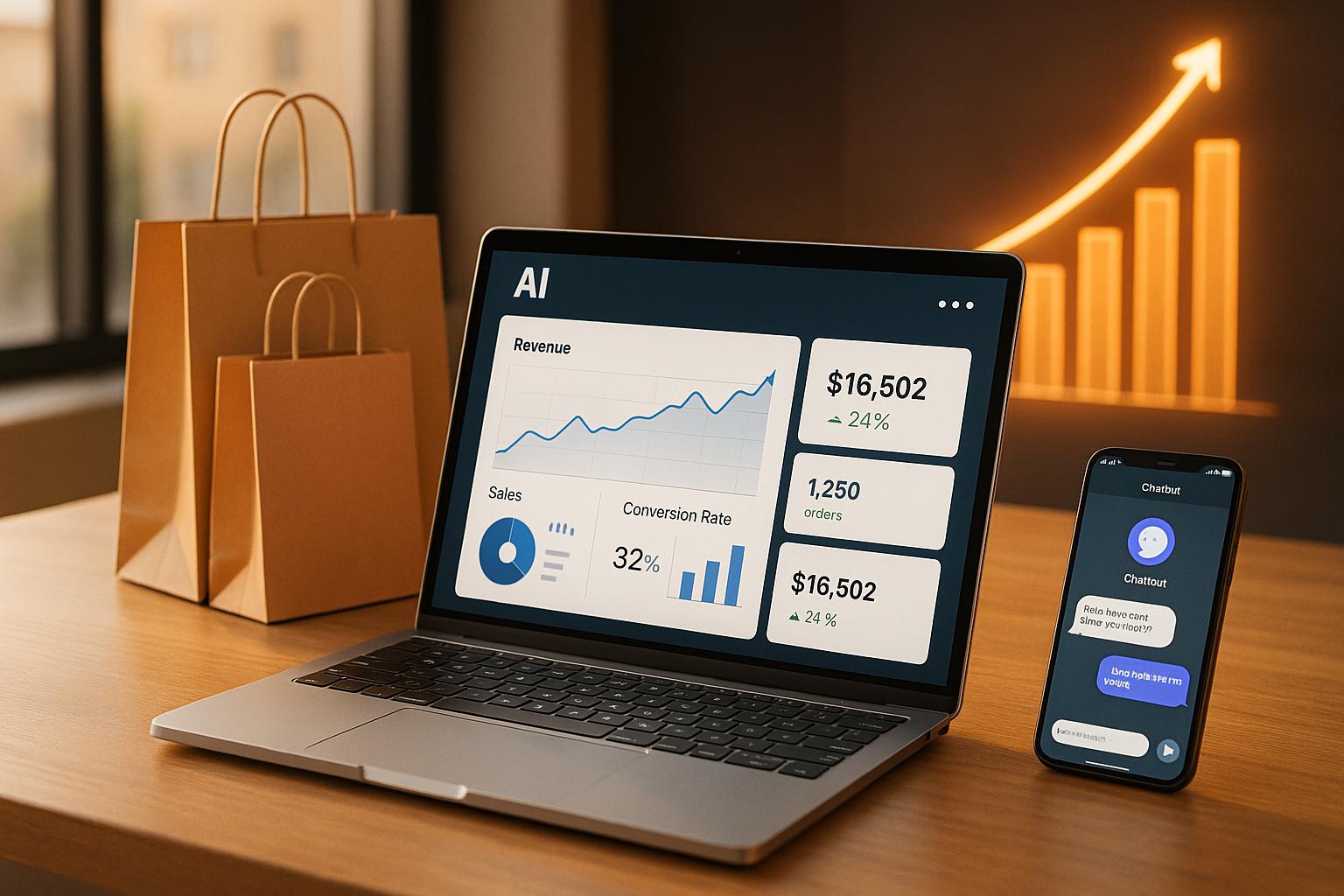
AI agents are transforming e-commerce by making shopping experiences faster, smoother, and more tailored. Here’s how they help businesses grow revenue:
- Boost Conversions: AI agents provide instant answers to customer questions, reducing hesitation and increasing the likelihood of purchase.
- Increase Order Value: They suggest relevant add-ons or complementary products based on customer behavior and cart contents.
- Recover Abandoned Carts: Real-time prompts and follow-up messages encourage shoppers to complete their purchases.
- Enhance Post-Purchase Engagement: AI agents send order updates, gather feedback, and recommend repeat buys or upgrades.
What AI Agents Are and How They Increase Revenue
What AI Agents Do
AI agents are advanced systems designed to interact with customers in a way that feels natural and intuitive. Unlike basic chatbots, these agents use natural language processing and machine learning to truly understand customer questions. For instance, if a shopper asks, "Do you have this in blue?" the AI agent can quickly locate the product, check inventory in real time, and provide details about availability and shipping options.
What sets AI agents apart is their ability to operate smoothly across multiple channels. A customer might start a conversation on your website, continue it via email, and wrap it up on a messaging app. Throughout this journey, the AI agent keeps the context intact by pulling from data like purchase history, browsing behavior, and personal preferences.
Another strength of AI agents is their ability to handle large volumes of interactions at once. While human agents are limited to one conversation at a time, AI agents can manage multiple inquiries simultaneously. They analyze customer actions - such as which products were viewed, how long they stayed on a page, or if they added items to their cart - and use these insights to offer tailored suggestions. Over time, they get even better, learning from every interaction to refine their responses and improve outcomes.
How AI Agents Drive Revenue
The advanced capabilities of AI agents directly translate into increased revenue. One of the most immediate benefits is higher conversion rates. When customers get quick answers to their questions, they’re more likely to complete their purchases. For example, if someone shopping late at night wants to know about return policies, an AI agent can provide the information instantly, eliminating hesitation and making the buying process smoother.
AI agents also help increase the average order value by making smart recommendations. Instead of offering generic suggestions, they analyze the customer's cart and propose complementary products that make sense. These recommendations are timed perfectly - once the customer has already chosen their main item - making them feel helpful rather than pushy.
In cases of abandoned carts, AI agents act swiftly. The moment they detect hesitation, they can step in with a friendly prompt like, "Need help completing your order?" This real-time support addresses common concerns, such as shipping costs or delivery times, and encourages customers to finalize their purchases without delay.
Beyond driving immediate sales, AI agents also play a role in keeping customers engaged after the purchase. They can follow up to confirm delivery, request feedback, or even remind customers when it’s time to reorder consumable products. By improving conversion rates and maintaining ongoing engagement, AI agents not only boost revenue but also make marketing efforts more efficient in the long run.
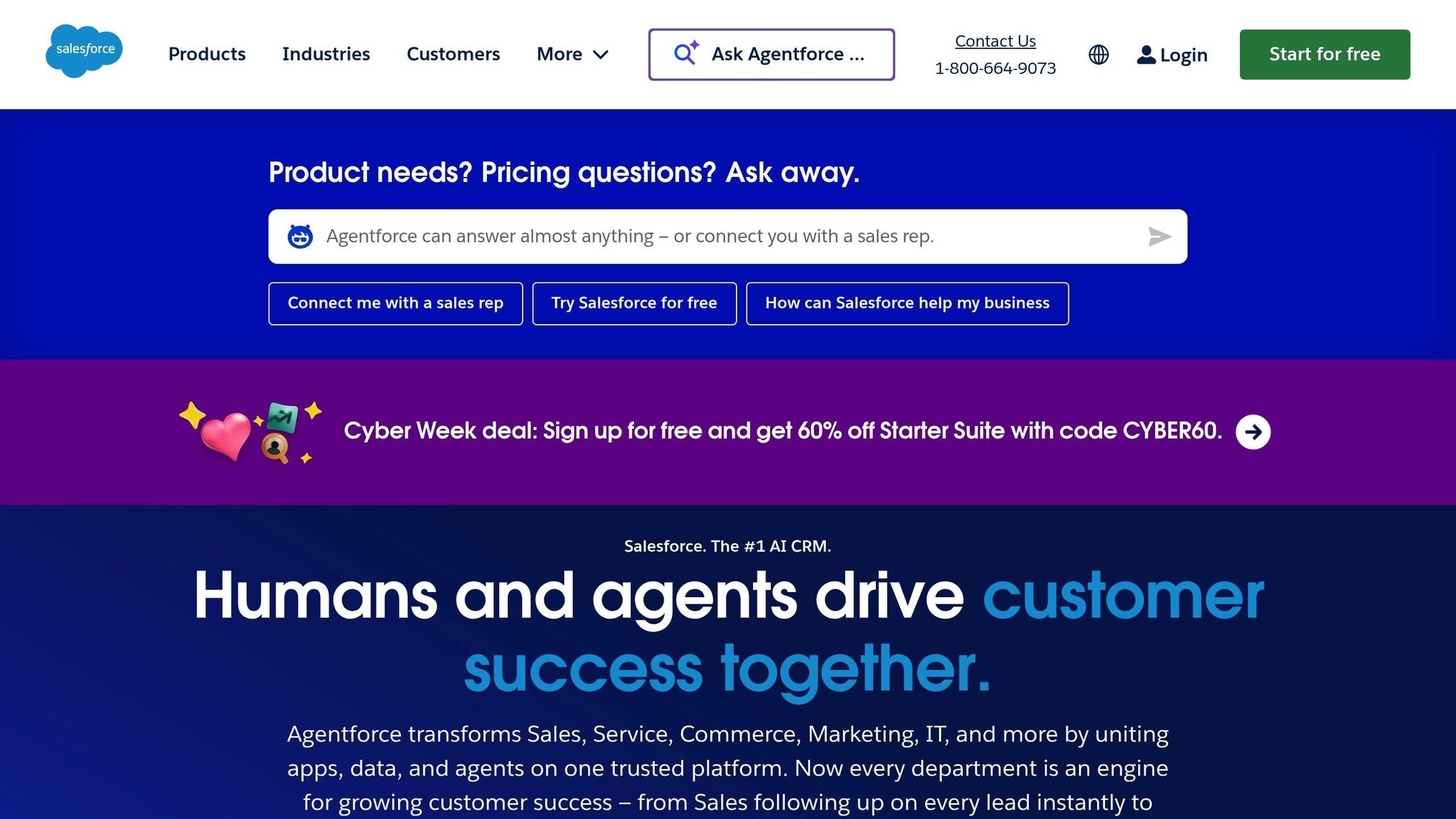
Salesforce Reveals How Much Growth Retailers Using AI Agents are Experiencing
Where AI Agents Increase E-commerce Revenue
AI agents play a pivotal role in enhancing the shopping experience by engaging with customers at critical stages. From discovery to post-purchase, these tools streamline processes, address concerns, and ultimately drive revenue. Let’s break down how AI agents make an impact at every step.
Before the Purchase
In the discovery phase, the speed and accuracy of customer support can make or break a potential sale. AI agents excel here by quickly answering questions and guiding shoppers to exactly what they need. For instance, they can filter search results to match specific preferences like "waterproof" or "size 10" and even prompt users for additional details to refine the search. They simplify decision-making by offering direct product comparisons, highlighting features, prices, and reviews.
Beyond just finding products, AI agents address common pre-purchase concerns - like sizing, compatibility, shipping times, or return policies - through instant responses. This kind of support reduces hesitation, making it easier for customers to confidently move toward completing their purchase.
Checkout and Abandoned Cart Recovery
The checkout stage is often where many shoppers abandon their carts, especially when unexpected issues arise. AI agents step in by providing real-time assistance to resolve problems on the spot. Whether it’s clarifying costs, such as shipping and taxes, or fixing payment errors, these agents ensure a smoother checkout experience. They can also highlight perks like free shipping for orders over a certain amount or suggest complementary items to increase the cart's value.
If a cart is abandoned, AI agents don’t stop there. They send follow-up messages via the original communication channel, offering personalized incentives or addressing lingering concerns like stock availability or return policies. These proactive measures not only recover lost sales but also strengthen customer trust for future transactions.
After the Purchase
Post-purchase, AI agents continue to add value by managing order tracking and providing timely updates. They can deliver helpful resources like care instructions or assembly guides, ensuring customers get the most out of their purchase. To keep the relationship going, agents gather feedback through targeted questions, encouraging positive reviews and quickly addressing any negative experiences.
For consumable products, AI agents can analyze purchase history to send reorder reminders at just the right time, even preloading an updated cart for convenience. They also use past buying behavior to suggest complementary products or upgrades, driving cross-sells and upsells. On top of that, they power re-engagement campaigns with personalized messages designed to win back customers who haven’t shopped in a while.
Setting Up AI Chatbots and Product Recommendations
Place AI agents where they can make the biggest impact - on pages where customers ask questions, browse products, or make purchase decisions. By using chatbots strategically and building smart recommendation systems, you can create a shopping experience that feels tailored to each customer, ultimately boosting sales.
Deploying AI Chatbots for Instant Customer Engagement
Figuring out where to position your chatbot is key. Most e-commerce businesses place them on high-traffic areas like the homepage, product pages, and checkout screens - places where shoppers often need assistance. Mobile apps should offer similar coverage, ensuring chatbots are easy to access while customers browse.
Start by training your chatbot to handle the most common questions. Use customer support data to identify frequent inquiries. For example, if you sell clothing or shoes, your chatbot should be ready to assist with sizing questions. It can pull up size charts, guide customers on measurements, and even recommend sizes based on inputs like height and weight. For technical products, the chatbot should answer compatibility or feature-related questions directly.
Your chatbot can also serve as a product guide. If a customer types, "I need running shoes for trail running", the bot should filter your inventory, display relevant options complete with images and prices, and provide quick links to add items to the cart. It can follow up with clarifying questions about budget, preferred brands, or must-have features like waterproofing.
When items are out of stock, the chatbot should keep the conversation going by suggesting similar products or offering back-in-stock alerts. This avoids frustrating dead ends and keeps customers engaged.
For the best customer experience, integrate live inventory data. If someone asks about a product's availability in a specific size or color, the chatbot should pull real-time information and provide an accurate answer immediately.
Once your chatbot is up and running, you can use it to personalize interactions and drive upselling opportunities.
Creating Personalized Upselling Strategies
With real-time engagement in place, leverage customer data to craft tailored upselling and cross-selling strategies. Connect your chatbot to a customer data platform so it can access details like purchase history, browsing habits, and cart contents.
Use this data to suggest bundles of frequently purchased items. For instance, if customers often buy a memory card and carrying case with a camera, your chatbot should recommend these items as soon as someone adds a camera to their cart. Timing is everything - these suggestions work best when offered immediately after a product is added.
For returning customers, the chatbot can use past purchases to make relevant recommendations. If someone bought a coffee maker six months ago, it might suggest compatible filters or a milk frother. For consumables like vitamins or pet food, it can send reminders when it’s time to reorder.
Promotions can also be woven into the conversation naturally. For example, if a customer is browsing winter coats and you’re running a sale on scarves and gloves, the chatbot might say, "Just so you know, we’re offering 20% off cold-weather accessories this week. Would you like to check out our scarves?"
Upselling based on price works well when the chatbot highlights clear benefits. If a customer is looking at a $50 blender, it might suggest a $75 model with better reviews and additional features, explaining the differences in a straightforward way.
You can also program the chatbot to offer discounts or incentives to close a sale. For instance, if a customer has items sitting in their cart for 10 minutes, the chatbot could offer free shipping or a small discount to encourage checkout.
Finally, track how well your chatbot’s recommendations perform. Look at the data to see which suggestions are clicked, added to carts, and purchased. Use these insights to fine-tune your strategy, focusing on the combinations and offers that generate the most revenue.
sbb-itb-204ca50
Using klink.cloud for Omnichannel AI Agent Integration
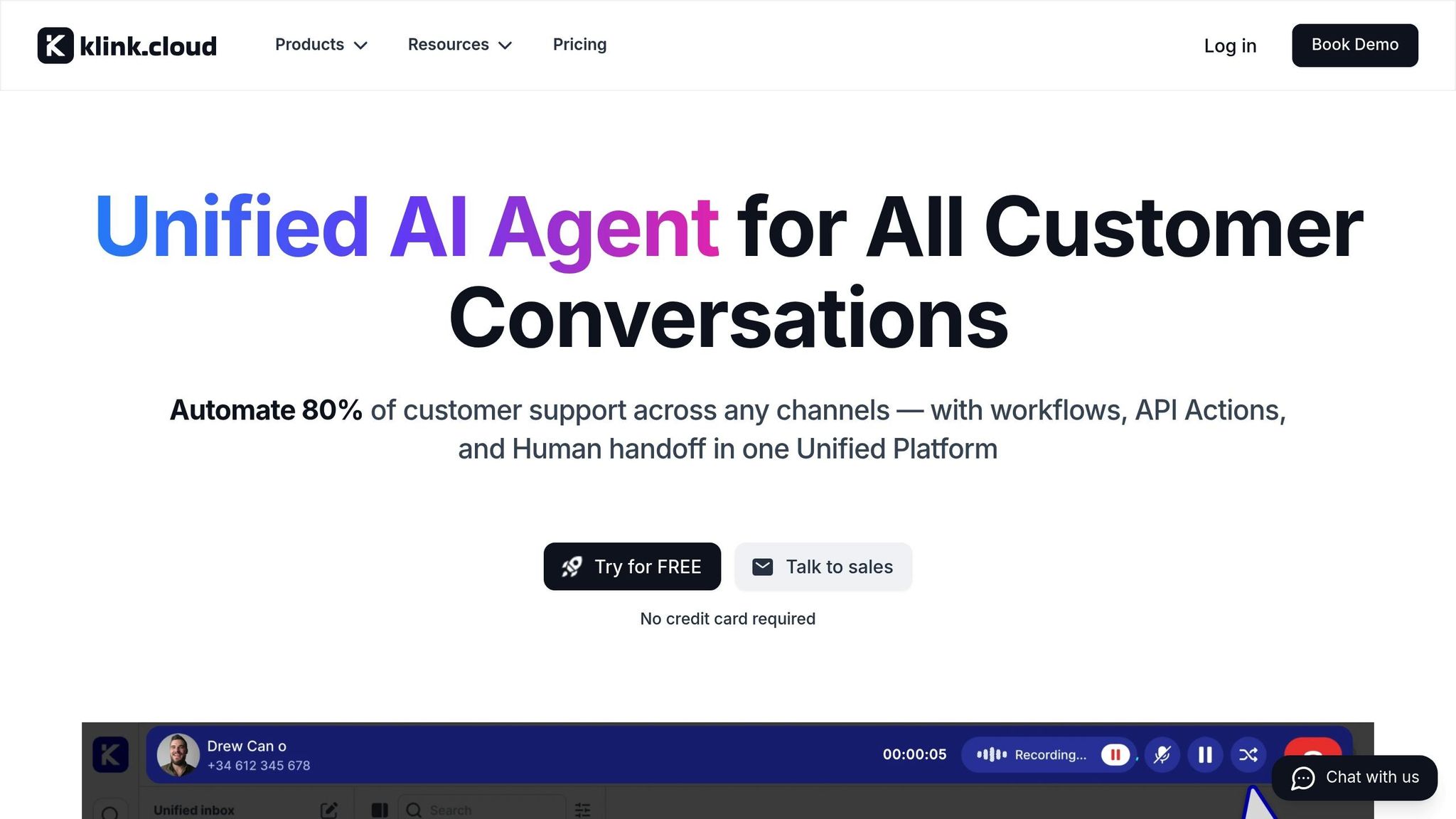
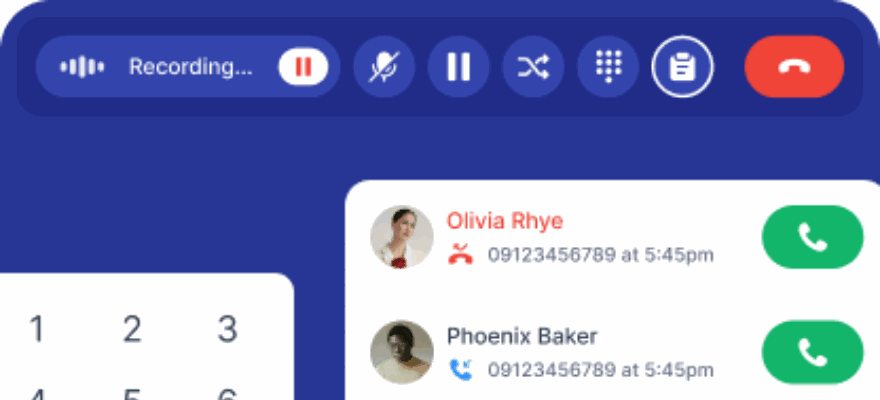
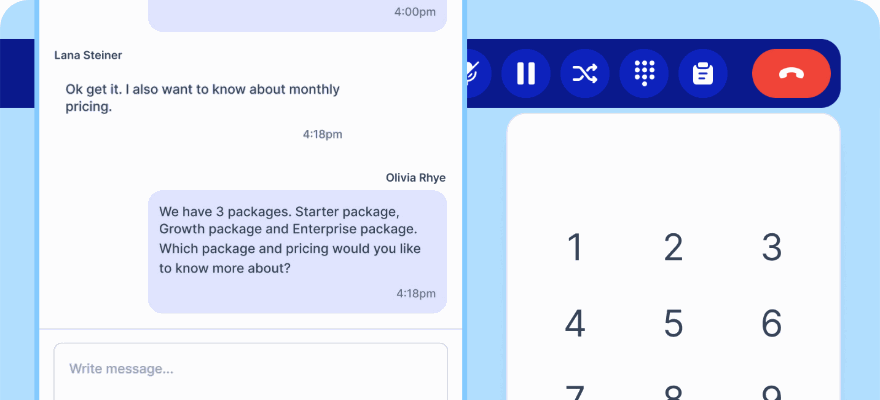
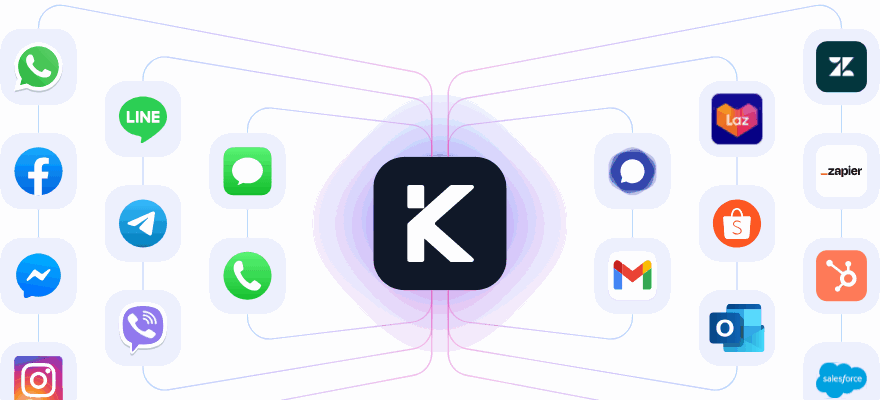
AI agents can do more than just improve revenue - they can transform customer interactions when seamlessly integrated across all channels. Once you've fine-tuned chatbot interactions and personalized recommendations, the next step is connecting these AI agents across platforms. That's where klink.cloud comes in, unifying communication channels like phone calls, SMS, WhatsApp, Facebook Messenger, Instagram DMs, email, and web chat. The result? Customers never have to repeat themselves, and every interaction feels smooth and connected. The key to this is centralizing communication and customer data.
Centralizing Communication and Customer Data
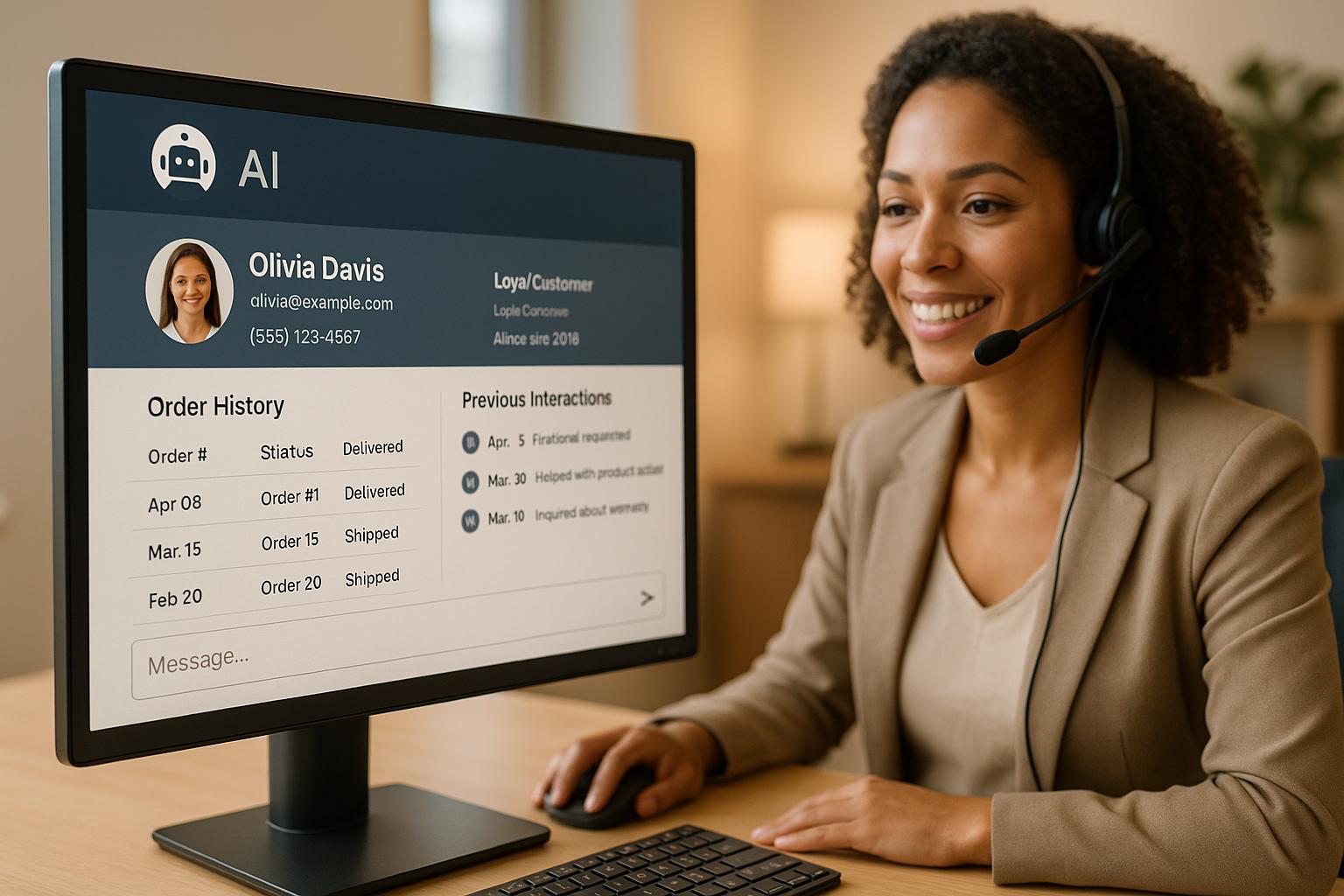
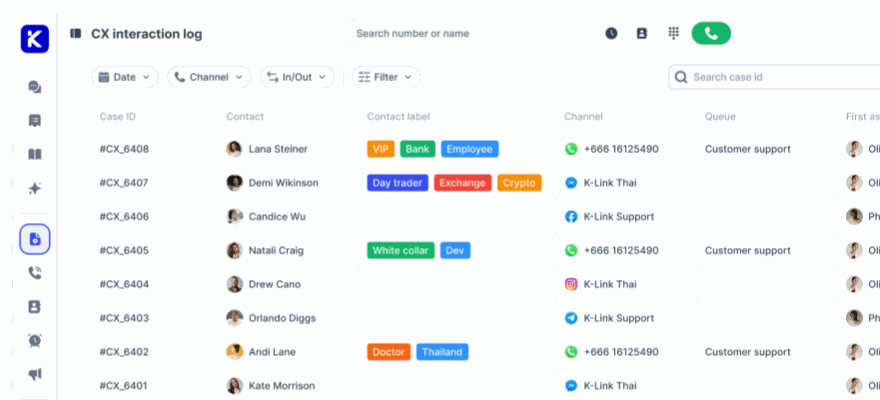
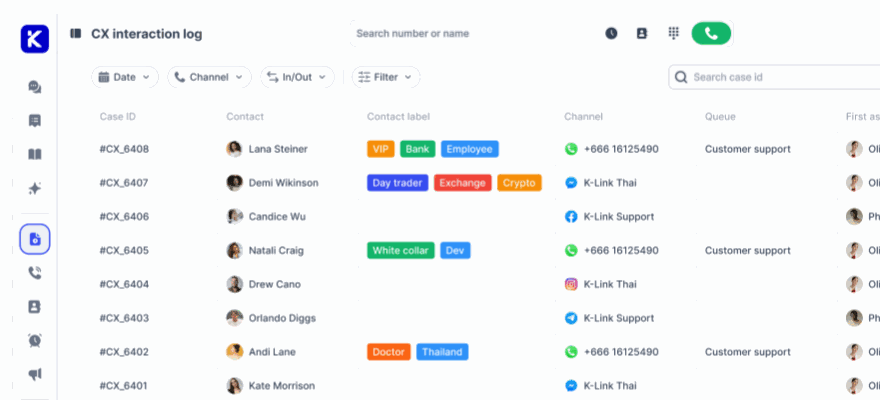
klink.cloud pulls together all your communication channels and integrates them with tools like your CRM, help desk, and e-commerce platform. This means your AI agents have instant access to a customer's history and behavior. Whether someone calls about an order, messages on Instagram, or emails a question, the AI can immediately reference their past purchases, browsing behavior, support tickets, and ongoing conversations.
This setup allows AI agents to respond in a way that feels personal, not robotic. For example, if a customer texts about a delayed order, the AI can instantly provide shipping details and the purchase date - without needing an order number. Later, if that same customer calls, the AI already knows the context from the earlier text and can pick up right where the conversation left off.
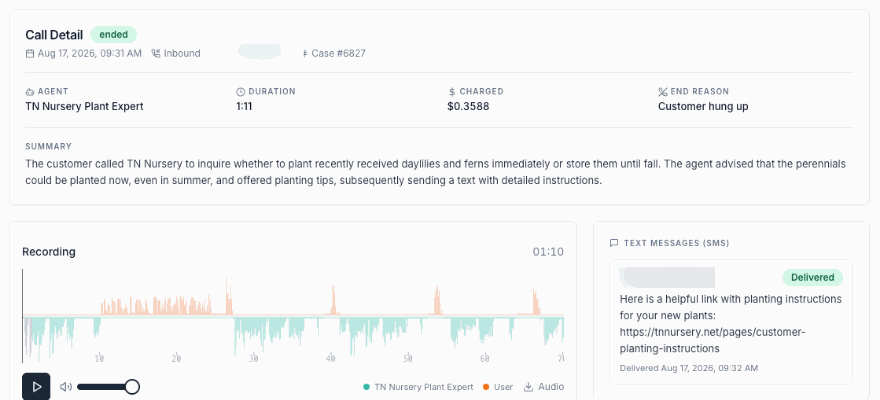
For U.S.-based e-commerce businesses, this often involves linking klink.cloud to platforms like Shopify and CRMs such as HubSpot or Zendesk. klink.cloud acts as an integration layer, giving AI agents the ability to read and update customer records. If an AI agent successfully upsells a customer or resolves an issue, the system automatically updates the CRM with notes and deal information, saving time and effort. Plus, every interaction is auto-recorded, creating a searchable archive to improve future AI responses.
Setting Up AI-Powered Automation
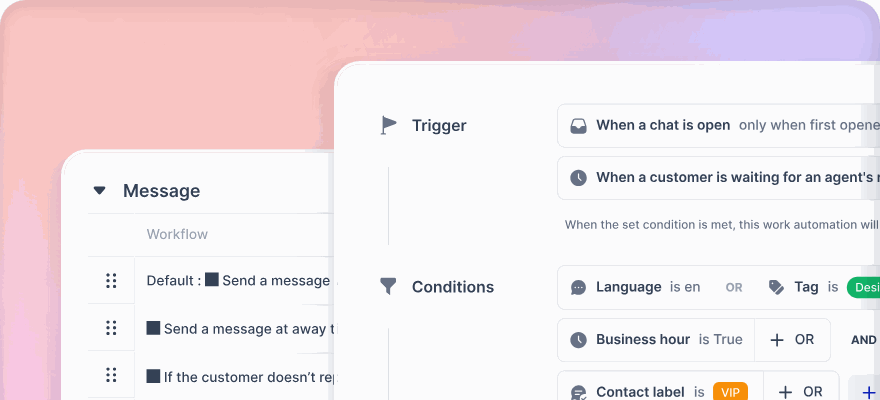
klink.cloud also offers tools to automate how AI agents handle customer interactions. You can create workflows that route inquiries based on keywords, customer type, language, or even VIP status. For example, if a message includes terms like "refund" or "complaint", the system can flag it for human review while the AI gathers initial details.
The platform’s AI-powered IVR (Interactive Voice Response) system uses natural language understanding to process requests. So, when a customer says, "I want to check my order status", the system automatically routes the query with all relevant order details already visible.
Messaging workflows can also be automated. If a customer sends a question - whether it’s about products, orders, or returns - the AI can greet them by name, reference recent purchases, and route their request appropriately. Routine questions like “Where is my order?” or “What’s your return policy?” can be fully handled by AI, freeing up human agents to focus on more complex tasks. Industry data shows that up to 65% of e-commerce customer interactions can be handled by AI chatbots, which helps reduce costs and allows human agents to prioritize high-value opportunities.
Ticket management can also be streamlined. AI can tag conversations based on urgency, upsell opportunities, or potential churn risks. High-value customers can be routed to senior team members, while routine queries are resolved by AI without creating new tickets.
Proactive automation is another powerful feature. For instance, when an order ships, the AI can automatically send tracking updates via the customer’s preferred channel. If a customer abandons their cart, the system can send a personalized SMS or WhatsApp message, offering assistance or a limited-time discount to encourage checkout.
Tracking Performance with Real-Time Analytics
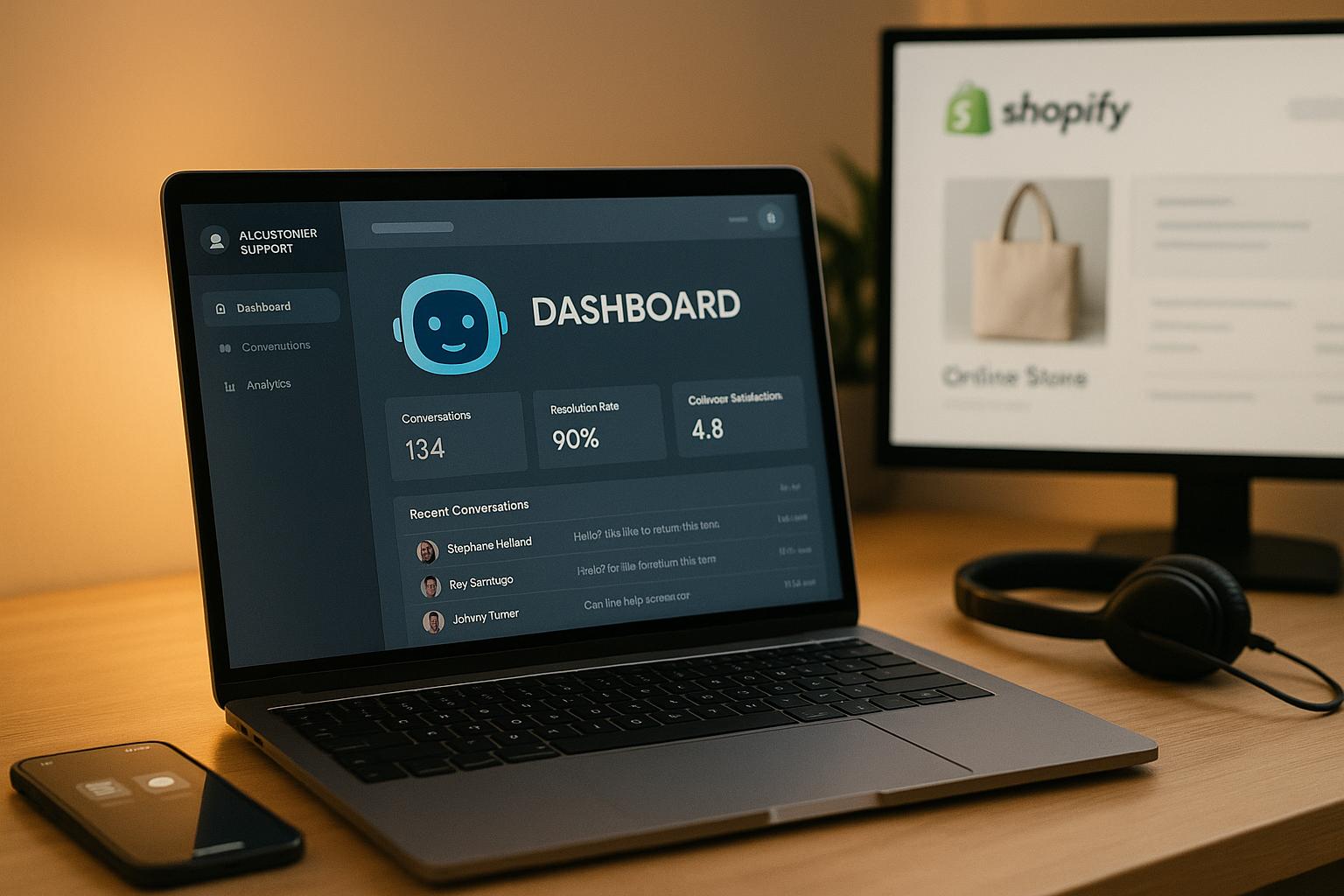
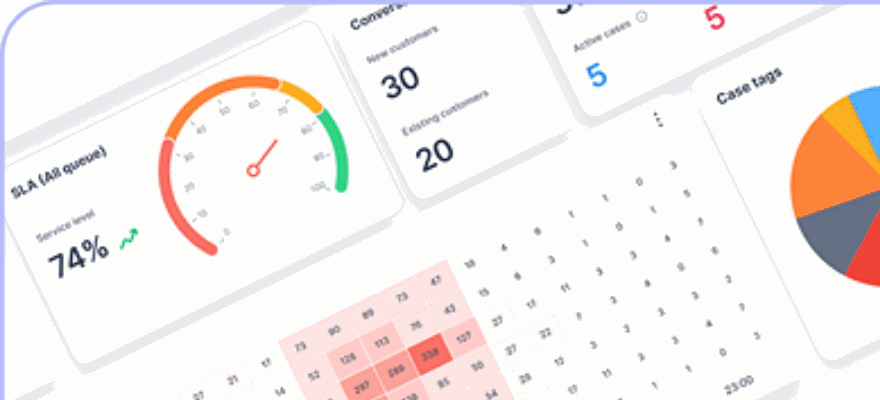
Once your automation is set up, it’s essential to measure its effectiveness. klink.cloud's real-time dashboards provide insights into how AI agents are influencing key revenue metrics. Beyond standard stats like response time, you can track conversion rates, upsell and cross-sell performance, and cart recovery success.
First-contact resolution rates are another critical metric, as higher rates often mean lower support costs and happier customers. You can also monitor how AI performs across different channels, as customer expectations can vary between phone calls, texts, and social media.
Revenue tracking is particularly insightful. For example, if an AI agent upsells a customer from a $50 product to a $75 bundle, that extra $25 is directly tied to the AI’s performance. Thanks to klink.cloud’s integration with your e-commerce platform, you can see which AI recommendations drive revenue and which ones fall flat.
The analytics also reveal patterns in customer behavior. You might find that customers who engage on certain social platforms are more likely to make high-value purchases or that different channels yield varying engagement results. These insights help you refine your strategy and focus on the areas where AI agents are most effective.
A/B testing is another way to optimize performance. You can experiment with different AI scripts, recommendation strategies, or routing rules for specific customer segments. For instance, test whether offering free shipping or a 10% discount performs better for cart recovery. klink.cloud lets you track these tests in real time, making it easy to expand on what works.
Finally, it’s important to balance revenue growth with customer satisfaction. Even if AI agents are driving sales, keep an eye on satisfaction scores and escalation rates. A spike in requests to speak with a human could signal that the AI needs fine-tuning. klink.cloud’s reporting features also help you manage staffing by tracking conversation volumes by channel and time of day, so you can optimize labor costs while maintaining top-notch service during busy periods.
Measuring and Improving Revenue Results
After deploying AI agents, it’s crucial to monitor their impact on revenue and fine-tune their performance over time. This process builds on earlier insights about AI engagement, allowing you to directly assess how these tools influence your bottom line. To do this effectively, set clear metrics, experiment with strategies, and make adjustments based on how customers respond.
Identifying Key Revenue Metrics
Start by defining benchmarks for your essential revenue metrics before introducing AI agents. Key metrics to focus on include revenue per visitor, average order value (AOV), conversion rate, and customer lifetime value (CLV).
Additionally, keep an eye on cart recovery rates and the percentage of support tickets resolved without human intervention. It’s also important to track how many customer inquiries are fully handled by AI agents. Make sure your analytics tools can directly attribute revenue to AI interactions - whether it’s through upselling, cross-selling, or recovering potentially lost purchases. This clarity will help you understand the financial contributions of your AI initiatives.
Testing AI Agent Effectiveness
Experimentation is key to uncovering what works best for driving revenue with AI. For example, test different greeting styles to see which tone resonates most with customers and leads to higher conversions.
You can also try various product recommendation strategies. Compare the outcomes of suggesting complementary items versus premium upgrades to determine which approach generates more sales. Timing matters too - test whether engaging customers shortly after they show interest is more effective than waiting for signs they might leave. When tackling abandoned carts, experiment with different incentives, like discounts or free shipping, to see which options not only recover sales but also encourage repeat purchases.
Customer segmentation is another valuable strategy. New visitors, returning customers, and high-value shoppers may react differently to AI-driven interactions, so tailor your tests to each group. Run these experiments over a sufficient period to account for traffic fluctuations and ensure the results are statistically reliable.
Maintaining Quality and Continuous Improvement
To keep your AI agents performing at their best, commit to ongoing monitoring and refinement. Set up clear escalation paths so that complex or sensitive issues can smoothly transition from AI to human agents. Regularly review AI conversation logs to spot recurring problems, identify triggers for escalations, or detect signs of customer frustration. These insights can guide improvements.
Gather post-interaction feedback through ratings or surveys to assess customer satisfaction. Periodically audit your AI’s responses to ensure they remain accurate and consistent with your brand’s voice. Keep your AI’s knowledge base up-to-date whenever you launch new products, adjust pricing, or revise policies - outdated information can harm the customer experience.
Building trust is equally important. Clearly inform customers when they’re interacting with AI, and make it simple for them to switch to human support if needed. Continuously refine your AI’s tone and personality to reflect your brand identity. Striking the right balance between AI efficiency and the empathy of human agents can help you boost both revenue and customer satisfaction as your business evolves. By focusing on these metrics and testing strategies, your AI agents will stay effective and contribute meaningfully to your growth.
Conclusion
AI agents are reshaping the way e-commerce businesses engage with customers and drive revenue. From the moment a shopper visits your site, AI-powered chatbots step in to answer questions, assist with product discovery, and recommend items tailored to their preferences. This not only enhances the shopping experience but also boosts conversion rates and simplifies the path to purchase. At checkout, AI minimizes obstacles by clarifying details like shipping options, discount codes, and return policies in real time. Plus, proactive cart recovery ensures fewer abandoned carts. Even after the sale, AI continues to deliver value by automating order updates, resolving common support queries, and suggesting products that encourage repeat purchases - ultimately increasing customer lifetime value.
The impact is both immediate and measurable. Many merchants report seeing results within weeks of deploying AI agents. These tools engage visitors right away, rescuing abandoned carts and promoting in-stock items without requiring lengthy setup or training. For example, shoppers who interact with AI chat are converting at a rate of 12.3%, compared to just 3.1% for those who don’t - a nearly fourfold difference. Additionally, returning customers tend to spend about 25% more. Across the industry, 76% of e-commerce teams using AI have noted revenue growth, and the global AI in e-commerce market is expected to climb from $5.79–$6.66 billion in 2023–2024 to over $50 billion by 2033.
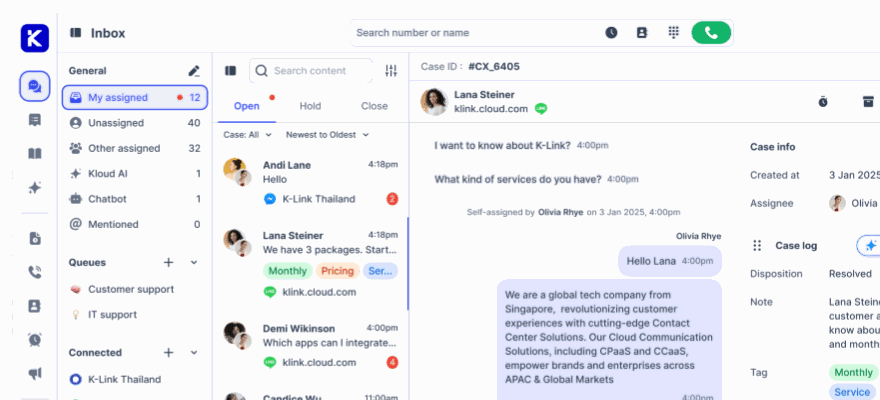
Platforms like klink.cloud make it easy for U.S.-based e-commerce brands to adopt AI tools without heavy development work. This centralized platform supports AI chatbots, recommendation engines, and automated workflows across web, mobile, SMS, and social channels. It consolidates customer data from sources like WhatsApp, Messenger, email, live chat, and phone into a single Unified Inbox. This gives AI agents a complete view of each shopper, enabling them to deliver consistent, personalized experiences. Real-time analytics track key metrics such as revenue per visitor, conversion rate, and average order value, all in U.S. dollars, making it simple to measure ROI and identify which AI interactions are driving the most revenue. Businesses using klink.cloud have reported a 5x boost in productivity and doubled customer satisfaction. Lila Wong, CEO, shared:
"Managing our contact center is simpler, faster, and more cost-effective. The ROI speaks for itself."
Getting started doesn’t have to be overwhelming. Start small with a specific use case, like automating FAQ responses on product pages or sending personalized cart recovery messages. A 30-day pilot can help you test the waters - track KPIs like checkout completion rates, response times, and revenue from recommendations using klink.cloud's intuitive dashboards. Keep human oversight in place for complex or sensitive customer interactions. Configurable guardrails and brand voice controls allow you to fine-tune AI behavior as you gain insights into what works best for your audience.
AI agents are not a one-and-done solution - they’re a dynamic system that evolves over time. Experiment with conversation flows, refine recommendation strategies, and adjust timing based on performance data. By focusing on high-performing scenarios and improving weaker ones, you can create a cycle where better customer experiences lead to fewer returns, higher average order values, and more repeat business. This continuous optimization directly supports revenue growth and improves profit margins. With AI, the path to sustained success is clear: better tools, better experiences, and better results.
FAQs
How are AI agents different from traditional chatbots in improving e-commerce customer experiences?
AI agents differ from traditional chatbots by providing highly personalized and dynamic interactions. While chatbots typically follow fixed scripts, AI agents leverage advanced tools like natural language processing and machine learning to interpret customer intent, preferences, and behaviors as they happen.
This capability enables AI agents to offer customized product suggestions, proactive support, and more intuitive responses, enhancing the overall shopping experience. By predicting what customers might need and delivering relevant solutions, AI agents contribute to increased conversion rates, greater customer satisfaction, and higher revenue.
How can e-commerce businesses use AI agents to recover revenue from abandoned carts?
E-commerce businesses can tap into the power of AI agents to recover lost revenue from abandoned carts by focusing on personalized interactions and well-timed follow-ups. Tools like chatbots and virtual assistants can send automated, tailored reminders to shoppers about the items they left behind. To sweeten the deal, these reminders often include incentives like discounts or free shipping to nudge customers toward completing their purchase.
On top of that, predictive analytics can pinpoint the ideal moments to reconnect with customers. By examining browsing habits and past purchases, AI tools can figure out when a shopper is most likely to return and finalize their order, allowing businesses to fine-tune their outreach. These strategies not only help boost sales but also create a smoother, more enjoyable shopping experience - ultimately building stronger, long-term customer relationships.
How can AI agents on platforms like klink.cloud enhance customer experience and drive revenue growth for e-commerce businesses?
AI agents on platforms like klink.cloud are reshaping customer experiences by automating routine tasks, delivering quicker responses, and creating more personalized interactions. These tools ensure customers are connected to the right agents, simplify workflows, and provide efficient support - all of which contribute to higher satisfaction and stronger loyalty.
Beyond support, these AI-driven tools use real-time analytics and predictive insights to uncover upselling opportunities, boost conversion rates, and elevate the shopping experience. By fine-tuning operations and customizing interactions, businesses can achieve immediate revenue gains while fostering deeper connections with their customers.