AI Contact Center vs Legacy Call Center Systems
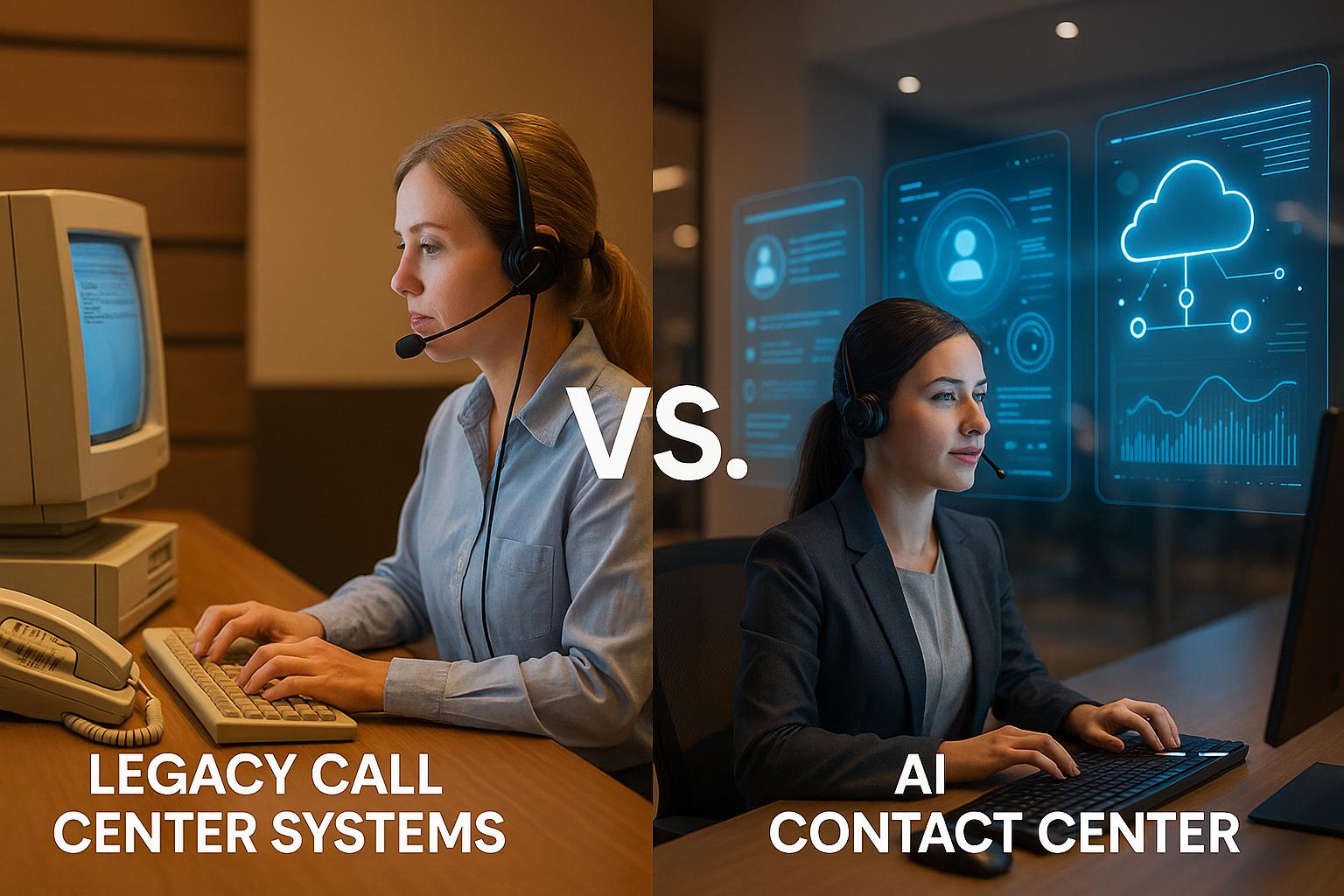
AI-powered contact centers are reshaping customer service by offering faster, more personalized, and cost-effective solutions compared to legacy call center systems. While legacy systems rely on hardware, voice-only channels, and rigid workflows, AI platforms integrate multiple communication channels, automate routine tasks, and provide real-time insights. These systems are scalable, cloud-based, and reduce costs significantly, making them a better fit for modern customer demands.
Key Differences:
- Infrastructure: AI systems are cloud-based, requiring no physical hardware, while legacy systems depend on on-premises equipment.
- Customer Experience: AI platforms offer unified communication across channels (voice, chat, social media) and personalized interactions. Legacy systems are voice-focused with limited channel integration.
- Efficiency: AI automates routine tasks, improving productivity and cutting costs. Legacy systems rely on manual processes, increasing labor costs.
- Scalability: AI systems adjust instantly to demand, while legacy systems require costly hardware upgrades for scaling.
Quick Comparison:
| Feature | AI Contact Centers | Legacy Call Center Systems |
|---|---|---|
| Deployment | Cloud-based, fast setup | On-premises, hardware-dependent |
| Channels Supported | Unified (voice, chat, email, etc.) | Primarily voice |
| Cost | Subscription-based, lower TCO | High upfront and maintenance costs |
| Scalability | Instant, real-time adjustments | Slow, hardware-limited |
| Automation | High (chatbots, routing, analytics) | Minimal |
AI contact centers are ideal for businesses seeking to improve customer satisfaction, reduce costs, and handle growing demand across multiple channels. Legacy systems may still serve specific needs, but their limitations make them less effective for modern customer expectations.
AI Driven Transformation in Contact Centers: Enhancing Customer Experience - Nurul Khan
What Are AI Contact Centers?
An AI contact center is a cloud-based platform that leverages machine learning, natural language processing (NLP), and generative AI to streamline customer interactions. Unlike traditional call centers that mainly handle phone calls, AI contact centers integrate voice, chat, email, SMS, and social media into one cohesive system.
These platforms unify communication channels, customer data, and human resources. When a customer reaches out, the AI does more than just route calls - it interprets intent, pulls relevant customer history, and determines the best course of action, whether through automation or by connecting the customer to the most suitable agent.
Typically operating on a software-as-a-service (SaaS) model, these systems are priced in USD on a per-seat or per-usage basis. This makes them accessible to businesses of all sizes in the United States, from small teams to large enterprises with distributed workforces.
Main Features of AI Contact Centers
AI contact centers rely on four interconnected layers to provide seamless customer experiences:
AI and Automation Layer:
This layer drives the intelligence behind customer interactions. NLP models interpret a wide range of customer queries, while speech-to-text and text-to-speech engines handle voice interactions. Chatbots and voicebots, managed by dialog systems, address common concerns such as tracking orders, resetting passwords, or checking account balances. Sentiment analysis tools monitor customer emotions in real time, while predictive models suggest optimal actions and routing.
Communications and Routing Layer:
This layer oversees the flow of interactions across multiple channels, including voice calls, SMS, email, chat, and social media. Cloud-based systems manage both inbound and outbound communications, while intelligent routing directs interactions based on agent skills, availability, sentiment, and priority levels.
Integration Layer:
Through APIs and prebuilt connectors, this layer links the contact center to other business systems like CRM platforms, help desks, billing tools, and workforce management software. For example, when an agent picks up a call, they can instantly access the customer's records, and any updates from the interaction are logged automatically.
Data and Analytics Layer:
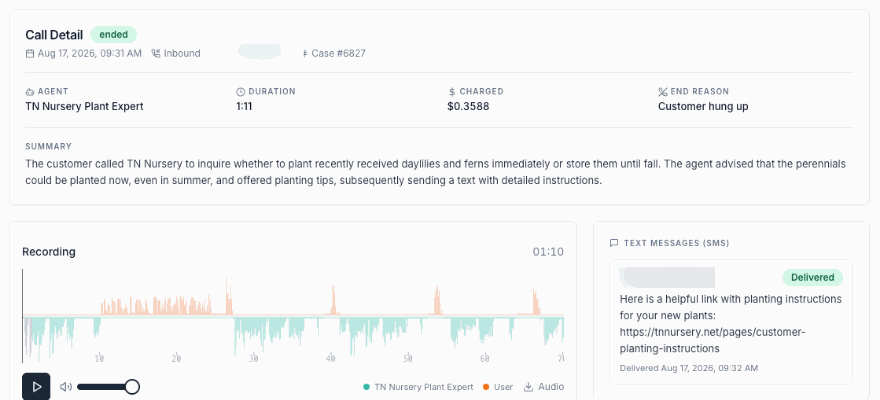
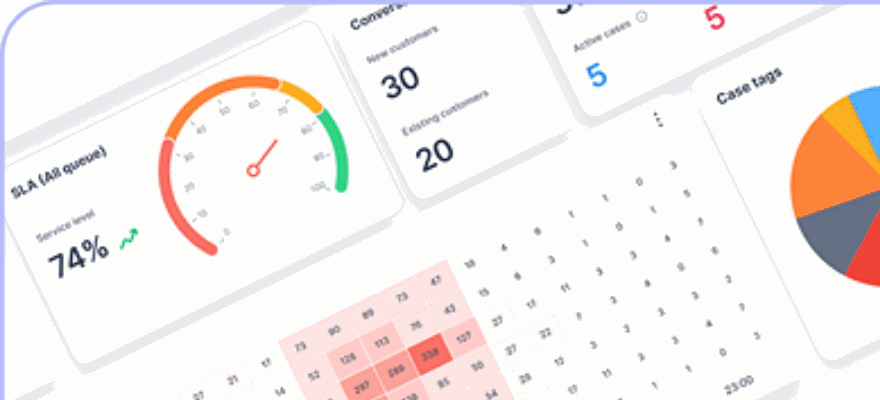
Every interaction is recorded and analyzed to generate actionable insights. Centralized dashboards provide real-time metrics on customer behavior, call quality, and agent performance. Supervisors can track key indicators like call volume, average handle time, sentiment trends, and abandonment rates, enabling them to make informed adjustments to staffing or processes.
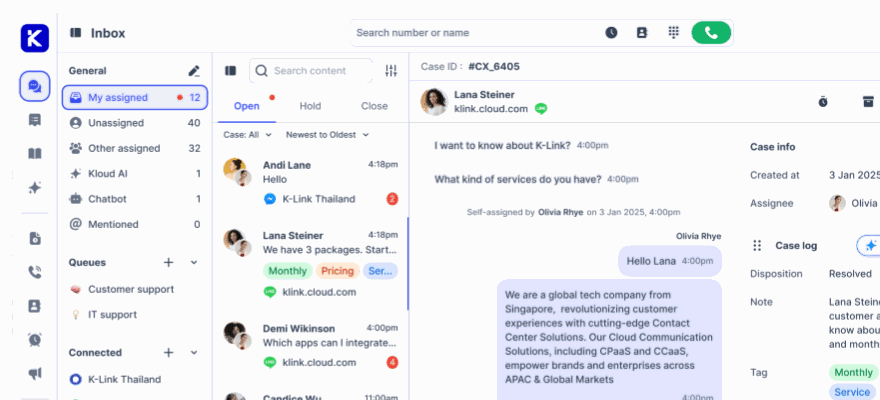
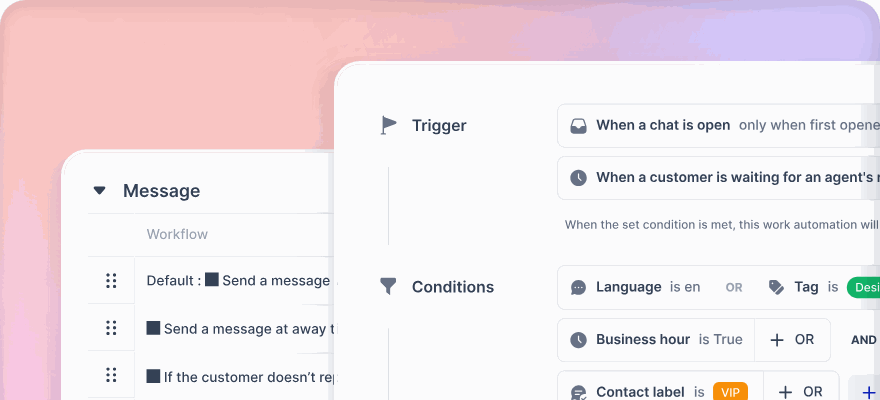
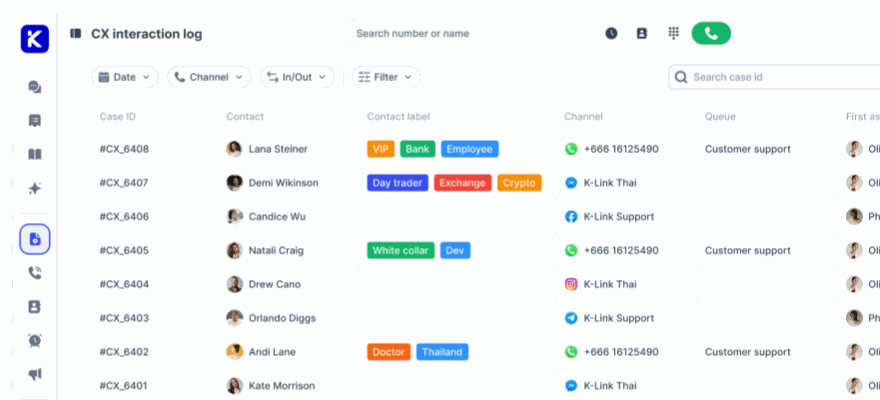
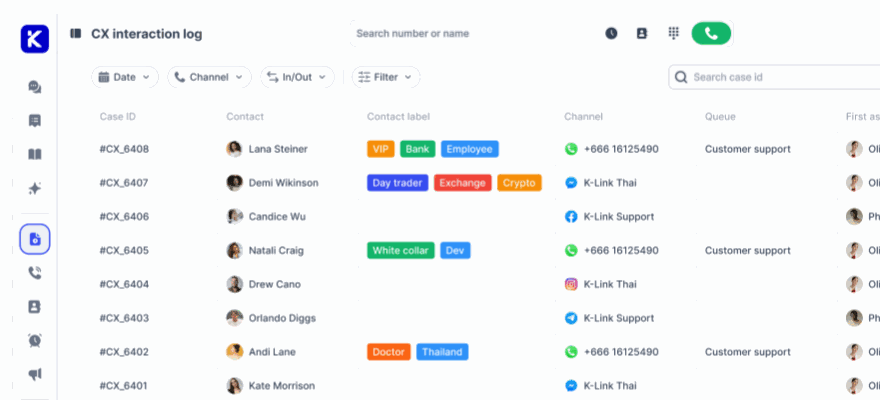
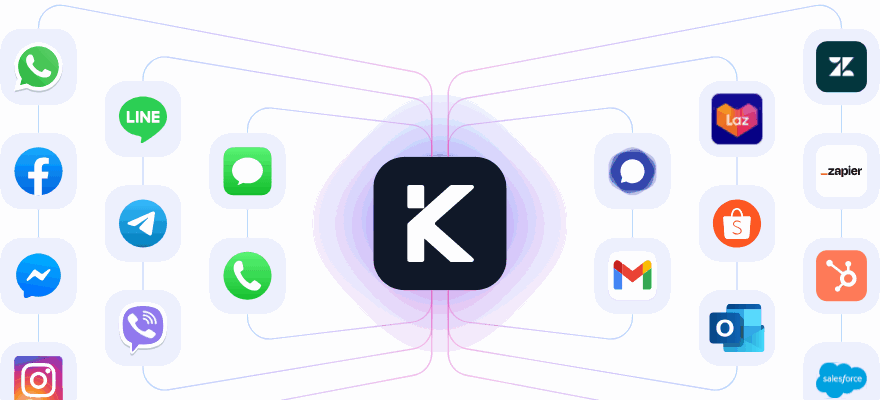
Platforms like klink.cloud bring all these features together into a unified inbox, consolidating customer communications from various channels - voice, WhatsApp, Facebook, Telegram, email, and live chat - into a single view. Smart automation assigns conversations based on keywords, customer type, language, or VIP status. For instance, a returning customer with a complex history might be routed to a senior agent, while a first-time visitor asking about store hours could receive an instant response from a bot.
Real-time analytics enhance visibility into metrics like first response time, SLA compliance, and customer satisfaction ratings. For example, if a customer inquires about a delayed shipment, the AI can pull up order details, detect frustration, and route the issue to a senior agent - eliminating unnecessary delays and repetitive questions.
These layers work together to improve both operational efficiency and customer satisfaction.
Advantages of AI Contact Centers
AI-powered contact centers bring measurable improvements to customer service and operational performance.
Speed and Availability:
AI can instantly handle up to 80% of routine inquiries, eliminating wait times and bypassing the limitations of traditional business hours. Chatbots and intelligent IVR systems provide 24/7 support across multiple US time zones. When human assistance is needed, predictive routing ensures customers are connected to the best-suited agent on the first attempt, improving first-contact resolution.
Personalization:
Using integrated CRM data, AI tailors interactions based on purchase history, past conversations, and customer preferences. This means responses are highly relevant - whether offering setup tips to a new buyer or directing a billing issue to a specialist with full context.
"Since adopting klink.cloud, we've seen a massive improvement in our response times. Our customers are happier, and our agents are more efficient than ever." - Sarah Lee, Head of Contact Center, Horizon Solutions
Agent Productivity:
By automating repetitive tasks like balance checks, order tracking, and appointment scheduling, AI allows agents to focus on resolving complex issues and building stronger customer relationships. Real-time assist tools provide agents with suggested responses and relevant knowledge base articles during live interactions, reducing handle time and improving accuracy. Automated after-call work also ensures agents can quickly move on to the next task.
Cost Efficiency:
AI solutions can cut contact center costs by up to 70% by reducing labor and infrastructure expenses. Per-call costs, for example, can drop from $0.75–$2.50 to under $1.50, while ticket handling costs can decrease from around $16 to about $3. These savings come from automating routine tasks, optimizing agent workloads, and eliminating the need for expensive on-premises hardware.
Data-Driven Insights:
Every customer interaction becomes a valuable data point. AI-powered analytics uncover service gaps, training opportunities, product issues, and upsell potential. Automated tools for quality scoring, topic modeling, and sentiment tracking provide continuous feedback, enabling improvements that go beyond what traditional systems can achieve.
Together, these benefits lead to higher customer satisfaction scores, better Net Promoter Scores, reduced costs per interaction, improved resolution rates, and lower agent turnover. Many businesses see a return on investment within 6–12 months, thanks to cost savings and improved customer retention.
What Are Legacy Call Center Systems?
Unlike AI-driven contact centers, legacy call center systems were designed for single-channel communication and have struggled to keep up with shifting customer demands. These systems are typically on-premises setups built around Private Branch Exchange (PBX) technology and traditional telephony.
At their core, legacy systems depend heavily on physical hardware - servers, phone switches, circuit boards, and dedicated telephone lines. The software that powers these systems is often proprietary, requiring specialized IT support for maintenance and updates. Most operate on a perpetual licensing model, which involves a hefty upfront cost that scales based on the number of users and features.
The way these systems work is straightforward but rigid. Calls are routed through an Interactive Voice Response (IVR) system, which uses a pre-set menu to direct callers to the right department or agent. Agents typically handle calls from workstations equipped with desktop phones or headsets connected to the PBX, focusing almost exclusively on voice interactions.
Despite their age, many businesses continue relying on these systems. A major reason is the sunk cost of previous investments, which makes decision-makers hesitant to switch. Additionally, transitioning to newer systems involves challenges like retraining staff, migrating data, and managing potential disruptions. In industries like healthcare or finance, where stability and control are critical, the perceived reliability of on-premises systems often outweighs the drawbacks. For companies unfamiliar with features like omnichannel support or real-time analytics, the limitations of legacy systems might not even be fully apparent.
Main Characteristics of Legacy Systems
Legacy call center systems are defined by several key features:
- Hardware Dependence: These systems rely entirely on on-site equipment, meaning any hardware failure can lead to outages.
- Voice-Only Focus: Designed for voice communications, they often lack seamless integration with other channels like email or chat. When added, these features usually function as isolated tools without a unified customer interaction history.
- High Maintenance Costs: Keeping these systems operational requires dedicated IT support. Updates must be applied manually, and hardware components need regular servicing or replacement, leading to significant ongoing expenses.
- Limited Integration: Built before modern APIs and cloud-based tools, legacy systems struggle to connect with platforms like CRMs or analytics software. Custom integrations are expensive, time-consuming, and often result in one-way data flows rather than real-time synchronization.
- On-Site Agent Requirement: These systems typically require agents to work on-site. Remote work setups are possible but often involve complex and costly VPN configurations, limiting flexibility.
These characteristics directly contribute to the operational challenges associated with legacy systems.
Limitations of Legacy Systems
The structural design of legacy call center systems creates several operational hurdles:
- Scaling Challenges: When call volumes increase due to seasonal demand or unexpected events, legacy systems can't quickly adapt. Adding capacity requires new hardware installations, which take time and leave businesses vulnerable to either overcapacity during slow periods or insufficient resources during peak times.
- No Omnichannel Support: Modern customers expect seamless communication across channels like text, email, social media, and chat. Legacy systems, being voice-centric, lack the ability to integrate these channels, forcing customers to repeat information when switching between them - a frustrating and inefficient experience.
- Basic Data Analysis: While these systems track basic metrics like call volume and average handle time, they don't offer advanced analytics to uncover deeper insights. This makes it harder to address performance issues or identify trends to improve service quality.
- Minimal Automation: Routine tasks and inquiries require manual handling, leading to longer wait times and higher labor costs. Features like intelligent chatbots or automated workflows are absent.
- Fragmented Agent Workflow: Agents often juggle multiple disconnected systems to handle calls, access customer information, and update service tickets. This disjointed process slows down service, increases errors, and contributes to employee burnout.
- Disaster Recovery Risks: With operations tied to a single physical site, these systems are vulnerable to local disruptions like power outages or natural disasters. Implementing backup systems or disaster recovery plans requires additional investments.
- Security and Compliance Issues: Many legacy systems run on outdated software that lacks regular security updates, making them susceptible to cyber threats. Maintaining compliance with modern security standards often involves manual efforts, adding to the complexity and risk.
These limitations highlight the challenges legacy systems face compared to modern, AI-powered contact center solutions, setting the stage for a deeper comparison of the two approaches.
sbb-itb-204ca50
AI Contact Centers vs Legacy Systems: Direct Comparison
Let’s break down the key differences between AI contact centers and legacy systems across the most critical factors for decision-making.
Infrastructure and Deployment
The core distinction lies in how these systems are built. Legacy systems rely heavily on physical infrastructure - servers, PBX hardware, and phone lines. If something breaks, operations grind to a halt until repairs or replacements are made.
AI contact centers, by contrast, operate on cloud-native platforms. This eliminates the need for physical hardware and the associated upfront costs. Everything runs through a browser, making remote work seamless without requiring complex VPN setups.
Deployment is another area where AI systems shine. Traditional setups often take weeks or months to plan, procure, and install hardware before becoming operational. Scaling means buying more equipment and waiting for installation. On the other hand, AI contact centers can be up and running in days. Adding new agents is as simple as creating user accounts, and updates happen automatically in the background - no downtime, no IT headaches.
| Feature | AI Contact Centers | Legacy Call Center Systems |
|---|---|---|
| Deployment Model | Cloud-native CCaaS (Contact Center as a Service) | On-premises, hardware-dependent |
| Infrastructure Needs | No physical hardware; elastic cloud infrastructure | Requires PBX systems, servers, and other hardware |
| IT Maintenance | Automatic updates with minimal intervention | Manual updates and high maintenance costs |
| Agent Workspace | Browser-based; fully remote-capable | Office-bound with physical equipment |
| Integration Capability | Open APIs for seamless connections (e.g., CRM, analytics) | Limited integration; often requires custom development |
With infrastructure covered, let’s explore how these systems impact customer interactions.
Customer Experience and Channel Options
Customer expectations have evolved far beyond simple voice interactions. Legacy systems, designed primarily for phone calls, often struggle to adapt. When customers use email, chat, or other channels, these systems treat each interaction as isolated - forcing customers to repeat themselves or start fresh with every new agent.
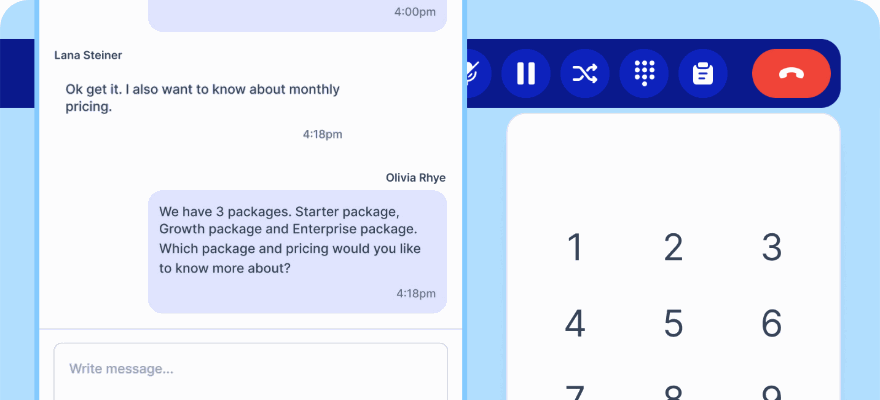
AI contact centers take a more modern, omnichannel approach. They unify all communication channels - phone, email, SMS, social media, live chat, and messaging apps - into a single, cohesive conversation history. This ensures agents always have the full context, delivering smoother, more personalized experiences.
Legacy systems also rely on rigid IVR menus that treat every caller the same, regardless of their history. AI platforms, however, use machine learning to dynamically adapt to each customer’s needs. Returning customers can be routed to the right agent or solution instantly, while AI-powered chatbots handle natural language queries, resolving common issues without human intervention.
| Feature | AI Contact Centers | Legacy Call Center Systems |
|---|---|---|
| Supported Channels | Unified across phone, email, SMS, social media, chat, and more | Primarily voice; other channels operate separately |
| Personalization | AI-driven recommendations and routing based on history | Static IVR menus with no personalization |
| Self-Service | Intelligent chatbots with natural language understanding | Basic, menu-based IVR systems |
| Cross-Channel Continuity | Unified conversation history across all channels | Disconnected interactions with no unified view |
| Real-Time Adaptation | Dynamic routing and responses based on context | Pre-programmed, fixed workflows |
Now let’s examine how these systems differ in terms of efficiency and costs.
Efficiency and Cost Structure
When it comes to costs, the contrast is stark. Legacy systems demand a hefty upfront investment in hardware and licenses. Ongoing expenses - like IT staff, maintenance contracts, and updates - further inflate the budget.
AI contact centers, on the other hand, operate on a subscription model with predictable monthly fees. Without the need for hardware or maintenance contracts, costs align directly with usage. These platforms also boost operational efficiency. Tasks like data entry and call logging, which are manual in legacy systems, are automated in AI platforms. Chatbots handle routine inquiries, and real-time tools help agents resolve issues faster, improving productivity and reducing costs.
| Feature | AI Contact Centers | Legacy Call Center Systems |
|---|---|---|
| Cost Structure | Subscription-based with predictable monthly fees | High upfront costs plus ongoing maintenance |
| Startup Expenses | Minimal; no hardware required | Significant investment in hardware and installation |
| Automation Level | Extensive automation for routine tasks | Manual handling for most processes |
| Agent Productivity | Enhanced by automation and real-time tools | Slower due to manual workflows |
| Return on Investment | Faster ROI through lower costs and quick deployment | Slower ROI due to high initial expenses |
Finally, let’s consider how these systems handle scalability and flexibility.
Scalability and Flexibility
Business needs can change rapidly, and systems must keep up. Legacy systems, tied to physical hardware, struggle to scale efficiently. Accommodating higher call volumes often means purchasing additional equipment and enduring long installation timelines. This leaves businesses either underprepared during busy periods or overinvested during slow times.
AI contact centers excel in scalability. They adjust to demand in real time, scaling up during peak periods and scaling down when volumes drop. This elasticity not only improves efficiency but also helps control costs. Flexibility is another strong suit - AI platforms allow administrators to tweak workflows, update routing rules, and integrate new tools easily. Expanding to new locations is just as straightforward: no need to replicate hardware setups, just add agents in the cloud.
| Feature | AI Contact Centers | Legacy Call Center Systems |
|---|---|---|
| Scalability | Elastic, adjusts in real time | Limited by hardware; slow and costly to expand |
| Flexibility | Configurable workflows and integrations | Rigid and requires custom development |
| Growth Potential | Seamless expansion across locations and channels | Requires duplicating hardware and infrastructure |
With scalability and flexibility addressed, the next focus is on security and compliance.
How to Choose the Right Solution
Deciding between an AI contact center and a legacy system isn’t about picking the "better" option - it’s about identifying what works best for your business. To make the right choice, you need to understand your current situation, future goals, and any limitations you face.
Decision-Making Factors
Start by defining success in measurable terms. Identify clear objectives like improving CSAT or NPS scores, reducing average handle time (AHT), increasing first-contact resolution (FCR), or determining whether 24/7 support is necessary. Without specific benchmarks, it’s tough to judge if a new system is worth the investment.
Take a close look at your customer interaction data. Review which channels your customers use most and when peak contact times occur. For example, if digital interactions are on the rise or you’re seeing high abandonment rates during busy periods, a voice-only legacy system might not cut it anymore.
Consider the type of inquiries your contact center handles. If most interactions are routine - like checking balances, tracking orders, scheduling appointments, or resetting passwords - AI automation can save time and money. AI tools can manage up to 80% of routine inquiries, slashing labor costs by as much as 70% compared to traditional call centers. On the other hand, if your business handles more complex issues, AI-powered tools that assist human agents may be a smarter choice than full automation.
Scalability is another critical factor. Seasonal spikes - such as retail holidays, tax season, or product launches - can overwhelm systems with fixed hardware. Cloud-based AI platforms can scale up or down as needed, adjusting resources in real time. Traditional call centers, however, often spend 60–70% of their budgets on labor alone, making them highly sensitive to volume changes.
Compliance and security are also essential, especially in industries like healthcare or finance. Look for platforms with robust features like PCI DSS, HIPAA, SOC 2, and CCPA/CPRA compliance. Modern AI systems often include encryption, role-based access controls, data redaction, and detailed audit logs. If your organization requires on-premises data storage, a legacy system might still work - as long as it’s maintained with up-to-date security measures.
Lastly, calculate the total cost of ownership (TCO) over the next 3–5 years. For legacy systems, this includes hardware, licenses, facility costs (rent, utilities, security), telecom fees, maintenance, and IT staffing. In contrast, AI contact centers can significantly lower costs, reducing per-call expenses from $0.75–$2.50 to as little as $0.15–$0.25. Handling costs for tickets can drop from $16 to just $3. Many companies see returns on their AI investments within 6–12 months, with some reporting up to a 15% boost in CSAT.
To align stakeholders across finance, IT, operations, and customer experience, use a weighted scoring model. Evaluate each option - AI, legacy, or hybrid - based on factors like customer experience, channel coverage, scalability, TCO, compliance, and ease of use. Assign weights to each criterion based on your priorities, then score the options to reach a data-driven decision.
These steps lay the groundwork for planning a seamless migration, which we’ll explore in the next section.
Migration Approaches
Once you’ve defined your requirements, choose a migration strategy that minimizes disruptions while transitioning to an AI platform. The three main approaches are full replacement, phased migration, and adjacent-channel rollout.
- Full replacement: This involves moving all contact center functions to a cloud AI platform on a set date. While it offers the quickest transformation, it carries higher risks if not executed carefully. This approach is best for businesses needing urgent change.
- Phased or hybrid migration: A safer, more gradual option. Here, you keep your legacy system running while introducing AI features over time. For example, you could deploy chatbots for after-hours support or billing inquiries while continuing to handle complex calls through your existing setup. In January 2025, Sam Newton, a Senior Account Executive, described a "smooth migration", highlighting how the Unified Inbox simplified processes compared to traditional ticketing systems.
- Adjacent-channel rollout: This strategy adds AI-driven channels like web chat, SMS, or social messaging alongside your legacy system. It lets customers transition to digital self-service while your core telephony system is upgraded later. This approach works well for testing AI’s value or easing skeptical stakeholders into the shift.
During any migration, an omnichannel platform can act as a central hub, integrating voice, SMS, email, and messaging apps into one interface. For instance, a platform like klink.cloud can work alongside your existing telephony system. It intelligently routes interactions to either agents or AI bots while maintaining consistent reporting across old and new systems. This setup allows you to introduce features like AI chatbots, smarter routing, and unified customer profiles without immediately retiring your legacy infrastructure - ensuring a smooth experience for U.S. customers during the transition.
To ensure success, start with a pilot program focused on a specific use case. Track key metrics like bot containment rate, CSAT, and cost per contact to confirm your assumptions before scaling up. Integrate the platform with your CRM and other essential systems so both agents and AI have access to complete customer histories. Train agents on the new tools, clearly communicate any role changes, and roll out the system in phases by team or region. Finally, use real-time analytics and customer feedback to fine-tune AI workflows, self-service options, and escalation paths after launch.
Conclusion
Moving from traditional call centers to AI-driven contact centers is more than just a technology upgrade - it's a transformative step that reshapes customer service, optimizes costs, and sets the stage for future growth. As we've explored, AI contact centers bring clear benefits in customer experience, efficiency, and scalability, making them a strong contender for modern businesses.
By integrating various communication channels, AI contact centers handle routine inquiries faster while allowing human agents to focus on more complex issues. This balance not only enhances interactions but also fosters customer satisfaction and builds stronger relationships.
Operationally, these systems simplify workflows and cut costs, enabling businesses to invest resources in innovation rather than maintaining outdated systems. Their cloud-based design also ensures real-time scalability, adapting to fluctuating demand without the need for expensive hardware upgrades - something legacy systems struggle to achieve.
That said, legacy systems still have their place in highly specialized environments, such as those requiring complex interactions or strict on-premises setups. However, for businesses dealing with rising customer expectations, growing contact volumes, and a shift toward digital communication, AI contact centers provide a forward-thinking solution.
When evaluating your options, consider how well your current infrastructure meets customer needs and whether it can evolve to handle future demands. Think about the channels your customers prefer, the complexity of their inquiries, and how adaptable your system truly is.
Ultimately, transitioning to an AI-powered contact center isn’t about keeping up with trends - it’s about preparing your business to deliver efficient, seamless, and customer-focused service in an ever-changing landscape. Taking this step ensures you're ready to meet the challenges of today and tomorrow.
FAQs
What are the main advantages of switching from a traditional call center system to an AI-powered contact center?
Switching to an AI-powered contact center can bring a host of advantages to businesses. With AI, companies can process data faster and dive into advanced analytics, which helps them gain deeper insights into customer needs and behaviors. The result? A smoother, more personalized experience for customers.
AI also takes the pressure off customer service agents by automating repetitive tasks. This means agents can dedicate their time and energy to solving more complex problems. On top of that, AI contact centers operate around the clock, so customers can get support whenever they need it - day or night. This constant availability not only boosts customer satisfaction but also strengthens loyalty.
Over time, businesses adopting AI-driven contact centers often see lower operational costs and find it easier to scale their services as they grow. It’s a smart move for companies looking to stay competitive while keeping customers happy.
How do AI-powered contact centers use customer data to deliver personalized support across different channels?
AI-powered contact centers leverage cutting-edge tools such as predictive analytics, sentiment analysis, and CRM integrations to process and interpret customer data in real time. By analyzing a customer's past interactions, preferences, and behaviors across various channels, these systems can deliver responses and assistance that feel both personalized and timely.
On top of that, AI prioritizes data privacy and security by following strict ethical guidelines and compliance requirements. This not only safeguards sensitive information but also fosters trust, all while providing smooth and tailored customer support.
What should businesses evaluate when choosing between a legacy call center system and an AI-powered contact center?
When choosing between a legacy system and an AI-powered contact center, businesses need to weigh several important factors. First, think about the system's ability to handle multi-channel communication - does it effectively support phone, email, and chat interactions? Also, consider its scalability to ensure it can grow alongside increasing customer demands.
Another critical aspect is the availability of real-time analytics and AI-driven automation, which can greatly improve personalized and proactive customer interactions. Don’t overlook the integration capabilities of the system - will it work seamlessly with your existing tools? Additionally, evaluate the cost of maintenance and the security measures the system provides to protect sensitive customer data.
AI-powered contact centers often bring advanced tools like predictive analytics and omnichannel platforms, which can streamline operations and improve customer satisfaction. The final decision should reflect your business objectives and align with your long-term strategy for delivering exceptional customer service.