Why Traditional Contact Center Software Is Dying

The old way of running contact centers is falling apart. Systems built for handling phone calls no longer meet the demands of today’s customers, who expect fast, connected, and personalized service across multiple channels like chat, SMS, and social media. These outdated tools create silos, slow down agents, and frustrate customers with long waits and repetitive questions.
Here’s the problem: legacy systems are expensive to maintain, hard to scale, and struggle to integrate with modern tools like cloud platforms, AI, and CRMs. They rely on rigid hardware and outdated workflows, which can’t keep up with rising customer expectations or remote team needs.
Modern cloud-based platforms like klink.cloud solve these issues by combining all communication channels into one place, automating repetitive tasks, and providing real-time insights. Businesses using these platforms report faster response times, happier customers, and smoother operations - all while cutting costs and scaling easily.
Key takeaways:
- Legacy systems are phone-first and siloed, which leads to inefficiency and poor customer experiences.
- Customers demand seamless, omnichannel support and personalized service, which old systems can’t deliver.
- Modern platforms like klink.cloud offer unified communication, AI-powered tools, and flexible pricing to meet today’s needs.
If you’re still using outdated software, you’re likely paying more for less. Upgrading to a cloud-native solution is the way forward for better customer service and team performance.
Hidden Costs and Limitations of Legacy Systems
Technical and Financial Barriers
Legacy contact center systems come with hefty upfront costs. These include investments in hardware, telephony, and on-premise infrastructure, not to mention ongoing expenses for maintenance, support, and eventual equipment upgrades. Scaling these systems isn’t as simple as adding new users - it often means buying more licenses and equipment, locking businesses into long-term financial obligations. On top of that, managing these proprietary systems usually requires specialized IT staff, adding another layer of expense. Together, these technical and financial hurdles create significant operational headaches.
Day-to-Day Inefficiencies
The high costs are just the beginning. Legacy systems are often fragmented, making daily operations unnecessarily complicated. Agents are forced to juggle multiple disconnected tools to access call histories, log issues, retrieve customer details, and consult support resources. This constant back-and-forth slows down processes, increases the risk of errors, and leads to messy, inconsistent customer records due to manual data entry. Without automation, tasks like ticket assignment fall on supervisors, eating into time that could be spent on strategic initiatives. New agents also struggle to get up to speed, as they must learn several separate systems, delaying their productivity and creating uneven customer experiences.
Data and Reporting Challenges
The inefficiencies don’t stop there. Fragmented data storage adds another layer of complexity, with call logs, emails, and chat records often siloed in separate systems. Consolidating this information manually is time-consuming and prone to mistakes. Outdated and rigid reporting tools make it harder to resolve issues quickly or make informed, real-time decisions. Poor system integration further compounds these problems, leading to inconsistent data that complicates compliance and quality assurance efforts across all communication channels.
Why Legacy Systems Fail to Meet Modern Customer Expectations
Changing Customer Expectations
Today’s American customers expect service that’s fast, smooth, and effortlessly connected. They want to move between channels without a hitch - starting a conversation on a messaging app during lunch, following up via email, and calling later if they need more help. Tools like chatbots, FAQs, and knowledge bases highlight a growing preference for self-service options. But when customers do reach out to a human agent, they don’t want to repeat their story. They expect agents to already have their history and preferences at hand. Unfortunately, legacy contact center software - designed for a phone-first world - falls short of meeting these modern demands. These shifting expectations reveal the limitations of outdated systems.
Omnichannel Gaps in Legacy Systems
Legacy systems are heavily focused on phone communication, which creates significant gaps in delivering a true omnichannel experience. These systems struggle to route customer inquiries intelligently, whether based on the customer’s preferred channel, an agent’s expertise, or the context of the conversation. Even worse, they fail to maintain conversation histories across channels. This forces agents to manually track down previous interactions, leaving them without the full picture. The result? Disconnected silos that lead to fractured customer experiences and inefficiencies for both customers and agents.
Impact on Customer Satisfaction
The shortcomings in omnichannel capabilities directly affect customer satisfaction. Agents waste time repeatedly gathering the same information, causing delays that frustrate customers. This inefficiency not only hinders personalized service but also highlights the outdated design of legacy systems, which often can’t support modern features like AI-powered personalization, automation, or real-time insights. These tools are critical for delivering the seamless, consistent service today’s customers expect. As expectations continue to rise, the gap between what legacy systems offer and what customers demand will only grow, making it harder for companies to maintain loyalty and satisfaction. Modern platforms address these issues with integrated, automated solutions that streamline the customer experience.
The Impact on Agents and Teams
Inefficient Agent Workflows
Outdated systems often force agents to juggle multiple disconnected tools, turning simple tasks into time-consuming challenges. Imagine an agent pulling up a customer’s account in one system, only to re-enter the same information into another to log the interaction or create a ticket. These repetitive actions add up, wasting valuable hours and slowing response times.
Even navigating these systems can feel like a daily hurdle. Designed decades ago, many legacy tools have clunky interfaces that require weeks of training just to master the basics. New agents face a steep learning curve, while seasoned employees waste time clicking through endless screens to complete routine tasks. On top of that, switching between systems dozens of times an hour exhausts mental energy, making it harder for agents to stay focused and efficient.
These inefficiencies don’t just affect individual agents - they ripple across teams, hindering management and oversight.
Challenges in Workforce and Quality Management
Managing teams effectively becomes a struggle with traditional contact center software. These systems offer limited insights into team performance, making it difficult for managers to adapt to real-time needs. For example, rigid scheduling tools make it nearly impossible to adjust staffing on the fly, delaying feedback and disrupting quality management.
Quality control also takes a hit. In legacy environments, call reviews often happen hours or even days after the fact. By the time a supervisor identifies an issue - whether it’s a flawed approach or a training gap - the agent has already handled dozens of interactions the same way. This lag in feedback means missed opportunities to correct mistakes in real time, leaving both agents and customers at a disadvantage.
Compiling performance data adds yet another layer of frustration. Something as basic as generating a report on average handle times across channels might require exporting data from multiple systems and stitching it together manually in a spreadsheet. This process is not only time-consuming but also prone to errors, leaving managers with outdated insights that fail to reflect current conditions. Without real-time analytics, supervisors can’t spot emerging trends or make informed decisions to improve efficiency. It’s clear that traditional systems struggle to keep up with the fast-paced demands of modern, omnichannel customer service.
Impact on Remote and Distributed Teams
The challenges of legacy systems become even more glaring for remote teams. These tools, built for on-premises use, often falter when it comes to remote connectivity. Agents working from home frequently deal with dropped calls, poor voice quality, and system freezes - issues that rarely occur in a physical call center with dedicated infrastructure.
Many systems lack the ability to adapt to varying bandwidth, causing choppy audio, echo, and other disruptions that make communication difficult. This isn’t just frustrating for agents - it also affects customers, leading to repeated calls and unresolved issues.
Supervising remote teams brings its own set of obstacles. Managers can’t easily monitor live calls or step in to help agents who are struggling. Features like whisper coaching - where supervisors provide real-time guidance during a call - are often unavailable in systems designed for centralized operations. Without these tools, remote agents can feel isolated and unsupported, increasing stress and turnover.
Collaboration also takes a hit in remote settings. In an office, agents can quickly ask a colleague for help or flag down a supervisor. These informal support networks disappear in remote environments, leaving agents to tackle complex issues alone. This lack of collaboration leads to longer handle times and lower confidence in resolving customer problems effectively. These limitations highlight the pressing need for modern, integrated solutions that can support both in-office and remote teams seamlessly.
5 Contact Center Challenges Facing CX Leaders in 2025
sbb-itb-204ca50
How Modern Platforms Like klink.cloud Solve These Challenges
Legacy systems often highlight the need for advanced cloud platforms that unify communication channels, automate repetitive tasks, and seamlessly integrate with key business tools. Instead of piecing together disconnected applications or struggling with rigid infrastructures, platforms like klink.cloud directly address these inefficiencies. They simplify operations, eliminate fragmented communication, and streamline workflows that traditional systems often fail to manage effectively.
Unified Omnichannel Communication
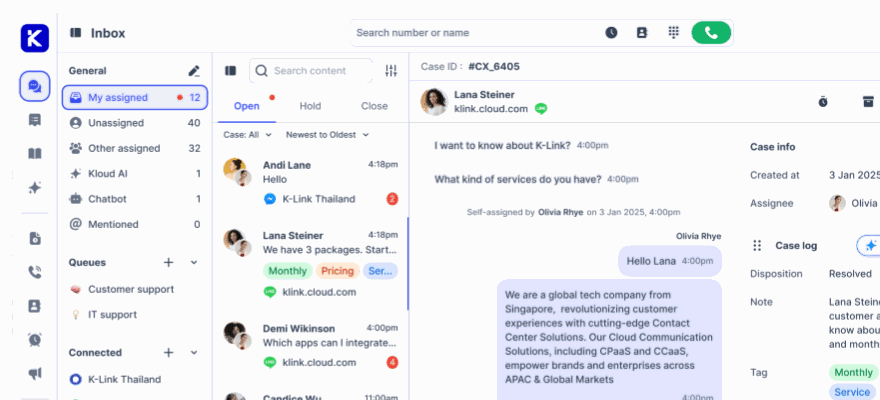
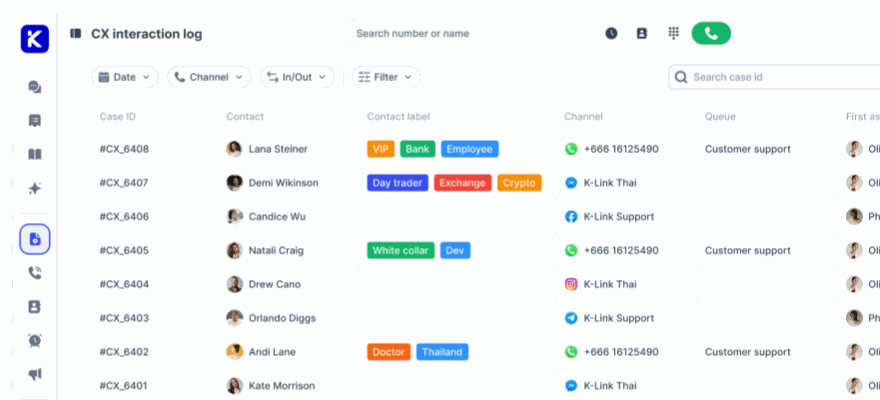
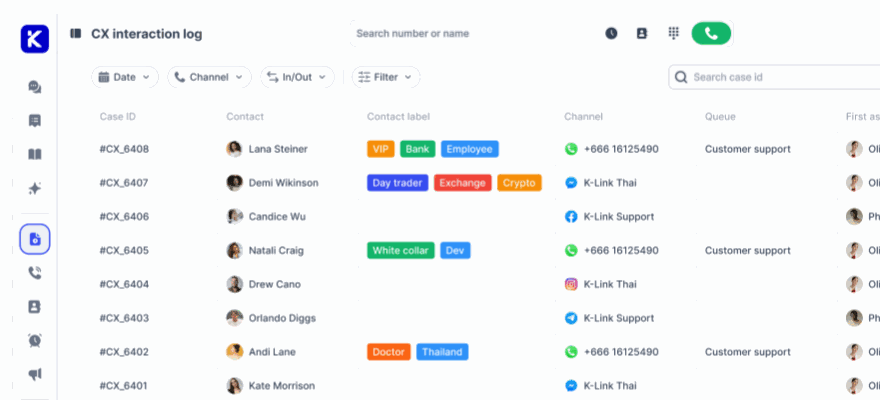
Modern platforms consolidate all customer interactions into a single, easy-to-navigate view. For example, klink.cloud's Unified Inbox pulls together phone calls, WhatsApp, Facebook Messenger, Instagram DM, Telegram, email, and live chat into one dashboard. No more jumping between apps or trying to piece together scattered conversation threads.
This unified approach transforms how businesses handle customer interactions. Picture a US-based e-commerce company where customers move effortlessly between web chat, phone calls, and email follow-ups. In a legacy system, each of these touchpoints might exist in separate silos, forcing customers to repeat their concerns multiple times. With klink.cloud, agents can see the entire conversation history - like a chat about a delayed shipment, a follow-up phone call expressing frustration, and notes from earlier interactions - all in one place. This comprehensive view enables faster resolutions, reduces transfers, and improves customer satisfaction.
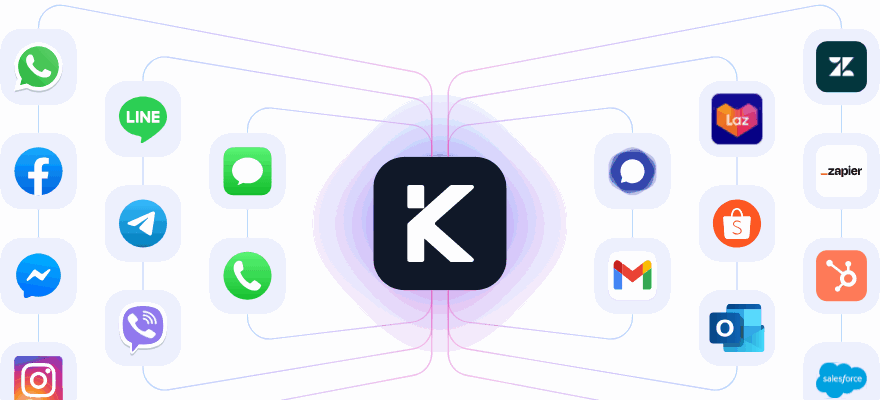
By integrating with popular communication tools like WhatsApp, Messenger, and Gmail, klink.cloud ensures that all conversations flow into a centralized system. For businesses juggling high volumes across multiple channels, this approach reduces context-switching, preserves the full conversation history as customers move between platforms, and supports key metrics like shorter wait times and better first-contact resolution.
But unifying communication is just the start. Platforms like klink.cloud also take efficiency to the next level with smart automation.
Smart Workflow Automation
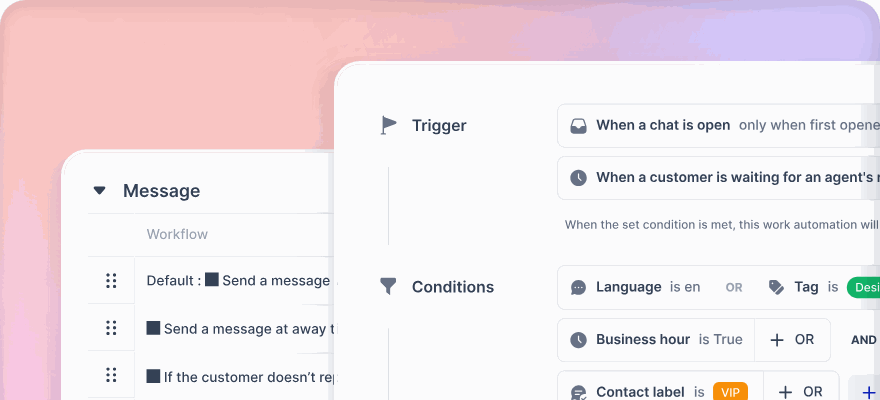
Repetitive tasks can drain an agent's time and increase the risk of errors. klink.cloud tackles these challenges with intelligent automation. For example, smart routing ensures that conversations are automatically assigned to the right team member based on factors like keywords, customer type, language, or VIP status - eliminating the need for manual triage.
Automation doesn't stop at routing. Post-interaction tasks are also streamlined. After a call ends, klink.cloud can automatically create a case record, apply relevant tags based on the conversation's content, and even send follow-up emails if further action is needed. This saves valuable time for agents and helps ensure compliance with service-level agreements (SLAs) by flagging delays before they become an issue.
"Since adopting klink.cloud, we've seen a significant improvement in our response times. Our customers are happier, and our agents are more efficient than ever." – Sarah Lee, Head of Contact Center, Horizon Solutions
The best part? Implementing automation doesn’t require a complete system overhaul. Businesses can start small - like automating routing for one queue or setting up follow-up email triggers - and measure impact through clear KPIs, such as reduced handle times or improved SLA compliance. This step-by-step approach allows for fine-tuning based on real-world performance.
In addition to communication and automation, deep CRM integration takes customer service to a whole new level.
CRM Integration
Deep integration with CRM systems ensures that agents have all the information they need at their fingertips. Customer identifiers, contact details, interaction history, purchase records, open cases, and notes are synchronized to create a unified profile that agents can access instantly. When a customer calls or chats, the corresponding CRM record and recent activities automatically appear, giving agents the context needed to provide personalized service.
For instance, an inbound call might immediately display the customer’s recent orders, support history, and open cases. This allows agents to address inquiries - like billing questions - without asking the customer to repeat background details.
"Our agents can easily manage conversations across different channels, helping us respond faster and keep our clients happy. We've seen big improvements in both productivity and customer satisfaction since we started using it." – James Carter, Operations Manager, MPG BPO
The integration also works both ways. After a chat, klink.cloud can create a follow-up task in the CRM for a sales rep, complete with the conversation transcript. It can also update fields like subscription status or churn risk based on customer interactions. This two-way data flow ensures that every department - whether sales, service, or marketing - has immediate access to accurate, up-to-date information, breaking down silos and improving collaboration.
For US businesses, this level of integration translates into more meaningful customer interactions. Agents can greet customers by name, reference their recent activity, and tailor their responses based on stored history. This not only saves time but also reinforces trust and shows respect for the customer’s time.
On top of these operational benefits, klink.cloud addresses US-specific concerns around security and compliance. The platform adheres to standards like SOC 2, offering secure data handling, role-based access controls, and audit trails. For industries like healthcare or finance, this means transitioning to the cloud doesn’t compromise security - in fact, it often enhances it compared to outdated on-premises systems. By resolving data fragmentation and ensuring compliance, klink.cloud provides a reliable foundation for modern customer service.
The Role of AI and Automation in Modern Contact Centers
AI and automation are reshaping how contact centers operate, addressing challenges that older systems often couldn't overcome. These technologies take care of repetitive tasks and provide real-time insights, enabling businesses in the US to handle high customer volumes efficiently while keeping costs down and improving customer satisfaction.
By automating the mundane, AI allows modern platforms to assist teams in delivering better service. Agents can focus on what they do best - solving problems and building connections with customers - while AI manages the background tasks.
AI-Powered Agent Assistance
Think of AI as a helpful partner for agents. During interactions - whether over the phone, chat, or email - AI listens, analyzes, and offers support in real time. It can suggest responses based on customer needs, provide relevant knowledge articles, or recommend the next steps.
One standout feature is live transcription. As customers explain their issues, AI instantly converts speech to text, identifying key topics, urgency, and sentiment. For example, if a customer mentions a billing issue, the system can pull up account details, recent transactions, and related policies without interrupting the conversation. This ensures a smoother interaction and eliminates the need for customers to repeat themselves.
Dynamic FAQs and policy lookups also play a key role. Instead of memorizing procedures or searching through outdated documents, agents get precise answers tailored to the customer's question. This reduces the time spent on calls and increases the likelihood of resolving an issue on the first contact, even for complex situations.
In Q2 2025, a major US retailer implemented an AI-driven contact center solution and saw impressive results: average call handling time dropped by 28%, while customer satisfaction scores rose by 17% within six months. The platform automated routine tasks, provided real-time assistance to agents, and monitored 100% of interactions for quality management.
AI also automates data capture. It transcribes conversations, summarizes key points, and updates CRM fields like contact reason or resolution status - all in the background. This reduces errors, shortens wrap-up time, and ensures interactions feed accurate data into reports and coaching systems. For agents, this means more time helping customers; for supervisors, it means better insights into contact center operations.
Workflow Optimization with Automation
AI doesn't just assist individual agents - it optimizes workflows across the entire contact center. Platforms like klink.cloud use AI to forecast customer volume by channel and time of day, enabling managers to adjust staffing before queues build up. Skills-based routing ensures customers are matched with the most qualified agents, while priority rules fast-track urgent or VIP interactions automatically.
Routing logic adapts in real time. If chat volumes spike, the system can shift agents from email to chat or adjust queue priorities on the fly. If a frustrated customer is detected through sentiment analysis, their case can be escalated immediately. This dynamic approach allows leaders to balance resources, maintain service levels, and enhance the customer experience without overhauling the system.
In July 2025, a healthcare provider adopted an AI-powered omnichannel platform and experienced a 35% reduction in agent workload alongside a 22% improvement in first-call resolution rates. The system handled routine inquiries, routed complex cases to specialists, and provided agents with real-time guidance - all without requiring a major process overhaul.
Automation also enhances performance tracking and coaching. AI evaluates every interaction, identifies outliers, and generates coaching prompts based on specific behaviors, such as long pauses or missed opportunities to show empathy. This makes performance management more data-driven and scalable, helping supervisors focus on developing their teams rather than manually reviewing calls.
Better Quality Management
Traditional quality management methods, like reviewing a small percentage of calls, are slow and leave gaps in oversight. AI changes the game by analyzing every interaction for script adherence, regulatory compliance, and tone. It can flag potential issues in near real time, giving leaders the chance to address problems before they escalate.
This approach provides continuous feedback, helping businesses identify recurring issues like product complaints or policy confusion. For example, if AI detects a rise in negative sentiment about a product feature, the contact center can alert the product team and update scripts to address concerns more effectively. Similarly, if agents struggle with a specific policy, training can be adjusted before it impacts more customers.
AI also converts unstructured data - like voice recordings and chat logs - into actionable insights, such as sentiment trends or effort scores. Businesses can analyze these insights by channel, customer segment, or campaign to prioritize metrics like customer satisfaction, first-contact resolution, and average handle time. By linking these metrics to operational strategies like staffing or script updates, leaders can make continuous, evidence-based improvements.
In industries like healthcare and finance, automated quality management also reduces compliance risks. AI reviews every interaction for proper disclosures and regulatory language, creating detailed audit trails to demonstrate compliance. This not only protects businesses from legal or reputational issues but also ensures a better experience for customers.
Looking ahead, AI in contact centers will continue to evolve. Future advancements might include enhanced emotion detection, predictive models for personalized offers, and tighter integration between human agents and bots. Platforms like klink.cloud are designed with flexible architectures, allowing businesses to adopt new capabilities incrementally without disruptive system overhauls. For companies still relying on outdated systems, the gap is growing. AI and automation are no longer optional - they're becoming essential for staying competitive and meeting customers' rising expectations.
Flexible Plans and Scalability for US Businesses
When it comes to modern contact center solutions, flexible and scalable pricing is a game changer. Traditional systems often come with rigid pricing structures, capacity limits, and hefty upfront investments in hardware. Add to that long-term contracts with steep penalties and costly upgrades, and it’s clear why these legacy platforms can be a headache. For US businesses dealing with seasonal demand, rapid growth, or economic uncertainty, this lack of flexibility can lead to wasted resources and added risk.
klink.cloud eliminates these challenges with a cloud-based subscription model that grows with your business. Whether you're a startup experimenting with your first support channel or a large company managing hundreds of agents across different time zones, the platform adjusts without locking you into long-term commitments or forcing you to pay for unused capacity.
Scalable Pricing Models
klink.cloud offers four pricing tiers tailored to businesses of different sizes and needs. Each plan is billed transparently in USD, with simple monthly or annual options. There are no hidden hardware costs, maintenance fees, or complicated contracts for smaller businesses.
- Free Plan: Perfect for small teams or businesses just testing the waters. It includes a unified team inbox, basic CRM (up to 100 contacts), and access to channels like Facebook Messenger, Instagram DM, Telegram, and live chat. Limited outbound calling is also included, making it a low-risk option for solo entrepreneurs or small e-commerce shops handling a few daily inquiries.
- Starter Plan: Priced at $23 per user per month, this plan is ideal for small US businesses formalizing their support operations. It expands CRM capacity to 10,000 contacts, adds a virtual phone number, and includes full inbound and outbound calling, SMS, call recordings, and custom case tracking. For example, a young software company with five agents can run phone and chat support for just $115 per month - significantly less than what traditional systems charge.
- Growth Plan: At $69 per user per month, this plan is designed for growing teams that need advanced automation and reporting tools. It offers unlimited CRM contacts, call recordings, multi-level SLA management, workflow automation, IVR, rules-based routing, and real-time dashboards. A retailer preparing for the holiday season might upgrade to this plan, add seasonal agents, activate automation features, and then scale back after the rush - all without renegotiating contracts.
- Enterprise Plan: For large organizations with complex needs, this plan offers custom pricing and features. It includes Salesforce and HubSpot integrations, advanced telephony options like dedicated queue management, e-commerce integrations (Shopify, Lazada, Shopee), SSO authentication, webhook APIs, and dedicated account support with guaranteed SLAs. Whether it’s a healthcare provider managing compliance-sensitive interactions or a BPO serving multiple clients, this plan can be tailored to fit specific workflows and regulatory requirements.
With this tiered structure, budgeting becomes straightforward. US businesses know exactly what they’ll pay each month based on active users and selected plans - no surprise invoices for software patches or server maintenance.
Flexibility to Match Business Needs
Beyond its pricing, klink.cloud offers unmatched operational flexibility. Adding agents, opening new channels, or enabling advanced features like AI-assisted routing can be done in minutes through the cloud dashboard - no lengthy procurement cycles or vendor-led installations required.
The pay-as-you-go model ensures businesses only pay for what they use. For example, a small customer support team might start with five agents on the Starter plan handling phone and email. As ticket volume increases, they can quickly add more agents or activate additional channels like SMS and live chat. If business slows down, scaling back is just as easy.
This flexibility is especially beneficial for businesses with fluctuating workloads. A tax preparation service might triple its agent count during tax season, while a retail brand could add messaging channels and automation for Black Friday, then return to a leaner setup afterward. With klink.cloud, these changes are simple configuration updates - not major IT projects.
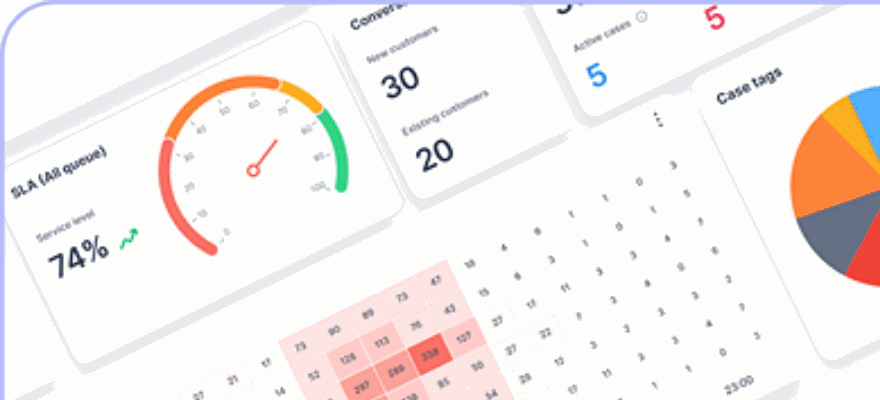
Real-time analytics also play a crucial role. Managers can monitor performance across all channels and adjust staffing or workflows as needed. If chat response times spike, supervisors can reassign agents or tweak routing rules instantly. During a product launch, the system’s smart automation can handle routine inquiries, freeing up agents to focus on more complex issues. This kind of dynamic resource management is nearly impossible with traditional on-premises systems that require manual reconfiguration and downtime for changes.
For US businesses measuring ROI, the results speak volumes. Companies using klink.cloud report a 5x boost in productivity, a 2x improvement in customer satisfaction, and a 2x increase in customer relationship strength - all while maintaining 99% uptime. These gains come from streamlined workflows, reduced manual effort, and the ability to scale without a proportional increase in costs or complexity.
With these scalable options, US businesses can adapt quickly and efficiently, delivering better customer experiences while staying agile in a changing market.
Conclusion: The Future of Customer Experience
Key Takeaways
Older systems are falling short because they were built for a different era of communication. On-premises platforms tie businesses to costly hardware, slow upgrades, and workflows focused on voice calls - none of which align with how customers in the U.S. prefer to interact today. These outdated systems create data silos, making it nearly impossible to deliver the seamless, personalized experiences modern customers expect.
The challenges go beyond just technology - they're baked into the structure of these systems. For instance, manual quality assurance often reviews only 1–3% of interactions, leaving huge blind spots in understanding customer sentiment and ensuring compliance. Disjointed systems lead to more errors, slower response times, and increased agent burnout. Addressing these issues requires a shift to cloud-native platforms designed for today's needs.
This is where klink.cloud shines. It streamlines interactions and automates workflows, removing inefficiencies caused by manual processes. Smart automation directs conversations based on keywords, customer type, or VIP status, ensuring inquiries land with the right agent immediately. Built-in AI tools assist with real-time knowledge suggestions and automated call summaries, cutting down on after-call work and allowing agents to focus on more complex, high-value interactions.
The results speak volumes. Companies using klink.cloud have reported a fivefold increase in productivity, a twofold boost in customer satisfaction, and a twofold improvement in customer relationship strength - all while maintaining 99% uptime. For U.S. businesses, the platform's transparent pricing in USD, pay-as-you-go model, and ability to scale with seasonal demand make it a more budget-friendly option compared to maintaining legacy systems. Whether you're a small team handling a few inquiries or a large enterprise managing hundreds of remote agents, klink.cloud offers flexibility without locking you into rigid contracts or charging for unused capacity.
Sticking with legacy software means higher costs, slower progress, and falling behind competitors who offer omnichannel, AI-powered support. Moving to a cloud-native platform reduces upfront costs, speeds up implementation, and delivers measurable gains in key metrics like first-contact resolution, average handle time, and customer satisfaction. For businesses planning ahead, the path is clear: evaluate your current tools, pinpoint the biggest pain points in customer interactions, and prioritize moving critical channels to a unified, modern platform.
Looking Ahead
The future of customer experience isn't about piling on more tools or channels. It's about focusing on what matters most: customer loyalty, agent efficiency, and driving revenue growth. Customers now expect consistent, seamless experiences across all touchpoints, 24/7 self-service for simple tasks, and highly personalized interactions powered by unified data - not disconnected systems. Voice is just one piece of the puzzle, and businesses that rely on it as their primary channel will find it hard to keep pace.
AI and automation are no longer optional - they're becoming essential. Features like real-time sentiment analysis, proactive outreach based on customer behavior, and AI copilots that assist agents in handling complex conversations are quickly becoming standard. However, success depends on more than just adopting AI - it requires clean data, thoughtful implementation, and ongoing refinement. Starting with focused use cases that deliver quick returns can set the stage for broader adoption.
For U.S. companies, the next steps are straightforward. Begin by assessing whether your current platform can support the unified approach and AI-driven enhancements discussed earlier. If it falls short, consider exploring cloud-native solutions like klink.cloud through a demo or pilot program. Assemble a small cross-functional team from CX, IT, operations, and finance to define success metrics, evaluate integration needs with existing tools, and create a phased migration plan that minimizes downtime. Align these efforts with budget cycles, seasonal peaks, and compliance requirements to avoid being caught off guard by expiring contracts.
The contact centers that excel in the coming years will seamlessly combine human empathy with machine intelligence, reserving complex, high-value interactions for skilled agents equipped with real-time support. These centers will operate on cloud-native platforms that enable secure remote work, scale up or down as needed, and receive frequent feature updates without long delays. Success will be measured not just through operational metrics like handle time, but by customer-focused outcomes like satisfaction, effort, and lifetime value.
Legacy systems can't keep up with the demands of today's omnichannel world. Modern platforms like klink.cloud are helping U.S. businesses move faster, serve customers better, and remain competitive in an era where customer experience is the ultimate differentiator.
FAQs
What challenges do businesses face with traditional contact center software?
Traditional contact center software often misses the mark when it comes to meeting the demands of today’s customers. One major issue is the inability to support seamless omnichannel communication, which is key to delivering a unified and smooth customer experience. On top of that, these systems often don’t integrate well with modern CRM tools, making it challenging for businesses to simplify their workflows and provide tailored interactions.
Another drawback is how these older platforms can drag down agent productivity. Limited automation and clunky interfaces make tasks less efficient, leaving agents struggling to keep up. As customers expect faster, more personalized service, sticking with outdated software puts businesses at a serious disadvantage.
How does klink.cloud improve customer experience over traditional contact center software?
klink.cloud takes customer experiences to the next level by tackling the challenges posed by outdated systems. It ensures that customers are instantly matched with the right agents, cutting down wait times and boosting overall satisfaction. With smart automation, responses are quicker, and workflows become more streamlined, making every interaction smoother and more efficient.
On top of that, klink.cloud brings all customer conversations into one centralized inbox. This unified approach makes it easier for teams to manage interactions across various channels. Plus, its ability to integrate with different apps and tools allows businesses to personalize interactions and monitor team performance with ease. These features work together to create a more connected and hassle-free customer journey.
How do AI and automation improve contact centers, and what benefits do they bring to agents and customers?
AI and automation are reshaping contact centers, making operations smoother while boosting both agent performance and customer satisfaction. Take intelligent virtual assistants (IVAs), for example - they’re designed to tackle complex questions, allowing agents to focus on tasks that require a human touch. On top of that, real-time agent assistance tools step in with instant suggestions and knowledge base insights, enabling agents to respond with greater speed and precision.
These tools also open the door to proactive customer engagement, anticipating customer needs and offering solutions before problems even surface. By automating repetitive tasks, they ease the burden on agents, giving them more time to craft personalized and meaningful interactions. The result? Seamless conversations, happier customers, and a more efficient team.