

Top 10 AI Tools E-commerce Brands Are Using in 2025

By 2025, e-commerce brands in the U.S. are transforming customer service with AI tools that handle inquiries across channels, automate repetitive tasks, and improve efficiency. These tools enable faster responses, better customer experiences, and reduced operational costs. Here's a quick look at the top AI tools reshaping the industry:
- klink.cloud: Centralizes multi-channel support with AI-powered routing and Shopify integration.
- Freshdesk Freddy AI: Automates routine tasks and provides ticket summaries for efficient support.
- Gorgias AI: Tailored for Shopify, it manages orders and automates common inquiries.
- Tidio Lyro AI: Affordable chatbot solution for automating up to 70% of inquiries.
- Salesforce Service Cloud Agentforce: Enterprise-level tool with predictive insights and CRM integration.
- Yuma AI: Simplifies ticket management for Shopify with context-aware responses.
- Ada AI: Customizable chatbots for handling standard queries.
- Intercom Fin: Uses generative AI for quick product and order inquiries.
- Kustomer IQ: Combines AI routing with a unified customer timeline.
- GPTBots: Offers real-time, context-aware multilingual translation for global support.
Quick Comparison
| Tool | Primary Focus | Best For | Starting Price |
|---|---|---|---|
| klink.cloud | Unified CX, omnichannel support | Small to Enterprise | $23/user/month |
| Freshdesk Freddy AI | Automating tickets, FAQs | Small to Enterprise | $15/user/month |
| Gorgias AI | Shopify-focused order management | Small to Mid-Market | $10/month |
| Tidio Lyro AI | Chatbot for repetitive tasks | Small to Mid-Market | $29/month |
| Salesforce Agentforce | Advanced CRM, predictive insights | Mid-Market to Enterprise | $75/user/month |
| Yuma AI | Shopify ticket automation | Small to Mid-Market | $199/month |
| Ada AI | Scalable self-service | Mid-Market to Enterprise | Custom pricing |
| Intercom Fin AI | Conversational AI for support | Small to Enterprise | $74/month |
| Kustomer IQ | AI routing, CRM integration | Mid-Market to Enterprise | $89/user/month |
| GPTBots | Multilingual AI support | Small to Enterprise | $49/month |
These tools cater to various needs, from small startups to large enterprises. Whether you're looking to automate FAQs, improve order management, or provide multilingual support, there's an AI tool to fit your business model.
3 Best Practices for AI Customer Service Agents
1. klink.cloud Unified CX Platform
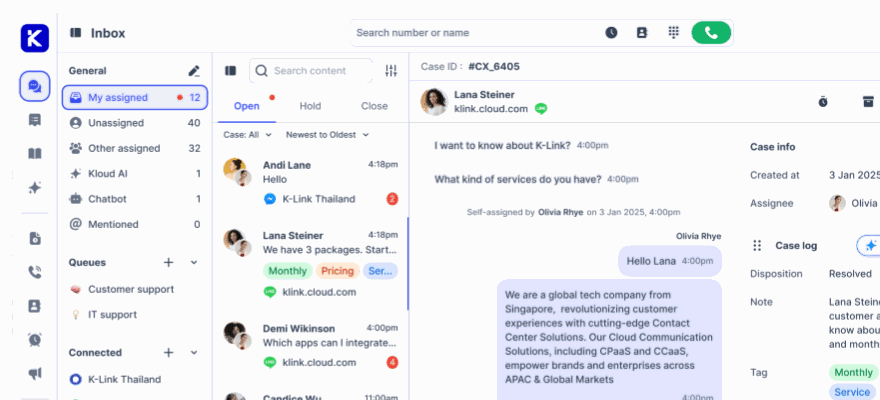
klink.cloud centralizes all customer interactions into one workspace, making it easier for e-commerce brands to manage support across various channels without losing context. Designed specifically for businesses handling high volumes of messaging-based interactions, the platform helps keep agents efficient and customers satisfied.
Multi-Channel Communication Capabilities
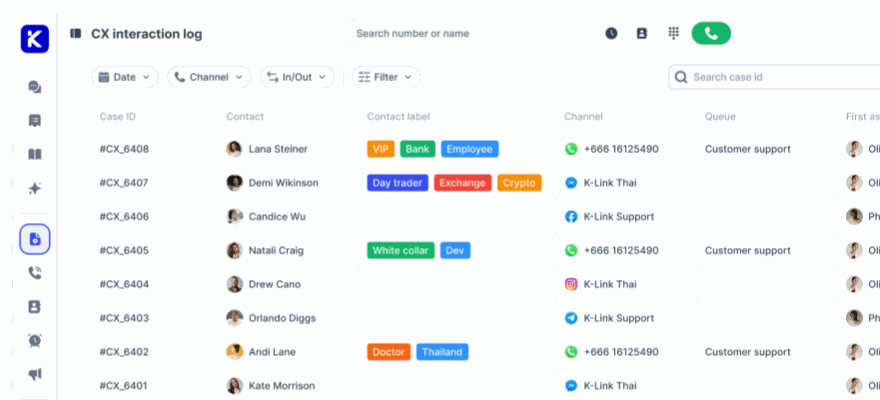
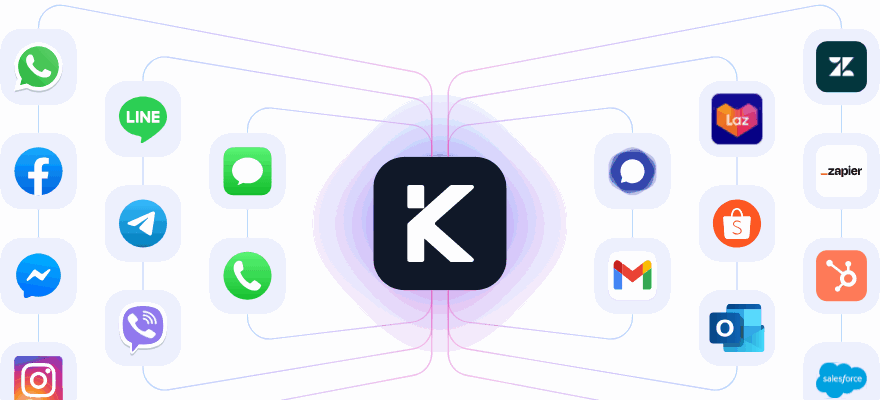
The platform brings together conversations from WhatsApp, Facebook Messenger, Instagram DMs, SMS, email, live chat, and phone calls into one unified inbox. For example, if a customer starts with a question on Instagram and follows up via email, the interaction is threaded together seamlessly. This eliminates the need for customers to repeat themselves and saves agents from hunting through multiple systems for previous messages.
For U.S. e-commerce brands juggling social media, messaging apps, and traditional channels, this unified approach is a game-changer. Agents can handle a variety of inquiries - like a shipping question on WhatsApp, a return issue on Facebook, or a payment concern over the phone - without ever leaving the platform. Features like internal notes, task assignments, and escalation tools also enable teams to collaborate on complex cases without exposing internal discussions to customers.
AI-Powered Automation Features
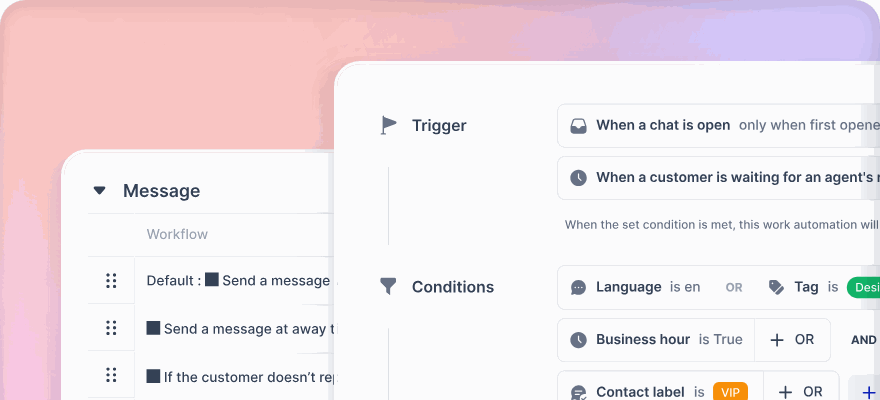
klink.cloud leverages AI to streamline repetitive tasks and intelligently route conversations. It can assign inquiries based on factors like skill, language, workload, and customer type, while also suggesting AI-generated replies based on past interactions and the knowledge base. For instance, if a high-value customer sends a message with negative sentiment, the system can escalate it directly to a senior agent. Meanwhile, routine questions like "Where is my order?" can be routed to junior agents or even resolved automatically.
The platform’s automation tools can tag, prioritize, and route tickets based on intent. For example, a message about order tracking gets tagged appropriately and routed to the right team. This reduces the time it takes to handle requests and improves first-response times, both of which have a direct impact on customer satisfaction.
"Since adopting klink.cloud, we've seen a massive improvement in our response times. Our customers are happier, and our agents are more efficient than ever." - Sarah Lee, Head of Contact Center, Horizon Solutions
One U.S.-based home goods brand with $20 million in annual revenue experienced slow response times and inconsistent support due to fragmented systems. After implementing klink.cloud, they unified all channels, introduced AI-powered routing, and integrated with Shopify and their logistics provider for real-time order updates. In just four months, they cut their average response time from 18 hours to 1.5 hours, boosted first-response CSAT from 72% to 89%, and increased ticket resolution rates from 70% to 92%. They also avoided hiring additional staff during peak seasons, reducing labor costs by 30%.
E-Commerce Platform Integrations
klink.cloud integrates seamlessly with Shopify, BigCommerce, Magento/Adobe Commerce, WooCommerce, Amazon, and eBay, pulling in customer profiles, order history, and product data. This integration gives agents a 360-degree customer view directly within the conversation panel, eliminating the need to switch between systems or ask customers for order numbers.
For example, agents can handle tasks like processing refunds, modifying orders, or initiating exchanges without leaving the platform. A DTC apparel brand using klink.cloud saw significant time savings by managing everything in one place. Instead of navigating between Shopify’s admin panel and the support tool, agents could complete tasks within a single interface, speeding up workflows and reducing errors.
These integrations not only simplify operations but also lead to noticeable improvements in customer service metrics.
Impact on Customer Experience Metrics
Brands using klink.cloud often report substantial improvements in key customer experience metrics. U.S.-based e-commerce companies have seen response times drop by 40–50%, resolution times improve by 30–40%, and CSAT scores rise by 10–15 percentage points within three to six months of implementation.
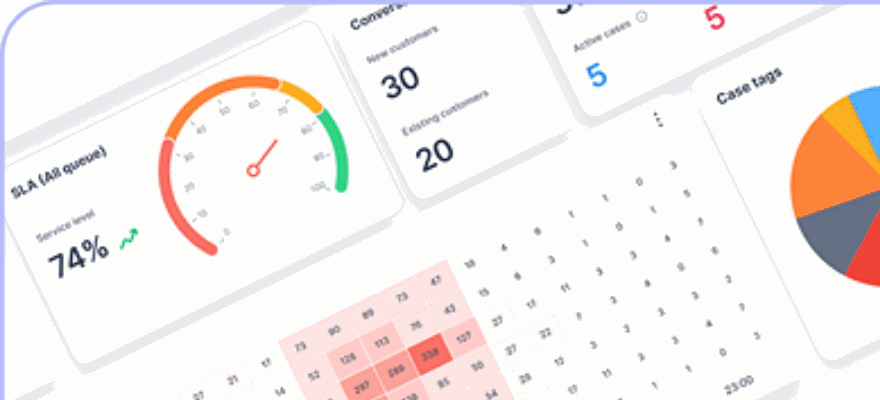
These results stem from reduced agent workloads, quicker access to customer data, and consistent experiences across all channels. By spending less time searching for information and more time resolving issues, agents can deliver better service. The platform’s real-time analytics and case management features track metrics like first response time, resolution time, and CSAT, helping teams monitor performance and pinpoint areas for improvement.
"klink.cloud has made a huge difference for our contact center! Our agents can easily manage conversations across different channels, helping us respond faster and keep our clients happy. We've seen big improvements in both productivity and customer satisfaction since we started using it." - James Carter, Operations Manager, MPG BPO
Additionally, klink.cloud supports automatic language detection and real-time translation, making it easier for U.S. brands to serve diverse customer bases. If a customer messages in Spanish or another supported language, the system automatically detects it and translates both incoming messages and agent responses. This ensures clear communication while maintaining the original tone and intent, reducing the need for large multilingual support teams.
2. Freshdesk Freddy AI
Freshdesk Freddy AI is reshaping how e-commerce businesses handle customer support. By automating routine tasks on the Freshdesk platform, it helps support teams work more efficiently. This tool is a great fit for businesses already using the Freshworks ecosystem or for those looking for a budget-friendly way to integrate AI into their support operations.
AI-Powered Automation Features
Freddy AI takes care of repetitive queries, freeing up your support team to focus on more complex issues. For instance, it can handle FAQs like “What’s your return policy?” or “Do you ship internationally?” by deflecting them with pre-set answers. It also suggests replies based on prior interactions, making it easier for agents - especially those who are new - to respond with confidence and save time on crafting responses from scratch.
Another standout feature is ticket summarization. When an agent picks up a ticket, Freddy AI can generate a concise summary of the customer’s issue. This is particularly useful for lengthy conversation threads or when tickets are handed off between team members. These tools not only speed up response times but also improve accuracy, ensuring customers get the help they need without unnecessary delays.
Considerations for E-Commerce Brands
For e-commerce brands with standard support needs, Freddy AI provides a cost-effective way to enhance response efficiency. It’s easy to implement, making it an appealing option for growing businesses that want to adopt AI without dealing with a complex setup. However, it’s worth noting that as your support volume increases, so might the costs. If your store primarily deals with straightforward inquiries, Freddy AI offers a practical solution to streamline your support operations while keeping things manageable for your team.
3. Gorgias AI for Shopify-Focused Support
Gorgias AI caters specifically to e-commerce brands, offering seamless integrations with platforms like Shopify, Magento, and BigCommerce. For Shopify-based Direct-to-Consumer (DTC) brands, it promises quick results through automation tailored to their needs, with setup taking just a few hours. Its standout feature? A powerful communication system that simplifies customer interactions.
Multi-Channel Communication Made Simple
Gorgias brings all customer interactions together in one place. Whether customers contact you via email, live chat, social media, or SMS, your team can handle everything from a single, unified helpdesk. This setup minimizes the chance of missing messages and keeps response quality consistent. For Shopify stores managing a high volume of inquiries, Gorgias provides agents with instant access to order history, past conversations, and purchase details - all visible directly in the dashboard.
Smart Automation with AI
Using AI-driven tools like suggested replies, macros, and intent tagging, Gorgias takes care of routine questions. It identifies common customer concerns and pulls answers straight from your FAQ content. You can set it up to handle frequent inquiries like "Where is my order?" (WISMO), returns, and cancellations. To keep operations smooth, the system includes safeguards, such as limits on automatic refunds and requiring agent approval for unusual cases.
Seamless E-Commerce Integrations
With Shopify integration, Gorgias automatically pulls in order details and customer information, so agents have everything they need without switching tools. Merchants using Magento or BigCommerce benefit from similar integrations, connecting store data directly to their support workflows for a smooth experience.
Boosting Customer Support Metrics
Gorgias is designed to improve key support metrics like first response time, resolution time, and ticket deflection rates. By automating repetitive tasks and providing AI-suggested replies, teams can respond faster and more consistently. This leads to happier customers and fewer unnecessary refunds. The combination of automation and human input allows DTC brands to scale their support operations efficiently without needing a larger team.
Source:
4. Tidio Lyro AI
Tidio Lyro AI is an impressive tool for e-commerce brands looking to streamline customer support without breaking the bank. Designed with small to mid-sized businesses in mind, this chatbot solution helps reduce ticket volume while requiring minimal technical setup. Powered by Claude (Anthropic AI), it uses conversational AI, deep learning, and natural language processing to provide 24/7 assistance. What’s noteworthy? It can automate up to 70% of customer inquiries and takes just hours or days to get up and running.
AI-Powered Automation Features
Lyro is built to handle repetitive tasks with ease. It manages FAQs, processes "Where Is My Order?" (WISMO) requests, explains return policies, and troubleshoots orders. Acting as an AI shopping assistant, it also helps customers by recommending products, answering questions, booking appointments, and tracking orders - all without needing human input.
For more complex issues, Lyro smoothly transitions conversations to human agents. During setup, businesses can define escalation paths and rules to ensure customers receive the appropriate level of support, striking a balance between automation and human expertise.
E-Commerce Platform Integrations
Tidio Lyro AI seamlessly integrates with popular platforms like Shopify and Magento, as well as other e-commerce systems, content management tools, and social media channels [8,11]. Once connected to your store and knowledge base, it automatically imports key policies and product details, allowing it to deliver accurate, store-specific responses without requiring constant manual updates.
The platform also supports proactive chat, engaging customers directly on product detail and cart pages. This feature helps address customer concerns at critical moments, reducing barriers to purchase and improving the shopping experience [8,10].
Impact on Customer Experience Metrics
Tidio Lyro AI tracks key metrics, such as bot resolution rates and handoff rates, providing insights into how effectively it resolves issues without human intervention. By automating routine inquiries, it significantly cuts response times, giving customers the instant answers they expect.
With multilingual support, Lyro makes it easy for businesses to serve customers in different languages without adding extra staff. Pricing is accessible too, with a free plan that covers up to 50 conversations and premium plans starting at just $25 per month [5,10]. The platform has earned strong reviews, boasting a 4.7 rating on G2 and 4.2 on Trustpilot.
For brands looking to enhance customer support on a budget, Tidio Lyro AI offers a practical, low-maintenance solution.
5. Salesforce Service Cloud Agentforce
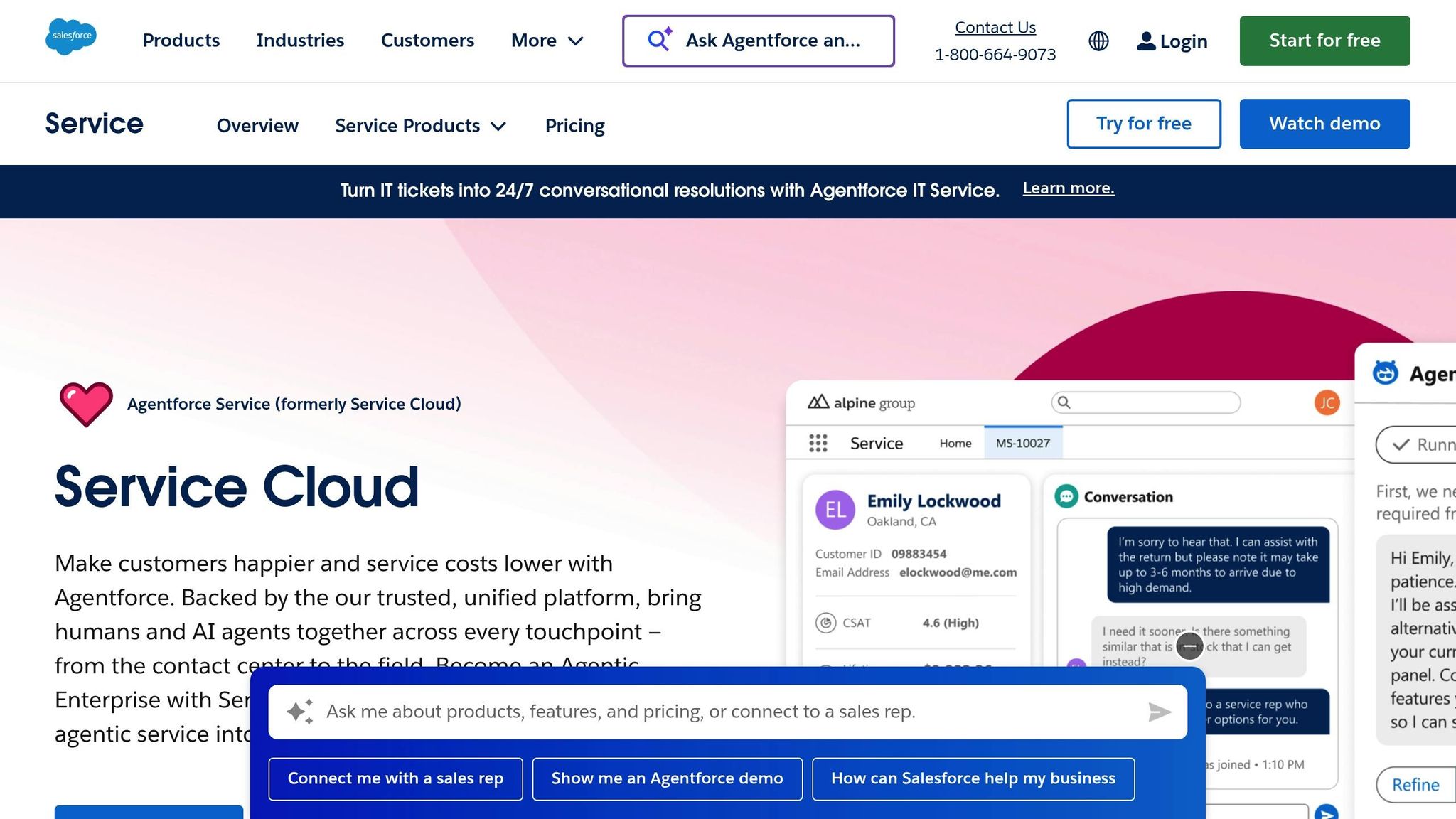
Salesforce Service Cloud Agentforce, powered by Einstein AI, is a powerful tool designed for e-commerce brands that demand advanced CRM capabilities. As part of the Salesforce ecosystem, it provides a comprehensive solution for managing customer interactions. It's particularly well-suited for larger businesses that require extensive customization and predictive insights to meet their complex needs. Below, we'll explore its key features, including multi-channel communication, automation, and integration capabilities.
Multi-Channel Communication Capabilities
Agentforce stands out for its ability to streamline customer interactions across a variety of channels. Whether customers reach out via email, social media, live chat, or phone, this platform ensures a cohesive experience. It leverages automated journey mapping to track customer behavior across these touchpoints, offering real-time predictive insights to help guide sales and marketing strategies. Additionally, its precise customer segmentation tools allow brands to create tailored groups based on factors like behavior, purchase history, and preferences, enabling highly targeted engagement.
AI-Powered Automation Features
Agentforce uses machine learning and natural language processing (NLP) to automate time-consuming tasks such as sales forecasting, lead scoring, and customer journey mapping. These automated processes continuously update customer profiles and uncover new engagement opportunities, significantly reducing the manual workload for teams.
E-Commerce Platform Integrations
For businesses looking to integrate Agentforce with their e-commerce platforms, custom solutions are available. However, these integrations typically require dedicated technical resources for both implementation and ongoing maintenance.
Impact on Customer Experience Metrics
Agentforce has earned strong reviews for its advanced features, including predictive insights, automated journey mapping, and detailed customer segmentation. It holds a 4.4 rating on G2 and a 4.0 rating on Capterra. However, its high cost and the need for extensive customization mean it’s best suited for established brands with complex service requirements and the technical resources to deploy enterprise-level AI solutions. These capabilities make it a robust option for improving multi-channel communication and customer relationship management.
6. Yuma AI for E-commerce Ticket Automation
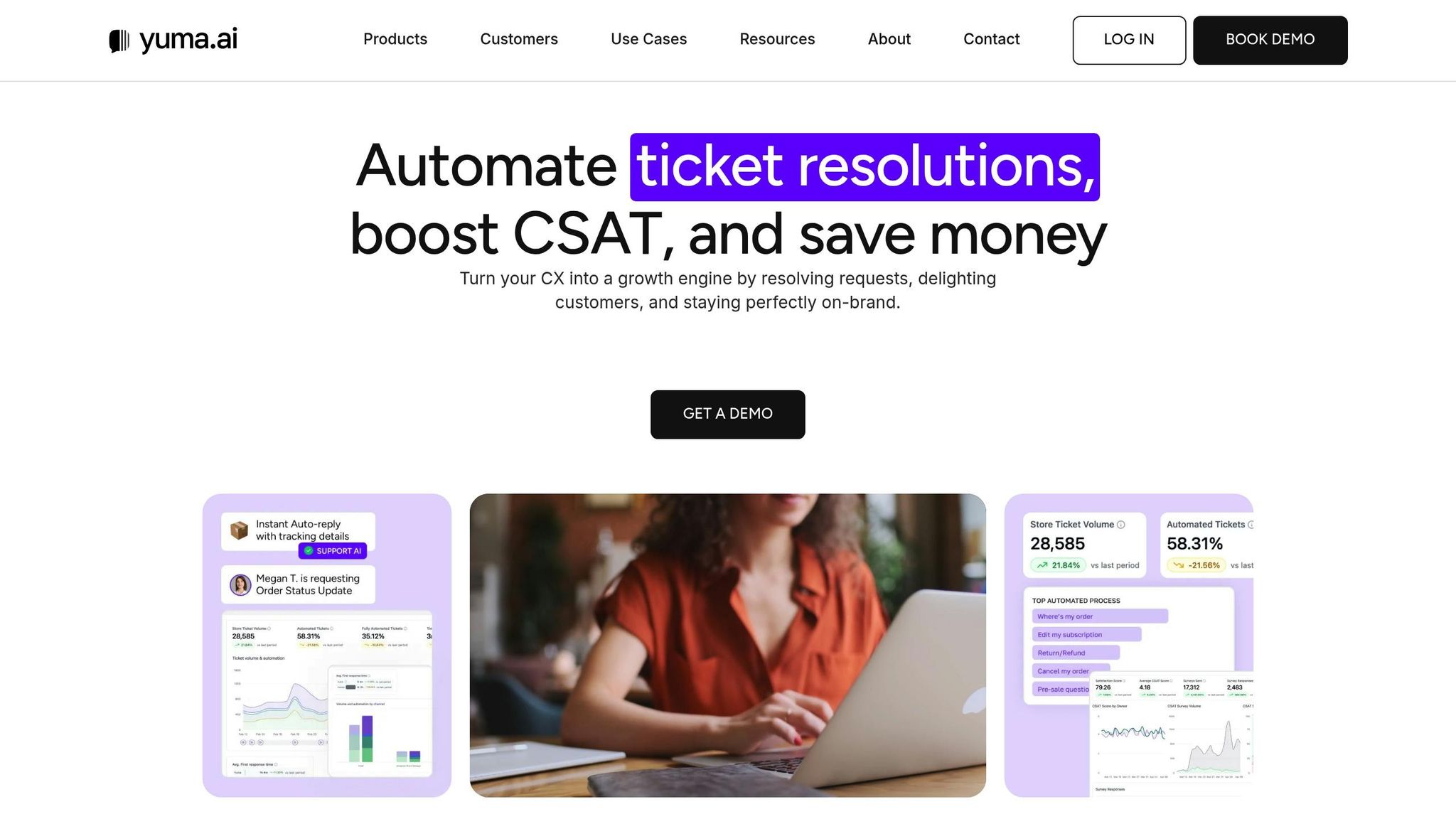
Yuma AI simplifies ticket management for Shopify sellers, making it easier to handle large volumes of customer inquiries. By working seamlessly with key e-commerce platforms, it helps streamline support processes and improve efficiency.
E-Commerce Platform Integrations
Yuma AI goes beyond basic automation by offering seamless integrations with popular platforms. It connects directly with Shopify and supports headless e-commerce setups, ensuring flexibility for modern online stores. Additionally, it integrates with Zendesk, enabling teams to continue using their existing support systems without disruption. The integration process is straightforward and typically takes anywhere from a few days to two weeks to complete.
sbb-itb-204ca50
7. Ada AI for Scalable Self-Service
Ada AI helps businesses cut down on support ticket volume by using customizable chatbots that are quick to set up. These bots are designed to handle straightforward customer queries, making them a practical solution for businesses looking to streamline their support processes. The ease of deployment lays the groundwork for the platform's advanced automation tools.
AI-Powered Automation Features
Ada shines when it comes to managing routine questions, offering a reliable way to automate repetitive tasks. However, its process logic can hit a wall when dealing with more complex, multi-step scenarios unless extra engineering support is involved. This means brands with intricate support requirements may need to allocate additional technical resources to fully utilize the platform.
Impact on Customer Experience Metrics
By taking care of simple inquiries, Ada allows human agents to focus on more challenging customer issues, boosting overall efficiency. Its fast setup also makes it a valuable tool for e-commerce brands that need to quickly scale their support operations during periods of high demand. This combination of automation and adaptability helps businesses maintain a high level of customer service even as they grow.
8. Intercom Fin AI Agent and Copilot
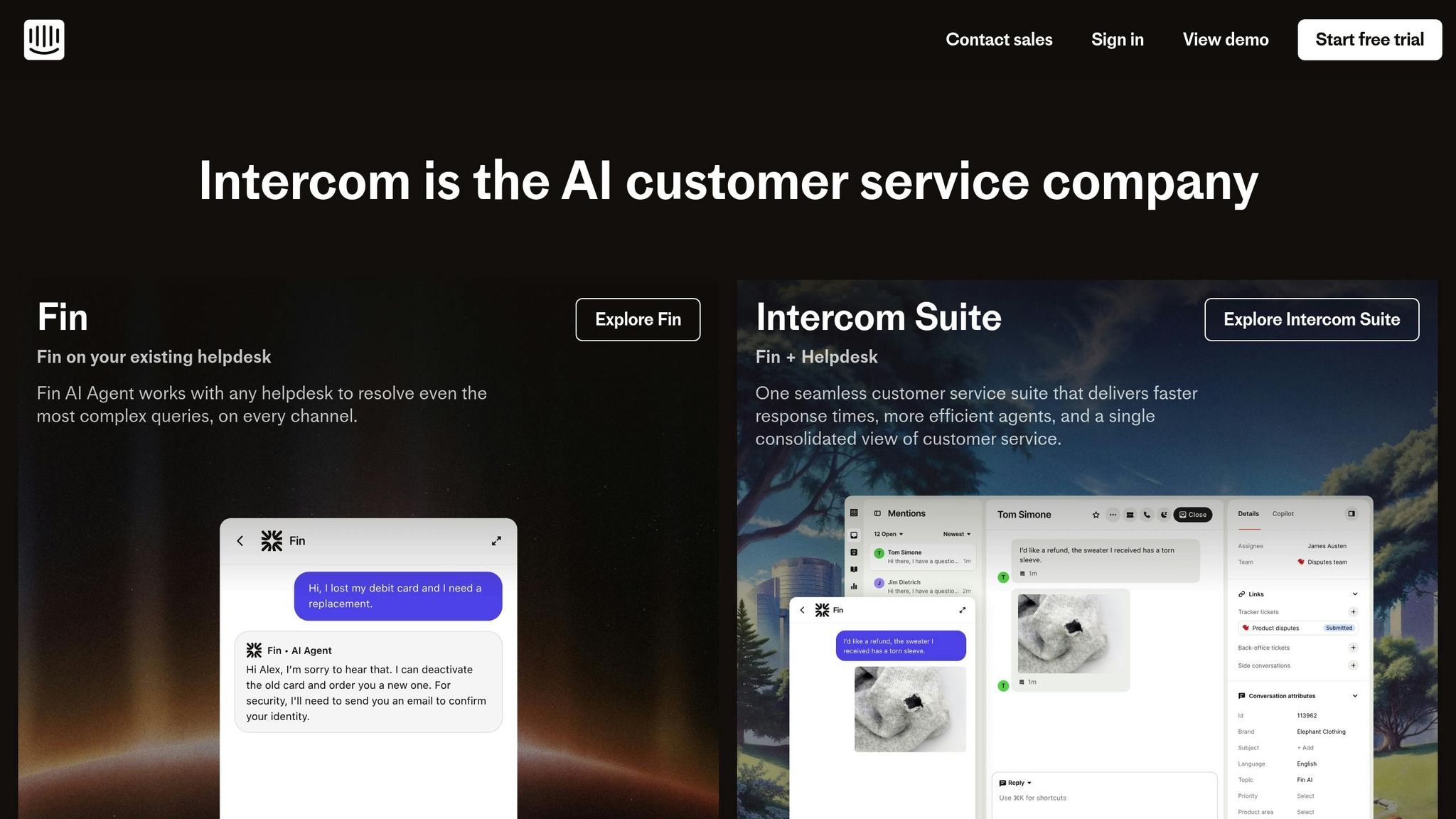
Intercom Fin uses generative AI to swiftly handle product and order inquiries. Its user-friendly interface makes setup quick and straightforward, ensuring businesses can get started without hassle.
AI-Powered Automation Features
Fin is designed to manage routine product and order-related questions using generative AI. However, it does not include advanced features for more complex tasks or executions.
Impact on Customer Experience Metrics
By automating responses to common queries, Intercom Fin helps improve support efficiency. One standout advantage is its ability to significantly reduce response times, ensuring customers get answers faster and with less waiting.
9. Kustomer IQ and AI Agents
Kustomer is built for e-commerce brands dealing with complex support demands. By combining AI-driven routing, a CRM-style customer timeline, and proactive support automation, it offers a unified solution. This makes it a strong choice for businesses moving beyond basic tier-1 support and managing a high volume of customer interactions.
Multi-Channel Communication Capabilities
Kustomer brings together email, chat, SMS, and social media DMs into one workspace. By consolidating customer data - like order history, past conversations, and customer tags - into a single timeline, agents can quickly review past interactions and identify issues. It also integrates with Shopify and headless commerce platforms to pull real-time customer data. This integration lays the groundwork for Kustomer IQ’s automation tools to function efficiently.
AI-Powered Automation Features
Kustomer IQ uses AI to streamline support processes. It can handle common inquiries, such as those about shipping updates, return policies, or promo codes, through automated responses. This reduces the manual workload, allowing agents to focus on more complex problems. The platform’s AI routing feature ensures tickets are directed to the correct team based on the type of inquiry and customer context. However, accurate ticket assignment relies on maintaining clean and up-to-date customer data. These automation tools can significantly improve operational efficiency when implemented effectively.
Impact on Customer Experience Metrics
The platform tracks key metrics like first response and resolution times, as well as the percentage of tickets that are automatically routed or resolved. This data helps businesses gauge how much workload has been lifted from their support agents. With a complete view of customer interactions, agents can work more efficiently, leading to quicker, more personalized responses and higher customer satisfaction scores. That said, overly customized workflows can complicate the system and may require extra training for agents to navigate effectively.
10. GPTBots for Multilingual E-commerce Support
GPTBots takes customer support to the next level by breaking down language barriers with advanced language models. It offers real-time translation in over 50 languages, ensuring quick and accurate responses no matter what language your customers speak. Unlike standard multilingual tools, GPTBots focuses on context-aware translations that capture the subtleties of customer intent and maintain your brand's tone across different markets. With built-in translation engines and smooth platform integration, it streamlines communication, making global customer interactions more efficient.
Here’s an example: A customer in Japan asks about a product in Japanese, while another in Germany inquires about shipping in German. GPTBots instantly translates both messages into English for your support agents and then translates the responses back into Japanese and German - within seconds. This eliminates the need for large multilingual support teams, all while delivering high-quality responses. By integrating real-time translation, GPTBots ensures that every customer receives consistent and seamless support, regardless of their language.
As e-commerce moves toward a unified omnichannel experience, GPTBots ensures that language differences never stand in the way of customer satisfaction. It’s a game-changer for brands looking to connect with a global audience.
Feature Comparison Table
This table provides a side-by-side look at top AI tools, focusing on their features, capabilities, and pricing to help you make informed decisions quickly.
| Tool Name | Primary Function | Key AI Capabilities | Target Business Size | USD Pricing |
|---|---|---|---|---|
| klink.cloud Unified CX Platform | Unified customer experience and omnichannel management | AI-powered agent assistance, intelligent call routing (with IVR), smart workflow automation, unified team inbox | Small to Enterprise | Free: $0; Starter: $23/user/mo; Growth: $69/user/mo; Enterprise: Custom |
| Freshdesk Freddy AI | Customer support ticketing with AI assistance | AI-powered ticket routing, sentiment analysis, chatbot automation, predictive support | Small to Enterprise | Starting at $15/user/mo |
| Gorgias AI for Shopify-Focused Support | Shopify-integrated customer service | Order management automation, AI-generated responses, revenue tracking per ticket | Small to Mid-Market | Starting at $10/mo |
| Tidio Lyro AI | Live chat and chatbot automation | Conversational AI chatbot, automated responses, visitor tracking | Small to Mid-Market | Free: $0; Starting at $29/mo for AI features |
| Salesforce Service Cloud Agentforce | Enterprise customer service management | Predictive AI, case classification, automated workflows, Einstein AI insights | Mid-Market to Enterprise | Starting at $75/user/mo |
| Yuma AI for E-commerce Ticket Automation | Automated ticket response generation | Context-aware response drafting, order data integration, multi-platform support | Small to Mid-Market | Starting at $199/mo |
| Ada AI for Scalable Self-Service | No-code AI chatbot platform | Automated resolution, personalization engine, multilingual support, analytics | Mid-Market to Enterprise | Custom pricing (typically $1,000+/mo) |
| Intercom Fin AI Agent and Copilot | Conversational support and sales | AI agent for instant answers, AI copilot for agent assistance, proactive messaging | Small to Enterprise | Starting at $74/mo |
| Kustomer IQ and AI Agents | Unified customer timeline with AI | Intelligent routing, automated responses, customer sentiment analysis, omnichannel view | Mid-Market to Enterprise | Starting at $89/user/mo |
| GPTBots for Multilingual E-commerce Support | Real-time multilingual translation | Context-aware translation in 50+ languages, brand tone preservation, instant responses | Small to Enterprise | Starting at $49/mo |
When deciding on the right tool, consider both pricing and how well each solution scales to your business size. For startups, entry-level plans provide affordable access to essential features, while mid-tier options cater to growing brands. Enterprise-level tools often come with custom pricing to accommodate complex integrations and large-scale operations.
Each tool has its strengths. For instance, if managing conversations across multiple channels is a priority, klink.cloud offers a unified team inbox and smart workflow automation to streamline operations. On the other hand, tools like Gorgias stand out for their Shopify integration, making them perfect for e-commerce businesses.
Advanced AI features such as predictive routing, sentiment analysis, and multilingual support are key differentiators. Your current tech stack can also influence your choice - some tools integrate seamlessly with specific platforms (e.g., Gorgias with Shopify or Salesforce Service Cloud within its ecosystem), while others, like klink.cloud, offer flexibility with webhook APIs and custom integrations.
Conclusion
AI tools are reshaping e-commerce in 2025, making customer interactions faster, more personalized, and available around the clock. They simplify workflows with features like automated ticket routing, smart responses, and predictive analytics, all while trimming costs by minimizing manual tasks and reducing escalations.
When choosing an AI tool, focus on what fits your specific needs. Start small with affordable, basic automation, and expand as your business grows. For businesses managing multiple channels, a unified platform can centralize communications. Shopify users should prioritize tools with strong order management integrations, while businesses operating in multiple languages will benefit from real-time translation capabilities. Larger enterprises might look for options with deep CRM integration. Making the right choice ensures smooth implementation and measurable results.
Once you’ve identified a tool, test it with a 14-day pilot centered on a single use case and one key performance indicator (KPI). Collect baseline data for four weeks, use A/B testing to measure its effectiveness, and aim for a return on investment within 12 months.
Data organization is critical. Ensure your product feeds, customer events, and support resources are well-structured before implementation. AI tools work best with high-quality data, often requiring 12–18 months of labeled data to perform optimally.
The success of AI in your operations depends on more than just the tool - it also requires a prepared team. Assess your team’s readiness, assign ownership of KPIs, and secure executive support. Without proper training and processes, even the most advanced tool will fall short. Don’t overlook costs like subscriptions, integrations, and consulting when planning your budget.
These tools cater to a wide range of needs, from small boutiques to large enterprises. The best choice will align with your business size, existing technology, and budget.
FAQs
How does klink.cloud help e-commerce brands deliver faster and more efficient customer service?
klink.cloud boosts customer service efficiency by using smart automation to simplify workflows and accelerate response times. It quickly connects customers to the best-suited agents, cutting down delays and enhancing overall satisfaction.
Through its Unified Inbox, teams can handle and reply to messages from all communication channels in one place. On top of that, klink.cloud makes performance tracking easier, helping teams stay productive and concentrate on delivering outstanding customer experiences.
What should small to mid-sized e-commerce businesses consider when selecting an AI tool?
When choosing an AI tool for a small to mid-sized e-commerce business, it’s important to focus on features that match your specific goals and available resources. Start by identifying tools that can provide a clear return on investment (ROI) and work smoothly with your current platforms. Integration into your existing workflows should be straightforward to avoid unnecessary complexity.
Pay attention to the tool’s time-to-value, meaning how quickly it can produce noticeable results. Also, assess your business’s data readiness, as some solutions may need well-organized and substantial data to perform effectively. Lastly, opt for tools that are budget-friendly, secure, and flexible enough to grow alongside your business.
How do AI tools integrated with Shopify improve order management and customer experience?
Integrating AI tools with Shopify can transform how businesses handle order management and improve customer experiences. By automating tasks like inventory updates, order tracking, and customer support, AI ensures faster, more precise service while reducing manual workload.
On top of that, AI-powered features such as personalized product recommendations and insights into customer behavior allow for tailored shopping experiences. These tools not only streamline operations but also enhance customer satisfaction by delivering a smoother, more engaging e-commerce journey.