Voice AI vs Chat AI: Which Is Better for Customer Support?
Choosing between Voice AI and Chat AI depends on your business goals and customer needs. Here's the quick answer:
- Voice AI is best for urgent, complex, or emotionally sensitive issues. It handles real-time spoken conversations and excels in scenarios like billing disputes, service outages, and healthcare inquiries.
- Chat AI works well for simple, high-volume tasks like order tracking, password resets, and FAQs. It’s ideal for digital-first interactions and offers written records for easy reference.
Both have strengths and limitations:
- Voice AI offers natural, conversational interaction but requires higher setup costs and struggles with accents or noisy environments.
- Chat AI is cost-effective, scalable, and supports visuals, but it can feel impersonal and tedious for complex issues.
Quick Tip: Combine both technologies for an omnichannel experience. Use Chat AI for routine inquiries and Voice AI for more nuanced conversations. Unified platforms ensure smooth transitions and better customer satisfaction.
What Is Voice AI in Customer Support?
Voice AI is a technology that manages spoken interactions with customers by combining speech recognition, natural language understanding, and text-to-speech capabilities. When a customer calls, the system interprets their request and responds with natural-sounding voices - all without human involvement. This approach is reshaping how businesses handle incoming voice inquiries.
Today's Voice AI goes far beyond traditional automated phone menus. It can understand context, manage follow-up questions, and even detect emotions, allowing it to process complex requests and take appropriate actions in real time.
Core Capabilities of Voice AI
Voice AI brings several key features to customer support, making call handling more efficient and improving customer satisfaction. For instance, AI-powered IVR (Interactive Voice Response) systems can route callers to the appropriate department or resolve straightforward issues without needing a human agent. These systems handle conversational requests like "I need to check my order status" or "Can I speak to someone about billing?" with ease.
Voicebots are designed to manage entire conversations, handling tasks such as scheduling appointments, sending payment reminders, tracking orders, and answering frequently asked questions. Research indicates that 65% of business calls can be resolved without involving a human agent, thanks to AI automation.
Another standout feature is real-time call routing, where Voice AI quickly assesses a customer's needs and directs them to the most qualified agent or department. This eliminates the frustration of being transferred multiple times. Additionally, Voice AI supports live agents by providing real-time transcriptions, displaying relevant customer details, and even suggesting responses during calls.
Strengths of Voice AI
Voice AI enables natural, real-time conversations, making it ideal for urgent queries. Unlike text-based systems, where customers must type and wait, voice interactions flow at the pace of natural speech. This immediacy is especially useful for customers who find typing difficult, have accessibility needs, or simply prefer speaking over writing.
The technology is particularly effective for handling complex or emotionally charged queries, where tone and urgency matter. For example, Voice AI can detect urgency or confusion in a caller's voice and adjust its responses accordingly.
Voice support remains a dominant channel, with 73% of call center interactions conducted via voice. The financial benefits are equally compelling: Voice AI can reduce operational costs by up to 70%, with call centers reporting up to a 50% drop in expenses. Companies like Estafeta have seen dramatic results, reducing call handling time by 78% and increasing call volume by 120%. This efficiency allows businesses to handle more calls without needing to expand their workforce.
Another advantage is multilingual support, which helps overcome language barriers. Voice AI can switch languages instantly, making support more accessible to diverse audiences. This feature plays a direct role in customer loyalty, as 70% of clients prefer businesses that offer services in their native language.
Limitations of Voice AI
Despite its strengths, Voice AI does face some challenges. High setup costs, including telephony infrastructure and software licensing, can be a significant hurdle for smaller businesses.
Language and accent recognition issues are another concern. The system may struggle with strong regional accents, background noise, poor phone connections, or unclear speech. These technical limitations can lead to customer frustration - 51% of people reportedly abandon voice calls to avoid navigating an IVR system.
The technology's performance also depends on the quality of the telephony infrastructure. Issues like dropped calls, audio delays, or system outages can disrupt the entire voice support channel, whereas chat-based systems often have more backup options.
Voice AI may not be ideal for troubleshooting scenarios that require visual aids. For example, when customers need help navigating software settings or reviewing account details, voice-only communication can become tedious, often requiring escalation to a human agent.
While Voice AI is excellent for handling high-volume, repetitive tasks, it falls short in situations requiring deep empathy or creative problem-solving. Predictions suggest that AI could power 95% of customer interactions by 2025, but certain scenarios will always benefit from the human touch. Balancing these strengths and limitations is key to building an effective omnichannel strategy that integrates Voice AI with other tools like Chat AI.
What Is Chat AI in Customer Support?
Chat AI is a technology designed to handle text-based interactions across platforms like websites, social media, SMS, and apps. Unlike Voice AI, which deals with spoken language, Chat AI focuses on written communication, delivering quick, natural, and helpful responses.
It works by analyzing customer messages to provide instant answers or direct queries to a human agent when necessary. Available 24/7, Chat AI ensures immediate responses and integrates seamlessly across all digital touchpoints, enhancing the overall customer experience.
Let’s dive into the key features that make Chat AI a game-changer for customer support.
Core Capabilities of Chat AI
Chat AI offers a range of features that redefine how businesses manage customer inquiries via text. One of its most basic yet impactful abilities is FAQ automation, which enables it to instantly answer recurring questions about topics like business hours, return policies, shipping, or account management. This spares customers from searching through help pages or waiting for assistance.
Another standout feature is intent recognition, allowing Chat AI to grasp the underlying meaning of customer requests, even if they’re phrased in various ways. This ability to understand different expressions of the same question makes interactions feel smooth and conversational.
With workflow triggers, Chat AI can go beyond answering questions. It can handle tasks like creating support tickets, updating customer records, processing refunds, scheduling callbacks, or escalating issues to the right team. For instance, if a customer mentions a defective product, the system can kick off a return process and send a prepaid shipping label automatically.
Chat AI also supports live agents by suggesting relevant articles, drafting response templates, and providing customer history. This assistance helps agents work faster and with greater accuracy, especially when juggling multiple conversations.
Another critical capability is conversation handoff, where the system seamlessly transfers customers to human agents when needed, along with the full conversation history. This ensures customers don’t have to repeat themselves, reducing frustration and improving resolution times.
These features collectively enhance the efficiency and quality of customer support.
Strengths of Chat AI
Chat AI is highly scalable, capable of managing thousands of conversations simultaneously without losing speed or accuracy. This makes it invaluable during busy periods like product launches or promotions when customer inquiries spike.
Its cost-efficiency is another major advantage. Unlike Voice AI, Chat AI doesn’t rely on telephony infrastructure, which keeps implementation and operational costs lower. Businesses can handle a higher volume of interactions without needing to proportionally increase their support staff, optimizing resources and improving margins.
The asynchronous nature of Chat AI is a big plus. Customers can start a conversation, step away, and return hours later to pick up right where they left off. This flexibility fits modern lifestyles, where multitasking and switching between apps are common.
Chat AI excels at handling simple, transactional queries. Tasks like checking order status, updating account details, resetting passwords, or locating stores are resolved quickly without the need for lengthy phone calls. Customers get the answers they need with minimal effort.
Additionally, Chat AI provides a permanent record of interactions. Customers can revisit conversations to review instructions, reference order details, or confirm what was discussed. This not only reduces misunderstandings but also provides businesses with valuable data for improving their support systems.
The inclusion of visual elements enhances its functionality. Chat AI can send images, videos, links, and interactive content to simplify troubleshooting. For example, annotated screenshots or step-by-step visual guides can make resolving technical issues much easier compared to voice-only support.
Limitations of Chat AI
Despite its strengths, Chat AI has its challenges. For instance, it struggles with ambiguous or emotional queries. When customers are upset, confused, or dealing with sensitive issues, the lack of vocal tone can make it harder to detect urgency or emotional distress, potentially leading to responses that miss the mark.
The system’s performance heavily depends on quality training data. Without well-labeled examples of customer conversations and comprehensive knowledge bases, Chat AI may fail to understand requests, give irrelevant answers, or miss cues for escalation. Regular updates and maintenance are essential to keep it effective.
Complex troubleshooting can also be a pain point. When resolving multi-step technical issues, the back-and-forth nature of text communication can be tedious. What might take two minutes to explain over the phone could require multiple messages and significantly more time via chat.
Another limitation is accessibility. Customers with limited typing ability or those who find texting inconvenient - such as older individuals or people multitasking - may prefer voice support. This highlights a segment of users who are less likely to embrace text-based systems.
Language complexity can also trip up Chat AI. While it handles straightforward requests well, it may falter with industry-specific jargon, regional slang, abbreviations, or poor grammar. Misunderstandings can lead to repeated clarifications, frustrating both the customer and the business.
Lastly, text-based communication lacks the emotional warmth and empathy that a human voice can convey. For interactions that require compassion or relationship-building, Chat AI often falls short, making voice support a better choice for these situations.
Voice AI vs Chat AI: Key Differences
Voice AI and Chat AI both aim to enhance customer support, but they function in distinct ways. Knowing these differences can help businesses decide which technology aligns best with their goals.
The most noticeable difference lies in the interaction mode. Voice AI focuses on real-time, spoken conversations, where customers talk naturally, and the system responds instantly through audio. On the other hand, Chat AI operates over text, allowing users to type their questions and receive written replies. This basic distinction sets the foundation for a deeper comparison.
User preferences also play a significant role. Voice AI is ideal for customers who are multitasking, driving, or simply prefer hands-free communication. It’s a favorite among those who find typing inconvenient or want quick resolutions without navigating through complex menus. Conversely, Chat AI appeals to users who value privacy, need a written record of their interaction, or are in situations where speaking isn’t practical - like open offices, public spaces, or late at night when they don’t want to disturb others.
Another key difference is the emotional connection each technology provides. Voice AI can pick up on vocal cues like tone, pitch, and speed, which allows it to sense frustration, urgency, or confusion. This makes it better suited for emotionally charged situations where empathy is crucial. Chat AI, however, relies solely on text, which can make it harder to interpret a customer’s emotional state accurately, potentially leading to misunderstandings.
When it comes to response speed, Voice AI excels in delivering immediate answers, making it perfect for time-sensitive concerns. Chat AI, while also quick to respond, offers the added flexibility of asynchronous communication, allowing users to pause and return to the conversation when convenient. However, this flexibility can sometimes lead to longer resolution times for complex issues.
From a documentation standpoint, Chat AI has a clear edge. It automatically creates a text-based record of every interaction, making it easy for customers and businesses to review and reference details. Voice AI, on the other hand, requires transcription to generate a written record, which can introduce errors and adds an extra step to the process.
Accessibility is another area where the two differ. Voice AI is a great option for individuals with visual impairments or reading difficulties, as it eliminates the need for screen interaction. Meanwhile, Chat AI is a better fit for those with hearing impairments or speech challenges, offering a comfortable alternative to voice-based support. Neither is universally accessible, but using both can create a more inclusive support system.
The complexity of implementation also varies significantly. Voice AI requires advanced technologies like natural language processing, speech recognition, and telephony systems. It must also handle challenges like accents, background noise, and diverse speech patterns, making it more challenging to set up. Chat AI, while simpler to deploy, still requires training data and natural language understanding but doesn’t demand the same level of infrastructure or specialized tools.
Comparison Table: Voice AI vs Chat AI
Here’s a breakdown of how the two technologies stack up:
| Aspect | Voice AI | Chat AI |
|---|---|---|
| Interaction Mode | Real-time spoken conversations through phone or voice-enabled devices | Text-based exchanges via websites, apps, SMS, and social media |
| Best For | Urgent issues, hands-free scenarios, emotional support | Simple queries, transactional tasks, and written records |
| Response Style | Instant, conversational, synchronous dialogue | Quick initial response with asynchronous follow-up capability |
| Emotional Intelligence | Adapts to tone, pitch, and urgency | Relies on text analysis; less effective at emotional interpretation |
| Documentation | Requires transcription for written records | Automatically provides text-based conversation history |
| Scalability | Limited by telephony costs and call capacity | Easily handles thousands of simultaneous conversations |
| Accessibility | Ideal for visually impaired or those with reading challenges | Great for hearing impaired or noise-sensitive environments |
| Implementation Complexity | High - requires telephony systems and speech recognition | Moderate - simpler setup with training data and basic NLP |
| Cost Structure | Higher due to telephony infrastructure and per-minute charges | Lower operational costs with minimal infrastructure |
| Visual Support | Cannot share images, links, or documents | Can send screenshots, videos, and interactive content |
| Customer Control | Requires full attention during the conversation | Allows multitasking and pausing conversations |
| Troubleshooting | Faster for detailed, complex issues | Can feel tedious for multi-step technical problems |
Next, we’ll dive into how these differences shape customer experience and influence support operations.
Impact on Customer Experience and Support Operations
The decision to use Voice AI or Chat AI significantly affects how customers interact with your business and how efficiently your support team operates. Each technology has its strengths and influences various performance metrics in unique ways, making it important to understand their specific impacts before choosing a solution.
Customer Experience Metrics
Voice AI and Chat AI both provide quick responses, but they shine in different areas. Voice AI is ideal for situations requiring empathy and urgency, while Chat AI offers the convenience of asynchronous communication.
Customer satisfaction scores (CSAT) often highlight these differences. Voice AI excels in handling sensitive issues like billing disputes or service outages, where spoken communication can help defuse tension and make customers feel heard. On the other hand, Chat AI appeals to those who value flexibility, allowing them to manage conversations at their own pace, review past messages, and multitask during interactions.
First-contact resolution (FCR) also varies by channel. Voice AI is particularly effective for resolving complex issues in one go, as it allows real-time clarification and dynamic adjustments to customer needs. Chat AI, while efficient for straightforward tasks like password resets or order tracking, may require additional exchanges or escalation for more complicated issues.
When it comes to handling volume, Chat AI has the edge. It can manage multiple interactions simultaneously, making it perfect for addressing high demand or serving customers across time zones. Voice AI, while available 24/7, requires dedicated resources for each call, which can be taxing during peak periods.
Voice AI also stands out in interpreting emotional cues. For instance, if a customer struggles to describe a technical issue, Voice AI can ask follow-up questions to clarify the problem. Chat AI, in contrast, relies on clear written communication, and misunderstandings can occasionally slow down the resolution process or lead to follow-ups.
Customer effort is another key consideration. Voice AI is a great option for those who find typing difficult, especially on mobile devices, as it allows natural speech. However, it demands continuous attention, as customers can't easily pause the conversation. Chat AI offers more flexibility, letting users respond at their convenience - though crafting detailed messages can sometimes feel more time-consuming.
These customer-facing metrics directly influence support team operations, driving internal efficiency and shaping how resources are allocated.
Agent Productivity Improvements
Voice AI streamlines support operations by automating routine calls and assisting with more complex ones. Features like automatic call summarization save agents time by generating concise notes that capture key details - such as customer concerns and next steps - so agents can move quickly between interactions. This efficiency allows agents to focus on more high-value tasks over time.
Intelligent routing is another strength of Voice AI. By analyzing the nature of each call, it directs customers to the most appropriate agent or department, bypassing cumbersome menus and reducing handling times. This ensures that customer queries are matched with the right expertise from the start.
Voice AI also supports agents during live calls by providing relevant information like knowledge base articles, customer history, or suggested responses. This reduces the need for agents to place customers on hold while searching for details, helping newer agents perform more effectively and ensuring consistent service across the team.
Chat AI, meanwhile, boosts productivity in its own way. It automates repetitive tasks like answering questions about business hours, return policies, or account access, removing these routine queries from agent workloads. This allows agents to focus on more complex issues that require human judgment. Many businesses find that Chat AI can handle a significant portion of routine inquiries without human involvement.
Additionally, Chat AI speeds up workflows when human input is needed. By suggesting complete responses based on customer queries and past interactions, it reduces the time agents spend drafting replies while still allowing for personalization.
Another advantage of Chat AI is its ability to handle multiple conversations at once. Its asynchronous nature lets agents juggle several interactions simultaneously - responding to one customer while waiting for another - greatly increasing overall service capacity.
Integrating both Voice AI and Chat AI into a unified dashboard amplifies these benefits. Agents can switch seamlessly between channels based on customer needs and issue complexity, while smart workflow automation and performance dashboards help managers track key metrics. This ensures that whether customers choose voice or chat, support teams can deliver efficient, high-quality service.
Training requirements for these technologies differ as well. Voice AI requires agents to understand speech nuances and know when to step in during automated calls. Chat AI, on the other hand, demands proficiency in managing multiple text-based interactions at once. While both systems involve a learning curve, agents often find chat-based solutions easier to adopt due to their familiarity with messaging platforms.
Quality assurance processes also vary. Voice AI interactions can be reviewed through recordings and transcripts, offering opportunities for coaching and compliance checks - though this can be time-intensive. Chat AI, however, generates complete text records that are easier to analyze. AI-powered monitoring can flag issues like negative sentiment or unresolved queries, helping managers focus their attention where it matters most.
sbb-itb-204ca50
Implementation and Integration Requirements
Setting up Voice AI and Chat AI requires specific technical groundwork to ensure smooth operation and avoid delays. To maximize their potential in customer support, focusing on effective implementation and seamless integration is key.
Technical Requirements for Voice AI
Voice AI relies heavily on telephony infrastructure. Businesses need a way to connect phone calls to the AI system, which often involves integrating with cloud-based telephony providers or using existing SIP trunks. Many modern cloud contact centers offer APIs to connect with current telephony systems. If your business already has a phone system in place, look for platforms that support BYOC (Bring Your Own Carrier).
"Get virtual phone numbers worldwide or easily connect your own number or SIP trunk with klink.cloud's flexible BYOC option" - klink.cloud
The core AI components include automatic speech recognition (ASR) to convert spoken words into text, text-to-speech (TTS) for generating natural-sounding responses, and natural language understanding (NLU) to interpret customer intent. These systems need to be fine-tuned for your specific audience. For instance, a system trained on generic data might struggle with industry-specific jargon or regional accents common across the United States.
Voice AI must also address technical challenges like background noise, echo, and overlapping speakers. Features such as real-time noise suppression, echo cancellation, and robust barge-in handling (allowing customers to interrupt prompts) are essential. With proper tuning and noise management, enterprise systems can achieve speech recognition accuracy rates of 95% or higher, rivaling human performance in controlled settings.
Security and compliance are critical considerations. Voice AI systems must encrypt call data during transmission and storage, implement role-based access controls for recordings, and comply with U.S. regulations like two-party consent laws, HIPAA for handling health information, and PCI-DSS for payment data. Additionally, the infrastructure must scale to handle peak call volumes without performance issues. Autoscaling capabilities are vital for managing demand fluctuations effectively.
Technical Requirements for Chat AI
Unlike Voice AI, Chat AI operates on digital channels rather than telephony. Its foundation includes a messaging platform or web server with scalable HTTP and WebSocket infrastructure to handle real-time text conversations.
Channel integration is a crucial aspect. Your system must connect with popular messaging platforms in the U.S., such as WhatsApp, Facebook Messenger, SMS, and Apple Messages for Business. This requires managing diverse API requirements, rate limits, and structured message formats. Robust retry logic and error handling ensure consistency even during temporary disruptions.
On the frontend, integration involves embedding user-friendly interfaces into your digital platforms. For websites, this typically means adding a JavaScript widget that adheres to U.S. accessibility standards, supporting keyboard navigation and screen readers, and offering responsive design for various devices. For mobile apps, native SDKs or in-app web views are often used to present the chat interface.
Chat AI must also support rich message formats, including buttons, quick replies, forms, images, and file attachments. Authentication features like single sign-on ensure personalized responses, with localized formats for dates, times, and currencies based on U.S. conventions. Chat AI’s simpler infrastructure generally allows for quicker deployment and lower costs compared to Voice AI.
Integration with Unified CX Platforms
Voice AI and Chat AI reach their full potential when integrated with your existing business systems. Standalone AI that cannot access customer data or update records often leads to repeated questions and inefficient handoffs.
Integration with CRM systems, ticketing tools, and order management platforms is essential. Secure API connections enable the AI to access customer profiles, check order statuses, retrieve account balances, and log interactions as support tickets or contact records.
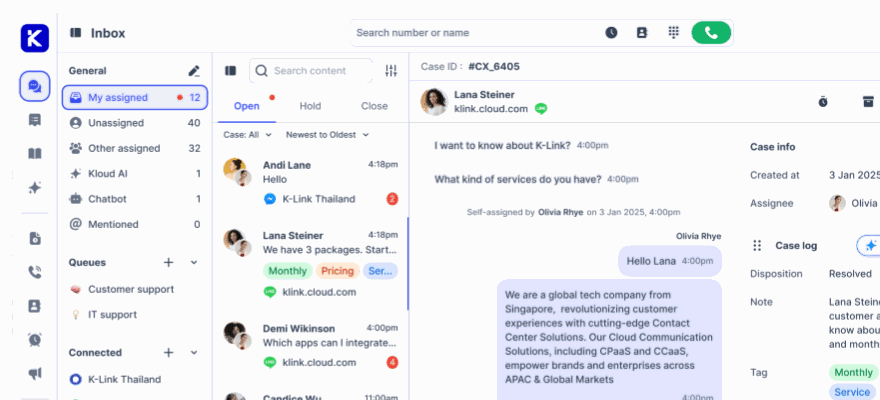
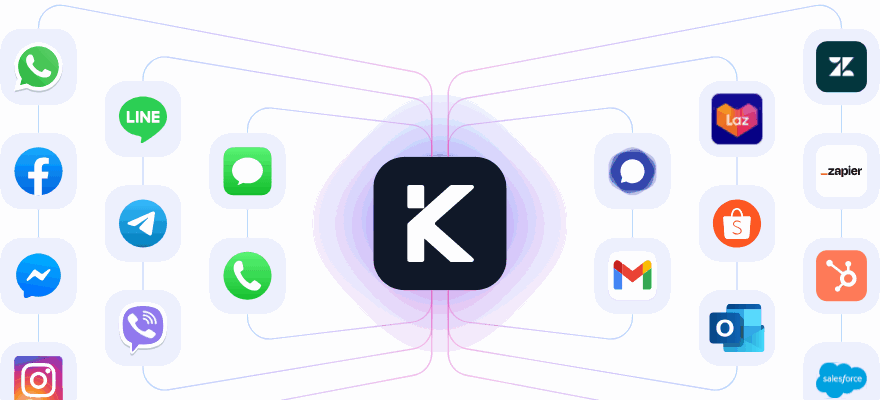
A unified customer experience platform brings Voice AI and Chat AI together under one system, maintaining shared customer profiles and conversation histories. For instance, if a customer starts a conversation via web chat and later calls your support line, the Voice AI can access the earlier chat transcript to continue the discussion without starting over.
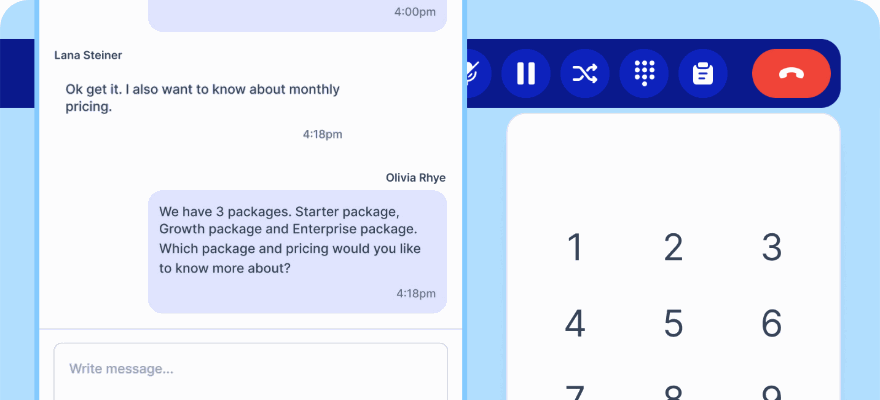
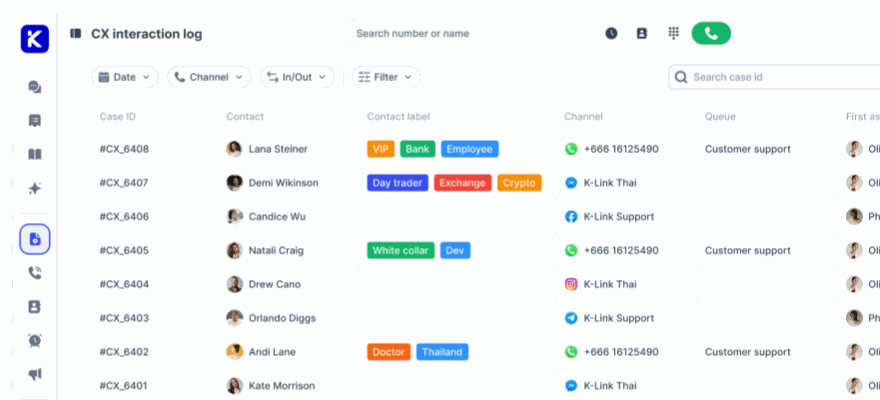
"With klink.cloud's Unified Inbox, you can view and respond to every message - whether it's a phone call, WhatsApp, Facebook, Telegram, email, or live chat - all in one unified dashboard." - klink.cloud
This unified approach relies on channel-agnostic conversation APIs, which allow consistent routing rules across channels. Workflow automation further enhances efficiency by verifying customer identities, gathering necessary information, and generating summaries that pre-fill support tickets. These features let support agents focus on resolving issues rather than repetitive data entry.
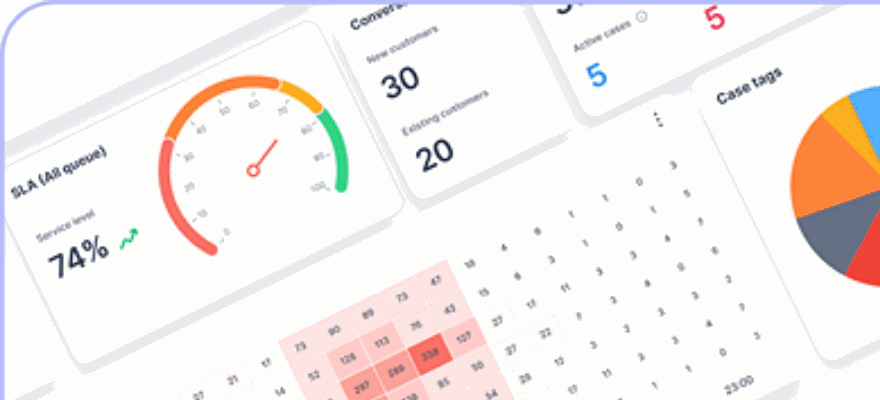
Businesses using both Voice AI and Chat AI within a unified platform have reported impressive results, such as a 41% reduction in total handle time, 4.5/5 average customer satisfaction scores, and over 20% improvement in customer retention. Consolidated analytics and reporting also allow teams to monitor key metrics - like containment rates, average handle times, and first-contact resolutions - across both channels.
Centralized management of intents, entities, and conversation flows reduces maintenance efforts. By defining these elements once, they can be deployed across Voice AI and Chat AI, ensuring consistency. Fast data storage, strong encryption, and detailed audit logs are essential for real-time interactions and regulatory compliance. These integration strategies not only streamline operations but also form the backbone of a robust omnichannel customer support system.
When to Choose Voice AI vs Chat AI
Deciding between Voice AI and Chat AI comes down to understanding your business needs and what your customers expect. Factors like who your audience is, the complexity of their issues, and the channels they prefer all play a role. Here's a closer look at when each technology works best and how they can complement each other.
When to Prioritize Voice AI
Voice AI shines in situations where real-time, conversational interaction is necessary. Think industries like banking, healthcare, utilities, and travel - places where immediate, human-like assistance is often expected. It’s particularly effective for handling high call volumes and complex, multi-step issues.
This technology is a great fit for high-stakes scenarios such as fraud alerts, service outages, billing disputes, insurance claims, or healthcare-related inquiries. The natural flow of spoken interaction makes it easier to explain issues, reduces misunderstandings, and quickly captures context. Key metrics to track here include average handle time, abandonment rate, first-contact resolution, customer satisfaction (CSAT), and escalation rates.
Voice AI is also ideal for situations where speaking is simply more convenient than typing. To make these interactions as smooth as possible, design call flows that minimize complicated menus, let customers describe their issues in their own words, and support regional accents in US English. Always provide clear options to transfer to a live agent if needed.
When to Prioritize Chat AI
Chat AI is the go-to choice for digital-first interactions. If your customers are reaching out through websites, mobile apps, SMS, or messaging platforms, Chat AI is perfectly suited to handle straightforward, repetitive tasks. These might include order status updates, password resets, appointment confirmations, or basic troubleshooting - all without requiring voice infrastructure.
This technology works especially well for users who prefer multitasking. It can surface knowledge base content, present quick-reply buttons, or guide users through FAQs, billing questions, subscription updates, and step-by-step instructions. To measure its success, keep an eye on metrics like deflection rates (how often it resolves issues without human help), resolution rates, time to first response, cost per interaction, and self-service adoption.
When deciding whether to use Chat AI, consider your audience. Are they younger, tech-savvy, and comfortable with digital tools? Do they use web, mobile apps, or messaging platforms more than phone calls? For simpler, high-volume interactions, Chat AI is a natural fit. However, for more time-sensitive or emotionally charged issues, Voice AI or callbacks may be better options.
Using Both Technologies Together
Voice AI and Chat AI each bring unique strengths to the table, and combining them can provide a seamless, omnichannel experience. For instance, a retailer might use Chat AI on their website to handle FAQs, order tracking, and returns, while Voice AI takes care of delivery issues, payment problems, or warranty claims. By keeping customer profiles and order data unified, businesses can ensure customers don’t have to repeat themselves.
Here’s another example: A SaaS provider could use Chat AI for in-app support but escalate more complex issues, like service outages or advanced configurations, to Voice AI callbacks. This smooth handoff helps avoid customer frustration and keeps things efficient.
A unified platform is key to making this work. Centralizing routing, customer profiles, and conversation histories ensures that whether a customer starts with Chat AI, moves to Voice AI, or ends up with a live agent, the context stays consistent. This allows businesses to create workflows where Chat AI handles simpler tasks and seamlessly transfers more complex issues to Voice AI or human agents.
Case studies have shown that integrating both technologies can significantly improve response times and boost agent productivity. To roll out both systems effectively, make sure they connect to the same CRMs, ticketing tools, and knowledge bases. Use US English spelling and phrasing, US currency formatting (like $1,299.50), and familiar date/time formats (such as "March 15 at 2:30 PM"). Test for US-specific expectations, such as short wait times, clear privacy policies, and easy escalation options. Regularly review analytics to fine-tune how issues are routed between Chat AI, Voice AI, and human agents.
Experts suggest starting with high-volume, well-defined use cases - like FAQs for Chat AI or basic call routing for Voice AI. As you gather data and refine your models, you can gradually expand into more complex workflows. Over time, you can introduce intelligent routing that automatically selects the best channel - chat or voice - based on factors like the type of issue, customer profile, or urgency. Establish governance practices for training data and monitor performance to ensure everything stays on track.
Conclusion: Choosing the Right AI for Your Business
There’s no one-size-fits-all AI solution - your choice depends on your business goals and what your customers need. For complex, high-stakes interactions like billing disputes or insurance claims, Voice AI shines with its ability to provide empathy and real-time conversations. On the other hand, Chat AI is perfect for handling high-volume, straightforward tasks like order tracking or password resets, all while keeping costs down.
The best results often come from combining the strengths of both. A hybrid approach can significantly improve efficiency and customer satisfaction. For example, one e-commerce company saw a 50% faster resolution time and a 30% increase in CSAT scores by integrating both Voice and Chat AI. Chat AI manages routine inquiries and offers 24/7 self-service, while Voice AI takes care of more nuanced conversations, building trust and loyalty along the way.
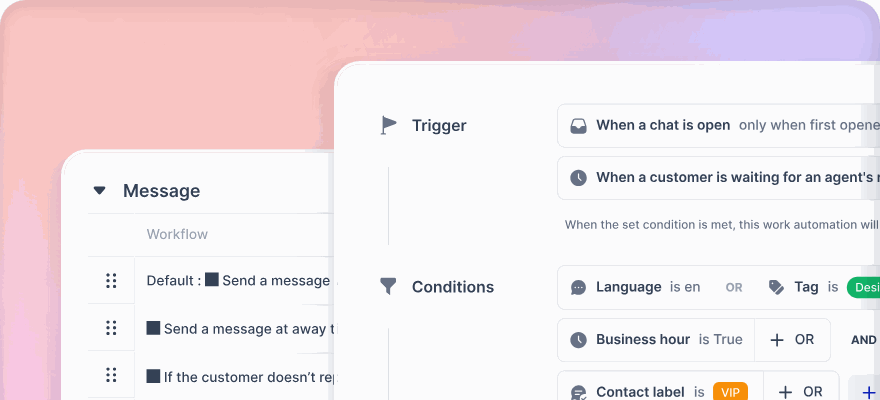
With klink.cloud's unified CX platform, managing customer interactions becomes seamless. It centralizes everything - from calls to chats - and ensures smooth transitions between channels, keeping the context intact. The platform uses smart routing, directing simple queries to Chat AI and more complex issues to Voice AI or human agents, based on factors like keywords, customer type, language, or VIP status. This streamlined approach ensures your support operations are efficient and data-driven.
To find the right balance, start by mapping out your contact reasons based on volume and complexity. Test both AI solutions on klink.cloud for 60–90 days, and adjust your strategy based on metrics like CSAT and containment rates. Set clear, measurable goals - whether it’s reducing phone wait times by 40%, deflecting 50% of FAQ chats, or boosting CSAT scores by half a point - and let those objectives guide your investment in Voice AI, Chat AI, or both.
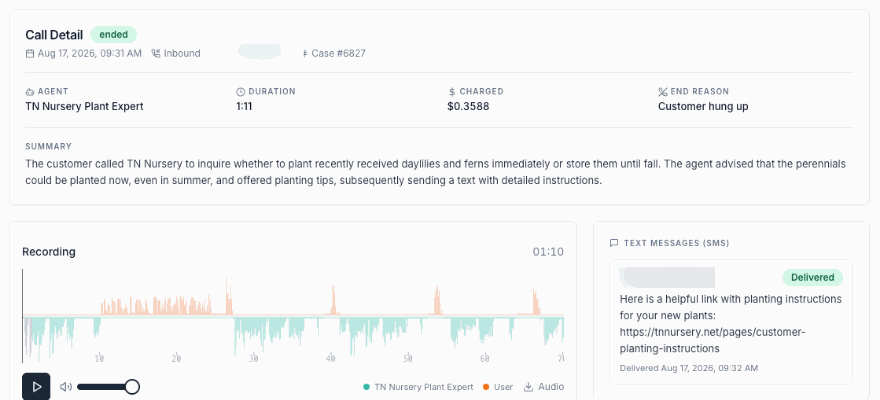
Ultimately, the real edge comes from aligning each AI channel with specific customer needs and business outcomes. With klink.cloud’s real-time analytics, call recordings, and performance tracking across all channels, you can continuously refine your customer support strategy to deliver faster, more satisfying solutions.
FAQs
How can businesses combine Voice AI and Chat AI to improve customer support?
Businesses can enhance customer support by combining Voice AI and Chat AI, each tailored to handle specific interaction types. Chat AI works best for straightforward tasks like answering FAQs or managing routine inquiries with quick, text-based responses. Meanwhile, Voice AI shines in scenarios requiring a more human touch, such as addressing complex, emotional, or urgent issues.
Blending these technologies allows companies to speed up response times, lighten the load on support agents, and offer a more tailored experience. For instance, Chat AI can walk customers through basic troubleshooting, while Voice AI can take over when empathy or detailed problem-solving is necessary. This balanced approach ensures high-quality, efficient support across various communication channels.
What should businesses consider when choosing between Voice AI and Chat AI for customer support?
When choosing between Voice AI and Chat AI for customer support, it’s essential to think about how your customers interact, the devices they rely on, and your business goals.
Voice AI shines in situations where real-time, hands-free assistance is needed. It’s perfect for handling urgent issues or helping customers who find it easier to talk than type. Meanwhile, Chat AI is a great fit for customers who multitask or need step-by-step written instructions, like troubleshooting a problem or updating account details.
Take into account what your customers prefer, the complexity of their questions, and how each option fits into your overall support plan to create a smoother and more satisfying experience.
What are the common challenges of implementing Voice AI in customer support, and how can businesses address them?
Implementing Voice AI in customer support isn't without its hurdles. One common challenge is the higher upfront costs associated with setup. Another is ensuring the system can handle a wide range of accents, dialects, and languages effectively. On top of that, integrating Voice AI into existing tools and workflows can prove tricky for many businesses.
To tackle these issues, companies should prioritize advanced speech recognition technology capable of understanding subtle linguistic differences. Thorough testing and training are key to fine-tuning the system for better accuracy. Additionally, working with experienced providers and ensuring smooth integration with current systems can simplify the process and help businesses fully leverage the potential of Voice AI.