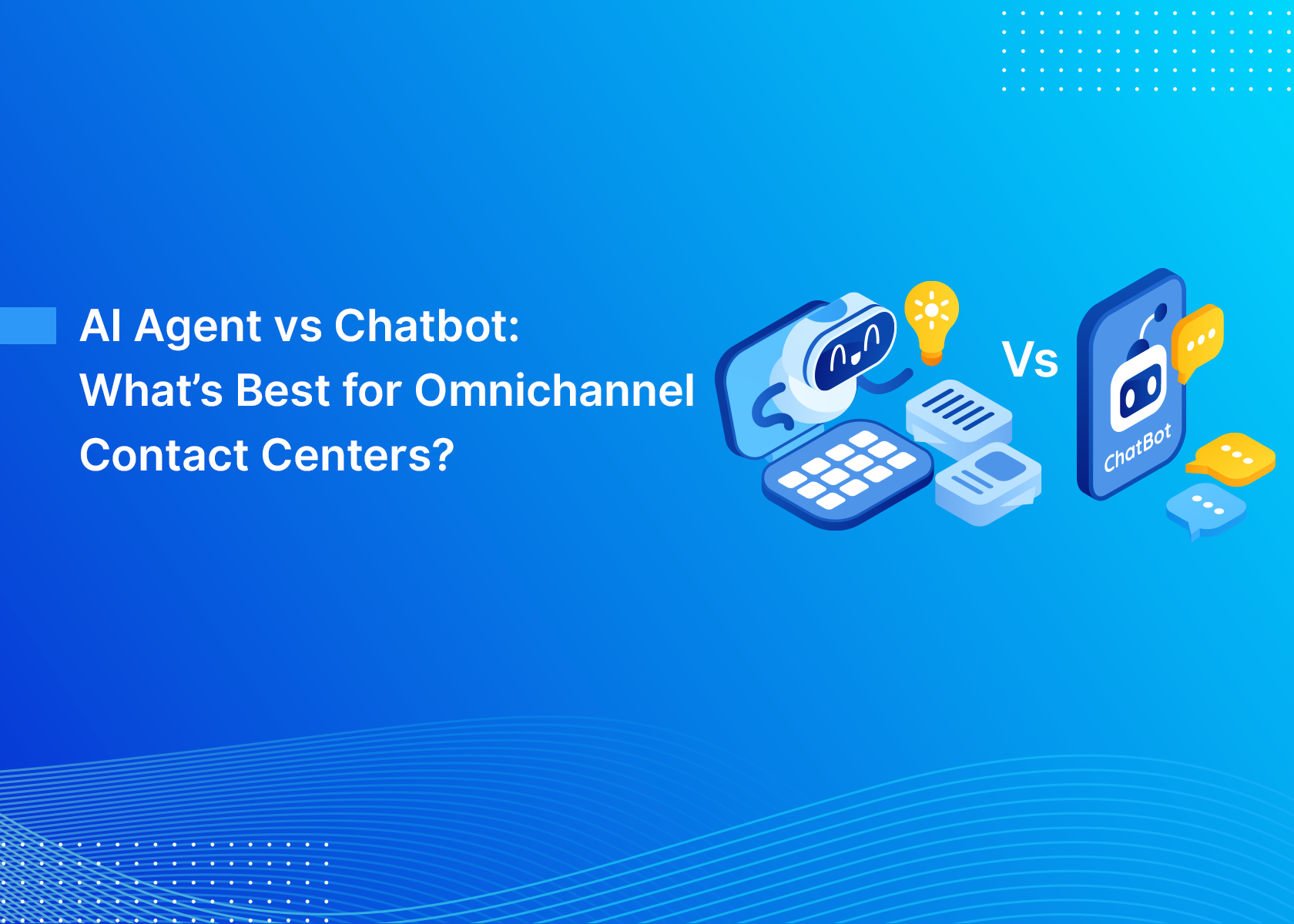
AI Agent vs Chatbot: Which One Does Your Business Need?
If you're deciding between chatbots and AI agents for your business, the choice comes down to the complexity of your customer needs and the level of automation you want. Chatbots handle simple, repetitive tasks like answering FAQs or scheduling appointments. They're cost-effective and easy to set up. AI agents, however, go further - they solve complex problems, make decisions, and integrate with multiple systems to deliver personalized, autonomous support.
Here’s a quick breakdown:
- Chatbots: Ideal for basic tasks like answering common questions, providing after-hours support, or routing inquiries. They’re simple, efficient, and affordable.
- AI Agents: Best for complex workflows like resolving billing issues, managing returns, or offering tailored recommendations. They operate independently, learn over time, and work across multiple platforms.
Quick Comparison
| Feature | Chatbot | AI Agent |
|---|---|---|
| Autonomy | Follows pre-set scripts | Makes decisions independently |
| Task Complexity | Handles basic, repetitive tasks | Manages multi-step, complex workflows |
| Context Retention | Limited to one session | Maintains history across interactions |
| Integration | Basic system connections | Deep integration with multiple tools |
| Cost | Lower initial investment | Higher upfront cost, but greater ROI |
Key takeaway: Use chatbots for straightforward tasks and AI agents for advanced problem-solving. Many businesses find success with a hybrid approach, starting with chatbots and scaling up to AI agents as needs grow.
3 Reasons AI Agents Are Better Than Chatbots In 2025 | EP52
Main Differences Between AI Agents and Chatbots
The differences between chatbots and AI agents highlight their unique strengths and how they address customer needs. Both rely on conversational interfaces, but their functionality, learning capabilities, and autonomy vary greatly. Understanding these distinctions can help you choose the right tool to meet your business goals.
Capabilities and Autonomy
Chatbots stick to predefined rules. They respond only to specific inputs, and when faced with questions outside their programmed scope, they often provide generic replies - usually suggesting the customer reach out to a human agent for further assistance.
AI agents, on the other hand, are built to act independently and adapt in real time. Instead of waiting for direct commands, they analyze situations and may even take action based on live data. For example, AI agents can integrate with inventory systems to provide detailed insights. Unlike chatbots, which need manual updates to accommodate new products or policies, AI agents refine their responses through continuous interaction.
Context and Memory
Chatbots treat each interaction as a separate event. They lack the ability to retain context, which means follow-up questions often reset the conversation, making it hard to build on previous exchanges.
AI agents excel in maintaining context, not just during a single interaction but across multiple ones. They can recall past conversations, enabling them to offer more personalized and efficient support. For example, an AI agent might notice a customer’s recurring purchase habits and proactively suggest a faster checkout process, improving the overall experience.
Task Complexity and Integration
Chatbots are ideal for simple, straightforward tasks like answering FAQs, gathering basic information, or routing requests. They’re particularly effective for handling high volumes of routine interactions.
AI agents, however, are designed for more complex workflows. They can manage multi-step tasks by pulling data from various systems and executing actions seamlessly. For instance, while a chatbot might explain a return policy, an AI agent could guide a customer through the entire return process - verifying purchase details, checking warranty status, and updating records - all in one conversation. Additionally, AI agents offer deeper integration with business platforms, making it possible to automate entire processes.
Comparison Table
| Feature | Chatbot | AI Agent |
|---|---|---|
| Autonomy | Follows predefined scripts | Makes independent decisions and adapts |
| Learning | Requires manual updates | Learns from interactions continuously |
| Task Complexity | Handles simple tasks | Manages multi-step workflows |
| Context Retention | Limited to current session | Maintains history across interactions |
| Memory | Minimal or none | Stores and uses past information |
| Integration | Basic system connections | Deep integration with multiple platforms |
| Problem-Solving | Matches inputs to fixed responses | Analyzes and tailors solutions |
| Channel Coverage | Limited to specific channels | Works across multiple touchpoints |
| Personalization | Generic responses | Tailored interactions based on history |
| Escalation | Often escalates complex issues | Resolves many problems independently |
| Setup | Easier to implement | More complex configuration required |
| Cost | Lower upfront cost | Higher initial investment, greater long-term value |
| Customer Experience | Effective for simple needs | Provides more human-like, comprehensive support |
Choosing between these tools depends on your business needs. Chatbots are great for automating basic, repetitive tasks at scale. But if your focus is on managing complex workflows and delivering personalized customer experiences, AI agents are the way to go - even if they require a more advanced setup and higher initial investment.
When to Choose a Chatbot
Chatbots shine when it comes to handling predictable, repetitive interactions at scale. Let’s explore scenarios where deploying a chatbot makes the most sense.
Best Use Cases for Chatbots
Handling routine, high-volume inquiries
If your support team is constantly fielding the same questions - like "What are your business hours?" or "How do I reset my password?" - a chatbot can step in. It answers these questions instantly, freeing up your human agents to tackle more complex, nuanced issues.
Providing after-hours support
Customers often need assistance outside of regular business hours. A chatbot ensures 24/7 availability, delivering instant responses even when your team isn’t online. This eliminates unnecessary wait times and helps retain customers who might otherwise leave out of frustration.
Qualifying leads and engaging visitors
When someone visits your website, a chatbot can greet them, ask a few key questions, and determine if they’re a potential customer. It can also collect contact details, schedule demos, and pass qualified leads directly to your sales team - all without requiring constant human involvement.
Managing simple transactions
Tasks like resetting passwords or checking order statuses are perfect for chatbots. They handle these efficiently and consistently.
Delivering consistent information
Chatbots ensure every customer gets the same, accurate response, maintaining consistency across all interactions.
Supporting an omnichannel presence
Deploying a chatbot across platforms like your website, Facebook Messenger, or WhatsApp allows customers to engage through their favorite channels. Better yet, the chatbot keeps the conversation seamless, so customers don’t have to repeat themselves when switching platforms.
These scenarios highlight how chatbots simplify routine interactions, allowing businesses to focus on more critical areas.
Benefits of Chatbots
Cost savings
Chatbots handle thousands of routine inquiries simultaneously, significantly reducing the need for a large support team. This translates to lower operational costs while maintaining high levels of customer service.
Instant responses
No one likes waiting. Chatbots provide immediate answers, keeping customers engaged and reducing frustration associated with traditional support delays.
Quick and simple setup
Unlike more advanced AI systems, chatbots are easier to configure. Businesses can define rules, create conversation flows, and link the chatbot to their knowledge base - all without requiring deep technical expertise or lengthy development cycles.
Effortless scalability
Chatbots can manage anything from a few hundred to tens of thousands of conversations per day. Whether it’s a holiday rush or an unexpected surge in traffic, chatbots handle the load without requiring extra staff or training.
Valuable data insights
Every interaction with a chatbot generates data about customer behavior and common questions. This information can help refine your knowledge base, improve products, and identify service gaps.
Boosting agent efficiency
By taking care of repetitive tasks, chatbots allow human agents to focus on more complex, high-value interactions. This not only leads to better problem-solving but also improves job satisfaction for your team.
Chatbots work hand-in-hand with human agents, taking care of repetitive tasks while leaving the more challenging, meaningful work to the experts.
When to Choose an AI Agent
Chatbots are excellent for simple, repetitive tasks, but when it comes to tackling more intricate and variable challenges, AI agents take the lead. These systems go beyond following pre-set scripts - they analyze, adapt, and act across multiple platforms to solve problems that would typically need human involvement.
Best Use Cases for AI Agents
Resolving complex customer issues
When a customer’s problem involves multiple steps or systems, AI agents can manage the entire process. For instance, in the case of a billing error, an AI agent can review account history, verify records, process a refund, and confirm the resolution - all without human intervention.
Coordinating across multiple systems
AI agents excel at tasks that require seamless interaction between different platforms. They can update a customer’s shipping address in your CRM, adjust order details in your fulfillment system, update billing in your payment processor, and send a confirmation - all in one smooth workflow.
Offering personalized recommendations
By analyzing customer history and preferences, AI agents provide tailored suggestions. For example, if a customer is shopping for software, the agent can assess past purchases, business size, and technical needs to recommend the most suitable plan or add-ons.
Intelligent escalation handling
AI agents know when they’ve reached their limits. They can transfer the full context of a conversation to a human agent, ensuring a seamless handoff and saving the customer from repeating details.
Managing scheduling and coordination
For tasks like scheduling or rescheduling appointments across time zones, AI agents handle calendars, send invites, and set reminders. They also resolve conflicts or find alternative times, making the process hassle-free for customers.
Processing returns and exchanges
AI agents can verify return eligibility, calculate any associated fees, generate return labels, and update records - all while keeping the process efficient and accurate.
Technical troubleshooting
AI agents guide customers through troubleshooting steps, interpret error messages, review logs, and apply fixes. If the initial solution doesn’t work, they adapt their approach instead of repeating the same steps.
These advanced applications highlight how AI agents can simplify even the most complex operations for businesses.
Benefits of AI Agents
AI agents bring a range of advantages that improve both customer experience and operational efficiency.
Faster task completion
By accessing and working across multiple systems simultaneously, AI agents complete tasks much quicker than traditional processes, reducing delays and improving service speed.
Higher first-contact resolution
AI agents often resolve issues in a single interaction. They can process refunds, update accounts, or modify orders without needing approvals or escalations, cutting down on follow-ups and improving customer satisfaction.
Consistent service delivery
Unlike human agents, who may vary in their decisions, AI agents follow business rules consistently, ensuring uniform service quality and adherence to company policies.
Ongoing improvement
AI agents learn from every interaction. By analyzing patterns and outcomes, they refine their strategies to become more effective over time.
Simplified operations
Instead of relying on separate systems for email, chat, voice, and social media, AI agents provide a unified solution. This streamlines your technology stack and reduces operational complexity.
Better use of human resources
By automating complex but routine tasks, AI agents free up your team to focus on areas requiring creativity, empathy, or strategic thinking - like handling sensitive customer issues or innovating service offerings.
Dynamic, real-time responses
AI agents adapt to customer sentiment, urgency, and context. Whether resolving time-sensitive issues or calming frustrated customers, they deliver tailored care with precision.
AI agents mark a shift from basic automation to intelligent systems capable of understanding context, making decisions, and adapting in real time. When your business needs extend beyond answering simple questions to solving deeper challenges, AI agents provide the expertise and flexibility to get the job done.
sbb-itb-204ca50
How to Evaluate Your Business Needs
Selecting the right solution for your business boils down to understanding your specific customer demands, operational workflows, and available resources. The goal is to align these factors with a system that meets your needs effectively.
Here’s a framework to help you evaluate your business context and make an informed decision.
Assessment Framework
To determine the best fit for your business, consider these key factors:
Interaction complexity: Analyze the types of customer inquiries you typically handle. If most questions are straightforward, like "What time do you open?" or "How can I reset my password?", a chatbot can manage these efficiently. However, if your customers often need help with more involved issues - like modifying an order already in progress or troubleshooting a technical problem that requires cross-referencing multiple systems - an AI agent is better equipped to handle these scenarios.
Volume patterns: Look at your customer traffic trends. If you experience predictable surges - such as a retail boom during the holidays or a tax software spike in April - this data can guide your automation strategy. High volumes of repetitive questions are ideal for chatbots, while irregular spikes involving complex requests may call for AI agents that can handle diverse situations without human intervention.
Data integration capabilities: Assess the complexity of your system integrations. If resolving customer issues only requires pulling data from one or two systems, a chatbot with basic integration features should suffice. On the other hand, if your team frequently needs to access and update information across several systems - like CRM, billing, and inventory - an AI agent's ability to seamlessly coordinate across platforms becomes essential.
Internal technical resources: Evaluate your technical team's capacity. If you have limited developer resources or an already overstretched IT team, chatbots are easier to implement and maintain. AI agents, while more powerful, require a stronger technical foundation and consistent oversight to ensure they make appropriate decisions.
This framework ties back to earlier discussions on task complexity and system integration, offering a structured way to identify the right solution for your needs.
Decision Matrix Table
Use this table to match your current situation with the most effective solution.
| Your Situation | Recommended Solution | Why This Works |
|---|---|---|
| Handling 500+ repetitive questions daily (e.g., hours, policies, account status) | Chatbot | Automates high-volume, repetitive inquiries effortlessly |
| Customers need assistance across 3+ systems (CRM, billing, inventory, shipping) | AI Agent | Synchronizes data and actions across multiple platforms |
| Support team spends over 60% of their time on routine tasks | Chatbot | Frees up staff to focus on more complex, judgment-based issues |
| Issues require analysis of account history for resolution | AI Agent | Provides informed decisions beyond preset scripts |
| Limited technical team with basic integration needs | Chatbot | Easier to implement and maintain with minimal resources |
| Seasonal spikes (2-3x normal traffic) with varied request types | Hybrid | Chatbot handles simple queries; AI agent manages complex overflow |
| First-contact resolution rate below 40% | AI Agent | Resolves more issues in one interaction by accessing multiple systems |
| Customer inquiries are mostly informational with no account updates needed | Chatbot | Delivers instant answers without requiring system changes |
| Requests involve modifying active orders, subscriptions, or bookings | AI Agent | Handles real-time updates across systems while maintaining accuracy |
| Expanding business with plans to add new sales channels soon | Hybrid | Scales alongside growth to ensure consistent service across channels |
The trick is to align your current needs with your future goals. For instance, if you’re currently managing 200 simple inquiries daily but plan to launch several new product lines in the next six months, factor that growth into your decision. Similarly, if your team is currently handling everything manually but you’re rolling out a new CRM soon, think about how that integration will shape your automation strategy.
Many businesses find it effective to start with a chatbot for common, simple questions and gradually incorporate AI agent capabilities for more complex scenarios. This phased approach allows you to automate quick wins while building toward more advanced solutions as your needs grow and evolve.
How klink.cloud Supports Both AI Agents and Chatbots
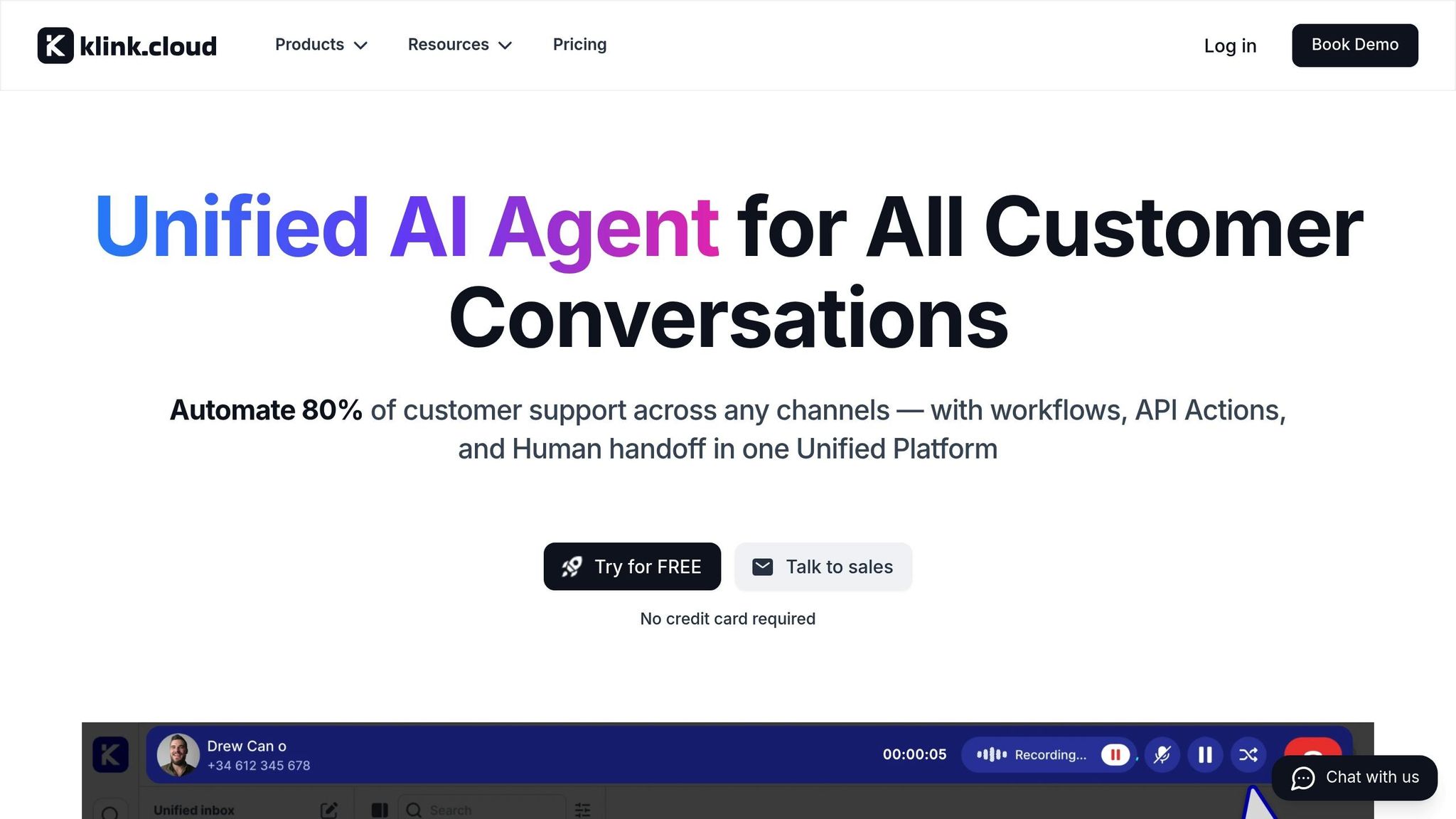
klink.cloud brings chatbots and AI agents together under one platform, simplifying the process for businesses to implement and manage their automation strategies. Whether your needs call for chatbots, AI agents, or a mix of both, klink.cloud eliminates the hassle of juggling multiple tools or rebuilding workflows, providing a seamless way to integrate automation into your operations.
With klink.cloud, businesses can deploy and manage chatbots and AI agents in a single environment. This approach allows you to start with straightforward automation and expand as your requirements grow, without the need to treat these systems as separate entities.
Omnichannel Support and Integration
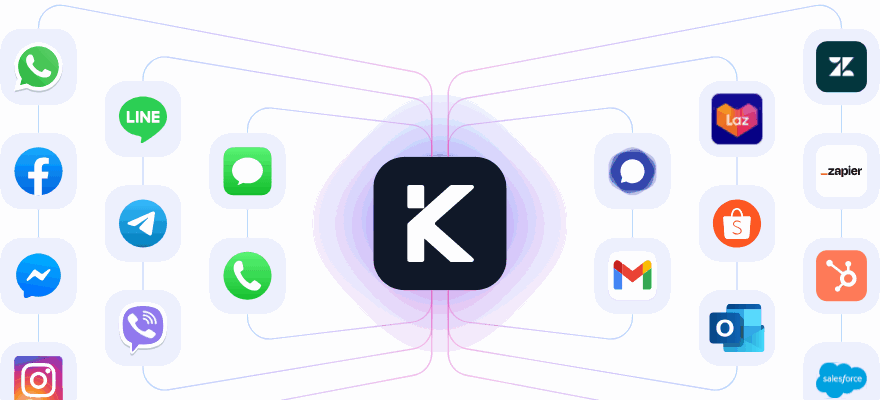
One of the biggest challenges in automation is delivering a consistent experience across multiple communication channels. Customers may start a conversation on Facebook Messenger, follow up via email, and later call your support line - all while expecting the same level of service. klink.cloud tackles this issue with native integrations across key channels like phone, SMS, social media, email, and web chat.
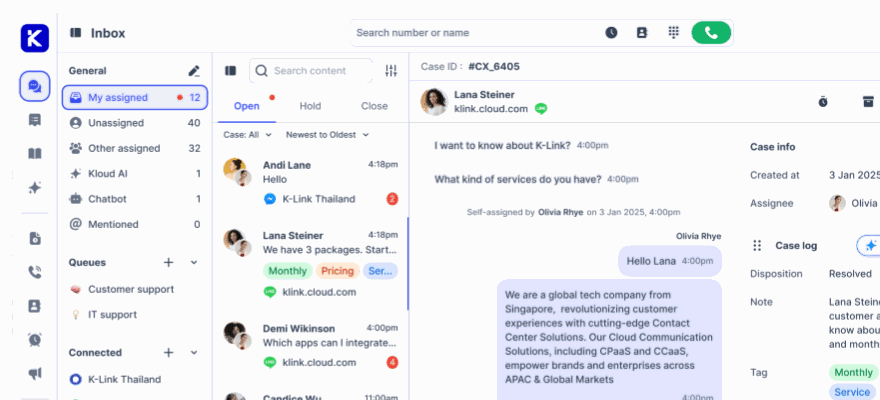
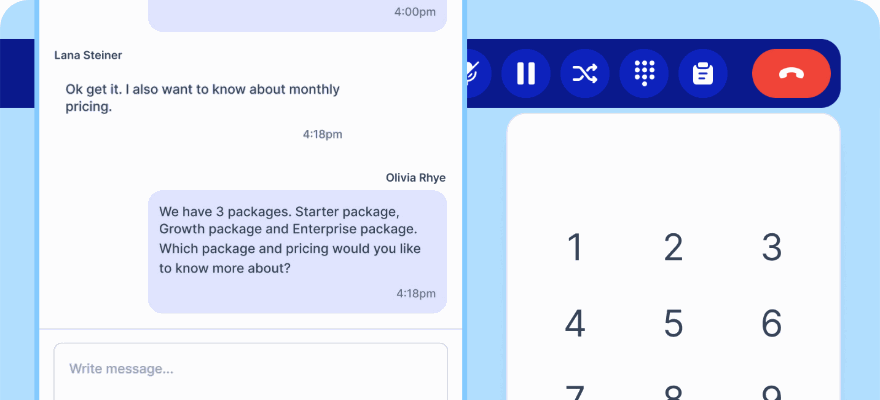
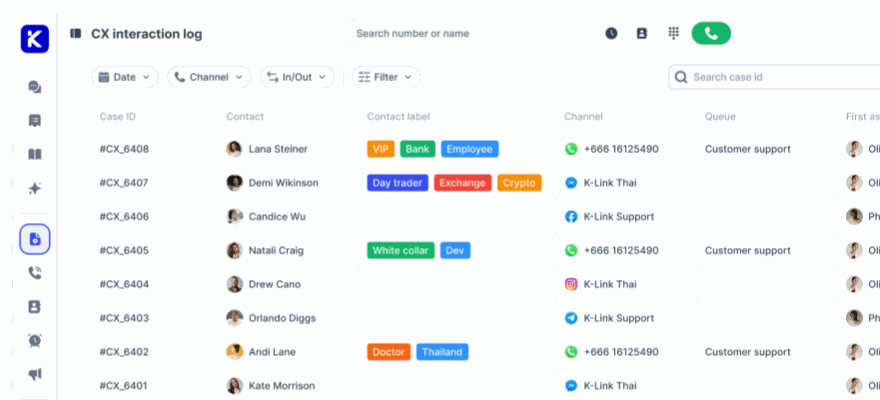
All customer interactions are funneled into a Unified Inbox, enabling your team to view and respond to every message from one dashboard. This ensures that both chatbots and AI agents operate seamlessly across channels, accessing the same customer data and using consistent logic. Whether a customer reaches out via text, call, or social media, they’ll receive accurate and uniform responses.
The platform adapts to the requirements of each channel automatically - converting voice to text for calls, adhering to SMS character limits, or displaying rich UI elements for web chat. This removes the need to configure separate bots for each channel and ensures customers get consistent answers, regardless of how they contact you.
Routing is managed through customizable rules based on intent, sentiment, and complexity. For instance, a chatbot might handle simple inquiries like store hours or return policies, while an AI agent steps in for tasks like modifying orders. If further assistance is needed, the system escalates to a human agent for nuanced or approval-based issues.
Additionally, klink.cloud integrates with tools like Salesforce, Zendesk, and Shopify, enabling both chatbots and AI agents to perform tasks beyond answering questions. For example, a chatbot can check order statuses, while an AI agent can process a return by updating inventory, issuing a refund, and creating a support ticket - all within the same interaction.
"klink.cloud has made a huge difference for our contact center! Our agents can easily manage conversations across different channels, helping us respond faster and keep our clients happy. We've seen big improvements in both productivity and customer satisfaction since we started using it." - James Carter, Operations Manager, MPG BPO
These integrations pave the way for scalable automation that grows alongside your business.
Scalable Automation and AI Assistance
klink.cloud’s strength lies in its ability to scale automation incrementally. It allows businesses to start small - perhaps with a chatbot handling common questions - and gradually expand into more sophisticated AI agent capabilities as opportunities for deeper automation arise.
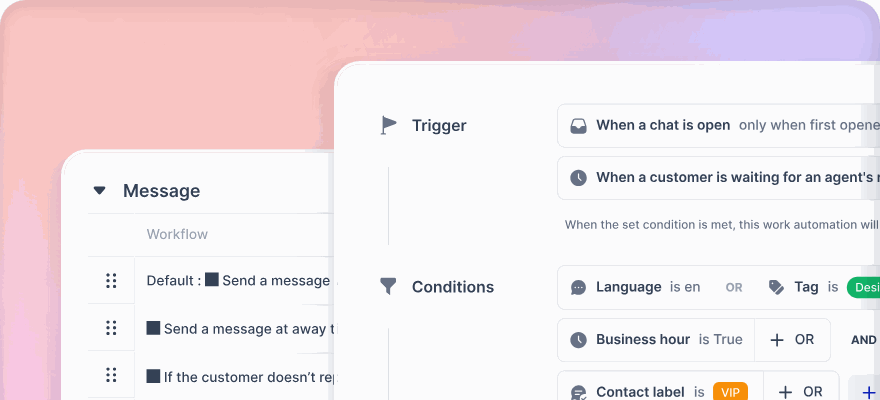
The platform includes a workflow automation engine that simplifies the creation of multi-step processes. Using a visual interface, you can define workflows with conditional logic, loops, approval steps, and error handling. These workflows enable AI agents to handle complex tasks like onboarding new customers, conducting eligibility checks, or managing appointment scheduling across various systems - all without requiring advanced coding knowledge.
klink.cloud also supports event-driven triggers, enabling proactive customer engagement. For example, if a payment fails or a support ticket remains unresolved, an AI agent can notify the customer, suggest alternatives, or escalate the issue automatically.
With CRM integration, every interaction is enriched with customer data, such as account tier, purchase history, and past support tickets. Even basic chatbots can personalize interactions, like greeting customers by name or prioritizing specific topics. AI agents take it further by using real-time customer data to tailor their responses and decisions. They can recommend troubleshooting steps based on the product version a customer owns, identify accounts at risk of churning, or suggest relevant upsells based on purchase history.
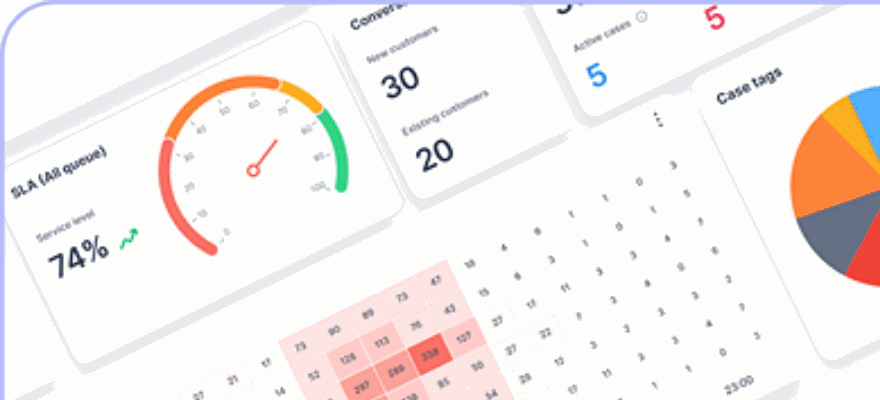
To measure performance, klink.cloud provides real-time dashboards and analytics. These tools track key metrics like conversation volume by channel, containment rates (how many issues are resolved without human intervention), time to resolution, escalation rates, customer satisfaction scores, and cost per contact. Detailed reports also highlight areas for improvement, such as chatbot misunderstandings, delays in AI agent responses, or workflows driving the most revenue or retention.
Data shows that combining chatbots and AI agents on a unified platform can significantly boost self-service resolution rates - from the typical 20–30% with chatbots alone to 40–60% when AI agents handle more complex tasks. Contact centers often see up to 30% lower costs per contact due to smarter automation and better routing.
Businesses using klink.cloud report impressive results, including a 5x increase in productivity and a 2x boost in customer satisfaction, all supported by 99% uptime.
"Since adopting klink.cloud, we've seen a massive improvement in our response times. Our customers are happier, and our agents are more efficient than ever." - Sarah Lee, Head of Contact Center, Horizon Solutions
For example, a U.S. retail e-commerce brand might use chatbots on their website and social media to handle order tracking and return policies, while AI agents manage tasks like updating delivery addresses or processing refunds. In healthcare, chatbots could handle appointment reminders and intake questions, while AI agents coordinate scheduling, insurance verification, and electronic health record updates - all while meeting HIPAA compliance.
klink.cloud also includes governance and security features like role-based permissions, audit logs, and data residency options. This centralized approach ensures compliance with U.S. standards like HIPAA and SOC 2, making it a reliable choice for businesses with strict regulatory requirements.
Conclusion: Making the Right Choice for Your Business
Throughout this article, we've explored how understanding the unique strengths of chatbots and AI agents can help you design a scalable and efficient customer experience. These tools aren't just alternatives - they can work together to meet your customers' needs effectively.
Key Takeaways
Chatbots are ideal for managing high volumes of straightforward requests, such as FAQs, checking order statuses, booking appointments, or providing basic account information. They’re affordable, quick to implement, and can handle up to 70–90% of routine support tasks without human help. On the other hand, AI agents shine in handling more complex, multi-step workflows. They can make context-aware decisions, manage tasks across multiple systems, and provide proactive, personalized support. For example, they can process returns while updating inventory and issuing refunds, coordinate meetings across time zones, or analyze customer behavior to trigger retention strategies. AI agents increase automation efficiency by about 45%, learning and adapting in real time to deliver a more tailored customer experience.
Many businesses find success with a hybrid approach - using chatbots for simpler tasks and AI agents for more advanced, personalized solutions. This layered strategy allows companies to address FAQs quickly while gradually expanding automation to handle more complex interactions.
When deciding which tools to implement, consider factors like the complexity of tasks, the need for personalization, integration requirements, and your budget. Start by mapping customer interactions into simple and complex categories. Define clear success metrics - such as automation rates, customer satisfaction scores, cost per ticket, and average resolution times - before deploying any solution. For businesses with tighter budgets, starting with a chatbot to achieve quick wins and then using the data to refine AI agent use cases is a smart, cost-effective approach.
The benefits are clear: companies that combine chatbots and AI agents often see self-service resolution rates jump from 20–30% with chatbots alone to 40–60% when AI agents are added to handle more complex scenarios.
Final Recommendations
Here’s how you can fine-tune your automation strategy based on these insights:
Start by identifying your current challenges, such as slow response times, inefficient routing, or fragmented communication channels. Look for solutions that integrate seamlessly with your existing CRM, helpdesk, and billing systems. Integration is key - AI agents are most effective when they can act across multiple systems, not just engage in conversations.
Consider using a unified platform like klink.cloud, which allows you to deploy both chatbots and AI agents without the hassle of managing multiple tools. This platform offers omnichannel support, workflow automation, CRM integration, and real-time analytics, making it easier to scale your automation efforts while maintaining consistent customer experiences. Businesses using klink.cloud report a fivefold increase in productivity and a twofold improvement in customer satisfaction, all supported by 99% uptime.
Additionally, regularly review analytics to refine bot workflows and agent policies. If your business operates in the U.S., ensure your solution is equipped to handle localized requirements like currency formatting, imperial measurements, and time zones to keep responses accurate and reliable.
Ultimately, the key to success lies in matching the right tool to the right task. By carefully assessing your needs, setting clear goals, and choosing a flexible platform, you can build an automation strategy that evolves alongside your business.
FAQs
How can a business decide whether to use a chatbot or an AI agent?
When deciding between a chatbot and an AI agent, it’s crucial to start by pinpointing your business objectives and the kind of customer experience you aim to provide. Chatbots work well for straightforward, repetitive tasks like answering FAQs or offering basic support. They’re a practical and budget-friendly choice for simple automation needs.
On the flip side, AI agents are designed for more advanced interactions. They deliver personalized responses, handle complex issues, and can often guide customers through an entire resolution process without human intervention.
Budget and long-term goals should also factor into your decision. While chatbots usually come with lower upfront costs, AI agents can deliver more value over time by streamlining operations and boosting customer satisfaction. Assess your specific requirements to determine which solution best fits your business goals and customer expectations.
How can businesses use chatbots and AI agents together to improve customer experience across different channels?
To enhance customer interactions across various platforms, businesses can strategically use a combination of chatbots and AI agents. Chatbots excel at handling simple, repetitive tasks, such as responding to FAQs or processing basic requests. On the other hand, AI agents are better suited for tackling more complex responsibilities, like making informed decisions or providing personalized solutions.
When these technologies work together, businesses can build a hybrid system where chatbots manage routine interactions, allowing AI agents to dedicate their efforts to more intricate and valuable tasks. This setup not only improves efficiency but also ensures consistent communication across platforms. The result? A more seamless and tailored experience for customers, leading to higher satisfaction and smoother operations across all channels.
What are the long-term advantages of starting with a chatbot and gradually adopting AI agent capabilities?
Starting with a chatbot and gradually building up to more advanced AI agent capabilities gives businesses a practical way to approach automation step by step. This strategy allows companies to test their solutions, make adjustments as needed, and ensure a smoother rollout while keeping potential risks in check.
By adding advanced AI features over time, businesses can boost customer experiences, streamline operations, and adjust to changing demands without putting too much strain on their teams or customers. This gradual process also offers helpful insights to refine workflows and get the most out of AI technology.