
AI Contact Center Platforms for SMEs and Enterprises

AI contact center platforms use artificial intelligence to improve customer support by automating tasks, reducing wait times, and enhancing service quality. They integrate tools like chatbots, voice assistants, and machine learning to manage inquiries, route calls, and personalize interactions across channels such as phone, email, and chat. These platforms are transforming customer service for businesses of all sizes.
Key Takeaways:
- For SMEs: Cost-effective automation handles up to 80% of routine queries, saving time and money.
- For Enterprises: Scalable solutions manage high volumes, improve response times, and reduce labor costs.
- Core Features: Multi-channel communication, workflow automation, and CRM integration for unified customer data.
- Trends: AI is evolving to provide predictive support, emotion detection, and real-time personalization.
AI contact centers help businesses save costs, improve efficiency, and enhance customer satisfaction, whether you're a small business or a large enterprise.
Core Features of AI Contact Center Platforms
Multi-Channel Communication
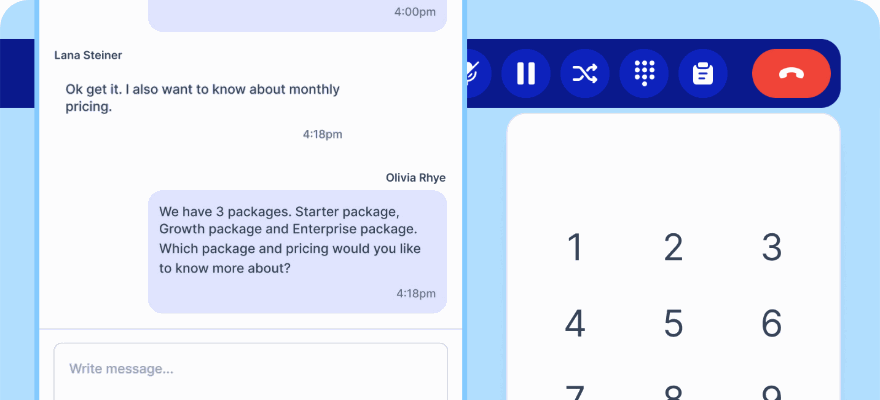
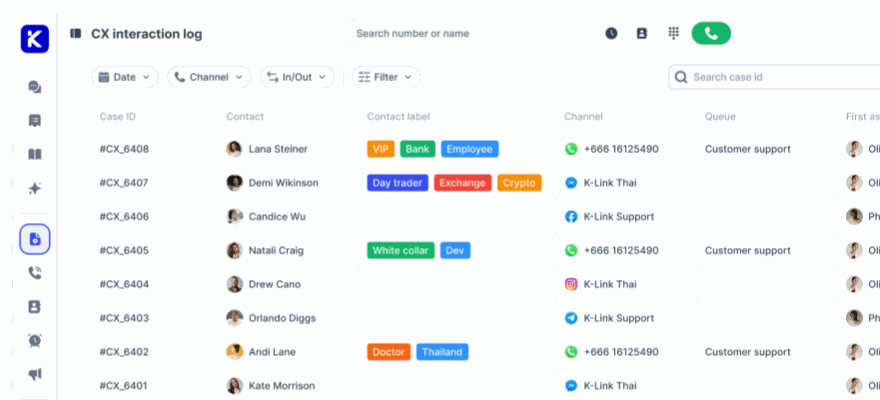
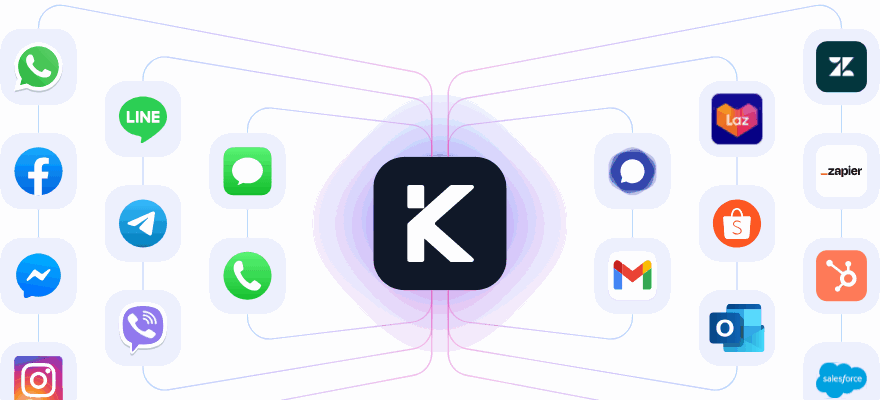
AI contact centers bring together multiple communication channels - like phone, email, social media, live chat, and SMS - into one easy-to-navigate dashboard. This setup allows customers to start their interaction on one channel and seamlessly continue on another without having to repeat themselves. For agents, having all interactions in one place means they can respond faster and with better context. Companies using omnichannel strategies see 91% higher year-over-year customer retention rates.
Take, for instance, a mid-sized financial services company in 2025. They introduced a custom AI virtual call center agent to manage support across multiple languages and platforms. The results? IVR-to-agent transfer times dropped by 40%, saving the company over $150,000 annually by automating multilingual queries. Even more impressive, 70% of incoming queries were handled automatically. On top of that, the AI pre-filled support tickets, cutting manual data entry by 60% and boosting agent productivity by 2.5 times.
These kinds of integrations don’t just improve efficiency - they lay the groundwork for automated workflows that take customer support to the next level.
AI-Powered Workflow Automation
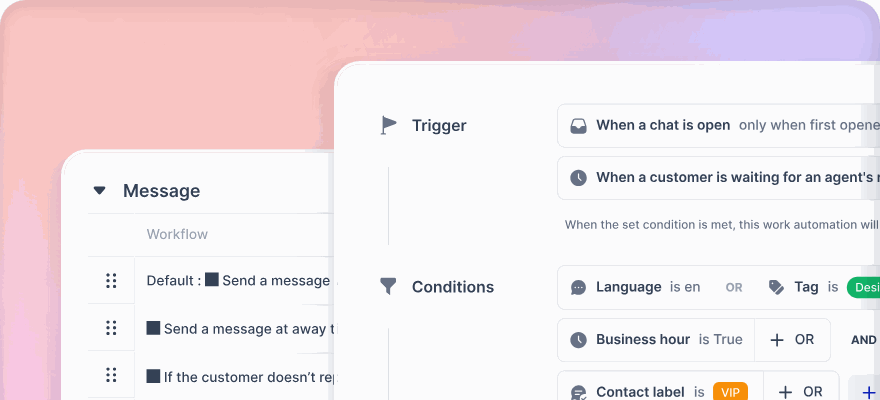
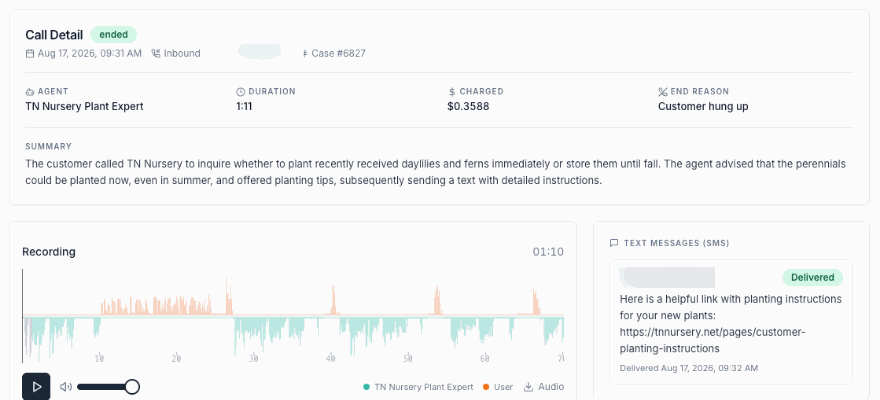
With unified communication channels in place, workflow automation takes over the repetitive tasks. Features like smart call routing, automated responses, and self-service tools (think chatbots) handle routine inquiries without needing a human touch. Using natural language processing (NLP) and machine learning, these systems can interpret customer intent, route issues to the right agent, respond instantly, and even detect frustration to escalate issues before they spiral. They also record full conversations, summarize key points, detect languages automatically, and update customer profiles - all without manual input.
This shift turns contact centers into proactive, customer-focused hubs rather than just reactive support teams.
CRM Integration and Data Management
When an AI contact center platform integrates with a CRM system, it creates a single, unified view of customer data. This integration ensures customer records are automatically updated and gives agents instant access to details like purchase history, previous interactions, and preferences. Armed with this context, agents can deliver service that feels tailored and genuine - not robotic or scripted. Every interaction becomes an opportunity to strengthen the customer relationship.
The seamless flow of data also provides businesses with deeper insights into customer behavior, making it an invaluable tool for both small businesses and large enterprises alike. By combining AI with CRM, companies can better understand and anticipate customer needs, setting the stage for long-term loyalty.
AI-Based Call Center: How Do They Work?
Benefits and Use Cases for SMEs and Enterprises
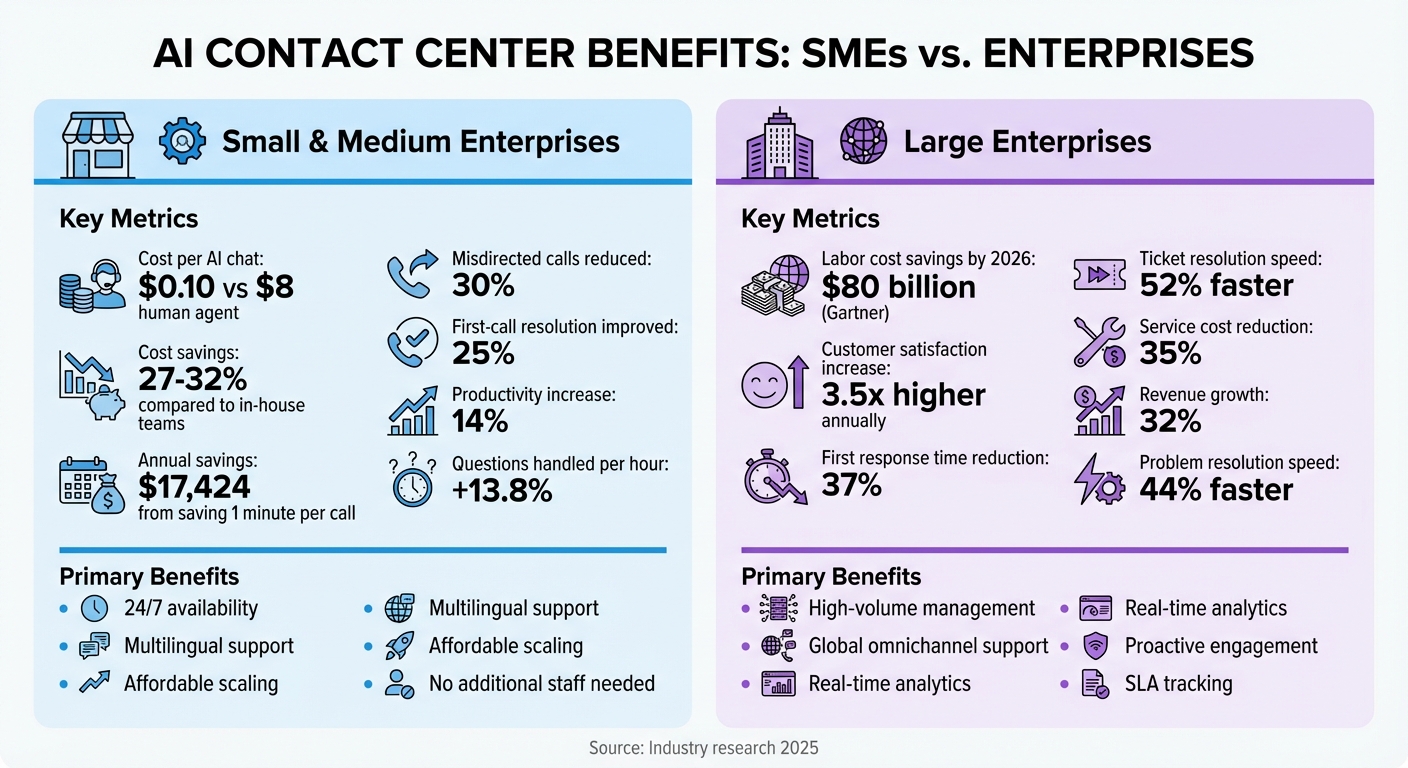
AI Contact Center Benefits: SMEs vs Enterprises Comparison
How SMEs Benefit from AI Contact Centers
Small and medium-sized enterprises (SMEs) face the challenge of delivering top-notch customer service while keeping costs in check. AI contact centers make this possible by automating routine tasks and providing round-the-clock support. For instance, AI chatbots handle interactions at just $0.10 per chat, compared to $8 for a human agent. That’s a huge cost advantage for smaller businesses.
AI also helps SMEs compete with larger companies by offering multilingual support and 24/7 availability. Studies show that AI integration can save small businesses 27–32% on service costs compared to building in-house teams. Even saving just one minute per call translates to $17,424 in annual savings. These platforms handle up to 80% of simple inquiries, reduce misdirected calls by 30%, and improve first-call resolution rates by 25% - all without requiring additional staff.
The productivity benefits are just as compelling. AI tools increase productivity by 14% and allow businesses to handle 13.8% more questions per hour. For growing companies, this means scaling customer support without ballooning costs - a critical edge when resources are limited.
Benefits for Enterprises
Enterprises, on the other hand, use AI contact centers to manage the complexities of large-scale operations. They face challenges like handling massive customer volumes, ensuring consistency across global teams, and meeting strict service level agreements (SLAs). AI contact centers tackle these issues with advanced tools like dynamic IVR systems, intelligent call routing, and real-time performance monitoring across multiple time zones.
The financial impact for enterprises is massive. Gartner estimates that conversational AI will slash contact center agent labor costs by $80 billion by 2026. Companies using AI report a 3.5x higher annual increase in customer satisfaction. AI has also cut first response times by 37% and sped up ticket resolution by 52%. This allows enterprises to handle higher volumes while maintaining service quality.
For large organizations, AI contact centers evolve from cost centers into strategic assets. Real-time analytics provide valuable insights into customer behaviors, agent performance, and operational challenges. This data-driven approach supports proactive engagement, enabling companies to address customer needs before they escalate. Enterprises that adopt AI report 35% lower service costs, 32% revenue growth, and 44% faster problem resolution.
Use Case Comparison Table
Here’s a quick look at how AI benefits SMEs and enterprises differently:
| Business Size | Primary Use Cases | Key Features Utilized | Typical Outcomes |
|---|---|---|---|
| SMEs | Automated FAQ handling, after-hours support, multilingual service, basic ticket routing | AI chatbots, automated responses, smart routing, CRM integration | 27–32% cost savings, 24/7 availability, 80% automation of simple queries |
| Enterprises | High-volume call management, global omnichannel support, SLA tracking, proactive engagement | Advanced IVR, real-time analytics, multi-level routing, workforce management | 37% faster response times, 52% quicker resolutions, 35% lower service costs |
sbb-itb-204ca50
Choosing the Right AI Contact Center Platform
Selection Factors for SMEs and Enterprises
When choosing an AI contact center platform, the first step is to nail down your business needs. For SMEs (small and medium-sized enterprises), the focus is often on affordability, ease of use, and fast implementation. These businesses typically look for platforms that don’t require heavy IT involvement or long setup times. Features like standard integrations, plug-and-play templates, and natural language configurations are ideal for quick deployment.
On the other hand, enterprises have a different set of priorities. They need platforms that can handle large-scale interaction volumes across multiple channels, languages, and time zones. Scalability is a must - whether it’s managing seasonal demand spikes or increasing communication loads, the platform must maintain service quality without faltering. Cloud-based solutions with elastic processing capabilities are particularly effective in meeting these demands.
Integration needs also vary. SMEs often require simple, ready-to-use connections to tools like CRM systems, WhatsApp, and email. Enterprises, however, need deeper integrations with workforce management tools, data lakes, and business intelligence systems to support their complex operations.
Budget priorities also differ. SMEs tend to favor affordable pricing models that allow them to start small and scale up as their needs grow. Enterprises, meanwhile, focus on the total cost of ownership, factoring in elements like advanced customization, API access, dedicated support, and service level agreements that can be negotiated to fit their requirements.
Why Customization and Scalability Matter
Customization and scalability are what set the best platforms apart from the rest. Platforms that offer configurable workflows, tailored reporting, and custom AI models can adapt to your business processes instead of forcing you to adapt to theirs. For example, automated workflows and unified data management tools can be fine-tuned to align perfectly with your operational goals.
Scalability ensures that as your business grows, your platform can grow with it - without blowing your budget or compromising performance. A scalable platform allows you to add new communication channels, expand into new markets, and handle increasing interaction volumes while keeping service quality consistent. This approach ensures your investment supports your long-term growth rather than becoming a bottleneck that requires a costly replacement.
Speed matters too. Platforms with rapid deployment options can help you realize returns on investment faster.
Feature Comparison Table
Here’s a breakdown of pricing tiers, features, and scalability to help you find the right fit for your business:
| Plan | Price | Best For | Key Features | Scalability |
|---|---|---|---|---|
| Free | $0 | Individuals and micro-businesses testing omnichannel support | 100 CRM contacts, unified inbox, social media channels (Facebook, Instagram, LINE, Telegram), live chat, basic reporting | Limited outbound calling, suitable for up to 2 users |
| Starter | $23 per user/month | Small teams managing basic sales and support | 10,000 CRM contacts, 1 virtual phone number, inbound/outbound calls, SMS, call recordings, custom case tracking | Handles growing contact databases, supports small team expansion |
| Growth | $69 per user/month | Growing businesses with high interaction volumes | Unlimited CRM contacts, advanced IVR, rules-based routing, workflow automation, multi-level SLA, real-time dashboards | Designed for scaling operations, handles seasonal spikes and multiple channels |
| Enterprise | Custom | Large organizations requiring advanced integrations | Everything in Growth plus custom API integrations, Salesforce/HubSpot integration, advanced telephony, e-commerce integration, SSO, dedicated support | Fully customizable for complex operations, guaranteed SLAs, unlimited scaling potential |
Your choice of plan should align with your current needs and where you expect your business to be in the next 12 months. Most SMEs find the Starter or Growth plans sufficient, while enterprises often require custom solutions tailored to their infrastructure and operational demands.
Implementation Best Practices and Future Trends
Step-by-Step Implementation Guide
Start small and grow gradually. Begin by identifying your current challenges - whether it's long response times, high call volumes, or inconsistent customer service. Evaluate your data readiness, technical capabilities, and team expertise to ensure you're set up for success.
Once you've pinpointed your needs, establish clear, measurable goals using the SMART framework (Specific, Measurable, Achievable, Relevant, Time-bound). For instance, you might aim to reduce response times or have AI chatbots handle a larger portion of routine inquiries. Well-designed chatbots can resolve up to 80% of repetitive tasks like password resets or order tracking. Focus on high-volume, repetitive processes that deliver the most value and are easiest to implement.
Pilot projects are invaluable. Start with a single channel or a limited set of interactions to test the waters. This allows you to identify potential issues and fine-tune your approach. Businesses that actively monitor and adjust their AI systems see up to 45% better results compared to those that adopt a "set-it-and-forget-it" mentality. Many companies report positive ROI within six months, with gains such as a 50% boost in operational efficiency and a 30% increase in sales.
Change management is key. Equip your team to work effectively with AI tools by providing proper training. Emphasize that AI is there to enhance their work, not replace it. This reassurance helps build trust and fosters collaboration. Interestingly, 76% of small business owners say AI enables them to focus on higher-value tasks, so framing AI as a tool for empowerment is crucial.
Finally, set up continuous monitoring systems to track key performance indicators like ticket deflection rate, AI containment rate, cost per interaction, and customer satisfaction. Regularly gather user feedback and update your AI models based on real-world data. These steps lay the groundwork for a resilient, future-ready AI contact center.
Future Trends in AI Contact Centers
With your implementation underway, it's worth exploring the cutting-edge developments shaping AI contact centers. While 98% of contact centers already use AI, new advancements are pushing the boundaries of what's possible. Gartner predicts that by 2026, 80% of customer support will be managed entirely by AI agents. The focus is shifting toward hyper-personalized and predictive support, where AI anticipates customer needs before they even reach out.
Agentic AI is transforming workflows. These future AI systems won't just answer questions - they'll take over complete workflows, such as processing returns, managing subscriptions, or coordinating with internal systems autonomously. We're also seeing the rise of multi-agent collaboration, where AI systems from different departments (like sales, support, and IT) work together seamlessly. Meanwhile, AI-powered co-pilot tools are enhancing human agents’ productivity by offering real-time assistance, suggested responses, and automatic summaries of interactions. In fact, 75% of customer experience leaders believe that within three years, agents will primarily manage AI systems while AI handles routine operations.
Emotion detection and sentiment analysis are becoming more advanced, allowing AI to recognize when a customer is frustrated or confused and escalate the issue accordingly. Combined with technologies like 5G and edge computing, AI will soon process interactions instantly, enabling real-time personalization at scale. Together, these innovations are transforming contact centers from reactive support hubs into proactive drivers of business success.
Planning for Growth and Continuous Improvement
After your initial implementation, focus on scaling and refining your AI systems to maintain momentum. Growth isn't just about handling more interactions - it’s about preserving quality as you expand. AI allows a single bot to manage thousands of interactions simultaneously, making it invaluable for rapidly growing companies or during seasonal peaks. Businesses using AI for support have seen ticket deflection rates rise by up to 45%, freeing human agents to handle more complex, high-value tasks.
To scale effectively, align your AI agents with your knowledge base. Regularly review and update content, using feedback from live interactions to improve responses. Ensure your AI integrates seamlessly with tools like CRMs, ticketing platforms, messaging apps, and analytics systems to provide consistent experiences across all channels.
Measure what matters. Go beyond traditional KPIs and track metrics like AI containment rate, cost per interaction, and agent productivity improvements alongside customer satisfaction scores. Shift the focus from efficiency alone to the broader impact of AI on customer outcomes and overall business performance.
Adopting a cloud-first strategy can help you scale quickly while keeping costs low. Cloud-based solutions offer benefits like centralized data access for remote teams and the flexibility to add new channels or expand into new markets without heavy infrastructure investments. Despite 91% of companies investing in AI in 2023, only 22% successfully scaled it across multiple functions, underscoring the importance of treating AI as an evolving system rather than a one-time setup.
Lastly, prioritize security and compliance as you grow. Implement safeguards like human-in-the-loop tools and ensure your platform complies with regulations such as GDPR, CCPA, and PCI-DSS to protect customer data and maintain trust. With 41% of small businesses citing security as a top concern, proactively addressing these challenges is essential for sustainable growth.
Conclusion: Improving Customer Experience with AI Contact Centers
Key Takeaways
AI contact centers are changing the game when it comes to customer support. By offering fast, tailored assistance through features like omnichannel communication, workflow automation, and smart routing, these platforms enhance customer experiences across the board. They help businesses - whether small or large - cut costs, speed up response times, and boost satisfaction, all while freeing up agents to handle more complex and meaningful tasks.
What’s more, AI contact centers aren’t just about saving money - they’re about driving growth. Tools like real-time analytics and automated quality checks provide actionable insights to refine both service delivery and agent performance. And thanks to cloud-based, scalable pricing models, even smaller businesses can tap into advanced AI capabilities without breaking the bank.
But implementing AI successfully takes more than just buying the latest tech. It requires a thoughtful approach. Setting clear goals, focusing on impactful use cases, training agents thoroughly, and consistently tracking performance are all key steps to ensure AI becomes a seamless part of operations. As AI continues to advance with features like multi-agent collaboration, businesses that adopt these tools now will be better prepared to meet growing customer demands and stand out in the market.
How klink.cloud Supports Businesses
klink.cloud brings all these benefits together in a single, scalable platform designed to meet the needs of both small businesses and large enterprises.
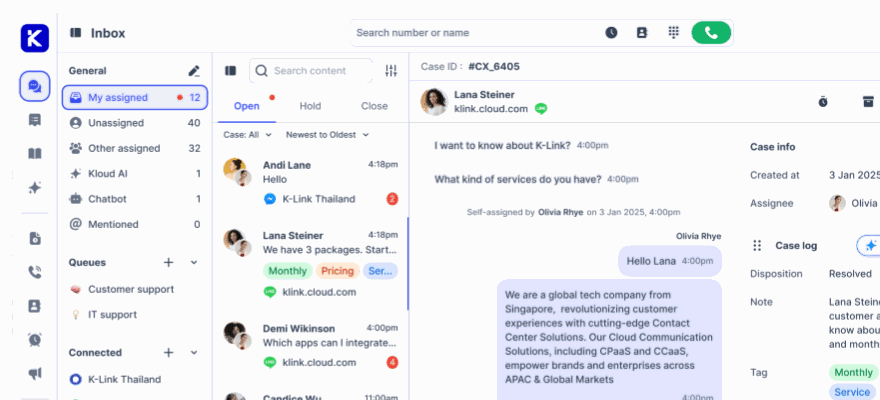
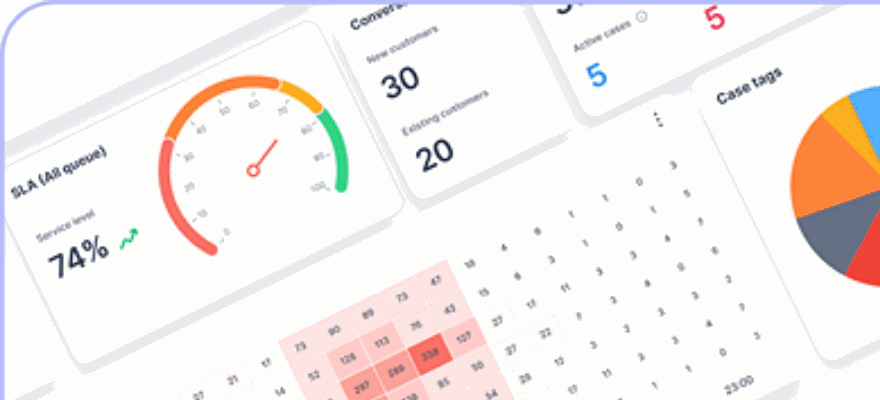
The platform simplifies customer interaction management by centralizing all communication channels into a Unified Inbox, eliminating silos and streamlining workflows. Its smart routing capabilities connect customers with the right team members based on specific criteria, while AI-Agents handle repetitive tasks and scale conversations to support business growth.
For small and medium-sized businesses (SMEs), klink.cloud offers straightforward and affordable solutions, with plans starting at just $23 per user per month. These plans include features like virtual phone numbers, call recordings, and CRM integration - all without unnecessary complexity. Larger enterprises can take advantage of advanced customization options, unlimited CRM contacts, sophisticated IVR systems, rules-based routing, and integrations with tools like Salesforce, HubSpot, and Shopify. With 99% uptime and robust case management features that track metrics such as first response time, SLA adherence, sentiment, and CSAT, klink.cloud provides the reliability and insights businesses need to deliver top-notch customer service.
"Since adopting klink.cloud, we've seen a massive improvement in our response times. Our customers are happier, and our agents are more efficient than ever." - Sarah Lee, Head of Contact Center, Horizon Solutions
Businesses using klink.cloud have reported impressive results, including a 5x boost in productivity, a 2x increase in customer satisfaction, and a 2x improvement in customer relationships. Whether you're a growing SME aiming to scale efficiently or an enterprise managing high volumes of global operations, klink.cloud offers the AI-powered tools, integrations, and analytics needed to turn your contact center into a true competitive edge.
FAQs
What are the benefits of AI-powered contact center platforms for small and medium-sized businesses (SMBs)?
AI-powered contact center platforms offer big benefits for small and medium-sized businesses (SMBs). By automating repetitive tasks and simplifying workflows, these tools help cut down on operational costs, saving both time and money.
They also improve customer service by speeding up response times, delivering personalized interactions, and maintaining consistent support across various communication channels. With AI in the mix, SMBs can elevate customer satisfaction and loyalty while allowing their teams to concentrate on more complex, high-value responsibilities.
What features should enterprises prioritize when selecting an AI-powered contact center platform?
When selecting an AI-powered contact center platform, it's important to focus on features that improve both the customer experience and your team's efficiency. Omnichannel communication is a must-have, allowing you to manage interactions seamlessly across platforms like voice, chat, and email. Tools like AI-driven voicebots and chatbots can handle routine queries and provide quick, automated assistance. With CRM integration, your team can access customer data effortlessly, while predictive analytics can help you stay ahead by identifying customer needs and emerging trends.
Other valuable features include interaction recording and employee performance dashboards, which are essential for refining quality management and training efforts. Finally, make sure the platform meets strict security and compliance standards to safeguard customer data and maintain their trust.
How does AI enhance efficiency in contact center customer service?
AI is transforming contact centers by taking over repetitive tasks like managing routine questions through chatbots and interactive voice response (IVR) systems. This frees up human agents to focus on tackling more complex customer issues, resulting in quicker resolutions and a more tailored approach to support.
On top of that, AI tools deliver real-time insights and analytics, equipping agents with the information they need to make smarter decisions during interactions. By simplifying workflows and cutting down wait times, these AI-driven solutions boost both customer satisfaction and agent efficiency.