
The Best AI Use Cases for Shopify Stores in 2025
AI is no longer a luxury for Shopify stores in 2025 - it's a game-changer for improving customer experience, automating routine tasks, and driving sales. From chatbots answering questions instantly to tools predicting inventory needs, AI simplifies operations and boosts revenue. Here’s how Shopify merchants are using AI today:
- Customer Support: AI chatbots handle FAQs, track orders, and escalate complex issues to human agents seamlessly.
- Personalized Shopping: AI recommends products based on browsing and purchase history, increasing conversions and order values.
- Inventory Management: Predictive tools prevent stockouts and reduce excess inventory by analyzing demand trends.
- Marketing Campaigns: AI optimizes email and SMS timing, content, and offers for maximum engagement.
- Multi-Channel Integration: Platforms like klink.cloud unify customer interactions across email, SMS, and social media.
Start small - integrate AI into one area like chatbots or product recommendations. Measure results, ensure data privacy, and scale gradually for long-term success.
AI Tools for Shopify Store: Grow Your Sales Exponentially with Automation

AI for Customer Experience and Support
Customer support is a cornerstone for Shopify stores. Shoppers today expect quick answers, no matter the time or how they reach out. AI steps in to provide 24/7 availability, speedy responses to common questions, and smooth transitions to human agents when necessary.
By automating repetitive tasks, AI-driven tools cut response times and help manage support costs efficiently. This allows your team to focus on more complex issues that need human insight and empathy. Small teams can deliver high-level support without requiring a large increase in staff or expenses. These tools directly address the challenges outlined earlier.
AI Chatbots and Virtual Assistants
AI chatbots act as the first responders for customer inquiries, handling routine questions that often monopolize support teams' time. These chatbots integrate with your Shopify store, pulling data on orders, products, inventory, and customer profiles to provide accurate, real-time answers instead of generic replies.
The best chatbots tackle high-volume queries, such as order tracking, return policies, inventory checks, and shipping updates. By mapping out your most frequent questions into structured conversation flows, you give the AI a solid framework to work from. For example, the chatbot can check order statuses instantly, confirm inventory, or guide customers through the return process - all without needing human intervention.
However, smart escalation is key. When the AI detects frustration, a complex issue, or a high-value order, it should immediately transfer the customer to a human agent, providing all the context needed so the agent can pick up seamlessly.
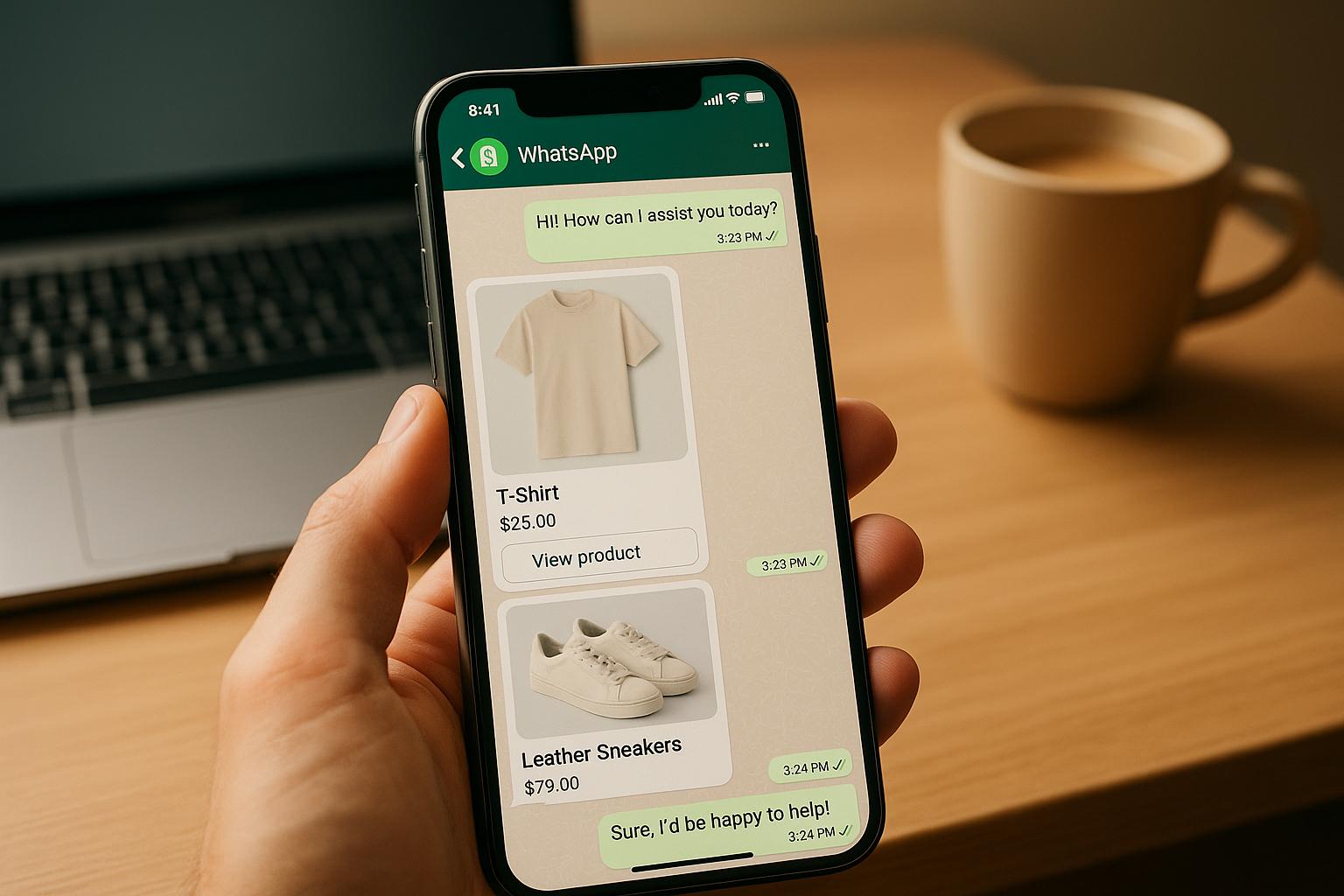
Platforms like klink.cloud enable merchants to deploy AI assistants that work consistently across multiple channels - website chat, email, SMS, Facebook Messenger, Instagram DMs, WhatsApp, and more. The AI keeps track of the conversation, even when customers switch between platforms, ensuring a smooth experience. For instance, a chat that starts on Instagram can continue via email without losing context.
"Since adopting klink.cloud, we've seen a massive improvement in our response times. Our customers are happier, and our agents are more efficient than ever." - Sarah Lee, Head of Contact Center, Horizon Solutions
AI chatbots can also drive sales. They recommend complementary products during support chats, recover abandoned carts with targeted offers, and answer pre-purchase questions that might otherwise lead to lost sales. For example, if a customer asks about sizing, the bot can suggest related items or highlight current promotions, turning a support interaction into a sales opportunity.
Connecting a chatbot to your Shopify store is straightforward. Typically, you install an app or unified AI platform and grant permissions to access orders, products, inventory, and customer profiles. Syncing your FAQ pages and policies gives the bot a reliable knowledge base, so it can perform tasks like order tracking or initiating returns while safeguarding sensitive data.
AI-Assisted Help Desk and Ticketing
While chatbots handle routine questions, AI-assisted help desks empower human agents to work smarter. These systems analyze incoming tickets, categorizing them by issue type - such as shipping delays, damaged items, billing questions, or product inquiries. They also assess sentiment and prioritize tickets based on factors like customer value or order details.
This automated organization ensures tickets reach the right agent quickly. VIP customers or frustrated shoppers are routed to senior team members, while straightforward issues go to agents best equipped to handle them. The system can also flag conversations requiring special attention, such as potential churn risks or high-value orders.
AI suggestions further speed up response times. When a ticket opens, the AI reviews the customer’s history, similar past tickets, and relevant knowledge base content to draft a reply. While agents should personalize these drafts, they provide a solid starting point that aligns with your brand’s tone. The AI can even recommend actions like issuing refunds, offering discounts, or suggesting products based on the customer’s purchase history.
Platforms that integrate Shopify data with help desk tools like Gorgias or Zendesk through klink.cloud deliver highly relevant suggestions. These systems learn from agent feedback, improving their recommendations over time.
"Our agents can easily manage conversations across different channels, helping us respond faster and keep our clients happy. We've seen big improvements in both productivity and customer satisfaction since we started using it." - James Carter, Operations Manager, MPG BPO
Sentiment analysis adds another layer of intelligence by detecting emotional cues in customer messages. It flags highly frustrated messages for immediate attention, enabling quicker resolutions. For U.S.-based Shopify stores, where customers demand fast and clear communication, this proactive approach can significantly improve satisfaction scores.
Merchants using AI-assisted help desks report measurable improvements, including up to five times greater productivity and twice the customer satisfaction.
While AI-assisted help desks optimize human responses, self-service tools give customers the power to resolve their issues independently.
Self-Service Solutions with AI
Self-service tools allow customers to solve problems on their own, reducing repetitive requests and freeing up your team for more complex cases.
AI-powered knowledge bases go beyond traditional FAQ pages. They interpret natural-language questions, so customers can ask things like, "How can I update my shipping address?" or "What should I do if my item is damaged?" The AI searches your help center, product details, and policy pages to deliver clear, conversational answers.
For routine tasks - like changing a shipping address, initiating a return, or tracking an order - AI can fully automate the process. For instance, when a customer requests a return, the AI checks the order details, confirms the request meets your return policy, generates a return label, and sends instructions - all without requiring human input.
For U.S. merchants, self-service tools should present information in familiar formats, such as return windows in days, prices in U.S. dollars, and detailed breakdowns of shipping costs and taxes. Building an effective self-service system starts by identifying common support requests and automating them wherever possible.
When self-service tools, AI chatbots, and AI-assisted help desks are integrated through platforms like klink.cloud, they create a seamless customer support experience. Customers can move effortlessly from self-help to human assistance, ensuring that no inquiry goes unresolved.
AI for Personalization and Sales
Shopify customers today expect shopping experiences tailored to their preferences - experiences that increase engagement, boost order values, and build loyalty. AI makes this personalization possible on a large scale. By analyzing customer behavior in real time, it can deliver product suggestions, refine search results, and create targeted offers that drive conversions. For U.S. merchants competing in crowded markets, AI-powered personalization can turn a one-time buyer into a loyal repeat customer.
Personalized Product Recommendations
AI recommendation engines work by analyzing a mix of data, like browsing habits, purchase history, cart contents, and time spent on product pages. Using this information, they suggest products each customer is most likely to buy, adapting in real time as customer behavior evolves.
These recommendations appear in key moments - on product pages, during checkout, and in follow-up emails. For example:
- On product pages, AI suggests complementary or alternative items that align with the customer's preferences.
- During checkout, it highlights add-ons that can increase the cart value.
- In post-purchase emails, it recommends products based on the customer’s recent purchase, encouraging them to shop again.
Here’s how it might look in practice: If a customer buys a pair of running shoes for $89.99, the AI might recommend moisture-wicking socks for $14.99 or a fitness tracker priced at $129.99 in a follow-up email. These suggestions feel natural because they’re based on patterns observed in similar customers.
AI also uncovers upsell and cross-sell opportunities that human merchandisers might miss. For instance, it can identify when a customer is browsing a mid-tier product but is likely to afford a premium option, then showcase the higher-value item with clear benefits. It can also bundle frequently purchased items into convenient package deals.
The magic lies in relevance. AI avoids suggesting items the customer already owns or products that don’t align with their interests. And because the system learns continuously, its recommendations become more precise over time.
Shopify merchants can integrate AI-powered recommendation tools directly into their stores. These tools use data like inventory levels, pricing, and customer segments to ensure suggestions are accurate and up-to-date. Platforms such as klink.cloud extend these recommendations beyond websites, applying them to email campaigns, SMS, and even social media, ensuring consistent messaging across all touchpoints.
By narrowing down choices to a curated selection, AI reduces decision fatigue. Instead of overwhelming customers with endless options, it simplifies their shopping journey, speeding up decisions and reducing cart abandonment rates.
AI-Powered Search and Product Discovery
Search is often the quickest route to a sale, but traditional search bars can fall short when faced with typos, vague queries, or conversational language. AI-powered search changes the game by understanding what customers mean, not just what they type. Whether someone searches for "blu jens" or writes "comfortable shoes for standing all day", AI interprets the intent and delivers relevant results based on product descriptions, attributes, and reviews.
AI search also improves over time by learning from user behavior. For instance, if many customers click on a specific product after searching "wireless headphones", the AI prioritizes that product in future searches for similar terms. This ensures that the most relevant items appear at the top, helping customers find what they need faster.
Advanced filtering further enhances the shopping experience. AI adjusts results based on whether customers are casually browsing or searching with intent. For browsers, it highlights trending items, new arrivals, or bestsellers. For focused searchers, it prioritizes exact matches and applies filters - like price, size, or color - automatically based on the query.
Visual search takes things up a notch. Customers can upload a photo of a product they like, and the AI identifies similar items in your catalog. This is especially helpful for fashion or home decor stores, where customers often have a specific aesthetic in mind but may struggle to describe it in words.
For U.S. Shopify merchants, AI search accommodates regional preferences and terminology. It understands that "sneakers" and "tennis shoes" refer to the same category or that "fall collection" aligns with autumn inventory. It also accounts for U.S. sizing standards, ensuring customers see familiar formats like small, medium, large, or numerical sizes for shoes.
Search analytics provide additional insights, highlighting queries that return no results. This can reveal gaps in your product catalog or areas where product descriptions need improvement. AI also tracks trending search terms, helping you stock popular items and fine-tune marketing campaigns.
When paired with platforms like klink.cloud, AI search capabilities extend to conversational interfaces. Customers can interact via chat, email, or messaging, and the AI provides product suggestions directly within these conversations. This seamless integration turns every interaction into a potential sale.
Dynamic Customer Segmentation and Offers
Not all customers are alike, and treating them the same way means missing out on opportunities. AI enables dynamic customer segmentation, grouping customers based on behavior, purchase history, engagement levels, and predicted lifetime value. It then creates tailored offers to encourage each segment to take the next step toward a purchase.
Unlike traditional segmentation, which relies on static rules (e.g., grouping customers who spent over $500 last year), AI updates segments in real time as customer behavior changes. It can identify high-value customers for VIP treatment, at-risk customers for re-engagement campaigns, or first-time buyers who need nurturing.
For instance, AI might spot frequent browsers who rarely buy and send them a targeted email offering 15% off with a clear expiration date. For loyal customers, it might offer early access to new products or exclusive bundles instead of discounts, rewarding their loyalty while protecting margins.
AI personalizes not just the offer but also its timing and delivery channel. It determines whether a customer responds better to email, SMS, or on-site pop-ups, and sends the message at the optimal time. For U.S. customers, this means respecting time zones and avoiding inconvenient hours like late nights or early mornings.
Predictive segmentation goes even further. AI can forecast future behavior, identifying customers likely to churn based on declining engagement or spotting those who might become high-value buyers. It then triggers campaigns to win back at-risk customers or encourage larger orders from promising ones.
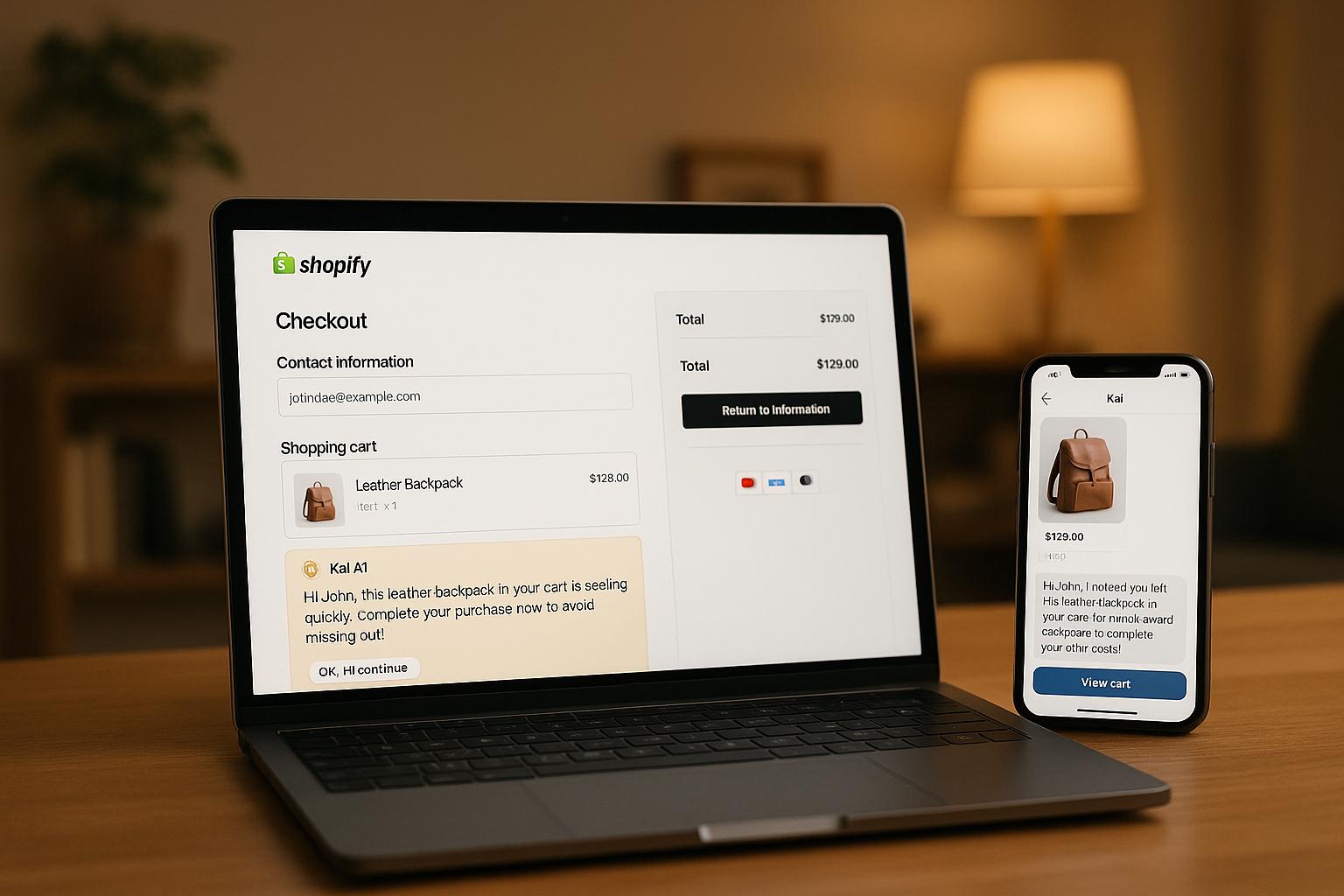
Offers also adjust dynamically based on cart value and intent. For example, if a customer has $75 worth of items in their cart and your free shipping threshold is $100, the AI suggests products to bridge the gap. If the customer abandons their cart, it sends a personalized recovery email highlighting the exact items left behind, sometimes with a time-sensitive discount to seal the deal.
Platforms like klink.cloud allow Shopify merchants to automate these workflows across multiple channels. By tracking customer interactions on your website, through email, via SMS, and on social media, the AI builds a complete profile that informs every offer. This unified approach ensures customers receive consistent, relevant messaging no matter where they interact with your brand.
AI for Marketing, Retention, and Revenue
Gone are the days when marketing depended on guesswork. Thanks to AI, businesses can analyze customer data to create campaigns that feel personal, predict when customers might stop buying, and turn everyday conversations into sales opportunities. For Shopify merchants in the U.S., this means running smarter campaigns, retaining customers more effectively, and increasing revenue - without needing to grow their teams endlessly. This shift in marketing precision also leads to more effective retention strategies.
AI-Optimized Marketing Campaigns
AI takes email and SMS marketing to the next level by tailoring messages to individual customer behaviors. Instead of sending generic messages, it adjusts subject lines, product images, and calls-to-action to align with each person's preferences.
It even determines the best times to send these messages. For example, it might schedule emails for 8:00 AM EST to catch New York commuters or 7:00 PM PST for Los Angeles shoppers. AI also adapts campaigns to align with U.S. shopping events like Black Friday, Memorial Day, and back-to-school sales, while identifying smaller opportunities like National Coffee Day or grilling season.
As Alex Pilon, Shopify senior developer and AI advocate, puts it:
"AI will slash the cost of entry to marketing and ad campaigns. … Having an assistant who understands your business and helps design, execute, and tweak strategy is a massive power-up. With access to your business data and tools, it becomes a marketing expert wired into your systems - a superpower."
AI doesn’t stop there. It automates A/B testing, fine-tuning campaigns in real time to improve results. From testing subject lines to tweaking button colors and discount amounts, AI continuously optimizes for maximum returns. It also reallocates budgets to focus on the most effective channels, ensuring every dollar works harder.
Predictive Analytics for Customer Retention
Beyond marketing, AI helps predict and prevent customer churn. It tracks behaviors like reduced purchase frequency, fewer email clicks, longer gaps between visits, or abandoned carts to identify customers who might leave.
Retention strategies become more targeted and personal. For instance, if a customer who usually shops monthly hasn’t made a purchase in 60 days, they might receive an email highlighting new arrivals in their favorite category, paired with a limited-time discount. A less engaged customer might get a re-engagement SMS with a surprise gift offer to spark interest.
AI also pinpoints high-value customers by analyzing their purchase history, average order value, and potential future spending. These insights allow merchants to focus retention efforts on VIPs, offering perks like early access to sales or exclusive products. Beyond identifying at-risk customers, AI uncovers broader issues - like dissatisfaction with shipping times or pricing - so businesses can address them directly.
By analyzing historical data, AI determines the best times to intervene, ensuring outreach happens when it’s most effective. For Shopify merchants, this proactive approach translates to fewer lost customers and more stable revenue streams.
Conversational Commerce with AI
Shopping is increasingly becoming a dialogue, and AI is at the heart of this transformation. AI-powered chatbots act as 24/7 sales representatives, answering questions, recommending products, offering discounts, and even completing orders across platforms like websites, SMS, and social media.
These chatbots use advanced language algorithms to understand customer intent, even when questions are vague. Whether someone is looking for a birthday gift or comfy shoes, the AI clarifies their needs and suggests products based on current inventory and pricing.
During high-demand periods like Black Friday, AI chatbots shine. They handle thousands of inquiries simultaneously, streamlining customer interactions and boosting conversion rates by about 15%. They also integrate seamlessly into the checkout process, reducing friction by providing answers to questions about product details, stock levels, or shipping - right from the cart. If a customer hesitates, the AI might offer a limited-time discount or flexible payment options to close the sale.
Rennie Wood, founder of Wood Wood Toys, highlights the value:
"Shopify Inbox is a powerful tool. It helps me rescue sales after spending time, money, and energy getting a customer to that point. It pays huge dividends."
AI chatbots also gather valuable insights, such as common customer questions or sizing preferences, which can inform product development and improve customer service.
Real-world examples show the impact. Ridge, a brand specializing in wallets and accessories, uses AI to handle 60% of customer service tickets, improving satisfaction scores by 10% to 20% compared to human-only workflows. Sean Frank, Ridge’s CEO, notes that customers appreciate the faster, more consistent responses. Similarly, Loftie, a wellness company, relies on AI to manage over half its support emails. As founder and CEO Matthew Hassett explains:
"It's difficult to standardize responses across human agents - AI can be much more reliable. It's answered the same question 1,000 times before."
AI-driven conversational commerce even extends beyond traditional channels. In February 2025, health and wellness coach Marie Tuason used ChatGPT to find protein bars meeting her dietary needs, ultimately making a purchase from a Shopify merchant. This showcases how AI is transforming modern shopping experiences.
sbb-itb-204ca50
AI for Operations and Inventory Management
AI isn't just revolutionizing customer interactions and sales; it's also reshaping the way Shopify stores handle their behind-the-scenes operations. Efficient inventory tracking, smarter pricing strategies, and streamlined workflows are essential for thriving in today's competitive market. With AI, these processes shift from reactive problem-solving to proactive, data-informed decision-making. For U.S. merchants juggling multiple SKUs and seasonal demand shifts, AI provides the tools to anticipate customer needs, cut waste, and boost profitability. These enhancements seamlessly integrate with AI's impact on customer experience and sales, creating a more efficient operation from start to finish.
AI-Driven Inventory Forecasting
Stock issues can be a nightmare - running out during peak times means lost sales, while overstocking ties up cash and space. AI tackles this challenge by analyzing historical sales, seasonal trends, and external factors to predict demand with greater accuracy.
For example, AI can forecast inventory needs for major U.S. shopping events like Black Friday or back-to-school season. It even considers regional demand patterns, such as increased winter coat sales in colder areas or higher sunscreen demand in warmer regions during vacation seasons. By combining past sales data with real-time trends, AI refines its predictions continuously.
The system adapts as it learns. If a product sells out faster than expected, the forecast adjusts to prevent future shortages. AI also improves reorder timing by calculating supplier lead times and triggering orders automatically. For merchants dealing with overseas suppliers, the system accounts for longer shipping times and customs processes, while domestic orders benefit from quicker turnarounds.
AI also optimizes multi-location inventory management. For instance, a retailer specializing in outdoor gear might allocate hiking equipment to regions with higher demand while positioning seasonal items closer to coastal areas. This approach reduces shipping costs and delivery times, improving customer satisfaction.
Dynamic Pricing and Promotions
Pricing strategies are no longer static. AI enables Shopify merchants to adjust prices dynamically based on demand, competitor activity, inventory levels, and customer behavior - all within preset guidelines.
For instance, AI can track competitor pricing in real time and notify merchants when their prices deviate significantly. If competitors lower their prices on a popular product, AI might suggest a competitive adjustment to maintain market share while protecting profit margins.
Promotions also get a boost with AI. It can identify which customers need extra incentives, such as offering first-time visitors a discount while rewarding loyal customers with early access to new products. AI can even test different price points across customer segments to find the sweet spot between value and revenue. Seasonal pricing adjustments happen seamlessly, too - AI might gradually lower prices on summer inventory as the season winds down, ensuring stock is cleared before new arrivals. Flash sales and limited-time offers are also strategically timed to maximize engagement and profitability.
Workflow Automation for Back-Office Tasks
AI doesn’t just stop at pricing - it takes on back-office tasks to reduce manual effort. For example, it automatically categorizes and routes service tickets, such as shipping questions, product inquiries, and refund requests. During high-traffic times like Black Friday weekend, when ticket volumes skyrocket, AI helps prevent bottlenecks by prioritizing urgent issues like payment problems while routing routine queries to self-service tools or chatbots.
Order processing becomes more efficient, too. AI flags potentially fraudulent orders by spotting patterns like mismatched billing and shipping addresses or unusually high order values. At the same time, legitimate transactions are processed seamlessly. Straightforward returns can be approved instantly, with shipping labels generated automatically, while exceptions are flagged for manual review.
Vendor management also benefits from automation. AI tracks purchase orders, monitors delivery schedules, and sends reminders to suppliers when deadlines approach. If shipments are delayed, merchants are alerted to avoid stockouts. Financial tasks like reconciling payments and categorizing expenses are streamlined as well, cutting down the time needed for month-end accounting.
For merchants selling across multiple platforms - whether through a website, social media, or marketplaces - AI synchronizes inventory in real time. When a product sells on one channel, the system updates stock levels across all platforms instantly, reducing the risk of overselling and eliminating the need for manual updates.
AI even optimizes shipping by selecting the most cost-effective carrier for each order based on destination, package weight, delivery speed, and current rates. It continuously evaluates carrier performance to refine future shipping decisions, ensuring orders arrive on time while keeping costs in check. This not only improves operational efficiency but also enhances the overall customer experience.
Connecting Shopify with klink.cloud for Multi-Channel AI
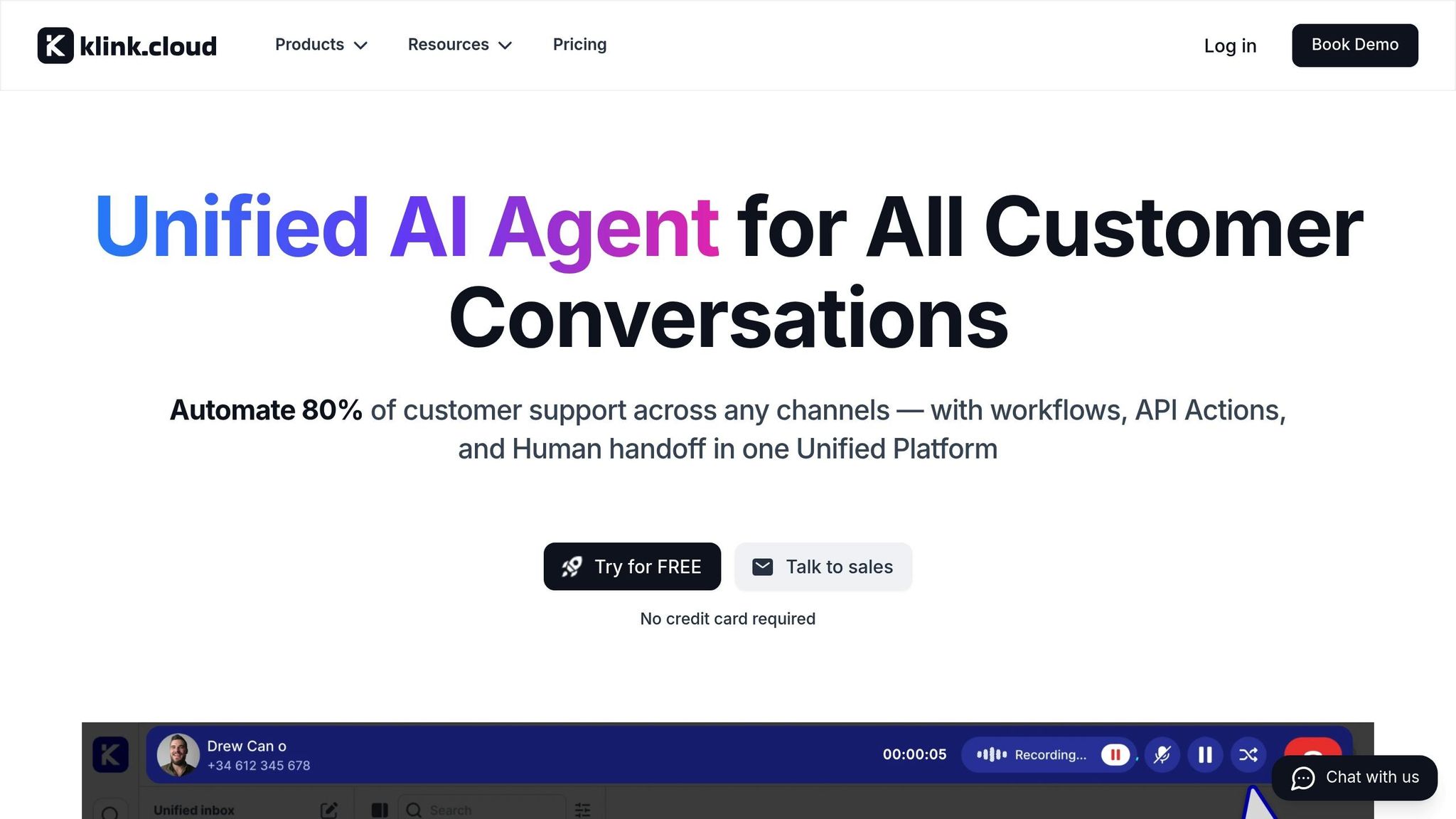
Running a Shopify store often means juggling customer conversations across email, SMS, social media, and more. When each channel operates in its own app, your team wastes time switching between tools, and customers get frustrated repeating themselves. Even worse, AI features locked within individual apps can’t see the full picture - like order data from Shopify - making it harder to deliver seamless customer experiences.
klink.cloud changes this by becoming a central hub that connects directly to your Shopify store. It pulls in customer, order, and product data, then uses this information to drive AI-powered conversations across all channels from a single dashboard. For U.S. merchants dealing with high message volumes and multiple sales channels, this means your team can work from one place while AI provides key insights - like past orders, average order value in USD, and recent browsing behavior - to personalize every interaction. This integration builds on earlier AI strategies by unifying customer data and streamlining communication.
klink.cloud Features for Shopify Stores
Integrating Shopify with klink.cloud takes AI-driven customer support and sales to the next level by simplifying multi-channel operations.
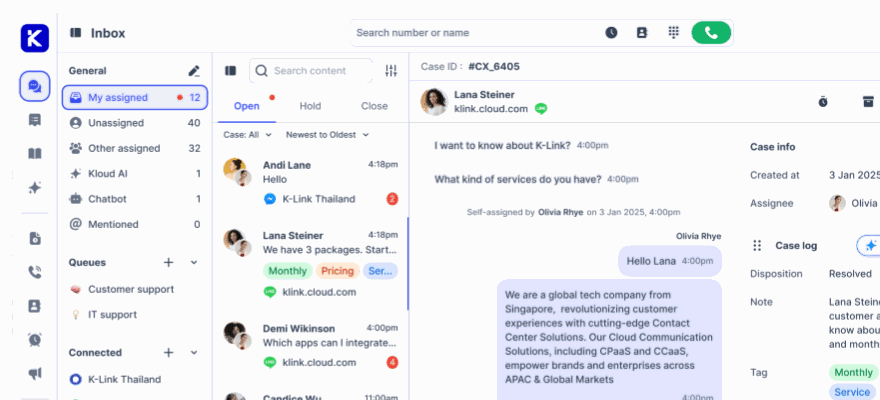
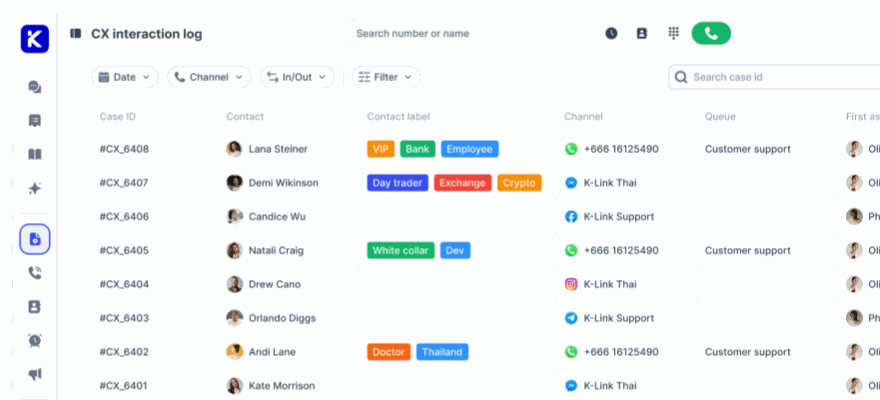
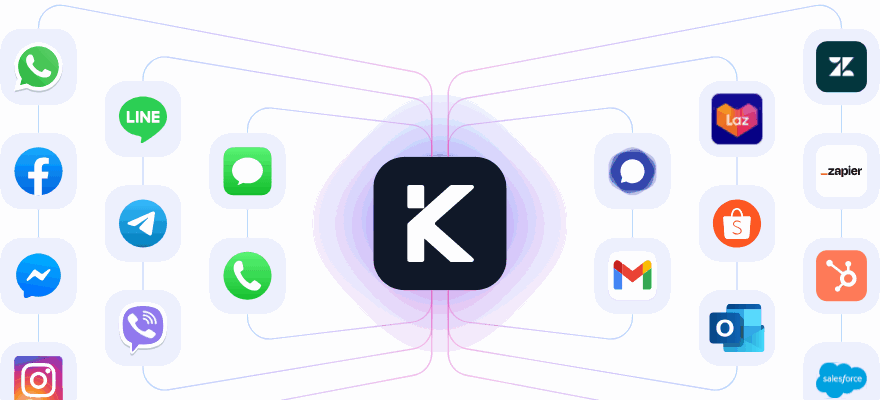
The platform’s Unified Inbox consolidates messages from WhatsApp, Messenger, Instagram, email, SMS, live chat, and phone calls into one view. When a customer reaches out, agents can instantly access the full conversation history across all channels.
Behind the scenes, klink.cloud syncs Shopify objects - customers, orders, products, and tags - into detailed contact profiles and timelines. Every conversation is automatically linked to structured data, so agents don’t need to switch windows to check order statuses or customer histories. For instance, if a customer asks about a delayed shipment, the agent can view the tracking number, carrier, and order details directly within the message thread.
AI-powered agent assistance takes things further by using Shopify data to suggest replies based on the customer’s inquiry, order details, and your store’s policies. Agents can review and tweak these suggestions before sending, speeding up response times while maintaining a consistent tone. The AI also recommends next steps, like offering a discount for an abandoned cart, suggesting complementary products, or escalating complex cases to senior team members.
The platform’s integrated CRM system organizes contact profiles, interaction histories, and tags, making it easy to segment customers by lifetime value, product preferences, or purchase habits. This enables personalized follow-ups and tailored offers. For example, VIP customers can be tagged and routed to your most experienced agents, while routine inquiries might be handled by AI or junior staff.
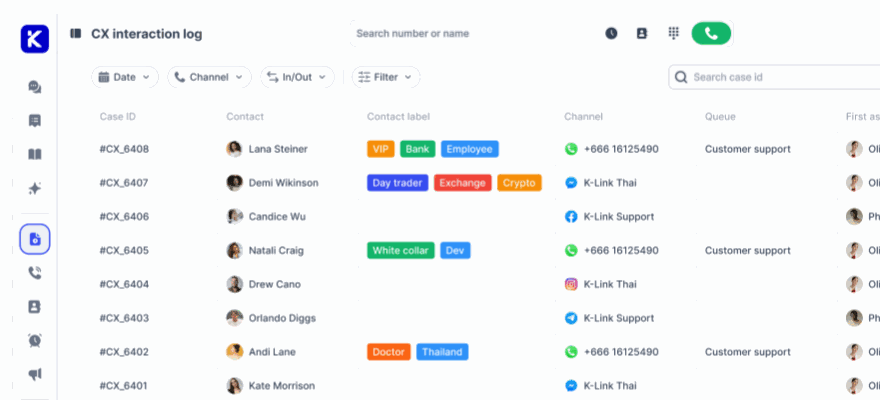
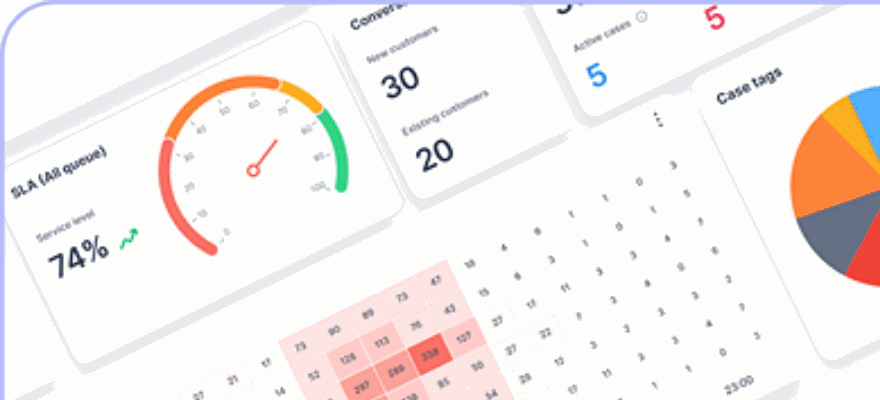
Comprehensive case management tracks every interaction across channels, capturing metrics like first-response time, resolution time, sentiment, and CSAT. Enriched with Shopify data, these metrics not only help you measure support performance but also reveal how it impacts order value and repeat purchases. Dashboards provide instant insights into agent performance and customer satisfaction, helping you fine-tune your multi-channel strategy.
By combining Shopify data with multi-channel messaging, klink.cloud delivers more personalized and efficient interactions. Merchants using klink.cloud report up to 5x increases in productivity and 2x improvements in customer satisfaction. This is largely because agents no longer waste time switching apps or searching for order details. Plus, with 99% uptime, the platform is reliable even during flash sales or peak shopping seasons.
AI-Powered Multi-Channel Workflows
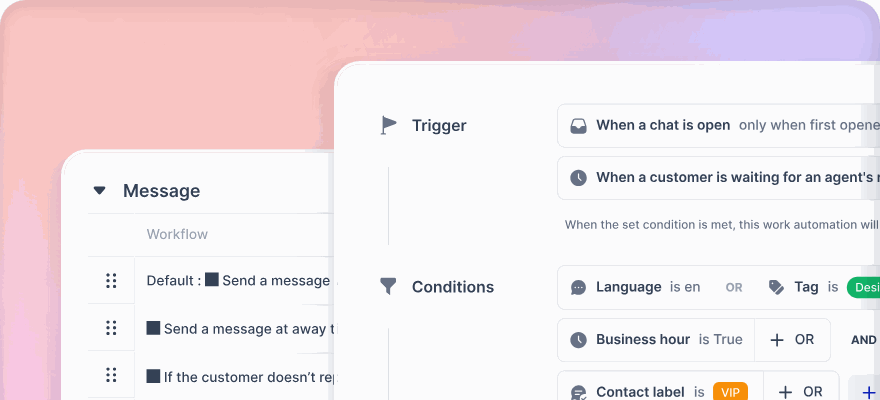
klink.cloud’s workflow engine takes unified data insights and turns them into automated, personalized actions triggered by Shopify events.
For example, when a cart is abandoned, the system can send a sequence of reminders via email and SMS, personalized with cart and purchase details. Post-purchase workflows can automatically send order confirmations, product guides, and review requests, all fine-tuned to the customer’s preferences. These workflows run automatically but allow you to set limits to protect your margins.
Proactive support workflows help you address issues before they escalate. If an order is delayed, the system can immediately notify the customer with an explanation and even offer a coupon. Similarly, if a refund is processed, it can send a satisfaction survey or a win-back campaign through the customer’s preferred channel.
AI-driven cart recovery and re-engagement workflows can recover 10–20% of abandoned carts by personalizing messages based on browsing and order history from Shopify. Additionally, platforms that combine AI with Shopify’s data can increase average order value by 10–15% through upsells and cross-sells delivered during support interactions.
To maintain a consistent brand voice, you can define templates, style guides, and reusable snippets that the AI uses to generate or suggest replies. This ensures that even during high-volume periods, your team delivers a unified tone across email, SMS, chat, and social media.
Getting started is simple. Install the klink.cloud integration from the Shopify app store, authenticate your store, and grant access to customer, order, and product data. Begin with impactful workflows like abandoned cart recovery and post-purchase follow-ups. Test AI-generated messages internally and gradually roll out automations while monitoring response quality and customer feedback.
Track key metrics before and after implementation to measure impact. For support, focus on first-response time, resolution time, and CSAT. For revenue, monitor conversion rates, average order value in USD, and campaign revenue. Engagement metrics like open rates, click-through rates, and opt-out rates by channel can help you refine workflows. By centralizing customer data and messaging, klink.cloud can reduce average handle time for support tickets by 20–30%.
For U.S.-based Shopify stores, staying compliant with local privacy and consent rules is crucial. TCPA regulations govern SMS marketing, and email requires opt-in consent, so ensure your workflows respect these guidelines. klink.cloud’s workflow builder can filter by consent status and channel preferences, ensuring you only reach customers who’ve agreed to receive messages.
Measuring Results and Using AI Responsibly
Using AI is just the beginning. To determine if it’s delivering value - and to ensure customer data is handled responsibly - you need to track the right metrics, establish strong governance, and follow a careful plan for testing and scaling AI features.
Key Metrics to Track
Once AI is in place, measuring the right metrics helps confirm its impact on both performance and customer experience. These indicators form the backbone of assessing how AI influences your business.
For AI-driven product recommendations and search, focus on metrics like conversion rate, average order value (AOV), and revenue per visitor. For example, AI recommendation systems have been shown to increase conversion rates by up to 19%. Additionally, track click-through rates for recommended items and revenue linked to AI-suggested products.
When it comes to AI chatbots and virtual assistants, key metrics include first-response time, resolution time, and containment rate (how many cases are resolved without human intervention), alongside customer satisfaction (CSAT) scores. Many ecommerce teams aim for first-response times under 1–2 minutes while maintaining or improving CSAT, often targeting scores of 4.5 out of 5 or higher. Monitoring escalation rates - how often cases are handed off to human agents - can also highlight areas where the AI may need fine-tuning.
"Since adopting klink.cloud, we've seen a massive improvement in our response times. Our customers are happier, and our agents are more efficient than ever." – Sarah Lee, Head of Contact Center, Horizon Solutions
For inventory and pricing AI, focus on metrics like forecast accuracy, stockout rates, overstock levels, and the overall impact on cash flow. AI tools that analyze historical sales and demand trends can help reduce excess inventory and stockouts, improving profit margins. Many ecommerce teams aim for AI to deliver a 5–15% lift in conversion rates or a 5–20% boost in AOV within 30–60 days, while long-term AI strategies often contribute to sales increases of 20% or more.
To isolate AI’s impact, use tools like Shopify order tags (e.g., "AI-recommended" or "AI-chat-assisted") and UTM parameters for AI-driven campaigns. Running A/B tests or holdout experiments - where a portion of traffic doesn’t interact with AI - provides a clear comparison of metrics like conversion rate, AOV, and customer support outcomes between AI and non-AI groups. Analytics dashboards that combine data from Shopify, marketing tools, and platforms like klink.cloud can give you a complete view of AI’s influence on traffic, on-site behavior, orders, and post-purchase support.
Data Governance and Privacy
Performance aside, ethical data use is non-negotiable. Responsible AI use requires transparency about how data is collected and used, while giving customers control over their information.
For U.S.-based Shopify merchants, obtaining explicit consent is critical. Laws such as CAN-SPAM and TCPA regulate email and SMS marketing, so it’s important to maintain clear opt-in records and offer easy ways for customers to unsubscribe. Use straightforward privacy notices to explain how AI uses data, and let customers know when they’re interacting with an AI chatbot rather than a human agent.
When integrating Shopify with AI platforms like klink.cloud, carefully map out which data fields - such as order history, email addresses, and behavioral events - are shared with the AI provider. Share only what’s necessary for the specific use case. Additionally, confirm where the AI provider stores and processes data, use role-based access controls for internal users, and establish agreements that outline security, data handling, and breach notification responsibilities.
Set clear data retention and deletion policies for AI tools to ensure customer data isn’t stored longer than needed. Align these policies with your broader Shopify and analytics practices, using automatic anonymization or deletion for chat logs, training data, and behavioral events after a defined period. Make sure AI vendors can delete or anonymize individual customer records upon request, and establish internal processes to handle such requests promptly.
Testing and Gradual Implementation
Rolling out AI across your entire store all at once can be risky. A gradual approach allows for smoother adoption and minimizes potential issues. Start with a small-scale pilot - like enabling AI recommendations on specific product pages or deploying a chatbot for a subset of visitors - and evaluate the results before expanding. Use A/B tests or control groups to compare AI-driven performance against non-AI experiences. Once the results show consistent improvements in metrics like conversion rates or CSAT, extend AI capabilities to other areas like site chat, email, and social media.
For example, you might begin with internal tools that suggest content or draft responses for support agents before introducing customer-facing automation. This step-by-step rollout helps your team adapt to working with AI while reducing risks.
Human oversight remains essential, especially for complex interactions. Set clear escalation rules to ensure high-stakes issues - like refund disputes or large B2B orders - are immediately handled by human agents. Create review systems for staff to audit and override AI responses as needed.
Review metrics like conversion rates, CSAT, error rates, and escalation rates on a monthly basis. Adjust models, prompts, or rules as needed to account for changes in products, promotions, or customer behavior. Look out for biased or inconsistent outputs, gather feedback from customers and support agents, and retrain or reconfigure AI systems when necessary.
"The ROI speaks for itself." – Lila Wong, CEO (July 2024)
Regular reviews and a cautious, phased rollout ensure that AI integration remains effective and aligned with your business goals.
Conclusion
AI is transforming how Shopify operates in 2025. From chatbots that instantly address customer questions to recommendation engines that drive engagement, these tools are making a noticeable difference in areas like customer experience, marketing, and overall operations.
To get started, focus on a single area with high potential. Test AI tools with a small group, measure results against clear benchmarks, and expand gradually as you see consistent progress. This approach reduces risks and builds confidence in the benefits AI can bring.
For businesses looking to centralize AI efforts, platforms like klink.cloud simplify operations by consolidating customer interactions from multiple channels into a single Unified Inbox. Features like smart routing prioritize high-value customers for faster assistance, while automated responses improve efficiency. Plus, detailed analytics help track metrics such as first response time and customer satisfaction (CSAT) across all touchpoints.
It's essential to balance AI with human oversight. Set clear escalation rules, maintain transparent data practices, and regularly review performance metrics. Make sure customers can tell when they're interacting with AI versus a human, and always retain the ability to step in and override automated decisions when necessary.
FAQs
How can AI boost customer support and sales in my Shopify store without raising costs?
AI can transform customer support and increase sales in your Shopify store, all while keeping costs in check. AI-powered chatbots and virtual assistants are game-changers in this area. They can handle customer questions 24/7, delivering instant responses and cutting down the need for extra staff.
Beyond support, AI takes personalization to the next level. By analyzing customer behavior, it can recommend products, suggest tailored discounts, and craft customized marketing messages. The result? Higher sales and stronger customer connections - all without adding much to your operational costs.
How can I ensure data privacy and use AI responsibly when adding AI tools to my Shopify store?
To protect customer data and ensure responsible AI integration in your Shopify store, start by focusing on first-party data. This includes information gathered directly from customer purchases, email communications, and product reviews. Handle this data with care, being transparent about its use and staying compliant with privacy regulations like GDPR or CCPA.
When selecting AI tools, prioritize those with strong data security measures and clear, upfront policies about how they handle and store information. Responsible AI practices are key - this means avoiding bias in automated decision-making and ensuring that personalized recommendations or actions are both relevant and respectful to your customers.
It's also important to routinely review your AI systems and data management practices. Regular audits help you stay aligned with changing privacy standards, maintain customer trust, and use AI effectively without compromising data integrity. Taking these steps can help you build lasting relationships with your customers while safeguarding their information.
What’s the best way to measure how AI improves my Shopify store’s performance and customer satisfaction?
To understand how AI is influencing your Shopify store, keep an eye on key performance indicators (KPIs) like conversion rates, average order value (AOV), and customer retention. For instance, AI tools that provide personalized product recommendations have the potential to increase AOV by up to 20%. Similarly, automated customer support features can help lower cart abandonment rates and boost overall customer satisfaction.
Pay attention to metrics like repeat purchases, customer engagement, and response times to evaluate how AI-driven tools are enhancing the shopping experience. Consistently analyzing these data points will give you a clear picture of how AI contributes to growth and builds stronger customer relationships.