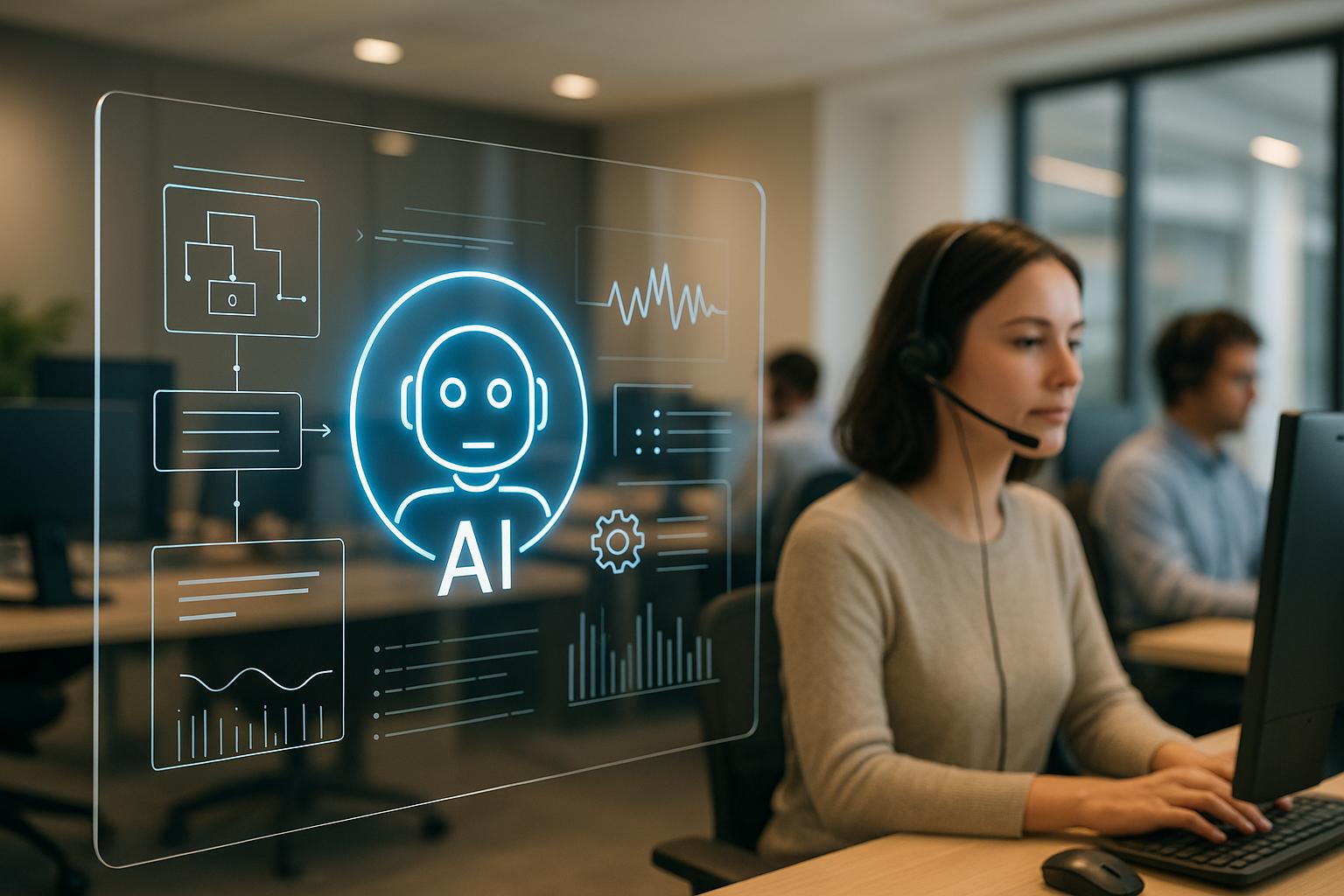

Human Agents vs AI Agents: Will AI Replace Call Centers?

AI won't fully replace human agents in call centers anytime soon. Instead, the future lies in a hybrid approach where AI and humans work together to deliver better customer service. AI handles repetitive tasks like FAQs, identity verification, and order tracking, while human agents step in for complex, high-stakes, or emotionally sensitive issues. This balance improves efficiency, reduces costs, and enhances customer satisfaction.
Key Points:
- AI excels at: Speed, 24/7 availability, handling simple queries, and scaling during peak times.
- Humans excel at: Empathy, complex problem-solving, emotional intelligence, and personalized service.
- Cost: AI is cheaper for routine tasks, but human agents are necessary for quality service in complex cases.
- Customer preference: 84% are fine with AI for simple tasks, but 67% prefer humans for complex or emotional issues.
Quick Comparison:
| Criteria | AI Agents | Human Agents |
|---|---|---|
| Strengths | Speed, consistency, scalability | Empathy, creativity, problem-solving |
| Best For | Routine tasks, FAQs, data collection | Complex issues, emotional situations |
| Limitations | Lacks emotional intelligence, nuance | Higher cost, slower for simple tasks |
| Cost Per Interaction | ~$2.10 | ~$8.50 |
Hybrid call centers combine the best of both, with AI handling routine work and humans focusing on more complex interactions. Tools like klink.cloud make this collaboration seamless, ensuring smooth transitions between AI and human agents while improving efficiency and customer satisfaction.
AI vs Human Support: Who Do Customers Trust More?
Human Agents in Modern Call Centers
Even with the rise of AI and automation, human agents remain a cornerstone of customer service. In a hybrid model, their role is crucial for handling situations that technology simply can't resolve. Their ability to make real-time decisions and adapt to unique challenges ensures they remain irreplaceable, even as technology advances. Some tasks will always require the human touch - something no algorithm can replicate.
What Human Agents Do Best
Human agents bring a level of empathy that machines can't match. When customers are upset, confused, or frustrated, a human can recognize these emotions and respond in a way that feels genuine. They adjust their tone, pace, and even their word choice based on subtle cues, creating a connection that builds trust and loyalty - something scripted responses fail to achieve.
Another strength lies in complex problem-solving. Customer issues are rarely straightforward. A human agent might need to dig into multiple systems, consult with colleagues, or think creatively to find a solution that satisfies both the customer and the company. They can weigh competing priorities, make exceptions, and exercise judgment in ways that rigid systems simply can't.
Human agents also excel at reading between the lines and building rapport. They can pick up on unspoken concerns or underlying issues, then engage customers with personalized conversation. Whether through small talk, relatable anecdotes, or even humor, these interactions often determine whether a customer leaves satisfied or frustrated - even if their original problem isn't fully resolved.
Their adaptability is another key strength. Unlike automated systems that need reprogramming for new situations, human agents can pivot on the fly. Whether it's a system outage, a policy change, or an unusual request, they can quickly assess the situation and find a workaround.
These skills make human agents indispensable in situations where a personal touch, quick thinking, or emotional intelligence is required.
When Human Agents Are Needed
There are certain scenarios where human agents are not just helpful - they're essential:
- High-stakes situations: Complex issues involving financial, legal, or safety matters demand the judgment and authority of a human. For instance, a customer disputing a $5,000 charge or resolving a medical billing error needs more than an automated response. They need someone who understands the gravity of the situation and can act accordingly.
- Escalations: When automated systems hit their limits, customers often arrive at human agents already frustrated. In these moments, an empathetic agent who takes ownership of the issue can turn the experience around by offering a resolution and a sincere apology.
- Sensitive personal matters: Issues like bereavement, medical challenges, or financial hardship require compassion and discretion. For example, a customer closing an account after a loved one’s passing deserves understanding that goes beyond what an AI can provide.
- Complex negotiations: Whether it's working out a payment plan, discussing contract terms, or finding a compromise, negotiations often require the back-and-forth flexibility that only a human can manage.
- Relationship-building: High-value customers and long-term clients expect personalized service that acknowledges their history with the company. A human agent can review past interactions and tailor their approach to strengthen these relationships.
- Ambiguous or unusual requests: When a customer’s needs fall outside standard procedures, human agents can interpret and resolve the situation without being constrained by rigid programming.
How Human Agents Affect Customer Experience Metrics
The contributions of human agents go beyond the qualitative - they also drive measurable improvements in customer experience metrics.
- Customer Satisfaction (CSAT): Human agents often boost CSAT scores, especially when dealing with complex issues. Their ability to connect with customers and resolve problems thoroughly leads to higher ratings and positive feedback.
- Net Promoter Score (NPS): Customers who receive exceptional service from empathetic agents are more likely to recommend the company to others. These positive experiences often translate into valuable word-of-mouth marketing, which no advertising campaign can replace.
- Customer retention: When customers feel heard, valued, and understood, they’re less likely to switch to competitors. The relationship they build with a company’s service team becomes a key factor in their loyalty.
- First Contact Resolution (FCR): Human agents can often resolve complex issues in a single interaction, reducing the need for follow-ups. While AI is efficient with simple queries, human agents handle the nuanced problems that would otherwise require multiple contacts.
- Average Handle Time (AHT): While human agents may take longer per interaction compared to AI, their thorough problem-solving often eliminates the need for repeat contacts. A longer initial call that fully resolves an issue is far more effective than multiple quick, unresolved interactions.
Beyond these metrics, the emotional impact of human interactions plays a lasting role. Customers remember how they were treated during challenging times, and these memories shape their long-term perception of a brand. A human agent who goes above and beyond can turn a potentially negative experience into a story of exceptional service, leaving a lasting impression.
Human agents also contribute to employee satisfaction within the organization. When agents are empowered to make decisions and use their skills to genuinely help customers, they feel more fulfilled in their roles. This leads to lower turnover, better performance, and stronger customer interactions - creating a cycle of success that benefits everyone involved.
AI Agents: What They Can and Can't Do
AI agents are now a staple in modern call centers, handling countless interactions daily with a speed and efficiency that human agents often can't match. But to effectively integrate them into customer service strategies, it's crucial to understand both their strengths and their limitations. Think of AI as a specialized tool - powerful but not without its boundaries. Here's a closer look at what they bring to the table and where they fall short.
What AI Agents Can Do
One of the standout advantages of AI agents is their 24/7 availability. Unlike human agents who need breaks, sleep, and days off, AI systems are always "on." This constant accessibility is especially valuable for customers in different time zones or those who prefer reaching out during non-business hours.
Speed is another area where AI shines. Tasks like retrieving account details, resetting passwords, or confirming order statuses are handled in a matter of seconds. For straightforward inquiries, this level of efficiency is a game-changer for customers who prioritize quick resolutions.
AI also scales effortlessly during peak periods. Whether it’s a product launch, the holiday rush, or an unexpected surge in calls, AI systems can handle the influx without breaking a sweat. This means shorter wait times for customers and no need for businesses to overstaff during quieter times.
Consistency is another strong suit. AI ensures that every interaction aligns with a company’s brand voice and compliance standards, delivering uniform responses across the board.
Beyond that, AI is excellent at data collection and analysis. Each interaction generates insights that can help businesses identify recurring issues, track patterns, and improve their overall service over time.
Where AI Agents Fall Short
Despite these strengths, AI agents have clear limitations. One major hurdle is their limited understanding of context and nuance. They often struggle with ambiguous language, sarcasm, or regional dialects. If a customer’s concern is complex or not clearly articulated, AI might miss the mark.
Another challenge is the lack of emotional intelligence. While some systems can detect sentiment, they can’t genuinely empathize with a frustrated or upset customer. A canned response like "I understand your concern" feels hollow compared to the authentic empathy a human agent can provide.
AI also faces difficulties with complex problem-solving. When an issue requires creativity, judgment, or flexible thinking, AI simply isn’t equipped to handle it and must defer to a human agent.
Escalations can be another sticking point. If a customer is transferred from AI to a human agent after an unhelpful interaction, their frustration may already be heightened. This can make it harder for the human agent to resolve the situation smoothly.
Cultural and linguistic nuances remain a challenge, too. Although AI systems are improving, they still struggle with idioms, colloquialisms, and references that don’t translate literally, which can lead to misunderstandings.
Common AI Use Cases in Call Centers
Despite these drawbacks, AI excels in handling repetitive, high-volume tasks. For example, answering frequently asked questions - like inquiries about business hours, return policies, or basic troubleshooting - is one of its strongest applications.
Routine tasks such as password resets and account verification are also perfect for automation. AI can securely verify a customer’s identity through security questions or multi-factor authentication, reducing wait times and freeing up human agents to handle more complicated issues.
AI is also effective in managing order tracking, status updates, payment processing, and other predictable transactions. Similarly, tasks like appointment scheduling and rescheduling can be fully automated, with AI handling everything from checking availability to sending confirmations.
For basic troubleshooting, AI can guide customers through common technical fixes, like resetting a router or updating software. And when it comes to routing and triage, AI can quickly assess the nature of a customer’s issue and direct them to the right resource, streamlining the overall experience.
Ultimately, AI works best for high-volume, low-complexity interactions that follow predictable patterns. For more complex or emotionally sensitive issues, human agents remain indispensable. By understanding where AI thrives and where it struggles, businesses can strike the right balance and deliver a better customer experience.
Human Agents vs AI Agents: Direct Comparison
Now that we’ve broken down the strengths of human and AI agents individually, let’s take a closer look at how they stack up side by side. Understanding these differences helps businesses craft smarter customer service strategies. This isn’t about picking a "winner" - it’s about recognizing where each shines and how they can complement one another in real-world scenarios.
Comparing Capabilities and Strengths
When it comes to routine tasks like checking account balances or updating contact details, AI is unmatched in speed and efficiency. It can instantly process and respond to high volumes of repetitive queries, making it perfect for handling straightforward customer interactions. Human agents, on the other hand, take longer to process these types of inquiries, though they excel in areas where personalization is key.
For more nuanced issues - think billing disputes or delayed shipments - human agents have an edge. They can pick up on subtle emotional cues, adjust their tone, and defuse tense situations. This ability to handle emotionally charged interactions with empathy is something AI currently struggles to replicate.
Flexibility in problem-solving is another area where human agents shine. For instance, if a customer needs to modify an order that’s already in progress, a human can assess the situation, collaborate with other departments, and come up with a tailored solution. AI, bound by its programmed parameters, often needs to escalate such requests.
AI, however, excels in consistency. It provides uniform responses and strictly adheres to company policies, ensuring a predictable experience. Human agents, while adaptable and capable of thinking outside the box, can sometimes introduce variability in responses.
Then there’s multitasking. AI systems can juggle multiple conversations at once without breaking a sweat, making them ideal for managing high volumes of simple inquiries. Human agents, by contrast, typically focus on one customer at a time, which allows them to give their full attention to complex or sensitive issues. Unlike AI, humans also draw from past experiences, applying lessons learned to new challenges. AI systems improve too, but only through updates and retraining within their programmed scope.
These operational differences also influence costs and productivity.
Cost and Productivity Differences
Human agents come with higher costs - salaries, benefits, and ongoing training all add up. AI, meanwhile, scales more affordably, particularly for routine tasks. Once implemented, AI systems can manage a significant volume of interactions at a fraction of the cost. Their ability to handle multiple conversations simultaneously highlights their efficiency for repetitive tasks.
That said, when it comes to resolving complex problems, human agents typically achieve better outcomes. Their nuanced understanding and problem-solving skills give them an edge in situations that require judgment and creativity.
Training is another area where the two differ. Human agents require extensive onboarding, which takes time and can temporarily affect productivity. AI systems, once deployed, can be updated centrally and rolled out quickly, ensuring consistency across all interactions.
These factors don’t just influence operational metrics - they also shape the overall customer experience.
Customer Experience Outcomes
The type of interaction often determines customer satisfaction. For simple, transactional requests, customers appreciate the speed and efficiency of AI. But when problems are complex or emotionally charged, human agents are the preferred choice. Their ability to empathize and provide personalized solutions leaves a lasting impression.
While AI is excellent for resolving basic queries, it often struggles with intricate issues, especially on the first attempt. Human agents, with their empathy and adaptability, tend to deliver more satisfying resolutions in these cases. This difference can significantly impact customer loyalty, as positive experiences with human agents often foster stronger emotional connections and increase the likelihood of customers recommending the service.
A hybrid approach - using AI for routine tasks and reserving human expertise for more challenging or sensitive situations - offers the best of both worlds. Combining AI’s efficiency with the empathy and creativity of human agents creates a customer service model that’s both effective and resilient.
sbb-itb-204ca50
Why Hybrid Call Centers Work Best
Hybrid call centers strike the perfect balance between automation and human interaction. By combining AI's efficiency and consistency with the empathy and problem-solving skills of human agents, businesses can create a customer service experience that is both effective and genuinely supportive.
How Hybrid Models Operate
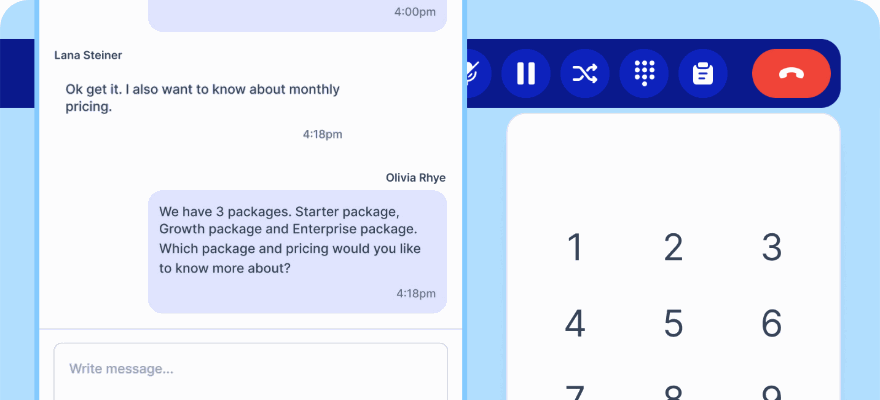
In a hybrid setup, AI typically handles the initial stages while human agents step in for more complex or sensitive situations. When a customer contacts the center - via phone, chat, email, or messaging - AI takes the lead. It verifies the customer's identity, gathers relevant details, and determines the nature of the request. For straightforward tasks like checking account balances, resetting passwords, or tracking orders, AI resolves the issue instantly. But when a situation requires deeper understanding, emotional intelligence, or has a significant business impact, the system escalates the interaction to a human agent, providing them with all the necessary context.
This approach works seamlessly across all communication channels. A customer might start with an AI chatbot on a website, move to SMS for further clarification, and eventually connect with a human agent over the phone - all without needing to repeat their issue. AI ensures continuity by maintaining a unified view of the customer’s journey, tagging interactions with intent markers like “billing dispute” or “cancellation risk,” and forwarding these to the right team.
The system relies on clear escalation criteria, such as issue complexity, emotional tone, and business impact, to decide whether a query stays with AI or moves to a human. By analyzing common customer concerns, businesses can automate low-risk, repetitive tasks while gradually expanding automation as the system proves its reliability.
This structure provides round-the-clock support for routine inquiries, while ensuring that human agents are available for situations that demand creativity, negotiation, or a personal touch. It’s a setup that not only improves efficiency but also enhances the overall customer experience.
Advantages of Hybrid Call Centers
Hybrid call centers consistently outperform fully automated or all-human models in key areas. A study of over 240 AI voice implementations revealed that hybrid models achieved the highest customer satisfaction scores (4.6 out of 5.0) and Net Promoter Scores (+62).
Cost savings are one of the most immediate benefits. AI can handle simple interactions for about $2.10 per call versus $8.50 for human-handled calls - a savings of 75%. By automating routine queries and reserving human intervention for more complex cases, businesses significantly reduce the average cost per interaction while maintaining high service quality. AI also helps manage sudden spikes in demand, such as during holiday seasons or product launches, reducing the need for temporary staffing.
Productivity improvements are another key advantage. Companies using AI-enabled customer service have reported a 14% increase in issues resolved per hour and a 9% reduction in time spent per issue. With AI handling tasks like data entry, summarization, and routing, human agents can focus on solving more challenging problems. AI’s near-instant response time (about 0.5 seconds) eliminates hold times for basic inquiries.
First-call resolution rates also improve significantly. By pre-qualifying issues, gathering essential information, and routing queries efficiently, hybrid models help human agents resolve problems faster and more thoroughly. Some implementations have seen a 23% increase in first-call resolution rates. Additionally, surveys show that 78% of consumers eventually require a human agent after a chatbot fails to resolve their issue, highlighting the importance of smooth AI-to-human transitions.
Finally, hybrid models offer scalability. AI takes on repetitive tasks, enabling businesses to serve more customers with a smaller, more skilled human team. This reduces agent burnout and turnover, creating a more sustainable workforce.
How klink.cloud Supports Hybrid Call Centers
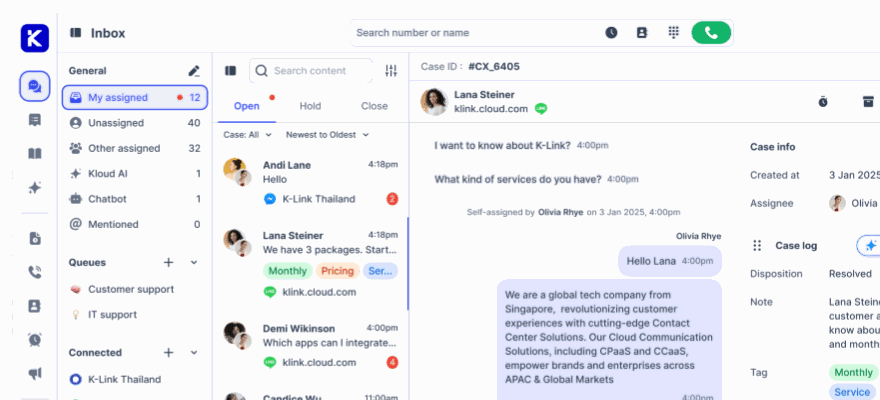
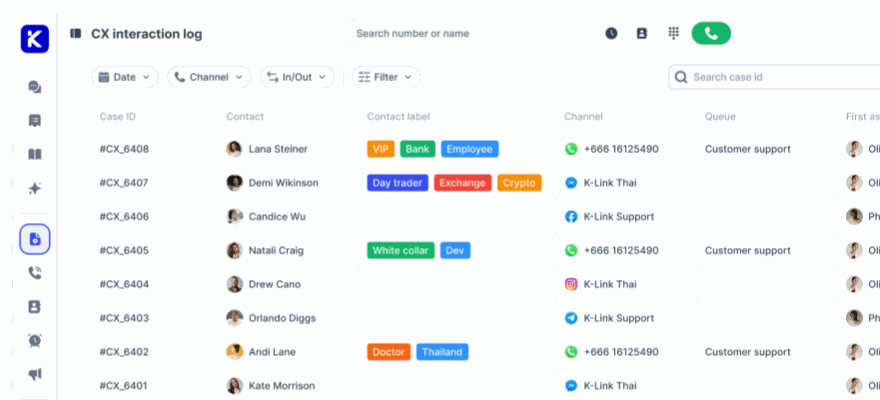
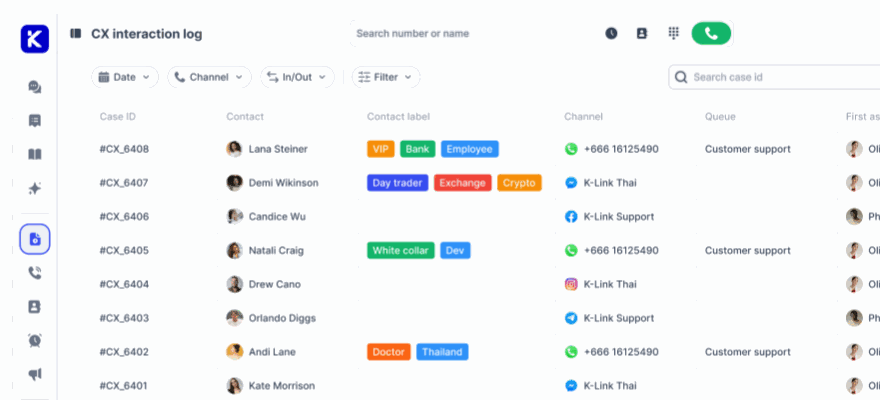
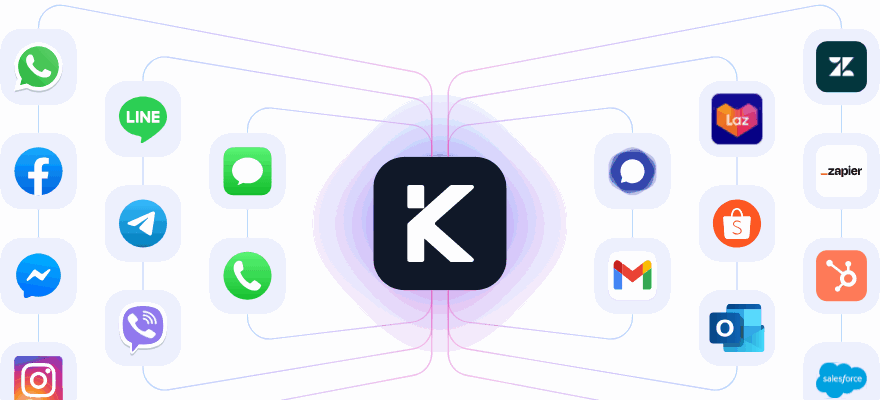
klink.cloud brings the benefits of hybrid models to life with its unified omnichannel platform. This platform consolidates all customer interactions - whether through phone calls, WhatsApp, Facebook Messenger, Instagram, Telegram, email, or live chat - into a single, easy-to-use interface. Both AI and human agents work from this centralized view, ensuring no customer interaction is overlooked.
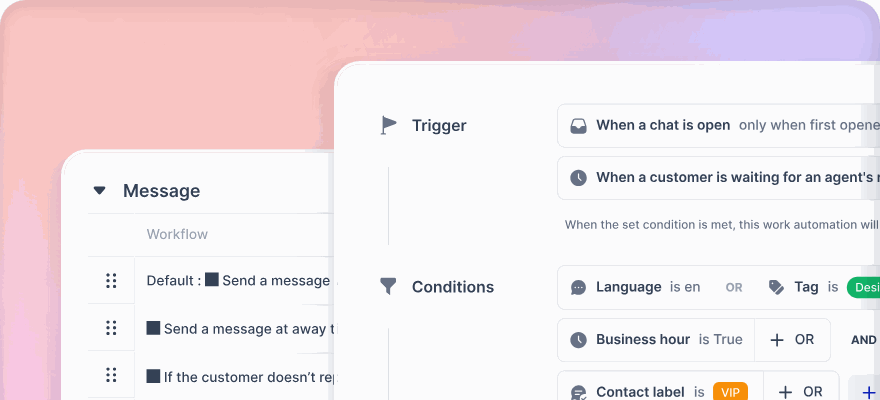
Intelligent routing is at the heart of klink.cloud’s hybrid approach. The system uses keywords, customer type, language, VIP status, and conversation tags to direct each interaction to the right destination. Routine queries are managed by AI, while complex or high-value cases are routed to specialized human agents. For instance, a VIP customer expressing frustration is flagged and directed to a senior agent for immediate and personalized attention.
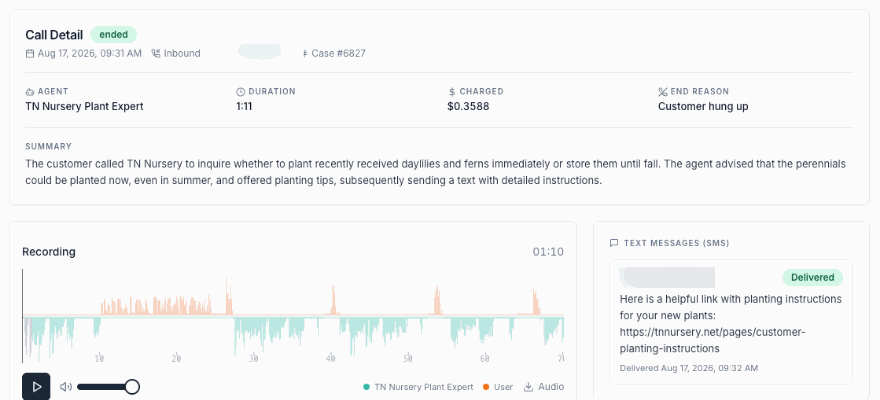
The platform’s AI-Agent capabilities handle tasks like identity verification, FAQ responses, and data collection. When an AI agent encounters a task beyond its scope, it seamlessly transfers the interaction to a human agent, complete with a full interaction history, customer profile, and suggested next steps. This ensures customers don’t have to repeat themselves during escalations.
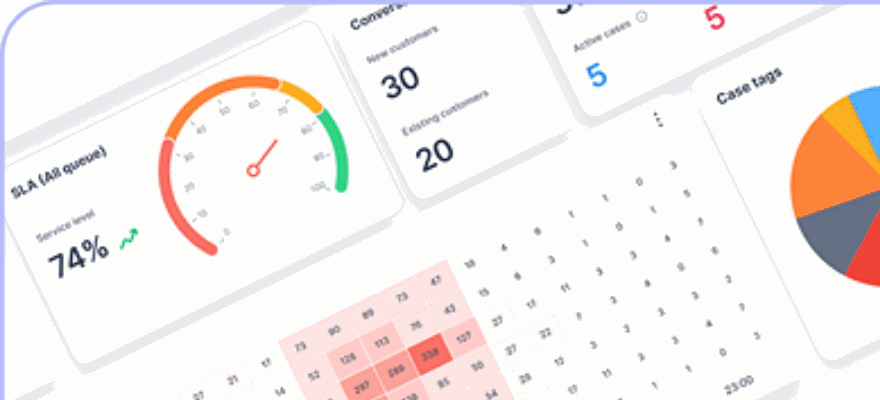
Case management ties it all together by tracking every interaction under a unified customer profile. Agents can access metrics like first response time, SLA status, resolution time, sentiment analysis, and CSAT scores in one place. This enables personalized service informed by the customer’s full history.
Real-time analytics and reporting give managers the tools to continuously refine the hybrid model. Metrics like average handle time, first-contact resolution, and CSAT scores can be monitored across all channels, allowing for adjustments to automation and routing rules based on actual performance. The platform also integrates with CRMs, helpdesks, billing systems, and e-commerce platforms, ensuring that both AI and human agents have up-to-date data at their fingertips.
Organizations using klink.cloud have seen impressive results. For example, Horizon Solutions adopted the platform in March 2024 and reported faster response times. Sarah Lee, Head of Contact Center at Horizon Solutions, stated:
Customer satisfaction and agent efficiency have notably improved.
James Carter, Operations Manager at MPG BPO, observed:
big improvements in both productivity and customer satisfaction.
Meanwhile, Michael Tan, Operations Manager at AlphaConnect, shared:
our productivity has doubled, and downtime is a thing of the past.
With 99% uptime, klink.cloud ensures hybrid operations run smoothly around the clock. Users have reported a fivefold increase in productivity and a doubling of both customer satisfaction and customer loyalty.
What's Next for AI and Human Agents in Call Centers
As we look ahead, the next decade promises a deeper integration of AI and human expertise in call centers. AI will increasingly manage routine tasks, while human agents will handle more complex and nuanced customer needs.
What to Expect in the Next 10 Years
AI is rapidly advancing beyond basic chatbots. Over the next decade, it will become a core part of the contact center ecosystem, enhancing everything from call routing and real-time agent support to quality assurance, forecasting, and analytics. By 2025, AI voice agents are projected to become a standard tool for handling tier-one customer needs, efficiently managing basic inquiries.
Gartner anticipates a significant leap in agent interaction automation, predicting it will grow from 1.8% today to around 10% by 2026. Similarly, Statista estimates that by 2024, over 8 billion voice assistants will be in active use globally - double the number seen in 2020.
Human agents, meanwhile, will see their roles evolve. Instead of focusing on repetitive tasks or rigid scripts, they’ll shift toward resolving complex issues, upselling, cross-selling, and retaining customers. AI will handle the initial steps, such as pre-qualifying customers, collecting data, and addressing simple requests, leaving agents free to apply empathy, expertise, and problem-solving skills to more challenging situations.
Real-time sentiment analysis is also set to play a pivotal role. These tools will guide agents during calls, improving their responsiveness and emotional intelligence. While traditional quality assurance teams review only a fraction of calls - typically 3–5 per agent each month - AI can now analyze 100% of calls, transforming coaching, compliance, and overall performance. Microsoft forecasts that by 2025, around 95% of customer interactions will incorporate sentiment analysis, providing continuous emotional insights for agents and supervisors.
The concept of an "AI-first contact center" is gaining traction. Companies like Replicant envision AI handling the majority of interactions, with a smaller, highly trained team of human agents stepping in for complex cases. This shift isn’t about replacing humans but rather transforming their roles into more specialized, higher-value positions. Customer preferences align with this approach: 84% are comfortable using AI for straightforward issues like order tracking or FAQs, while 67% prefer human agents for more complex or sensitive matters. The key will be offering customers a choice, ensuring seamless transitions between AI and human support for a smoother experience.
While AI will undoubtedly reshape call centers, it’s unlikely to fully replace human agents within the next decade. The focus will remain on finding the right balance - leveraging AI for efficiency while relying on human agents for empathy and problem-solving. This shift calls for thoughtful preparation, as outlined in the following steps.
How to Prepare for Future Changes
To thrive in this evolving landscape, organizations must embrace the hybrid model, blending advanced AI capabilities with empowered human roles. Success will depend on investing in both technology and people. Start by categorizing customer needs into three groups: tasks suited for AI, those requiring AI assistance, and issues that demand human expertise. This segmentation can guide strategic decisions on where to prioritize automation and where to strengthen human involvement.
Upskilling your workforce is essential. Training programs should go beyond product knowledge and basic scripts, focusing on soft skills, critical thinking, and managing AI tools. Equip agents to work confidently alongside AI, using real-time insights and handling interactions across multiple channels like voice, chat, and email. Position AI as a collaborative tool rather than a competitor to encourage adoption and reduce resistance. Clear communication about evolving roles and continued support will also help maintain morale and trust.
On the technical front, ensure your data is clean and well-organized so AI systems can access accurate information from your CRM, knowledge base, and call recordings. Prioritize platforms that offer real-time analytics, sentiment analysis, and seamless omnichannel integration. Your infrastructure should support smooth transitions between AI and human agents, ensuring customers never have to repeat themselves.
A great example of this approach is klink.cloud, which consolidates customer interactions across channels like phone, WhatsApp, Facebook Messenger, Instagram, Telegram, email, and live chat into a single interface. This setup allows AI and human agents to collaborate effectively. Intelligent routing directs each interaction - based on factors like keywords, language, and customer status - to the most appropriate resource, whether that’s an AI for quick resolutions or a skilled human agent for complex cases. Real-time analytics and case management tools empower managers to refine operations continuously, tracking metrics like first-contact resolution, handle time, and customer satisfaction.
Replace traditional, limited quality assurance with AI-driven systems that review 100% of interactions. Use these insights to improve coaching and refine scripts. Measure the impact of AI implementations by tracking metrics like customer satisfaction (CSAT), average handle time, and first-call resolution before and after introducing new features. Establish clear policies for AI use, including escalation protocols and error handling. Always ensure a human override is possible, and be transparent with customers about when they’re interacting with AI. Notably, 58% of support professionals advocate for transparency in AI usage, as it builds trust with customers.
Finally, start small by piloting AI in specific areas, such as answering initial calls, summarizing post-call details, or managing FAQs. Scale these efforts gradually based on measurable results. Use clear ROI frameworks to balance the cost savings from automation with ongoing investment in human talent.
The next decade holds immense potential for transformation. Organizations that take a balanced approach - investing in both AI infrastructure and human development - will be well-positioned to deliver exceptional customer experiences and stay ahead of the competition.
Conclusion
The idea that AI will completely replace human agents in call centers? It’s not happening - not now, and likely not anytime soon. Instead, what’s unfolding is a shift in how customer service operates, where AI and human agents work together, each excelling in their own areas.
AI shines when it comes to repetitive, high-volume tasks like answering FAQs, routing calls, or collecting basic information. By taking care of these tasks, AI allows human agents to focus on what they do best: solving complex problems, showing empathy, and navigating situations that require creativity and judgment.
The most successful call centers use a hybrid model. AI handles the initial contact and routine inquiries, while human agents step in for emotional or complicated issues. This setup strikes a balance, boosting efficiency without sacrificing the quality of service. It’s a strategy that helps businesses stay prepared for the future.
To succeed in this changing landscape, companies need to invest in strong AI systems and prioritize ongoing training for their staff. Tools like klink.cloud make this easier by consolidating customer interactions across multiple channels, creating a seamless collaboration between AI and human agents.
The future of call centers isn’t about replacing people; it’s about transforming how they work. AI will take on more tasks, but human agents will remain essential for delivering empathy, nuanced communication, and creative problem-solving - the kind of service that leaves a lasting impression. Businesses that embrace this balance - using technology to support, not replace, the human touch - will lead the way in shaping the future of customer experience.
FAQs
How can businesses decide which tasks in a call center are best suited for AI versus human agents?
Businesses can figure out how to divide tasks by looking at what both AI tools and human agents do best. AI shines when it comes to repetitive and straightforward jobs - think answering FAQs, processing payments, or giving updates on orders. These tasks are where AI's speed and accuracy truly stand out.
On the flip side, human agents are better suited for situations that involve complexity, emotional sensitivity, or a need for empathy. Whether it’s resolving a unique customer issue, managing a delicate complaint, or offering personalized solutions, humans bring qualities like critical thinking and emotional understanding that AI simply can’t replicate.
By carefully analyzing the type of customer inquiries and deciding how much personalization is needed, businesses can adopt a hybrid approach. This strategy blends AI's efficiency with the human ability to connect, creating a smooth and satisfying experience for customers.
What are the advantages of using a hybrid call center model with both AI and human agents?
A hybrid call center model that blends AI tools with human agents brings multiple advantages to the table. Chatbots and virtual assistants are particularly effective at managing routine questions swiftly and efficiently. This allows human agents to dedicate their time to addressing more complex or sensitive customer needs. The result? Faster response times paired with personalized, top-notch support when it truly matters.
This combination of AI efficiency and human empathy not only boosts cost-effectiveness and flexibility but also ensures that customers receive the best of both worlds. Straightforward tasks can be handled seamlessly at any time, while human agents step in for more intricate or emotionally charged situations, creating a well-rounded and satisfying customer experience.
How does AI integration in call centers influence customer satisfaction and loyalty?
AI integration in call centers has the potential to transform customer service by delivering quicker response times, tailored interactions, and proactive assistance. Tools like chatbots and virtual assistants handle routine questions with ease, allowing human agents to dedicate their time to more challenging and nuanced issues. This division of tasks creates a smoother and more satisfying experience for customers.
AI-powered systems also cut down on wait times and provide personalized suggestions, which not only boosts customer satisfaction but helps build loyalty over time. That said, while AI is excellent at maintaining speed and consistency, it lacks the human touch needed for empathy and complex problem-solving. Combining AI with human expertise creates a balanced approach, ensuring both efficiency and a personal connection in customer service.