

The Impact of AI Agents on E-commerce Logistics & Operations
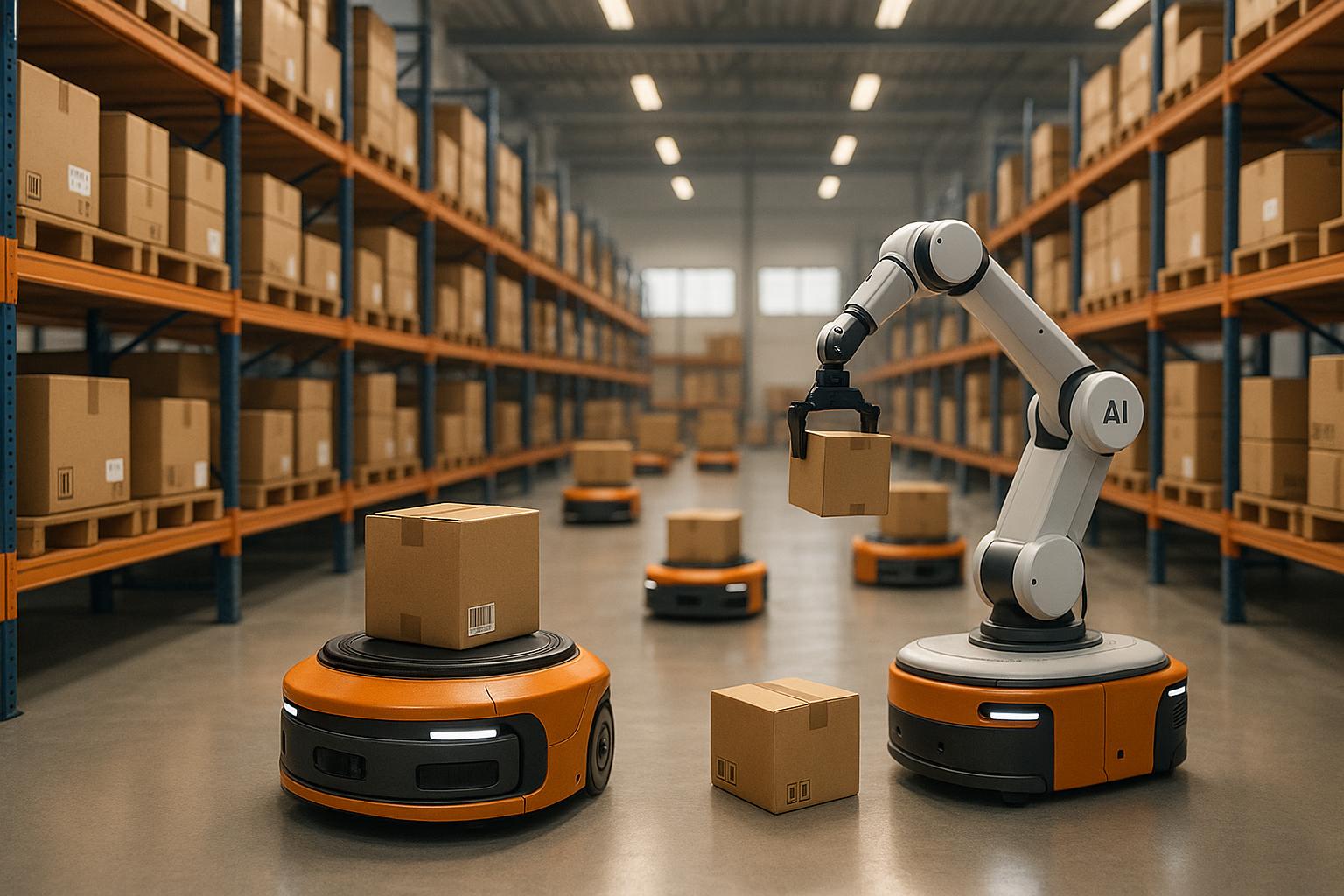
AI agents are transforming e-commerce logistics by automating complex tasks and improving efficiency across the supply chain. They analyze data, make decisions, and act independently to help businesses handle demand forecasting, inventory management, fulfillment, and last-mile delivery. Unlike traditional rule-based systems, AI agents learn and adapt, offering solutions that reduce costs, improve accuracy, and enhance customer experiences.
Key highlights:
- Demand forecasting: Predict sales trends using historical data, weather, and promotions.
- Inventory management: Balance stock across warehouses and automate reordering.
- Fulfillment optimization: Streamline picking, packing, and shipping processes.
- Last-mile delivery: Optimize routes, reduce delivery failures, and track performance metrics.
- Customer service: Automate routine inquiries like order status and delivery updates.
AI agents are becoming essential for businesses aiming to meet rising customer expectations for speed, transparency, and reliability. Start small, focus on specific challenges, and ensure your data systems are ready to support AI integration.
What AI Agents Are and How They Work in E-commerce Logistics
AI Agents: Definition and Technical Foundations
An AI agent is essentially software designed to perceive its surroundings, make decisions, and take actions independently. In the context of e-commerce logistics, these agents monitor data streams like order volumes, warehouse capacity, and shipping delays, then act accordingly to streamline operations.
At the core of an AI agent’s functionality are several technical components. Machine learning models play a key role by analyzing historical data to identify patterns and predict outcomes. For example, these models can forecast demand spikes during specific seasons or events by studying past sales data.
Natural language processing (NLP) allows AI agents to interpret and generate human language. This capability enables them to handle customer inquiries or process unstructured data, such as supplier emails, with ease. APIs serve as the connective tissue, linking AI agents to systems like warehouse management platforms, shipping carriers, and customer databases. This integration allows them to pull data and trigger actions across various tools seamlessly.
Workflow engines manage complex task sequences. For instance, if an AI agent detects low inventory on a high-demand product, it can automatically generate a purchase order, notify procurement, and update the inventory system all at once.
Most AI agents operate on cloud-based platforms, which provide the computing power needed to handle large datasets in real time. This setup ensures scalability, especially during high-demand periods like Black Friday or Cyber Monday, where order volumes can surge within hours.
These technical components collectively enable AI agents to address critical logistics challenges, as outlined below.
Primary Use Cases for AI Agents in Logistics
AI agents bring their technical strengths to bear on some of the most pressing challenges in e-commerce logistics.
One major application is demand forecasting. AI agents analyze purchasing trends, seasonal patterns, promotional schedules, and external factors like weather or economic conditions to predict future demand. They adjust these predictions as new data becomes available, offering near real-time insights. This helps businesses avoid running out of stock or overstocking items.
Inventory balancing is another key area. AI agents monitor stock levels across multiple warehouses and distribution centers, recommending or even automating transfers to optimize fulfillment. For instance, if a warehouse in Dallas is running low on a product while another in Atlanta has a surplus, the AI agent can arrange a transfer before the Dallas location runs out.
When it comes to exception handling, AI agents shine. Disruptions like delayed shipments, damaged goods, or address errors are inevitable in logistics. AI agents can quickly identify these issues and respond by rerouting shipments, notifying customers with updated delivery estimates, or flagging problems for human intervention.
AI agents also enhance warehouse efficiency. They optimize picking routes, reducing the time workers spend moving between items, and prioritize orders based on factors like shipping deadlines, customer importance, or product availability. This ensures that critical orders are fulfilled first.
How AI Agents Differ from Rule-Based Automation
Traditional rule-based systems rely on fixed if-then logic, which works well for predictable tasks but falters when conditions change.
In contrast, AI agents learn from data and adapt over time. Instead of rigidly following preset rules, they analyze multiple variables to make decisions that balance cost, speed, and customer satisfaction.
Take inventory reordering as an example. A rule-based system might reorder a fixed quantity whenever stock drops below a certain level. An AI agent, however, considers factors like current sales trends, upcoming promotions, seasonal demand, supplier lead times, and warehouse capacity. If ordering 500 units previously led to overstock, the agent might recommend a smaller order next time.
AI agents also improve with experience. By evaluating the outcomes of their decisions, they refine their models to make better choices in the future. For instance, if certain delivery routes consistently result in faster shipping times, the agent learns to prioritize those routes. Many modern AI systems also include explainability features, which provide insights into why specific decisions were made. This transparency helps logistics managers maintain oversight, especially for high-stakes decisions like large inventory purchases or order cancellations.
Unlike rule-based systems, which require manual updates when conditions change, AI agents adapt automatically. As customer preferences shift, these agents incorporate the changes into their decision-making processes without needing reprogramming. This ability to learn and adjust on the fly leads to smoother operations and better customer experiences.
AI Agents for Supply Chain and Inventory Management
Predicting Demand and Optimizing Inventory Levels
One of the toughest challenges in e-commerce logistics is figuring out the right amount of inventory to keep on hand. Too much inventory eats up cash and racks up storage costs, while too little can result in missed sales and unhappy customers. This is where AI agents step in to make a difference.
AI agents analyze a variety of data sources, including historical sales, current trends, competitor pricing, social sentiment, weather patterns, and economic indicators. For example, if a sudden cold snap hits the Northeast, an AI system might automatically adjust inventory forecasts for winter apparel in the affected areas.
During high-demand events, these agents monitor real-time order spikes and adjust inventory plans instantly. If a product starts selling faster than expected, the AI flags it for immediate restocking to avoid running out.
AI systems also automate reordering by factoring in inventory levels, sales velocity, supplier lead times, and promotions. This proactive approach helps businesses avoid stockouts without over-ordering, striking a fine balance between availability and cost.
Seasonality is another factor these systems handle well. For instance, an AI agent managing stock for a clothing retailer knows that demand for certain items will ramp up before specific seasons or holidays. By anticipating these shifts, businesses can keep inventory levels balanced throughout the year.
The financial impact is hard to ignore. Companies often see a reduction in excess inventory, lower storage costs, and increased revenue from fewer missed sales opportunities. And this is just the beginning - AI agents also excel at managing inventory across multiple warehouses.
Managing Inventory Across Multiple Warehouses
For e-commerce businesses with multiple warehouses, keeping inventory balanced across locations is no small feat. Stock at one warehouse might sit idle while another location struggles to fulfill orders, leading to higher shipping costs and longer delivery times.
AI agents provide a solution by offering real-time visibility into inventory across all warehouses. They track stock levels, incoming shipments, outgoing orders, and transfer requests, quickly identifying imbalances. If one warehouse is running low while another has surplus stock, the AI can recommend - or even initiate - a transfer to even things out.
These systems also weigh shipping costs, transit times, and warehouse capacities to determine whether transferring inventory is more cost-effective than placing a new order. For example, if a nearby warehouse has excess stock, the AI might suggest a transfer instead of shipping from a distant location or ordering new products.
AI agents handle complex scenarios like partial fulfillment as well. If an order includes items stored in multiple warehouses, the system calculates the most cost-effective way to fulfill it - whether that means splitting the shipment or consolidating items to save on shipping. Additionally, by monitoring available storage space, the AI can redirect incoming shipments or initiate transfers to maximize warehouse efficiency.
Tracking Inventory Performance Metrics
Beyond optimizing inventory levels, AI agents provide valuable insights through real-time performance metrics that enhance operational efficiency.
Take the inventory turnover ratio, for example. This metric shows how often stock is sold and replaced - a key indicator of efficiency. AI agents continuously track this ratio for individual products, categories, and entire warehouses. If turnover slows, the system flags slow-moving items and might suggest tactics like promotional pricing, bundling, or adjusting reorder quantities.
The days-of-supply metric is another critical tool. It estimates how long current inventory will last based on sales trends. By monitoring this in real time, AI agents can adjust reorder schedules as demand fluctuates, ensuring businesses stay responsive.
AI systems also analyze fulfillment costs, including picking, packing, shipping, and handling. They identify which products, warehouses, or methods are less cost-effective, helping businesses make changes that boost profitability. On top of that, they monitor storage fees, insurance, depreciation, and opportunity costs. If these costs start to hurt profitability, the AI might recommend strategies to reduce inventory or speed up product turnover.
Stockout rates - how often products are unavailable - are another focus. AI agents track these rates across products and locations, then adjust safety stock levels or reorder points to prevent future shortages.
Supplier performance doesn’t escape their attention, either. AI systems monitor lead times, order accuracy, and product quality issues. If a supplier proves unreliable, the agent might suggest increasing safety stock or rethinking the supply strategy.
Finally, AI agents analyze seasonal trends to help businesses prepare for cyclical demand. By studying past patterns, they can guide inventory planning for future seasons, reducing both stockouts and excess inventory. This ensures businesses are ready for whatever the market throws their way.
AI Agents for Fulfillment and Last-Mile Delivery
Improving Fulfillment Center Workflows
Fulfillment centers are the backbone of e-commerce, but even small inefficiencies can snowball into significant costs. AI agents are stepping in to streamline every stage of the process, from when an order is placed to when it leaves the warehouse.
Take product slotting, for example. Instead of relying on random storage or static placement rules, AI analyzes purchasing trends to position popular items closer to packing stations. This dynamic system adapts to shifts in demand, like holiday shopping spikes or promotional sales. Items often bought together are grouped strategically, cutting down the distance workers travel to fulfill multi-item orders.
The picking process also benefits from AI's precision. Traditional methods often lead to wasted time and inefficient routes. AI creates optimized paths for workers, factoring in order priority, item weight, and even upcoming orders. Some systems go a step further, pre-staging inventory based on predicted demand, so workers are ready to go as soon as orders come in.
When it comes to packing, AI simplifies decisions that can otherwise be time-consuming. By analyzing product dimensions, fragility, and shipping needs, it recommends the best box size and materials. This avoids oversized packaging, which can inflate shipping costs due to dimensional weight charges. AI also ensures compliance with carrier restrictions and regional regulations, helping packages move smoothly through the system.
Carrier selection is another area where AI shines. It evaluates shipping rates, delivery speeds, package dimensions, and even real-time carrier performance. If delays arise in a specific region, the system reroutes packages through alternative carriers, balancing speed and cost to meet delivery commitments.
AI doesn't stop at logistics - it also improves labor allocation. By predicting peak order volumes, it helps managers schedule staff more effectively, ensuring enough coverage during busy periods and allowing breaks during slower times. It can also identify workers' strengths and suggest cross-training opportunities to enhance overall efficiency.
Perhaps one of the most visible impacts is on order accuracy. AI cross-checks picked items against order details in real time, flagging mismatches before they leave the warehouse. This reduces costly returns and re-shipments while boosting customer satisfaction.
These optimizations within fulfillment centers lay the groundwork for tackling the challenges of last-mile delivery.
Making Last-Mile Delivery More Efficient
The last mile of delivery is often the most expensive and complex part of logistics, accounting for over half of total shipping costs. AI agents are transforming this critical step by tackling inefficiencies and adapting to real-world conditions.
Route optimization goes beyond standard GPS navigation. AI considers a wide range of factors - traffic patterns, customer delivery windows, vehicle capacity, driver schedules, and even parking availability. The result? Routes that save time, reduce fuel consumption, and maximize successful deliveries.
AI systems also excel in real-time adjustments. If a traffic jam or construction delay arises, the system recalculates routes instantly. Missed deliveries are rerouted or rescheduled, keeping the process smooth and minimizing disruptions.
Delivery density is another area where AI steps up. By clustering nearby deliveries, it reduces the distance between stops. For businesses with flexible delivery windows, AI may suggest slight adjustments to optimize efficiency, especially in urban areas where customers are close together.
Driver performance doesn't go unnoticed either. AI tracks metrics like deliveries per hour, fuel usage, and customer feedback. This data helps identify top performers and pinpoints where additional training could improve results. Some systems even provide real-time coaching, offering tips on parking or delivery order to streamline the process.
Preventing failed deliveries is another strength of AI. By analyzing past data, it predicts potential issues and takes proactive steps, like sending more precise delivery notifications or offering alternative drop-off locations. For addresses with recurring challenges, drivers receive alerts to prepare accordingly.
AI also reduces the environmental impact of last-mile delivery. Optimized routes and vehicle loads cut down on fuel use and emissions. Some systems even assign routes based on vehicle type, directing electric or hybrid vehicles where they can be most effective.
Measuring Last-Mile Delivery Performance
Once workflows and routes are optimized, tracking performance metrics ensures the system continues to improve. AI agents monitor these metrics in detail, helping businesses identify areas for refinement.
One key metric is the on-time delivery rate. AI tracks this across carriers, regions, and even times of day. If delays become frequent in a specific area, the system investigates causes - traffic, carrier issues, or unrealistic estimates - and suggests adjustments to improve reliability.
Another critical measure is cost per delivery, which includes everything from fuel and wages to failed delivery attempts. By breaking down these costs, AI pinpoints inefficiencies. For example, if failed deliveries in one neighborhood are driving up expenses, the system might recommend requiring customer confirmations or offering pickup options.
Average delivery time provides insight into the overall efficiency of the system. AI breaks this down into stages - order processing, warehouse handling, transit, and final delivery - helping identify bottlenecks. If warehouse processing slows during peak hours, the system might suggest staffing changes or process tweaks.
Delivery accuracy ensures customers receive the right items at the correct address. AI tracks error patterns, flagging frequently mishandled products or addresses that cause confusion. This allows for targeted quality checks or additional driver instructions.
Customer delivery experience scores combine factors like speed, package condition, and communication. AI identifies what drives satisfaction, such as accurate delivery windows or proactive updates about delays, and uses this information to refine operations.
Finally, vehicle utilization rates measure efficiency in terms of packages per trip, miles per package, and idle time. Low rates may indicate opportunities to consolidate routes, while high rates nearing capacity could signal the need for additional vehicles or route adjustments.
AI also improves return delivery efficiency, especially for businesses with high return rates. By coordinating return pickups with regular routes, it minimizes extra trips. The system tracks which products generate the most returns, flagging potential quality issues or misleading descriptions.
AI in Logistics & Warehousing | Use Cases, Benefits, and Real-World Applicationsits
sbb-itb-204ca50
Improving Customer Experience with AI-Driven Logistics
AI has transformed logistics by streamlining warehouse operations and optimizing delivery routes. But the real game-changer? Ensuring customers get transparent, real-time updates. For U.S. shoppers who expect Amazon-level tracking, anything short of that feels outdated.
Connecting AI Agents with Omnichannel Customer Platforms
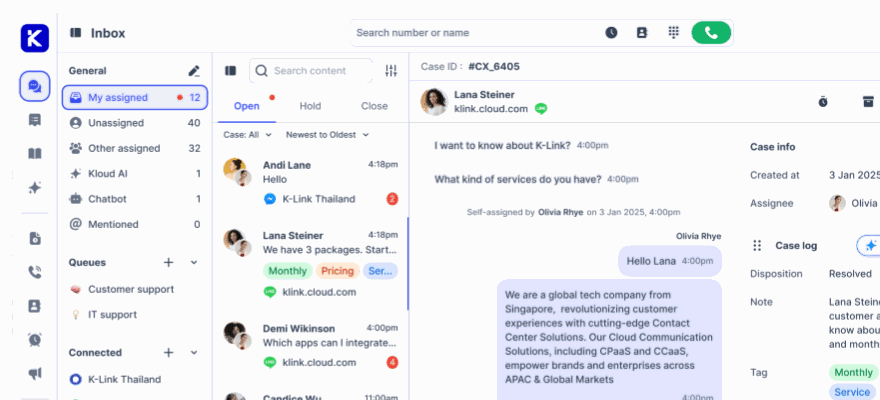
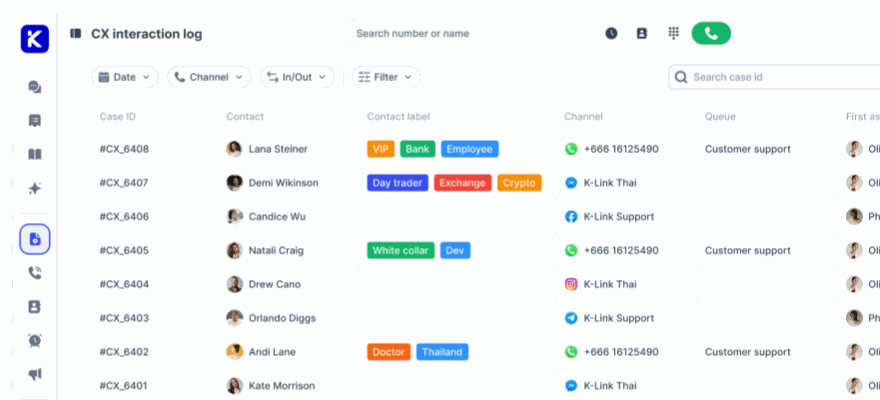
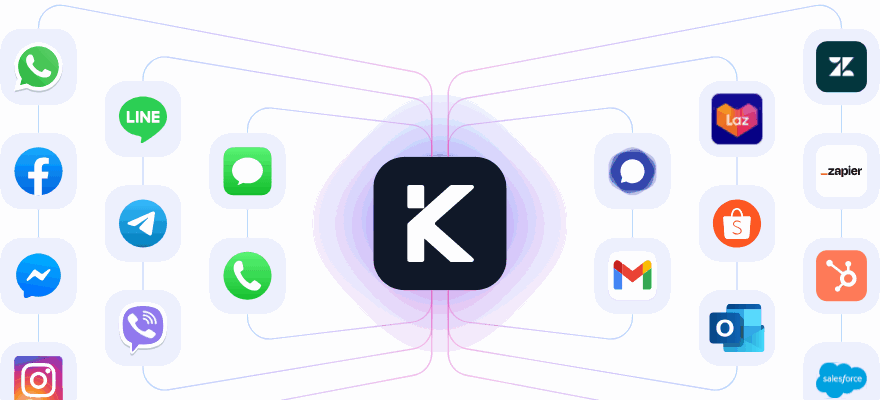
AI agents work behind the scenes, pulling data from order management systems, warehouse tools, and carrier APIs to deliver real-time updates across channels like email, SMS, web chat, and social media. Platforms like klink.cloud make this process seamless by maintaining a unified conversation history across all these touchpoints.
Picture this: a package leaves the fulfillment center, and the AI doesn’t just update a tracking page. It sends a personalized SMS, posts an update in the app, and logs the event in the customer’s interaction history. This ensures every future interaction - whether on Facebook Messenger or via email - picks up right where the last one left off.
"Since adopting klink.cloud, we've seen a massive improvement in our response times. Our customers are happier, and our agents are more efficient than ever." - Sarah Lee, Head of Contact Center, Horizon Solutions
Consistency is key. Customers shouldn’t have to repeat themselves if they switch communication channels. AI ensures this by recognizing the customer and pulling up their complete interaction history instantly.
For this to work, businesses need to integrate their systems effectively. Order IDs, tracking numbers, and warehouse locations must flow into the AI layer through secure APIs or webhooks. Event triggers - like "order created" or "delivery failed" - automatically prompt the AI to send tailored messages. For example, SMS is ideal for urgent updates, while email is better for detailed summaries.
During busy seasons, retailers who integrated AI-driven delivery updates reduced customer service bottlenecks. AI agents accessed real-time carrier data, forecasted delivery windows, and even suggested alternate pickup points for failed deliveries. This cut down on routine inquiries, sped up escalation handling, and lowered operational costs during peak times like the holidays.
"klink.cloud has made a huge difference for our contact center! Our agents can easily manage conversations across different channels, helping us respond faster and keep our clients happy. We've seen big improvements in both productivity and customer satisfaction since we started using it." - James Carter, Operations Manager, MPG BPO
This kind of integration not only automates routine tasks but also enhances the customer experience in measurable ways.
Handling Routine Customer Questions Automatically
AI agents excel at addressing the most common customer queries, like "Where is my order?" These agents authenticate the customer, retrieve order details, check the shipping status, and provide tracking links with localized delivery estimates. For example, U.S. customers might see: "Expected delivery: Tuesday, December 10 by 8:00 PM EST."
Change requests are handled just as efficiently. If a customer needs to update their delivery address, the AI checks whether the order has shipped and whether the carrier allows changes. If eligible, the agent updates the system, confirms the adjustment with the customer, and logs the change.
AI’s ability to unify tracking, inventory, and billing data has significantly reduced handling times for these routine inquiries. But it also knows when to step aside. Complex issues - like lost packages or damaged goods - are escalated to human agents. The handoff is smooth, with the AI summarizing the conversation, attaching relevant logistics data, and tagging the case with sentiment and urgency. This ensures human agents can prioritize and resolve issues faster.
Customer Satisfaction Metrics Improved by AI Agents
Beyond operational efficiency, AI-driven logistics elevate customer satisfaction by resolving inquiries quickly and reliably.
Metrics like first-contact resolution (FCR), customer satisfaction (CSAT), and Net Promoter Score (NPS) all see improvements. FCR rises when customers get immediate, accurate answers. Proactive updates reduce delivery anxiety, boosting CSAT. And NPS improves when customers experience fewer surprises and faster resolutions.
Operationally, the impact is clear too. Average handle time (AHT) drops as AI handles routine questions. Contact deflection rates - where AI resolves inquiries without human involvement - often exceed 50% for logistics-related queries. This frees up human agents to focus on more nuanced issues requiring empathy and critical thinking.
Businesses using klink.cloud have reported a 2x increase in customer satisfaction and a 5x boost in productivity. The platform’s ability to track metrics like first response time, resolution time, and sentiment analysis in real time has been key to these results. Companies can monitor how quickly AI responds, how often it resolves issues without escalation, and how customers feel about the interaction.
Measuring these improvements starts with capturing baseline data before implementing AI. Track metrics like the percentage of "Where is my order?" inquiries, average response times, and CSAT scores. After deploying AI, analyze results by channel (e.g., SMS vs. email), device type, and shipping method to identify where the AI delivers the most value.
For example, a global logistics leader found that using generative AI for documentation and process optimization sped up workflows, improved responsiveness, and enabled better decision-making. Automating back-office logistics tasks had a direct impact on the front-end customer experience, leading to faster resolutions.
Perhaps the most telling metric is repeat purchase behavior. Customers who receive proactive updates about delays or delivery windows are more likely to trust the retailer and order again. AI builds this trust by turning logistics into a transparent, predictable process.
"We moved from Zendesk, and it's the best decision we've made. The migration was smooth, and the Unified Inbox is so much easier to use than Zendesk tickets." - Sam Newton
Starting small with high-volume intents - like order status or delivery changes - allows businesses to prove the value of AI quickly. Clear escalation rules and SLAs ensure AI doesn’t overstep in sensitive situations. By involving both operations and customer experience teams in designing workflows, businesses can strike the perfect balance between efficiency and customer satisfaction.
How to Implement AI Agents in Your Logistics Operations
Bringing AI agents into your logistics operations isn’t something you can rush. It takes careful planning, a phased approach, and a clear understanding of your goals. Companies that succeed with AI treat it as a long-term investment rather than a quick fix. By focusing on strategy and preparation, you can ensure a smooth transition from concept to implementation.
A Step-by-Step Approach to AI Adoption
The first step in adopting AI is to evaluate your data infrastructure. AI agents thrive on clean, organized data. If your systems are fragmented or your data is messy, the AI won’t have what it needs to make informed decisions. Take inventory of your data - know what you have, where it’s stored, and how accessible it is.
Next, focus on one high-impact use case. Trying to automate everything at once is overwhelming and risky. Instead, start with a specific pain point that affects a large number of transactions. For example, many e-commerce businesses begin with "Where is my order?" inquiries. These questions are predictable, rely on straightforward data, and don’t require complex decision-making.
To test the waters, pilot the AI with a small subset of orders. This allows you to assess its accuracy, identify any quirks, and fine-tune your workflows - all without putting your entire operation on the line. During the pilot, keep an eye on how often the AI resolves issues independently, how quickly it responds, and whether customers are happy with the results.
Integration is key. Make sure your AI agent connects seamlessly with your existing systems using secure APIs or webhooks. This enables automatic actions like sending notifications for shipping updates or delays.
Once the pilot is successful, scale up gradually. Add more use cases one at a time, such as handling address changes, managing returns, or providing delivery window updates. Test and optimize each new capability before moving forward. This step-by-step approach minimizes risk and gives your team time to adjust.
Don’t forget about your team. Training your staff is just as important as training the AI itself. Customer service teams need to understand how the AI works, when it escalates issues, and how to interpret the data it generates. Similarly, warehouse managers should know how AI-driven inventory predictions influence their workflows. The goal is for everyone to see AI as a helpful tool, not a threat to their jobs.
Protecting Data Privacy and Maintaining Compliance
As you integrate AI, protecting customer data and staying compliant with regulations should be top priorities.
In the United States, data privacy laws are evolving, and businesses need to stay ahead of these changes. AI agents often handle sensitive information - like names, addresses, payment data, and order histories - so data security must be baked in from day one.
Start by ensuring your AI platform complies with relevant laws. For instance, if you operate in California, the California Consumer Privacy Act (CCPA) gives customers rights over their data, including the ability to request its deletion or opt out of data sales. If your business processes payments, compliance with PCI DSS is a must. Your AI vendor should provide clear details about how they secure data, where it’s stored, and who has access.
Encryption is non-negotiable. All customer data should be encrypted both when stored and during transmission. Access controls should restrict who can view or change sensitive information, and audit logs should track every interaction for accountability.
Transparency is another critical factor. If your AI denies a delivery change or flags an order as high-risk, the reasoning behind these decisions should be clear and easy to audit. This isn’t just good practice - it’s becoming a regulatory requirement to ensure AI systems don’t make biased or unfair decisions.
Regularly monitor the AI for bias and accuracy. For example, check how it handles different customer groups, regions, or order types. If specific groups experience longer resolution times or are frequently escalated to human agents, investigate the cause. Bias often creeps in through training data, so ongoing reviews are essential.
Finally, establish clear policies for data retention. Decide how long you’ll keep customer interaction histories and when to anonymize or delete records. These practices should align with legal requirements and customer expectations. Updating your privacy policy to explain how AI is used in your operations can also help build trust.
Matching AI Capabilities to Your Business Readiness
AI adoption isn’t a one-size-fits-all process. Your approach should match your current operational maturity. Think of it as a spectrum rather than an all-or-nothing leap.
At the most basic level, AI can act as a decision-support tool. Here, the AI analyzes data and makes recommendations, but humans still make the final call. For example, the AI might suggest optimal reorder quantities based on sales trends, but a procurement manager reviews and approves the decision. This setup works well for businesses new to AI or handling high-stakes decisions.
The next step is AI-assisted automation, where the AI handles routine tasks but escalates exceptions to human agents. For instance, if a customer wants to change their delivery address, the AI processes the request if the order hasn’t shipped yet. If the order is already in transit, it flags the case for human intervention. This hybrid model balances efficiency with quality control, allowing teams to focus on more complex issues.
At the most advanced stage, fully autonomous AI can make and execute decisions independently. This works best for well-defined, low-risk scenarios, such as sending automated tracking updates or adjusting inventory levels in real time. Even at this stage, human oversight remains essential. Set clear boundaries for what the AI can handle on its own and establish rules for escalating unusual cases.
The right approach depends on several factors:
- Data quality: Incomplete or inconsistent data will hinder even basic AI functions.
- Process standardization: AI performs best with predictable workflows. If your processes are highly variable, you may need to standardize them first.
- Risk tolerance: Industries with strict compliance requirements or high-value transactions may prefer to keep humans involved longer.
- Technical capabilities: Implementing AI requires skills in data integration, API management, and system monitoring. If your team lacks these skills, you may need to invest in training or hire specialists. Platforms like klink.cloud can simplify the process with pre-built integrations and user-friendly interfaces, but some technical know-how is still necessary.
Start small, measure your results, and expand based on what works. Track metrics like resolution rates, response times, and customer satisfaction before and after introducing AI. Use these insights to identify where AI adds the most value and where human expertise is still essential. The ultimate goal is to free up your team for tasks that demand creativity and critical thinking.
Conclusion
AI agents are transforming e-commerce logistics by simplifying supply chains, improving inventory management, and enhancing last-mile delivery. By predicting demand, refining workflows, and automating routine tasks, these systems empower businesses to meet growing customer expectations while keeping costs in check.
Unlike rigid rule-based systems, AI agents can adapt and learn in real time. This adaptability makes them well-suited to handle the complexities and unpredictability of modern e-commerce operations.
When integrating AI, it’s smart to start small, focusing on high-impact areas before expanding. Whether it’s tackling stock shortages, optimizing delivery routes, or easing the load on customer service teams, there’s likely an AI solution tailored to your specific challenges.
Success with AI hinges on having clean data, standardized workflows, and a team prepared for change. By automating repetitive, data-heavy tasks, AI allows your team to concentrate on strategic work that requires creativity and critical thinking.
As customer expectations for faster shipping, real-time tracking, and personalized shopping experiences continue to rise, AI is quickly becoming a necessity rather than a luxury. The real challenge lies in aligning AI with your business goals and operational needs. Start planning your AI strategy today to stay ahead in the rapidly evolving e-commerce landscape.
FAQs
How do AI agents make last-mile delivery more efficient in e-commerce?
AI tools are transforming last-mile delivery by fine-tuning routes, adjusting schedules in real time, and minimizing failed delivery attempts. These advancements translate into saved time, reduced costs, and smoother operations for businesses.
By tapping into real-time data - like traffic updates, weather conditions, and package locations - AI ensures drivers follow the quickest, most efficient routes. Plus, it can adapt schedules on the fly to handle unexpected delays or changes, keeping deliveries on track. The result? Lower operational expenses and happier customers who enjoy faster, more dependable service.
How do AI agents differ from traditional rule-based systems in managing inventory and supply chain operations?
AI agents have the ability to learn from data, enabling them to tackle complex and shifting challenges in inventory and supply chain management. They can identify patterns, forecast demand, and adjust in real time, bringing a level of flexibility and efficiency that meets the demands of today's fast-paced markets.
On the other hand, traditional rule-based systems stick to a set of predefined instructions. While they perform well in structured and predictable scenarios, they struggle to adapt to sudden changes or optimize processes on the fly. This makes AI agents a more suitable option for modern e-commerce businesses aiming to streamline their operations and respond quickly to evolving needs.
What are the key steps to successfully implement AI agents in e-commerce logistics and operations?
To make AI agents work effectively in e-commerce logistics, businesses need to start with a solid groundwork. This begins with ensuring high-quality, well-organized data. That means having detailed product descriptions, real-time inventory updates, and accurate pricing information at your fingertips. With this kind of data, AI tools can make smarter decisions and provide insights that actually matter.
Next, pinpoint specific areas where AI can make the biggest difference. This could include optimizing last-mile delivery, automating inventory management, or improving demand forecasting. Partnering with reliable vendors and investing in scalable infrastructure that supports AI protocols is also key to seamlessly integrating these tools into your existing operations.
Don’t overlook potential hurdles like data privacy concerns, governance issues, or system reliability. Implement strong policies and monitoring systems to tackle these challenges head-on. By following these steps, businesses can streamline operations and elevate customer satisfaction with AI-powered solutions.