Shopify AI Agent for COD Orders: Confirmations & Delivery Tracking
Shopify merchants face unique challenges with Cash on Delivery (COD) orders - manual processes, high return rates, and delayed cash flow. AI agents solve these problems by automating COD confirmations, fraud detection, delivery tracking, and customer updates. This reduces errors, saves time, and improves customer satisfaction.
Key Takeaways:
- Order Confirmation Automation: AI instantly confirms COD orders via SMS, email, or messaging apps, ensuring customers are ready to receive and pay for deliveries.
- Fraud Detection: Suspicious orders (e.g., mismatched addresses or high COD amounts) are flagged for manual review, minimizing losses.
- Real-Time Tracking: Customers receive live updates about their package's status, keeping them informed and reducing delivery failures.
- Centralized Communication: Platforms like klink.cloud unify customer interactions across channels, streamlining operations and improving response times.
- Performance Metrics: Key metrics like confirmation success rate, RTO (Return to Origin) rate, and delivery success rate help merchants refine workflows.
By integrating AI tools like klink.cloud with Shopify, businesses can handle COD orders efficiently, reduce costs, and enhance operational workflows - all while maintaining compliance with privacy laws and building customer trust.
Shopify + WhatsApp 💥 The ULTIMATE Hack for Explosive DTC Growth (Double Your Sales Fast!)

Automating COD Order Confirmations with AI
When a customer places a Cash on Delivery (COD) order on your Shopify store, the process kicks off immediately. You need to confirm their intent, verify their details, and ensure they’ll be available to accept the delivery - all before incurring shipping costs. AI agents streamline this process by reaching out to customers instantly and updating Shopify based on their responses.
How Automated COD Confirmation Works
The automation starts as soon as a customer selects COD at checkout. Shopify marks the order as pending, triggering the AI agent to retrieve relevant order details and initiate contact.
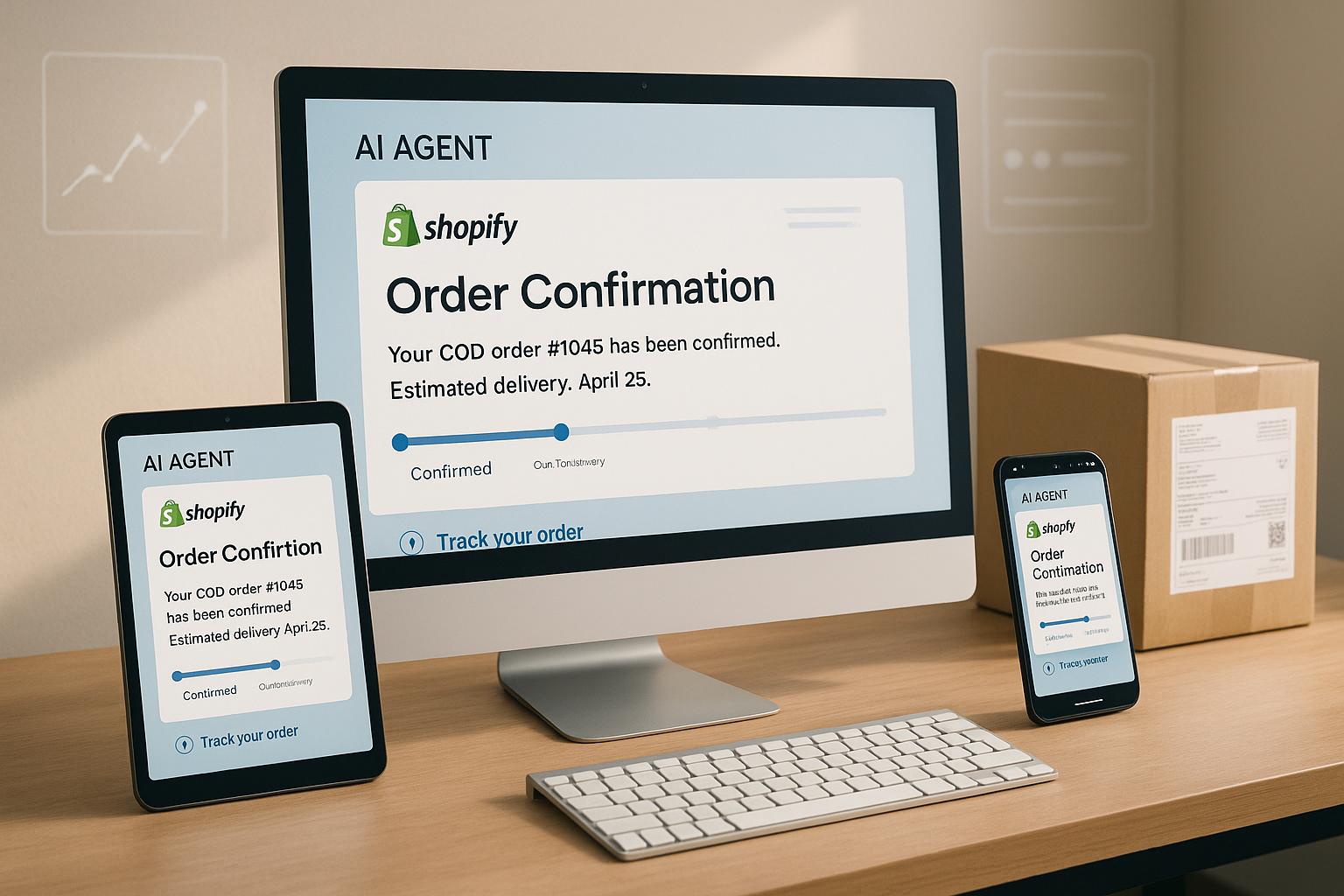
In just seconds, the AI agent sends a confirmation message through the customer’s preferred channel, such as SMS, email, or Messenger. The message clearly explains who is contacting them, why, and provides key details like the order total in U.S. dollars and the estimated delivery date in a familiar format. It also includes a simple call to action, such as “Reply YES to confirm” or “Reply 1 to cancel”.
Once the customer responds, the AI verifies their intent, logs the interaction, and updates the order status in Shopify. For confirmed orders, tags like "COD-confirmed" are added. If the customer requests changes - such as modifying the delivery address or time - the AI handles these updates directly in Shopify.
If no response is received within the set timeframe, the AI sends reminders. If the customer remains unresponsive after 12 to 24 hours or beyond your shipping cutoff, the system cancels the order and updates Shopify automatically. This ensures you avoid unnecessary shipping costs while keeping the process efficient.
The system operates continuously, ensuring confirmations are handled promptly regardless of when orders are placed.
Setting Up Automated Confirmations
To implement automated COD confirmations, start by enabling COD as a payment method in your Shopify store settings. Then, connect your store to klink.cloud. This platform integrates seamlessly with Shopify, allowing it to access order and customer data from platforms like WhatsApp, Messenger, and Gmail.
You’ll need to grant klink.cloud permission to access specific fields, such as order details, customer information, and fulfillment status. These permissions are carefully scoped to ensure the AI agent only accesses what’s necessary for confirmations. Within klink.cloud, you can configure your workflow by selecting the AI agent, prioritizing communication channels, and defining response logic. For instance, you might set SMS as the primary contact method, use email as a backup, and establish rules for canceling unconfirmed orders after a set period.
Your messaging templates should be clear, compliant, and tailored for U.S. customers. Each template should include the order total in dollars, a delivery window in a familiar format (e.g., "December 10, 2025"), and any required privacy disclosures. A recognizable sender name is crucial to build trust. For example:
"Hi [Name], thanks for your $47.99 order from [Store Name]! Reply YES to confirm delivery to [Address] on [Date]."
Effective templates not only confirm orders but also highlight inconsistencies that may need further review.
Additionally, mapping Shopify tags to AI decisions is essential. For instance, confirmed orders might get a "COD-confirmed" tag, while high-risk orders could be labeled "COD-high-risk" for manual review. Address-related issues might trigger a "COD-address-issue" tag. These tags help your team stay organized and ensure smooth collaboration across fulfillment, customer service, and analytics.
Clearly defined business rules are also critical. Set guidelines for minimum order values, eligible ZIP codes, delivery windows, and cancellation thresholds. For example, if COD is only available for orders under a certain amount or within specific regions, these restrictions can be built into the workflow to ensure consistency.
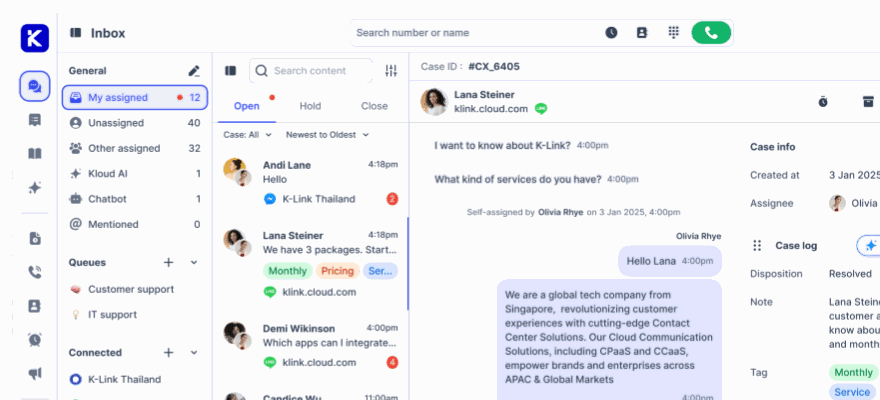
Finally, klink.cloud’s Unified Inbox centralizes all customer interactions, allowing your team to manage messages from various channels in one place. If a customer’s response is unclear or requires additional attention, the AI agent can assign the conversation to a human team member based on keywords or customer type.
Lowering RTO and Fraud with AI Detection
Beyond automating confirmations, AI agents help reduce Return to Origin (RTO) events, which can drain profits through additional shipping fees, tied-up inventory, and unsellable merchandise. By addressing potential issues during the confirmation process, the AI minimizes these costly returns.
During the confirmation conversation, the AI verifies critical details that often cause failed deliveries. If address components seem inconsistent or delivery preferences are unclear, the agent prompts the customer for clarification.
The agent also confirms that the customer will have the exact cash amount ready at delivery. This step helps catch situations where a customer mistakenly assumes they can pay with a card or overlooks shipping and tax charges. If the customer’s response indicates uncertainty or hesitation, the AI may send follow-up prompts or recommend canceling the order.
Fraud detection is another layer of protection. The AI system flags suspicious patterns, such as mismatched addresses, repeated failed deliveries from the same customer, unusually large COD amounts, or address formats that don’t align with standard conventions. High-risk orders are routed for manual review, allowing your team to investigate before shipping.
Over time, the AI learns from past RTO data. For example, if certain neighborhoods frequently result in returns or orders above a specific amount have higher refusal rates, the system adjusts its criteria. It may add verification steps, send extra reminders, or flag such orders for review.
By combining address verification, intent confirmation, and fraud detection, the AI creates multiple checkpoints to identify problematic orders early. Studies show that AI-driven fraud detection in ecommerce can significantly reduce chargebacks and other losses by catching risky orders before shipping. This proactive approach helps avoid the cycle of failed deliveries, return logistics, and inventory issues.
The AI also applies rules consistently, eliminating the risk of human errors or exceptions during busy periods. For instance, if your policy requires canceling orders with multiple risk signals, the system enforces this rule without deviation, protecting your margins while ensuring legitimate customers receive reliable service.
Real-Time Delivery Tracking and Customer Updates
Once AI-driven order confirmations are sent, real-time tracking keeps COD customers informed every step of the way. Unlike prepaid buyers who might tolerate some uncertainty, COD customers need precise updates - they need to know when to expect their delivery and have cash ready. AI agents bridge this gap by tracking shipments and sending timely updates through the channels customers actually use.
How AI Agents Track Shipments
AI agents connect directly to shipping carrier systems to monitor packages. For example, when you create a shipping label in Shopify, the tracking number is saved in the order record. The AI agent uses this number to subscribe to tracking updates from major carriers like USPS, UPS, and FedEx via API integrations.
These agents also pull data from connected shipping or fulfillment apps that update order statuses in Shopify. This creates a detailed timeline of the package’s journey. For COD orders, the AI watches for events requiring customer action - like when a package is "out for delivery" or if a delivery attempt fails. Customers are notified to prepare exact cash or reschedule delivery if necessary. If there’s a delay, the AI proactively explains the situation before the customer starts asking questions.
The system processes tracking data from different carriers and translates it into clear, standardized updates. Whether it’s USPS First Class or UPS Ground, the AI agent interprets carrier-specific codes and crafts customer-friendly messages. This automation eliminates the need for separate templates for each shipping provider.
This streamlined tracking system ensures updates are sent across multiple channels in real time, keeping customers informed and reducing delivery-related concerns.
Multi-Channel Updates for Better Communication
In the U.S., most people check text messages and messaging apps far more often than email, especially when expecting a package. AI agents can send updates through SMS, email, WhatsApp, Facebook Messenger, and more, based on customer preferences.
When setting up notifications, you can define which events trigger messages and the channels to use. For instance, an SMS might notify a customer when their package is "out for delivery", as this is often the most urgent update. Emails, on the other hand, work well for initial shipment confirmations with tracking details. Customers preferring WhatsApp or Messenger can receive updates there, often with quick-reply buttons for follow-up questions or rescheduling.
To make this work, you’ll need to collect channel preferences at checkout. A simple checkbox like "Send me SMS delivery updates" or "Contact me on WhatsApp" allows customers to choose their preferred method. These preferences are stored in Shopify’s metadata, ensuring the AI agent knows how to reach each customer.
For example, a COD notification via SMS might say:
"Hi [Name], your $49.99 order from [Store Name] is out for delivery at 3:00 PM. Have exact cash ready. Track: [link]."
This message uses clear U.S. formatting for the date, dollar amount, and payment reminder - key details for COD orders. The AI agent also has fallback options. If an SMS fails, it can try email. If the email isn’t opened and the delivery is imminent, a second SMS reminder can be sent.
Each tracking event prompts a tailored message:
- When a label is created, the message confirms shipment and provides an estimated delivery date.
- While the package is in transit, updates reassure the customer everything is on track.
- If there’s a delay, the message explains the reason and gives a new delivery estimate.
- For failed deliveries, instructions on rescheduling or confirming the address are included.
- After successful delivery, the system can confirm payment collection and request feedback.
Centralized Communication with klink.cloud
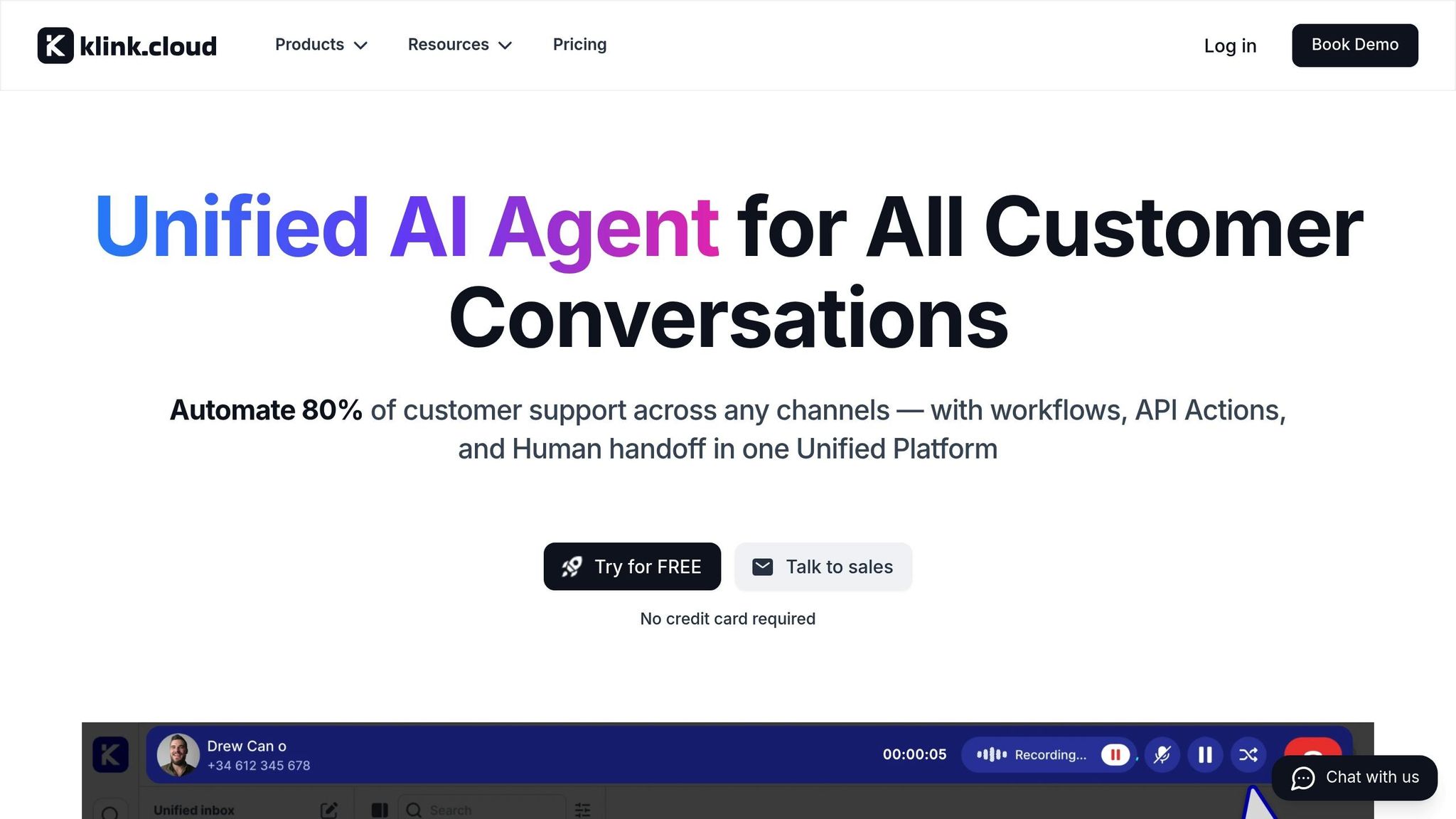
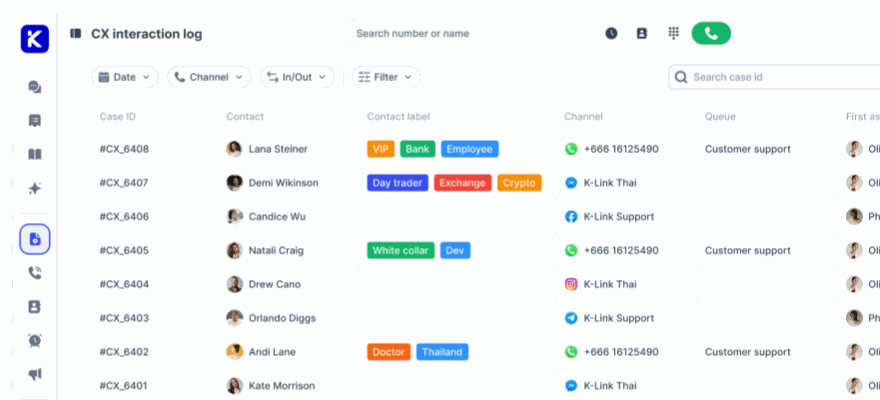
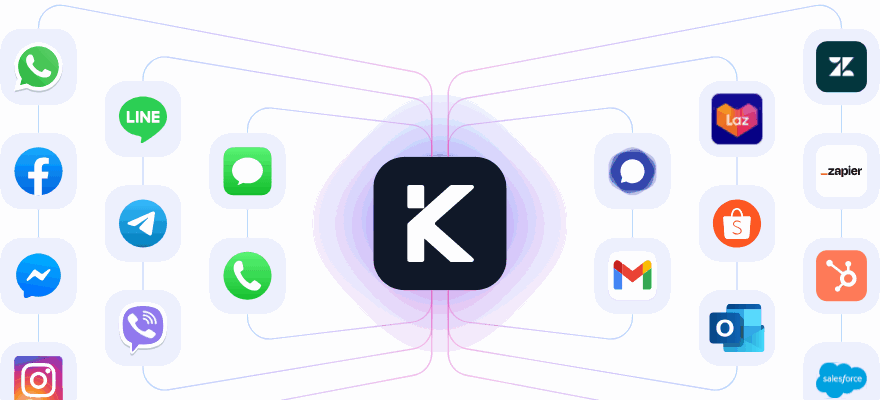
Managing communication across SMS, email, WhatsApp, Messenger, and live chat can get chaotic. That’s where klink.cloud steps in, consolidating all these channels into one unified system. Whether a customer reaches out via SMS or email, the Unified Inbox keeps the entire conversation history in one place, eliminating duplicate efforts.
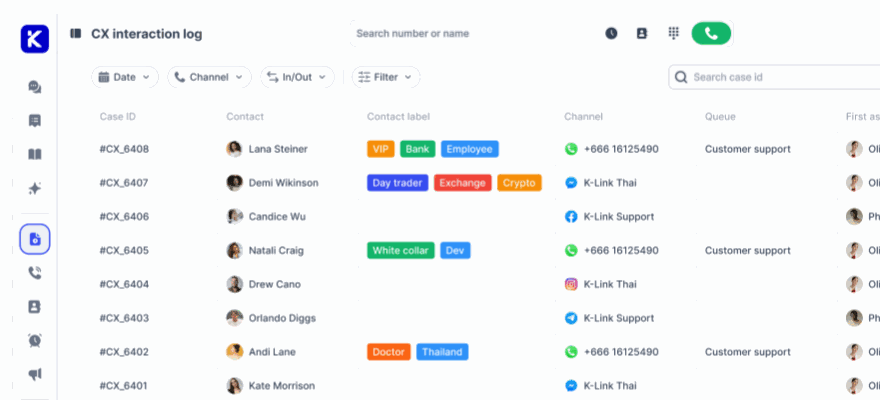
The platform’s Case Management feature tracks every interaction under a single customer profile. For COD orders, this means you can view the initial confirmation, delivery updates, customer inquiries, and team notes - all in one dashboard. Metrics like response time, resolution time, and customer sentiment are also recorded, giving you a clear picture of how each order is handled.
If the AI agent detects a situation that requires human intervention, like repeated failed delivery attempts or a missing package report, it automatically assigns the case to the appropriate team. Automated routing ensures delivery questions go to fulfillment specialists, while payment disputes are directed to the finance team.
"Since adopting klink.cloud, we've seen a massive improvement in our response times. Our customers are happier, and our agents are more efficient than ever." - Sarah Lee, Head of Contact Center, Horizon Solutions
Integration with Shopify allows order data to flow directly into klink.cloud. When a customer asks about their delivery, agents can see the order number, tracking status, COD amount, and delivery address - all in one view. There’s no need to switch between apps or dig through Shopify for details.
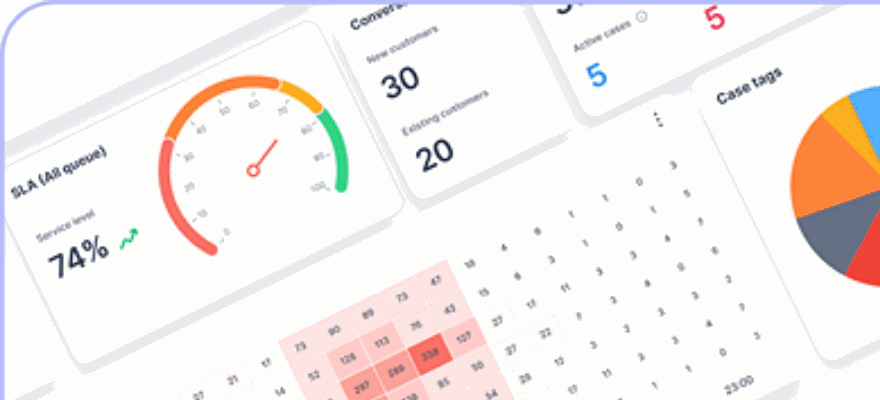
Real-time analytics provide insights into how your delivery communication is performing. Metrics like average response time to "Where is my order?" questions, the percentage of read delivery updates, and the resolution rate for failed deliveries help you fine-tune your messaging strategy.
"klink.cloud has made a huge difference for our contact center! Our agents can easily manage conversations across different channels, helping us respond faster and keep our clients happy. We've seen big improvements in both productivity and customer satisfaction since we started using it." - James Carter, Operations Manager, MPG BPO
For businesses handling high volumes of COD orders, this centralized system is invaluable. With hundreds of daily orders and inquiries across multiple channels, klink.cloud ensures no message slips through the cracks. Routine tracking questions are handled instantly by the AI agent, while your team focuses on more complex cases - all within the same platform.
The system also ensures compliance with U.S. privacy regulations. If customers opt out of SMS or request to stop receiving updates, these preferences are synced across all channels. The AI agent respects these choices, ensuring customers don’t receive unwanted messages.
Improving Workflows and Tracking Performance
Managing COD (Cash on Delivery) orders effectively hinges on tracking the right metrics and refining your processes based on actionable data. Without clear performance indicators, it’s tough to gauge whether AI-driven confirmations are working or if delivery updates are actually reaching customers.
Key Metrics for COD Operations
To make informed decisions, focus on these critical metrics:
- Confirmation success rate: This measures how many COD orders are confirmed by customers after the AI system reaches out. Calculate it by dividing the number of confirmed orders by the total confirmation requests sent. For instance, if 100 requests are sent and 92 are confirmed, the success rate is 92%.
- Delivery success rate: This shows the percentage of confirmed orders that are successfully delivered. Divide the number of completed deliveries by the total confirmed orders.
- RTO (Return to Origin) rate: This tracks the percentage of COD shipments that are returned instead of being delivered. It’s calculated by dividing returned shipments by the total shipped orders. High-performing teams aim to keep RTO rates below 10%, though this target varies depending on factors like region and product type.
- Cost per COD order: This metric combines all COD-related expenses and divides them by the total number of COD orders. It helps compare the efficiency of COD orders against prepaid ones.
- Average confirmation time: This measures how quickly customers confirm their orders after placement. Faster confirmations mean shipments can proceed sooner, reducing delays.
- Customer response rate: This reflects the percentage of customers who engage with your AI messages, whether to confirm, ask questions, or request changes. A low response rate could indicate problems with message clarity, timing, or delivery.
By consistently tracking these metrics, you can identify patterns and make adjustments to improve efficiency. These insights lay the foundation for building better AI workflows, which we’ll explore next.
Creating AI Workflows That Work
A well-structured AI workflow ensures that every step - from order placement to delivery - is guided by data. For instance, when a COD order is placed, the AI system should immediately send a confirmation message via SMS, WhatsApp, or email. This message should clearly outline the order details, including the items purchased, the total amount (e.g., $49.99), and the expected delivery date (formatted as month/day/year, e.g., 12/10/2025).
Customer responses can then trigger specific actions:
- Confirmed orders: Automatically marked as ready to ship.
- Requests for changes: Address updates or item switches can trigger clarification flows or escalate to a human agent.
- Cancellations: Immediately halt shipping processes and update the order status.
- No responses: After a set period, send reminders or cancel the order to avoid unnecessary delivery attempts.
Workflows can also be tailored for different customer segments. For example:
- New customers: Send detailed confirmations and follow-up reminders if there’s no response.
- Repeat customers: Use shorter, more straightforward messages without additional follow-ups.
- High-risk orders: Flag such orders - due to repeated refusals or inconsistent details - for manual review before shipping.
For multi-step notifications, set up event-based triggers like "Order confirmed", "Shipped", "Out for delivery", and "Delivery attempt failed." Each event should prompt a clear, branded message with tracking details or instructions for resolving delivery issues.
Here’s a practical example: A fashion retailer reduced RTO rates by adding an extra confirmation step and specifying delivery time windows in regions with high RTO rates. Similarly, an electronics store minimized RTO on high-value orders by sending pre-delivery reminders that included a breakdown of the total due and an easy cancellation option.
To refine workflows, run A/B tests on elements like confirmation scripts or message timing. If confirmation rates drop, investigate recent changes or potential messaging issues.
Analyzing Performance with klink.cloud Dashboards
Once workflows are optimized, real-time analytics become essential for maintaining and improving performance. Platforms like klink.cloud offer dashboards that provide instant insights into customer interactions, agent efficiency, and operational metrics across all channels. For COD operations, you can track how many confirmation messages were sent, how many customers responded, and how long it took to resolve delivery-related inquiries - all in one place.
The Case Management feature consolidates all customer interactions into a single profile. For each COD order, you can review metrics like first response time, resolution time, waiting time, customer sentiment, and CSAT (Customer Satisfaction) scores. Custom tags - such as "COD confirmation", "delivery issue", or "RTO reason" - allow you to pinpoint specific workflow stages. For example, if cases tagged as "delivery issue" take longer to resolve, it might indicate that your AI scripts need tweaking or that your team requires additional training.
The Unified Inbox centralizes messages from multiple channels, including phone, WhatsApp, Facebook, Telegram, email, and live chat. This streamlined view makes it easier to analyze performance across platforms and adjust your outreach strategy based on response trends.
Dashboards also help identify bottlenecks. For instance, a spike in "no response" confirmations might point to poorly timed messages or unclear communication. Spotting these issues allows you to implement targeted improvements and compare metrics before and after changes.
"Since adopting klink.cloud, we've seen a massive improvement in our response times. Our customers are happier, and our agents are more efficient than ever." - Sarah Lee, Head of Contact Center, Horizon Solutions
klink.cloud reports a fivefold boost in productivity for its users and a twofold increase in customer satisfaction, with 99% uptime. For businesses handling large volumes of COD orders, these gains translate into lower costs and fewer delivery failures. By identifying where workflows stall, you can take proactive steps to streamline your COD operations.
sbb-itb-204ca50
Maintaining Customer Trust and Legal Compliance
AI-powered COD confirmations and delivery tracking require handling sensitive customer data, all while navigating evolving U.S. regulations. Missteps can lead to fines, reputational harm, and a loss of trust. While AI integration can streamline operations, it also demands strict adherence to compliance and trust-building practices.
Privacy Requirements and Customer Consent
The Telephone Consumer Protection Act (TCPA) mandates prior express written consent for automated marketing messages. However, transactional COD communications are exempt - unless they include promotional content.
Here’s how to ensure compliance for AI-driven COD communications:
- At checkout, include a clear statement like: "By completing your purchase, you consent to receive automated COD order confirmations and delivery updates via SMS, WhatsApp, or email. Standard message and data rates may apply."
- Opt-out options should be straightforward and immediate. Include clear instructions in every message, such as "Reply STOP to unsubscribe", and process opt-out requests within 24 hours.
- Document consent thoroughly. Record details like the timestamp, displayed language, and customer IP or device data to verify compliance if needed.
State-level laws, such as California's Consumer Privacy Act (CCPA) and Virginia's Consumer Data Protection Act (CDPA), add more layers of responsibility. These laws give customers rights over their personal data, including the ability to know what data is collected, how it’s used, and to request its deletion. If you collect phone numbers, addresses, and order details for COD confirmations, your privacy policy must clearly explain these practices. Make the policy easy to find - link to it during checkout and in your automated messages.
For companies using AI systems in COD workflows, only store data that’s absolutely necessary. Once a COD order is complete and the data is no longer required for business purposes, delete it. This not only reduces liability but also helps build trust.
Lastly, ensure that third-party processors comply with privacy standards. If you’re using platforms like klink.cloud, secure data processing agreements and verify their adherence to relevant regulations.
While legal compliance is critical, trust goes beyond the law - it’s built on clear, consistent communication.
Building Customer Confidence in COD Transactions
Compliance is just the starting point. To truly gain customer trust, focus on transparency and consistency.
- Identify your brand clearly. Every message should prominently feature your business name or branded sender ID. Generic sender IDs like "Unknown" or "5-digit shortcode" can make customers skeptical.
- Be transparent in your messaging. Include all relevant details in COD confirmations: the items ordered, the total amount due (e.g., $49.99), the delivery address, and the estimated delivery date (e.g., 12/15/2025). Avoid vague messages like "Your order is confirmed", which can leave customers uncertain.
- Set honest expectations. If delays occur, notify customers immediately instead of waiting for them to ask. If a delivery attempt fails, explain the reason and provide next steps. For instance, "Delivery attempt failed because no one was home. We’ll try again tomorrow between 10:00 AM and 2:00 PM" is far better than leaving them in the dark.
- Offer human support when needed. Even with advanced AI, some customers will need help that automation can’t provide. Make it easy to reach a live agent by including phrases like "Reply HELP to speak with our team" or providing a phone number. Knowing that human assistance is available builds trust.
- Maintain consistent branding. Whether communicating via SMS, WhatsApp, or email, ensure your tone, language, and visual identity align across platforms. Inconsistencies - like using formal language in emails but casual slang on WhatsApp - can confuse customers and weaken trust.
- Reassure with security messaging. While you can’t include security badges in SMS messages, you can demonstrate your commitment to privacy. For example, "We protect your data. View our privacy policy at [yoursite.com/privacy]." Small assurances like this go a long way.
- Address potential issues proactively. If your AI detects a problem, such as an incomplete address, notify the customer immediately and help resolve it before shipping. This prevents delivery failures and shows you care about their experience.
- Collect feedback to improve. After a successful COD delivery, send a quick satisfaction survey. Keep it simple with one or two questions, like "How was your delivery experience? Reply 1 (Great), 2 (Okay), or 3 (Poor)." Use this input to refine your AI workflows and address pain points.
Trust isn’t built overnight - it grows through consistent, transparent, and respectful interactions. When customers see that your AI system keeps them informed, safeguards their privacy, and offers help when needed, they’re more likely to complete COD orders and return for future purchases. Legal compliance paired with genuine care creates a solid foundation for success in COD operations.
Growing Your COD Operations with klink.cloud
Once your COD workflows are up and running, the natural next step is scaling them effectively. For Shopify merchants managing increasing COD volumes, automation tools that grow alongside your business are essential. klink.cloud’s AI-powered platform goes beyond simple order confirmations and delivery tracking, turning COD management into a tool for building customer loyalty and driving repeat business.
Using AI for More Than COD
COD transactions don’t end when the package is delivered. In fact, each successful delivery creates an opportunity to strengthen customer relationships, gather valuable insights, and encourage repeat purchases - all without overburdening your team.
Take post-delivery surveys, for example. These can be a great way to engage customers. AI can craft personalized survey prompts based on the specifics of an order and send them through the customer’s preferred channel shortly after delivery. Instead of a generic “How did we do?” message, imagine a question like, “Your wireless headphones arrived on 12/10/2025. How’s the sound quality?” This kind of tailored approach can boost response rates and provide feedback you can actually use.
AI doesn’t just stop at collecting feedback - it analyzes it. Sentiment analysis and topic detection can uncover patterns, such as frequent complaints about late deliveries in certain areas or recurring packaging issues. Negative feedback can trigger immediate actions, like connecting the customer with a live support agent or creating a priority support ticket. Positive responses, on the other hand, might lead to follow-ups like a request for a product review or an upsell offer. Every survey response becomes a chance to refine operations and enhance customer loyalty.
Speaking of upselling, AI can help you strike the right balance after COD deliveries. For instance, if a customer buys skincare products and leaves positive feedback, AI might suggest a complementary serum or a subscription refill a few days later. These offers are carefully timed and targeted, ensuring they reach only qualified customers - those with successful COD histories or positive survey responses. A/B testing different offers and timings can further fine-tune this process, improving conversion rates over time.
AI also enables tailored retention strategies through SMS, email, or messaging apps. Loyal customers might receive early access to a new product, while at-risk customers could be offered a limited-time discount and a reminder of their previous positive experiences. This shift from simply managing operations to actively driving growth highlights the broader role AI plays in COD management.
Advanced klink.cloud Features for Scaling
As your COD operations grow, manual processes can quickly become a bottleneck. klink.cloud’s advanced tools are designed to help you scale while maintaining consistency and control.
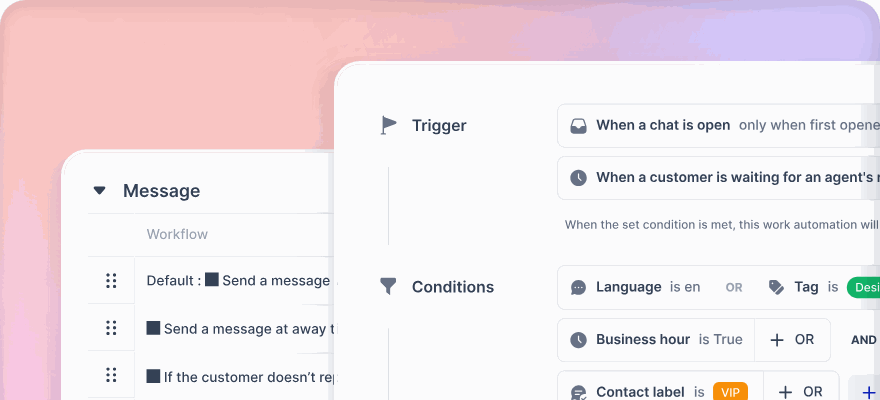
Custom workflows allow you to automate every step of the COD process, from order confirmation to post-delivery follow-ups. With a visual, rule-based workflow builder, you can create complete COD flows without needing to write code. Features like if/then logic, event triggers, and reusable templates let you standardize processes while accommodating specific needs, such as region-specific carriers or special product handling.
For example, a workflow might automate WhatsApp order confirmations, perform fraud checks, and send SMS tracking updates. After delivery, it could prompt a satisfaction survey and, if the response is positive, immediately follow up with a personalized upsell offer. Built-in features like rate limiting, error handling, and message queueing ensure these workflows run smoothly, even as your order volumes grow.
Managing customer communication across multiple channels - SMS, email, and messaging apps - can be challenging, but klink.cloud simplifies it. The platform ensures consistent messaging across all channels and consolidates every interaction into a Unified Inbox. This means your team can see the full history of COD-related messages, from order confirmations to survey responses, all in one place. This reduces duplicate replies and speeds up resolution times.
Channel performance metrics help you identify which communication methods work best. By tracking open rates, click-through rates, and opt-out rates, you can refine workflows to focus on the most effective channels, ensuring critical messages reach customers in the best way possible.
Real-time analytics provide actionable insights as your operations expand. You can filter data by carrier, region, product category, or campaign to identify bottlenecks. For instance, you might discover a particular carrier has a high rate of failed deliveries in specific ZIP codes or that a workflow is sending too many follow-up messages. These insights allow you to adjust processes and even test new upsell campaigns based on early feedback.
Integration with your existing tech stack ensures a seamless transition. klink.cloud connects directly with Shopify via an app or API, syncing order and customer data while mapping COD-specific fields like payment status and shipping method. It also integrates with major U.S. carrier tracking APIs, CRM tools, helpdesk platforms, and marketing software, so COD events automatically trigger updates and messages across your systems without manual intervention. Start by mirroring your current manual COD process, then scale up to more advanced workflows.
klink.cloud’s AI-Agents take automation to the next level, connecting customers with the right support based on keywords, customer type, language, or VIP status. This is especially helpful in COD operations, where first-time buyers, repeat customers, and high-value accounts all require different levels of attention. Smart features like auto-assignment and tagging streamline workflows, reducing the workload for your team.
The platform’s Case Management system consolidates all customer interactions into a single profile, tracking key metrics like first response time, SLA compliance, resolution time, sentiment, and customer satisfaction. This comprehensive view - from initial order confirmation to post-delivery interactions - helps you quickly address issues that could lead to returns or negative reviews.
To prepare for future growth, consider designing modular workflows that separate core COD tasks (like confirmation and tracking) from region- or product-specific rules. This approach allows you to quickly adapt and replicate successful strategies across new markets or product lines, ensuring a smooth and consistent experience for your customers as your business scales.
Conclusion
Handling COD orders doesn't have to be a time-consuming or costly process. By combining Shopify AI agents with klink.cloud, businesses can transform what was once a manual, error-prone workflow into an automated system that runs smoothly and efficiently. This shift brings clear benefits: reduced costs, streamlined operations, and happier customers. Let’s break it down.
Cutting Costs: Automation quickly slashes expenses. Automated COD confirmations and fraud checks significantly reduce failed deliveries and return-to-origin shipments - two major profit drains. Instant confirmation messages and clear delivery details mean customers are more likely to be available when couriers arrive. This leads to fewer wasted trips, lower courier penalties, and fewer undeliverable packages. Plus, by automating repetitive tasks, your team can focus on more impactful work.
Boosting Efficiency: Automation enhances efficiency throughout the COD process. AI agents validate customer details right after checkout, confirm payment intent via SMS or chat, and flag risky orders before they ship. During delivery, klink.cloud coordinates carrier updates and sends timely messages at each stage - whether the package is out for delivery, a delivery attempt failed, or it was successfully delivered. All interactions are logged automatically into Shopify, creating a unified view. Retailers adopting AI-driven tools are seeing measurable improvements. For instance, The Conran Shop reported a 50% reduction in total cost of ownership and a 54% increase in conversion rates after upgrading its Shopify-based system.
Improving Customer Experience: COD buyers deserve the same level of service as prepaid customers. Automation ensures real-time tracking, clear status updates, and accurate fee details (e.g., $49.99), creating a reliable and transparent experience. Customers receive timely notifications on their preferred channels, helping them stay informed and prepared. This consistent communication builds trust, encourages repeat purchases, and reduces support tickets.
The technology behind this - AI agents, integrations, and dashboards - works seamlessly to simplify COD management. Smaller merchants can benefit from ready-to-use templates and no-code setups, making automation accessible without needing a full engineering team. Larger or fast-growing brands can leverage advanced klink.cloud features like custom workflows, segmentation, and CRM integrations to scale and refine their COD operations.
Start small with high-impact workflows, such as automating order confirmations and delivery tracking updates, and measure the results. Monitor metrics like return-to-origin rates, support tickets per order, and first-attempt delivery success. Once you see the benefits, you can expand automation to cover prepaid orders, returns, post-purchase upsells, and multi-channel support. COD automation is just the beginning - it lays the groundwork for a smarter, AI-driven approach to logistics and customer engagement.
Shopify AI agents and klink.cloud workflows are designed with customer consent and privacy in mind. They ensure compliance with data privacy requirements and keep human oversight in place for sensitive situations. Automation doesn’t replace the need for responsible data handling or personal interactions; it allows your team to focus on moments that require a human touch. By combining automation with strong customer relationships and transparent policies, you can scale your COD operations without compromising trust.
FAQs
How does Shopify's AI agent confirm COD orders accurately, and what happens if a customer doesn't respond?
Shopify's AI agent streamlines the process of confirming Cash on Delivery (COD) orders by automating the verification of customer details and order information. This not only speeds up the process but also minimizes the chances of manual mistakes, ensuring confirmations are handled both quickly and accurately.
If a customer doesn’t reply to the confirmation request, the AI agent doesn’t stop there. It can send follow-up reminders based on pre-set communication protocols or, if necessary, escalate the matter to a human representative. This approach ensures that every order gets the attention it needs, keeping the workflow seamless and efficient.
How does Shopify's AI help prevent fraud and reduce return rates for COD orders?
Shopify uses AI-driven tools to tackle fraud and reduce high return rates in Cash on Delivery (COD) orders by spotting potential risks early. These tools analyze customer behavior during checkout to identify transactions that might be risky, flagging them for further review.
On top of that, automated voice calls play a crucial role in confirming orders directly with customers. These calls verify phone numbers and ensure that the order was placed intentionally, cutting down on fake or fraudulent orders. This approach not only boosts efficiency but also helps reduce unnecessary returns.
How does klink.cloud integration with Shopify simplify COD order management and improve customer communication?
klink.cloud integrates effortlessly with Shopify to simplify Cash on Delivery (COD) operations. It automates essential tasks like order confirmations and delivery tracking, saving time and effort for businesses.
This integration also consolidates customer communications into one platform, enabling teams to respond more quickly and efficiently. By cutting down on manual work, klink.cloud reduces errors and ensures customers stay informed about their orders in real time. The result? A smoother shopping experience that lets businesses prioritize growth and keep their customers happy.