
AI Agents for Inventory, Stock Alerts & Order Updates
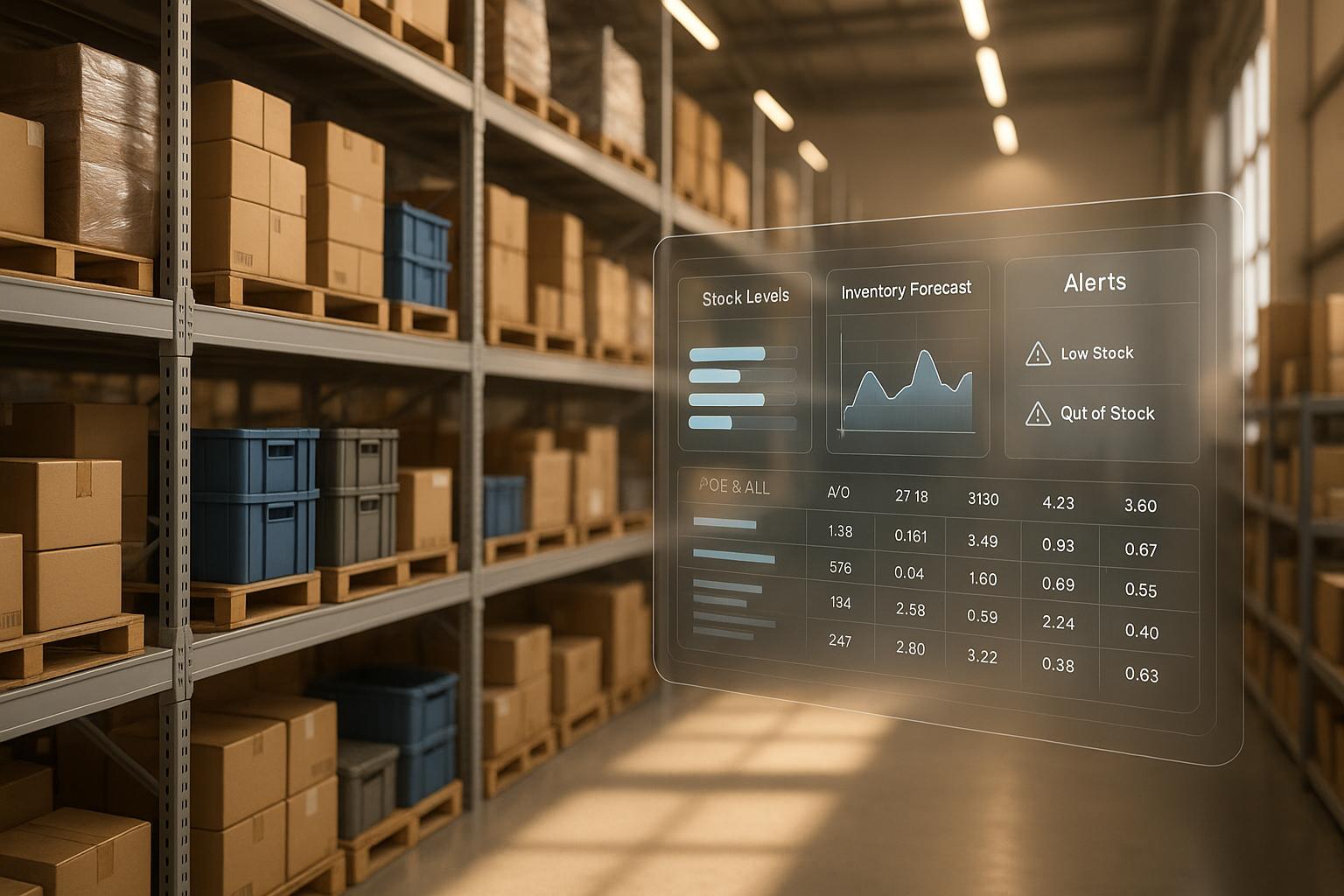
AI agents are transforming how businesses manage inventory and communicate with customers. Instead of relying on manual processes or outdated systems, these tools automate tasks like tracking stock levels, predicting demand, and sending order updates. Here’s what they do:
- Inventory Management: Monitor stock across locations, sync data in real-time, and prevent overselling.
- Demand Forecasting: Use past sales, trends, and external factors to predict future needs and automate reordering.
- Order Updates: Provide real-time notifications for order status changes, delays, and delivery confirmations via email, SMS, or chat.
- Anomaly Detection: Identify discrepancies in inventory or supplier issues and flag them for resolution.
Studies show businesses using AI for inventory can reduce costs by 10–30%, increase sales by 5–15%, and improve forecast accuracy by 20%. These systems also enhance customer satisfaction by ensuring timely updates and fewer disruptions. Platforms like klink.cloud integrate these AI agents into omnichannel systems, ensuring smooth communication across all customer touchpoints.
AI agents simplify operations, cut costs, and improve customer experience by automating repetitive tasks and delivering accurate, timely updates.
How Can AI Be Used In Inventory Management System? - Next LVL Programming
How AI Agents Handle Inventory and Stock Alerts
AI agents are revolutionizing how businesses manage inventory by keeping a constant watch over stock levels, analyzing trends, and sending timely alerts. These systems operate 24/7, processing data from point-of-sale systems, warehouse management software, and supplier databases. The result? Precise inventory counts and fewer disruptions.
Real-Time Inventory Visibility
AI agents bring all your supply chain data together - whether it’s from warehouses, retail stores, distribution hubs, or online platforms - into one cohesive view. This eliminates the chaos caused by mismatched data, like when an online store shows 15 items in stock, but the warehouse only has 3.
Thanks to API connections, inventory updates happen in seconds. For example, if a customer buys an item online at 3:45 PM, the system immediately syncs inventory across all platforms. This real-time adjustment prevents overselling, which can damage both your bottom line and customer trust.
Imagine running a big promotion, and stock starts flying off the shelves. AI agents can step in to pause online listings or suggest alternative products before you accidentally sell items you don’t have. For businesses with multiple locations, the system can reroute orders to warehouses with available stock, cutting down on shipping times and costs.
But this visibility goes beyond just knowing how much stock you have. AI agents track inventory movement, identifying fast-selling products versus those that sit untouched. Armed with this data, teams can make smarter decisions about product placement, promotional strategies, and how to use valuable floor space.
This level of insight also sets the stage for smarter demand forecasting and automated reordering.
Automated Reordering and Demand Forecasting
Building on real-time inventory data, AI agents predict future demand and handle reordering automatically. By analyzing past sales, seasonal trends, promotions, and even external factors like weather or local events, these systems can forecast what you’ll need and when. When stock levels hit a certain threshold, the system either places a purchase order or alerts your procurement team.
These forecasting tools juggle multiple variables at once. For instance, they’ll increase order quantities during peak seasons and scale back when demand slows. They also learn from past mistakes, refining their predictions over time to become more accurate. This reduces the risk of running out of stock or over-ordering, both of which can hurt your business.
Automation also saves time and cuts down on human errors. For industries like fast-moving consumer goods, this can make all the difference between keeping customers happy or losing them to competitors who have the items they need.
AI agents even handle tricky scenarios like supplier lead times, minimum order quantities, and bulk discounts. Say ordering 1,000 units instead of 800 unlocks a 15% discount - the system calculates whether the savings outweigh the added storage costs.
All of this precision naturally extends to spotting anomalies that could throw your inventory off balance.
Anomaly Detection for Inventory Accuracy
In today’s omnichannel world, having accurate inventory data is non-negotiable. But in reality, physical inventory rarely matches system records perfectly. Items can get damaged, misplaced, or even stolen. AI agents help by identifying discrepancies between expected and actual inventory levels, flagging unusual patterns for review.
Using statistical models, the system establishes a baseline for each product. For example, if SKU #4567 suddenly shows a 12% variance when it’s typically just 2%, the system sends an alert. This gives managers the chance to investigate potential issues - like theft, errors in receiving, or data entry problems - before they snowball.
Some advanced systems even use computer vision. Cameras scan shelves, and AI agents count products automatically. If the visual count doesn’t match the database, the system flags it for human review. This approach is especially useful for high-value items where accuracy is critical.
AI agents don’t just spot product-level issues - they can identify systemic problems too. If a specific warehouse location consistently has discrepancies, it might signal a problem with how items are stored or picked. Maybe the barcode scanners aren’t working properly, or items are being misplaced. Pinpointing these patterns helps teams address root causes instead of constantly fixing individual errors.
The technology also keeps an eye on suppliers. If a vendor’s shipments frequently arrive with incorrect quantities, the system tracks these inconsistencies and alerts procurement teams. This data can be a powerful tool during contract negotiations or when deciding whether to switch suppliers.
How AI Agents Automate Order Updates
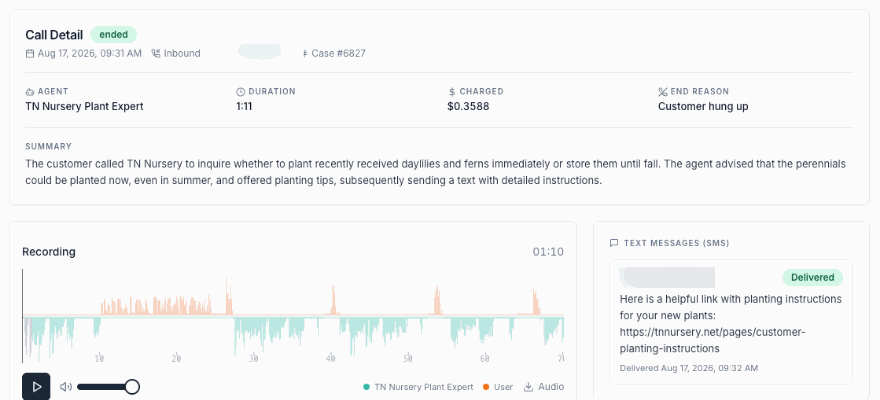
AI agents are revolutionizing how businesses handle order updates, creating a smoother and more consistent experience for customers. Once an order is placed, customers expect prompt, clear updates at every step of the process. AI agents make this possible by automating real-time updates, keeping customers informed from the moment they check out to the package’s arrival at their doorstep.
These agents connect seamlessly with systems like OMS, WMS, payment gateways, and carrier APIs (think UPS, FedEx, USPS). This integration allows them to instantly track and communicate changes in order status. Whether it’s a payment confirmation, a package pickup, or an unexpected delay, the AI sends timely updates through the customer’s preferred communication channels.
According to Salesforce's State of the Connected Customer report, 83% of U.S. consumers expect regular order status updates, and 74% feel frustrated when information is inconsistent across channels.
AI agents solve this by acting as a single source of truth, ensuring updates are consistent across all touchpoints. Let’s break down how this automation delivers a seamless order communication experience.
End-to-End Order Communication
AI agents manage the entire lifecycle of an order, from purchase to post-delivery follow-up. This ensures customers receive timely updates at every stage, building confidence and reducing the need for inquiries like "Where's my order?" Here’s how the process typically works:
- Order Confirmation: Right after a purchase, the AI sends a message like: "Thank you, Sarah. Your order #12345 for 2 × Nike Air Zoom Pegasus has been received. Estimated ship date: 03/15/2025."
- Payment Verification: Once payment clears, the AI updates the customer: "Your payment of $129.99 has been approved. Your order is now being prepared for shipment."
- Processing Updates: While the order is being packed, the system sends updates like: "Your order #12345 is being prepared in our Dallas, TX warehouse."
- Shipping and In-Transit Updates: As the package moves, customers get key tracking details: "Your package is in transit: Memphis, TN → Houston, TX. New delivery ETA: Tuesday, 03/18/2025." These updates might also include options like "Track in app."
- Exception Handling: If issues arise, such as weather delays, the AI recalculates the delivery time and informs the customer: "Carrier reported a weather delay in Kentucky. New ETA: Wednesday, 03/19/2025." It can even offer solutions like holding the package at a nearby location.
- Out-for-Delivery Alerts: On the delivery day, timely notifications are sent: "Your order #12345 is out for delivery today. Expected window: 1:00–4:00 PM (local time)."
- Delivery Confirmation: Once delivered, the AI confirms with details like: "Your package was delivered at 3:22 PM to your front door. Photo confirmation is available in your account."
- Post-Delivery Follow-Ups: Within a few days, the AI gathers feedback with messages like: "How did we do? Rate your delivery experience and the Nike Air Zoom Pegasus from order #12345."
A Narvar study found that 98% of U.S. consumers track their online orders, and 83% said regular proactive updates would make them more likely to purchase again.
Brands that prioritize clear, proactive communication often see customer satisfaction scores rise by 5–10 points while reducing "Where is my order?" (WISMO) inquiries.
Personalized Customer Notifications
Generic updates can feel impersonal, but AI agents use customer data to craft tailored messages that resonate. By analyzing past orders, browsing habits, and communication preferences, these agents ensure every notification feels relevant and thoughtful.
- Channel Preference: If a customer usually opens emails but ignores texts, the AI prioritizes email for routine updates and saves SMS for urgent alerts. For those who prefer WhatsApp or Instagram DMs, updates are routed accordingly using platforms like klink.cloud.
- Timing Optimization: Non-urgent updates are sent during peak engagement hours, such as 7:00–9:00 PM local time, based on the customer’s past behavior.
- Level of Detail: Some customers want every update, while others only care about major milestones like "shipped" or "delivered." The AI adjusts based on user preferences.
- Contextual Copy: Messages are tailored to the customer’s context. For example, a repeat runner might receive: "Your Brooks Ghost 15s are on their way. Since you bought insoles last time, we’ve included a guide on getting the best fit." Meanwhile, a business buyer could get: "Your bulk order of 250 toner cartridges has shipped. We’ve attached a reorder calendar based on your usage over the last 12 months."
- Location- and Season-Aware Messaging: Customers in Chicago during winter might get updates about possible weather delays, while those in Phoenix during summer might receive porch theft prevention tips.
Forrester reports that personalized lifecycle messages, including transactional updates, can achieve up to 6× higher engagement compared to generic messages.
The secret lies in using customer data wisely, keeping the focus on relevant, order-specific details. By doing so, brands can ensure updates feel meaningful and engaging.
Multi-Channel Integration for Real-Time Updates
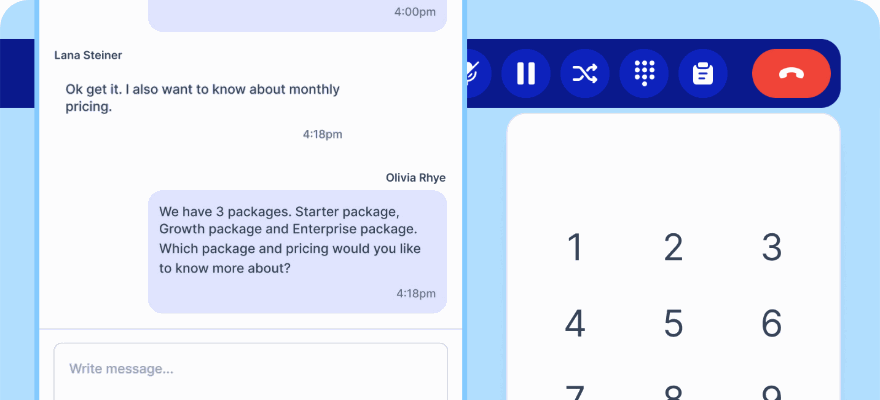
AI agents don’t just personalize notifications - they make sure updates reach customers seamlessly across all communication channels. Whether it’s SMS, email, push notifications, social media DMs, or even voice assistants, these agents ensure a consistent experience.
The backbone of this process is a unified event stream. Every order-status change, from shipment updates to delivery exceptions, is consolidated into a single event. The AI then determines the best channel to communicate the update, prioritizing customer preferences and urgency.
- Channel Routing Rules: Critical updates, like failed payments or delivery exceptions, are sent via SMS and email for maximum visibility. Routine updates are routed through the customer’s primary channel, while redundant messages are filtered out.
- State-Aware Messaging: To avoid overwhelming customers, the AI monitors recent notifications. For instance, if an "out for delivery" alert was sent 20 minutes ago, it may suppress a follow-up message.
- Cross-Channel Threading: If a customer replies to an update via SMS or social media, the AI links the response back to the original order thread. This ensures support agents have the full context, regardless of the channel.
According to Meta and Bain's report on conversational commerce, over 65% of U.S. shoppers prefer messaging apps for order updates and support over traditional methods like email or phone.
sbb-itb-204ca50
Building AI Inventory Agents with Omnichannel CX Platforms
AI-driven inventory updates and automated order communications can do wonders for keeping systems and customers aligned. To make this work, you need a solid architecture that turns raw data into automated actions and seamless customer interactions. At the heart of this setup, platforms like klink.cloud play a central role, coordinating how inventory events trigger real-time alerts and proactive messages across every customer touchpoint.
The architecture typically consists of four interconnected layers:
- Data sources: These include POS systems, ERP platforms, WMS tools, eCommerce platforms, supplier portals, and IoT sensors.
- Data and intelligence layer: This layer handles forecasting models, anomaly detection, and decision engines.
- Orchestration layer: Workflow automation, API integrations, and routing logic live here.
- Experience layer: This includes communication channels like voice, SMS, email, web chat, social messaging, and in-app notifications.
When these layers work together, AI agents can monitor stock levels in real time, predict demand, reorder supplies, and even notify customers about delays or restocks - all without human intervention.
Companies using AI-powered inventory platforms have reported impressive results. For instance, McKinsey research highlights a 10–30% reduction in inventory costs and a 5–15% increase in sales, while another industry report notes a 15% drop in inventory costs and a 20% improvement in forecast accuracy. These gains come from replacing outdated, static reorder rules with dynamic, data-driven decisions that adapt to real-world conditions.
Data and Intelligence Layers
The data and intelligence layers are where raw information transforms into actionable insights. For example:
- POS systems provide detailed sales data tied to product identifiers like SKUs or UPCs.
- ERP systems contribute inventory balances, supplier lead times, and financial data, all formatted for U.S. standards (e.g., dates like 03/15/2025 and amounts like $1,000.50).
- WMS tools offer bin-level stock details, shipment updates, and handling units measured in pieces, cases, pallets, or imperial units like pounds and inches.
All of this data is unified into a consistent inventory record, covering SKU, location, quantity, status, valuation, and a last-updated timestamp. This clean, structured data is essential for accurate forecasting. Without it, predictions can falter, leading to unreliable alerts.
The intelligence layer takes this unified data and puts it to work. Demand-forecasting models analyze historical sales, seasonality, promotions, and local demand patterns to predict future needs for each SKU and location. Decision engines then compare these forecasts with real-time stock levels, factoring in safety-stock thresholds, carrying costs, and service-level goals. If inventory is projected to dip below acceptable levels before the next restock, the system can automatically generate purchase orders or transfer requests. It can even prompt the CX platform to send low-stock or delay notifications to customers.
Anomaly detection also plays a critical role here, flagging issues like negative inventory counts, repeated mismatches during cycle counts, or frequently missing items. IoT sensors add another layer of precision by providing real-time stock and condition updates. To keep forecasts accurate, models need continuous retraining using recent sales, returns, and promotional data.
Workflow Automation for Critical Alerts
When the intelligence layer identifies an issue - such as low stock, shipment delays, or inventory discrepancies - the workflow automation system steps in. This is where the omnichannel CX platform shines, ensuring alerts and actions are routed efficiently.
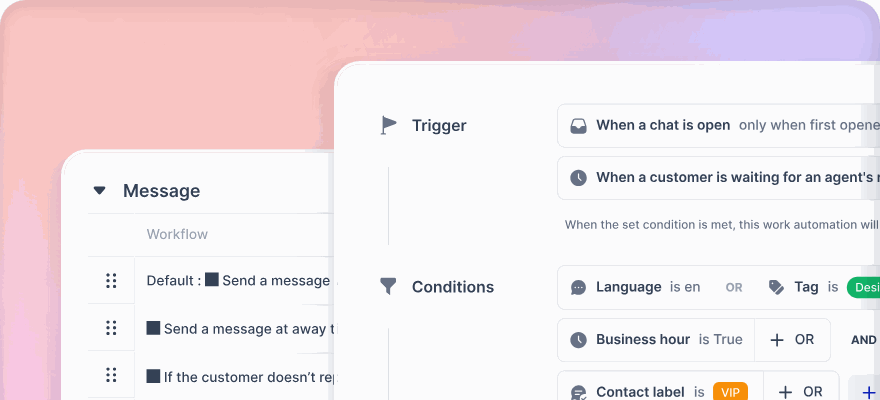
Automation kicks off with real-time event triggers, like supplier delays or low-stock warnings. Business rules classify these events by type and severity, directing them to the right teams - whether it's inventory planners, warehouse managers, or customer service reps. For customer-impacting events like stockouts or delivery delays, the system sends proactive updates via SMS, email, or chat. If an issue isn't resolved promptly, the workflow escalates it, moving from automated notifications to live agents and, if necessary, to higher-level managers.
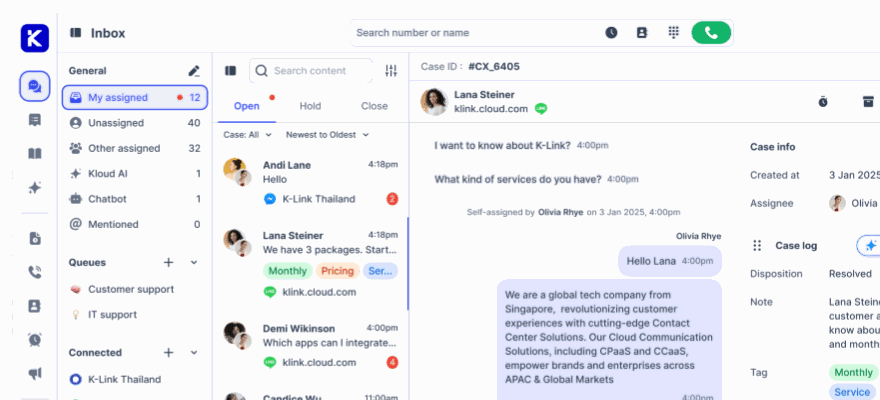
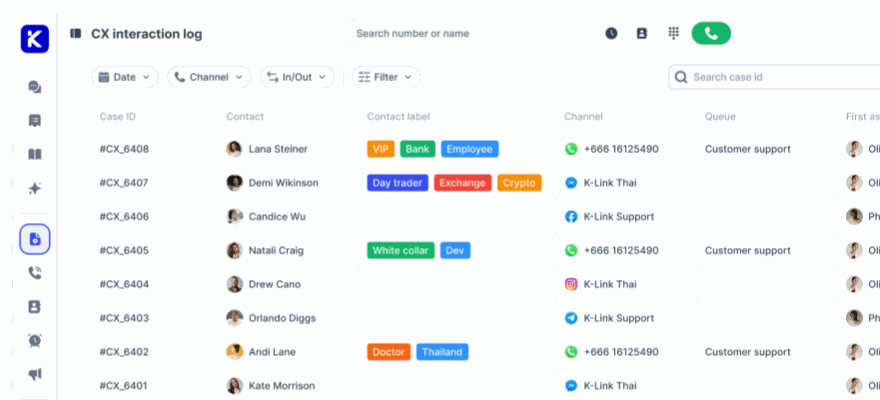
According to users of klink.cloud, centralizing interactions from platforms like WhatsApp, Messenger, Gmail, Shopify, and live chat into a single inbox has led to a 5× boost in productivity and a 2× increase in customer satisfaction.
This same approach applies to inventory alerts. Conversations are auto-assigned based on keywords, customer type, or VIP status, ensuring critical issues are addressed promptly. Common workflows include:
- Low-stock alerts: Trigger internal notifications and reorder proposals.
- Backorder workflows: Reallocate stock for priority customers and update ETAs.
- Exception workflows: Guide staff through corrective actions.
For order updates, AI agents track carrier events and translate them into customer-friendly updates, like "Your order is out for delivery today between 2:00 PM and 6:00 PM." They can also handle follow-up queries across chat or voice channels, keeping everything running smoothly without manual effort.
Technical Requirements and Best Practices
To make AI inventory agents work effectively, you need clean data, solid integrations, and clear policies. Here's what that entails:
- Data Quality: Clean, structured data is non-negotiable. SKUs, locations, and customers need consistent IDs and units of measure across systems. Historical transaction data (12–24 months) is also critical for training forecasting models.
- Integrations and Infrastructure: Real-time data flow is crucial. Secure API integrations or event streams ensure updates to inventory, orders, and shipments are communicated instantly. Scalable, cloud-based infrastructure supports low-latency processing and secure operations.
- Governance Policies: Strong governance ensures compliance with U.S. data privacy regulations and internal standards. This includes maintaining audit logs of AI decisions and recalibrating models as needed.
Finally, business rules act as the guardrails for automation. Define service-level objectives - for example, notifying customers within an hour of a delay - and use them to set alert thresholds and escalation paths. With the right setup, AI inventory agents can deliver both operational efficiency and a better customer experience.
Conclusion
AI-powered systems are transforming inventory management by streamlining operations and ensuring precision. These tools minimize stockouts and overstock issues, while providing timely alerts that keep businesses ahead of potential disruptions. With machine learning and real-time data, they predict demand accurately, adjust stock levels dynamically, and automate replenishment processes. For U.S. retailers and e-commerce businesses, this means consistently having the right products available at the right time and place.
Operational benefits are clear - less manual counting, automated purchase orders, and fewer picking errors. This leads to lower labor costs and more efficient warehouse utilization. In a recent survey, 63% of companies using AI inventory systems reported increased efficiency, while 59% noted reduced operational costs, alongside improvements in customer satisfaction. These tangible results not only safeguard revenue but also enhance competitiveness in fast-moving markets.
On the customer side, AI-driven updates across SMS, email, and chat significantly reduce "where is my order?" (WISMO) inquiries, allowing support teams to focus on more complex issues. This improves satisfaction scores while fostering loyalty. With accurate inventory data and reliable fulfillment, businesses can reduce canceled orders and encourage repeat purchases - key factors for success in retail and direct-to-consumer sectors.
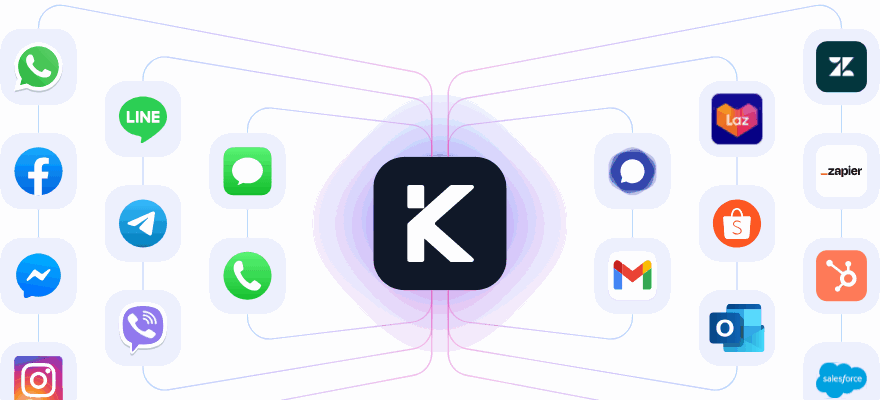
When integrated with an omnichannel customer experience platform like klink.cloud, AI agents connect inventory signals - such as low stock alerts or forecast changes - to customer-facing communications across multiple channels, including chat, email, social media, SMS, and voice. This centralized approach ensures seamless coordination, enabling a single inventory event to trigger internal alerts, customer notifications, and follow-up actions. By using prebuilt connectors and workflow automation, platforms like klink.cloud can increase productivity fivefold and double customer satisfaction, making these solutions accessible for mid-sized and large businesses alike.
To begin integrating AI into your inventory processes, start small. Pilot a focused solution targeting high-impact SKUs to measure improvements in stock availability, cost savings, and delivery accuracy. Ensure your data - covering inventory, orders, returns, and carrier information - is clean and ready for integration. Verify that your ERP, WMS, and e-commerce platforms can connect to an omnichannel CX platform via APIs or native integrations. Define clear, U.S.-specific KPIs, such as percentage reductions in stockouts, dollars saved in carrying costs, fewer WISMO tickets, and better on-time delivery rates.
AI agents complement human teams by handling repetitive tasks, allowing employees to focus on strategic decisions and exception management. Success requires timely, accurate data, strong integrations, and collaboration across IT, operations, and CX teams. Platforms like klink.cloud simplify this process with prebuilt tools and automation, making AI adoption more feasible for businesses aiming to stay competitive.
Organizations that delay adopting AI-driven inventory solutions risk higher costs, inaccuracies, and poor service. Meanwhile, those who embrace these tools gain efficiency, reduce inventory expenses, and strengthen their market position. With the right setup, AI agents can elevate both operational performance and customer satisfaction, turning inventory management into a strategic advantage.
FAQs
How do AI agents enhance demand forecasting and what factors influence their predictions?
AI agents are transforming demand forecasting by sifting through massive amounts of inventory data to spot patterns and predict customer demand with precision. Thanks to machine learning, these forecasts are constantly updated as fresh data rolls in, enabling businesses to adjust stock levels ahead of time and sidestep issues like overstocking or running out of products.
They take into account a variety of factors, including past sales trends, seasonal fluctuations, and external elements like weather, holidays, or local events. By using this well-rounded approach, businesses can streamline inventory management, cut down on waste, and operate more efficiently - all while keeping customers happy with the right products available when they need them.
What challenges might businesses encounter when integrating AI agents into their inventory management systems?
Integrating AI agents into inventory management systems comes with its fair share of hurdles. For starters, businesses might encounter steep implementation costs, particularly if significant customization is needed to adapt AI tools to their existing workflows. On top of that, integration challenges can arise when trying to merge AI solutions with older systems or complex omnichannel platforms.
Another major issue is data quality. AI systems depend on accurate, current data to deliver reliable results. If the data is incomplete or outdated, it could lead to mistakes in stock predictions or automated alerts. There's also the matter of workforce readiness - employees may need proper training to understand and effectively use AI-driven tools. And let’s not forget about security risks, as safeguarding sensitive inventory and customer data from breaches is absolutely essential.
That said, with thoughtful planning, a focus on employee training, and collaboration with skilled AI providers, businesses can navigate these obstacles and make the most of what AI has to offer.
How do AI agents enhance order updates for customers, and how does this improve satisfaction?
AI agents improve the way customers receive order updates by providing real-time, personalized notifications through tools such as chatbots and virtual assistants. These technologies work effortlessly with omnichannel customer experience platforms, keeping customers informed about order status, shipping progress, and delivery schedules.
By cutting down on delays, reducing mistakes, and delivering customized communication, AI agents help businesses keep their customers in the loop while making them feel appreciated. This smoother process not only enhances customer satisfaction but also helps businesses run more efficiently.