
Best AI Customer Support Tools for E-commerce Businesses
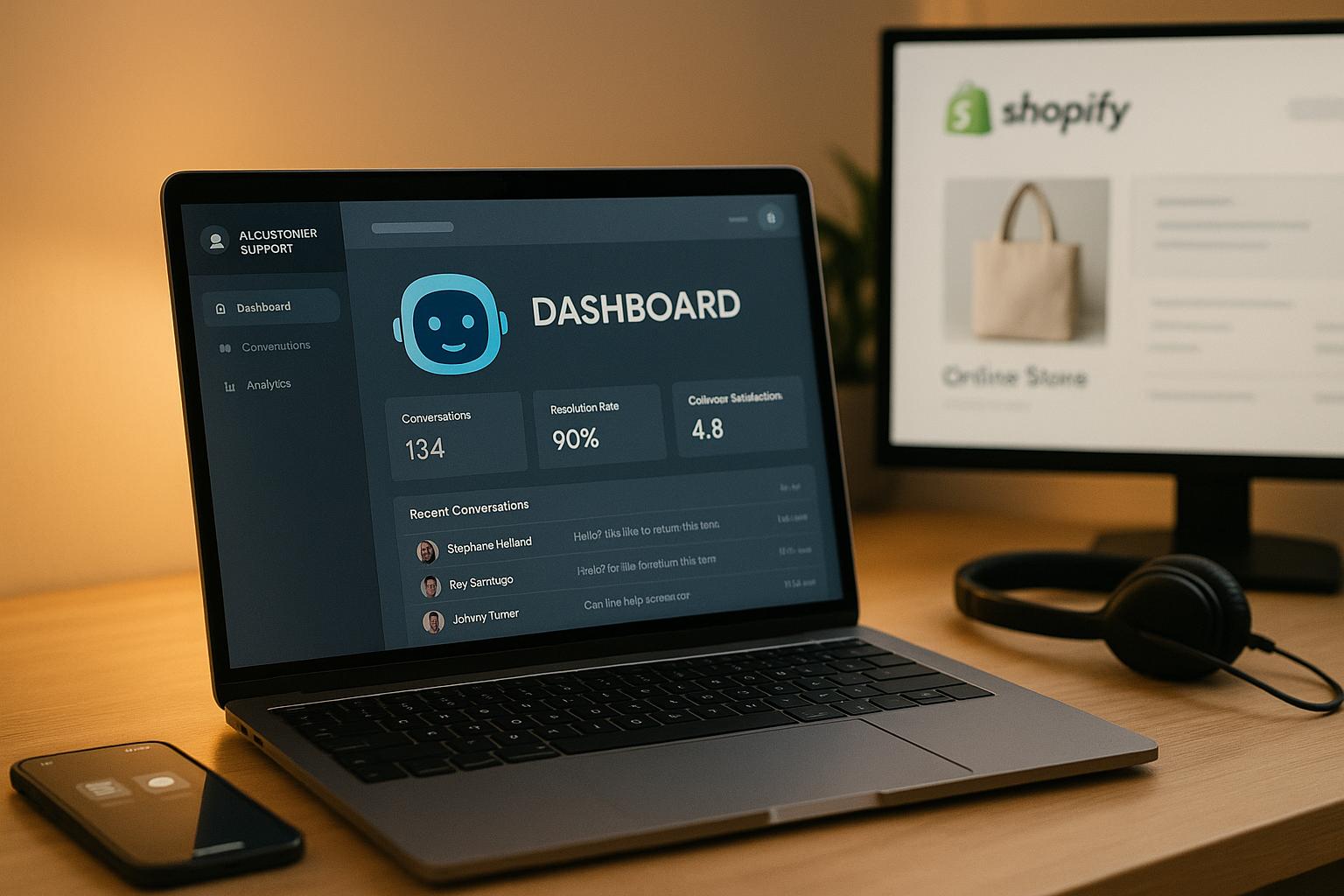
In e-commerce, fast and efficient customer support is essential. AI tools can handle routine inquiries, streamline workflows, and integrate seamlessly with platforms like Shopify or Amazon, helping businesses manage high volumes while improving customer satisfaction. Here's a quick look at the top AI customer support tools for e-commerce:
- klink.cloud: Centralizes omnichannel support (e.g., WhatsApp, email) with advanced automation, real-time analytics, and Shopify integration. Pricing starts at $0 for basic features.
- Zendesk: Combines traditional helpdesk functions with AI to automate ticket routing and integrate with major e-commerce platforms. Plans start at $69/agent/month.
- Gorgias: Tailored for Shopify users, it automates e-commerce-specific tasks like order tracking and returns. Pricing begins at $10/month for 50 tickets.
- Freshdesk: Offers AI-driven automation and integrates with Shopify for order management. Pricing starts at $15/agent/month, with AI add-ons available.
- Tidio with Lyro AI: Focuses on chat-based support, offering AI-powered bots for FAQs and Shopify integration. Free plan available; paid plans scale with usage.
- Intercom with Fin AI: Provides advanced AI tools for multi-channel support and multilingual capabilities. Custom pricing for high-volume businesses.
Quick Comparison
| Tool | Starting Price | Key Features | Best For |
|---|---|---|---|
| klink.cloud | $0 (Free Plan) | Omnichannel inbox, AI workflows, Shopify integration | Small to large teams |
| Zendesk | $69/agent/month | Unified workspace, AI automation, deep e-commerce integrations | Scalable for all sizes |
| Gorgias | $10/month | Shopify-focused, order management automation | Shopify-centric businesses |
| Freshdesk | $15/agent/month | AI tools, multi-channel, Shopify integration | General-purpose support needs |
| Tidio | Free, paid plans vary | Chat-based AI, quick setup, Shopify integration | Small to medium-sized businesses |
| Intercom | Custom pricing | Advanced AI tools, multilingual support | High-volume, global operations |
Each tool offers unique strengths, so your choice depends on your business size, budget, and platform compatibility.
Top 5+ AI Chatbots for Your E-Commerce Business
1. klink.cloud
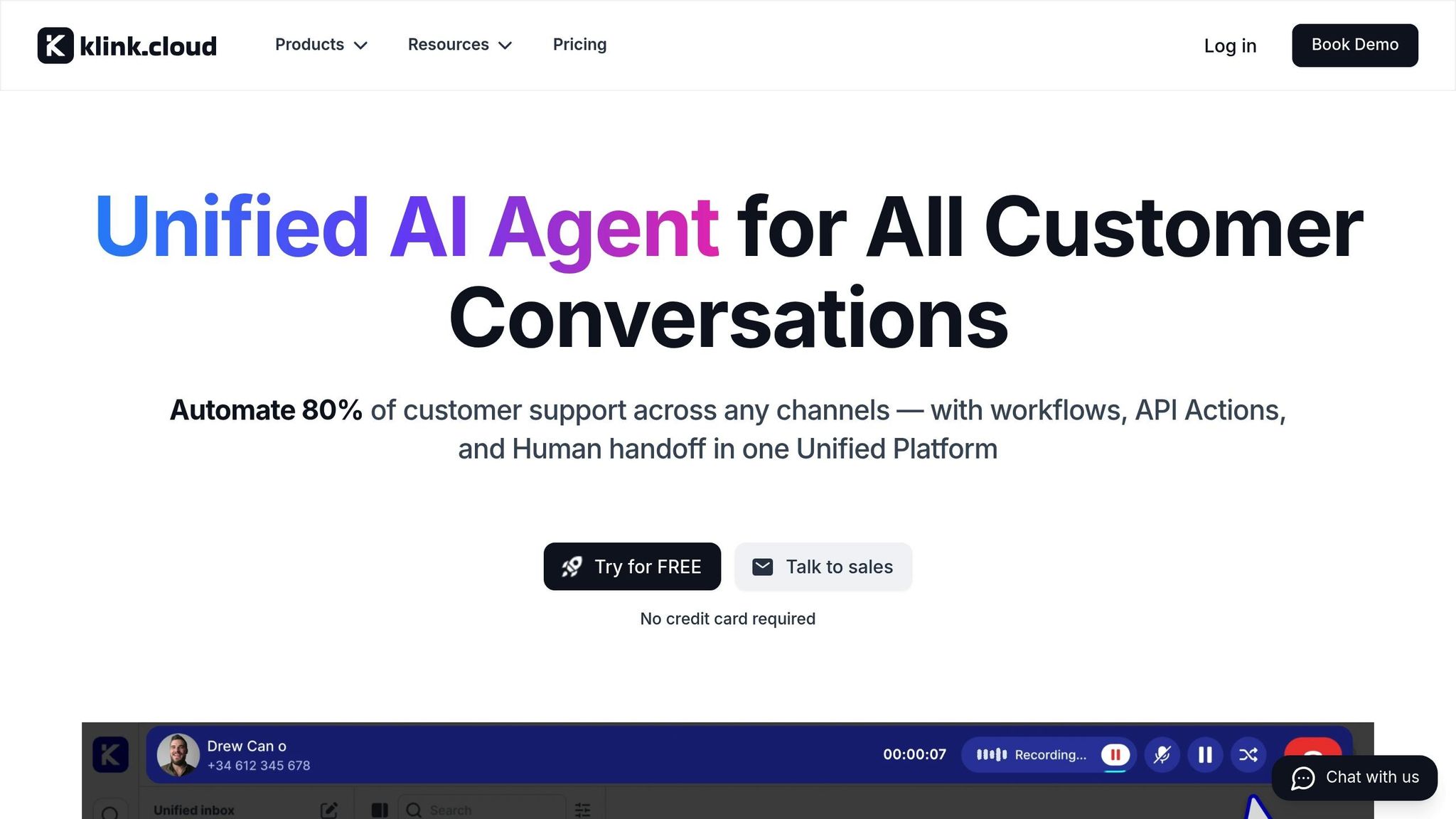
klink.cloud is an all-in-one customer experience platform that simplifies managing conversations across multiple channels. By combining communication tools, AI-driven automation, and e-commerce integrations, it streamlines everything from answering order inquiries to processing returns.
Omnichannel Support
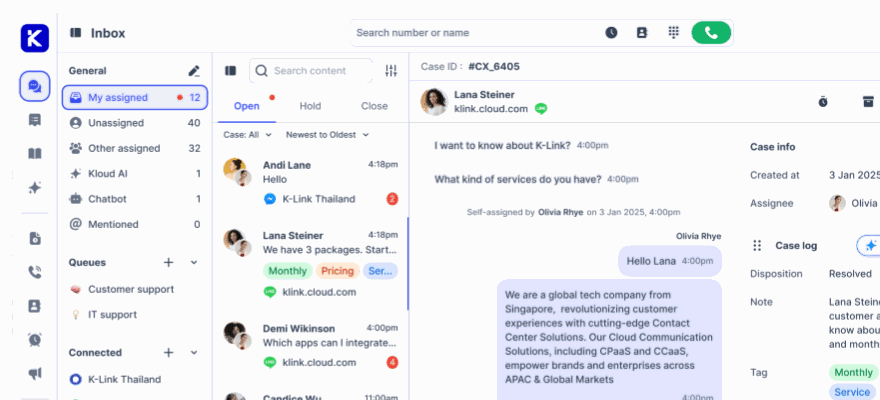
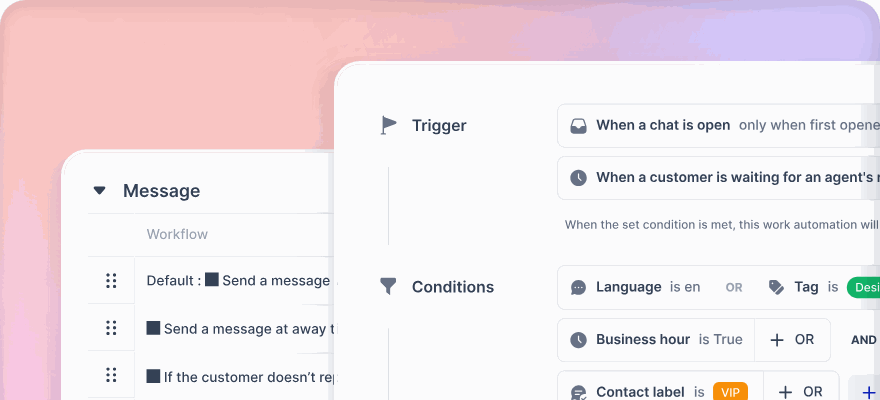
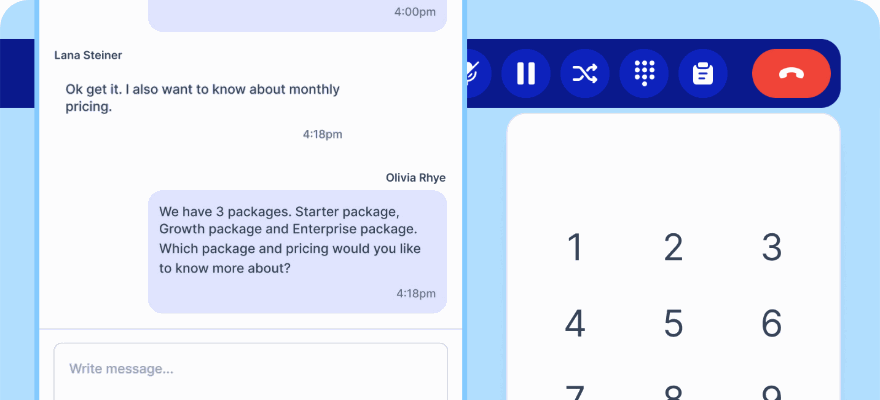
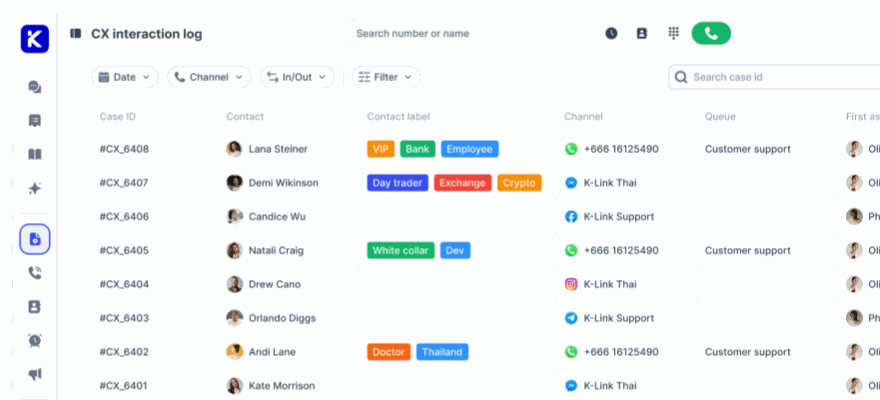
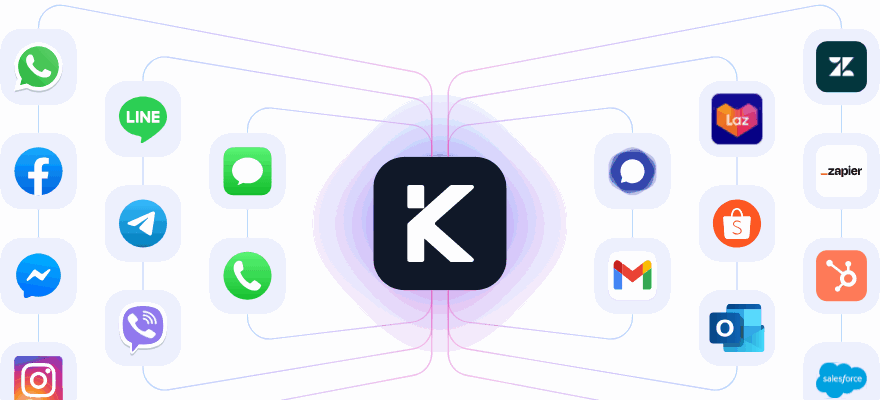
klink.cloud brings together messages from phone calls, WhatsApp, Facebook Messenger, Telegram, email, and live chat into one inbox. This means support agents can see every interaction with a customer, no matter where it started. Conversations are automatically routed based on keywords, language, or even VIP status, and all interactions are tracked under a single customer profile.
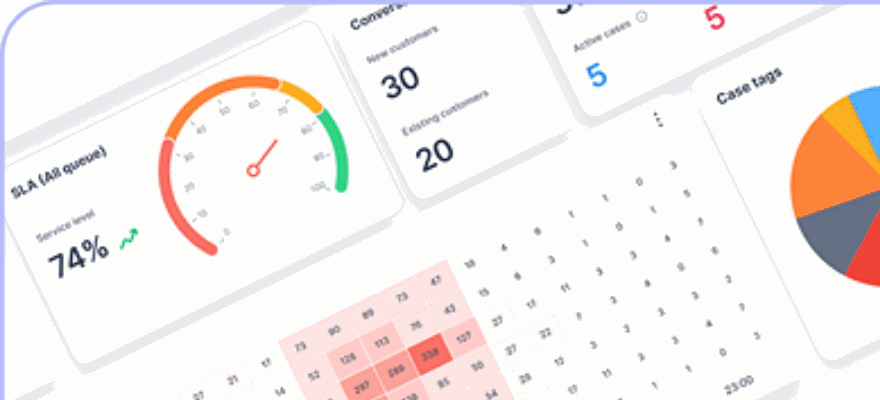
The platform also supports voice calls using global virtual numbers or existing SIP trunks. A real-time analytics dashboard provides instant insights into agent performance and customer interactions, helping teams stay on top of their game.
This centralized system sets the stage for its advanced AI-powered automation.
AI Capabilities
The platform uses AI-Agents to automate customer interactions intelligently. Messages trigger workflows that ensure inquiries reach the right agents based on customer profiles and conversation context. For example, order status questions can go directly to fulfillment specialists, while product-related queries are routed to sales experts.
Users have seen impressive results. In March 2024, Horizon Solutions implemented klink.cloud and noticed major improvements. Sarah Lee, Head of Contact Center at Horizon Solutions, said:
"Since adopting klink.cloud, we've seen a massive improvement in our response times. Our customers are happier, and our agents are more efficient than ever."
By June 2024, AlphaConnect reported even better outcomes. Michael Tan, Operations Manager at AlphaConnect, shared:
"klink.cloud has transformed how we manage customer interactions. Our productivity has doubled, and downtime is a thing of the past."
Overall, the platform boasts a fivefold boost in productivity and a twofold increase in customer satisfaction among its users. These gains come from reducing the time agents spend switching between systems and manually routing tickets.
E-commerce Integrations
klink.cloud integrates seamlessly with Shopify, making it a perfect fit for e-commerce businesses. It also connects with CRMs, helpdesks, and billing systems, ensuring customer data flows smoothly across platforms. For instance, it can automatically pull order details to handle common queries like "Where's my order?" - a huge time-saver for support teams.
MPG BPO implemented klink.cloud to manage conversations across multiple channels. James Carter, Operations Manager at MPG BPO, noted:
"klink.cloud has made a huge difference for our contact center! Our agents can easily manage conversations across different channels, helping us respond faster and keep our clients happy. We've seen big improvements in both productivity and customer satisfaction since we started using it."
The platform also boasts a 99% uptime, which is essential for e-commerce businesses that need to stay accessible during busy shopping seasons or promotional events.
These features and integrations make it a go-to solution for companies looking to scale efficiently.
Pricing and Plans
klink.cloud offers four pricing tiers to fit businesses of all sizes:
| Plan | Price | Best For | Key Features |
|---|---|---|---|
| Free | $0 | Individuals testing the platform | Unified inbox, 100 CRM contacts, limited outbound calling, Facebook Messenger, Instagram DM, Telegram, live chat |
| Starter | $23/user/month | Small teams | 10,000 CRM contacts, 1 virtual phone number, inbound/outbound calls, SMS channel, call recordings |
| Growth | $69/user/month | Growing businesses with high volumes | Unlimited CRM contacts, workflow automations, IVR & rules-based routing, real-time dashboard, multi-level SLA |
| Enterprise | Custom pricing | Large companies with complex needs | Salesforce/HubSpot integrations, e-commerce integrations (Shopee, Lazada, Shopify), SSO authentication, webhook APIs, dedicated support |
The Free plan is great for testing out basic features, while the Starter plan adds full calling capabilities and entry-level automation for smaller teams. The Growth plan is ideal for mid-sized businesses, offering advanced automation and unlimited contact storage. For large enterprises, the custom-priced Enterprise tier provides tailored solutions, including API integrations and dedicated onboarding.
Scalability
klink.cloud is built to grow with your business. The Growth and Enterprise plans allow unlimited CRM contacts, so you won’t have to worry about data limits as your customer base expands. Automated workflows and intelligent routing optimize ticket assignment, ensuring tasks are distributed based on agent availability, expertise, and customer priority.
Managers can use the real-time dashboard to monitor performance during busy periods, stepping in when necessary to keep things running smoothly. For companies serving global markets, AI-driven multilingual support makes it possible for one team to handle inquiries from customers in various regions - no need for language-specific agents.
With its focus on efficiency and scalability, klink.cloud is a powerful tool for businesses aiming to deliver top-notch customer experiences while staying ready for growth.
2. Zendesk
After looking at klink.cloud, it's time to explore Zendesk, a well-established player in the customer service space. Known for its trusted reputation, Zendesk offers a complete toolkit designed to help e-commerce businesses manage customer interactions efficiently. By combining traditional helpdesk features with modern AI capabilities, Zendesk enables support teams to handle inquiries at scale.
Omnichannel Support
Zendesk simplifies customer communication by bringing together conversations from email, phone, chat, social media, and messaging apps into a single, organized workspace. This unified view ensures agents can see the entire history of interactions across all channels.
Agents can respond to customers using their preferred communication method - all without leaving the Zendesk interface. This streamlined setup is particularly useful for e-commerce businesses during periods of high activity, such as Black Friday or holiday sales. It helps teams stay on top of urgent issues like payment errors or shipping delays, while routine inquiries are queued and addressed in an orderly manner.
This centralized communication hub also serves as a foundation for Zendesk’s advanced automation tools.
AI Capabilities
Zendesk leverages AI to reduce repetitive tasks and improve efficiency. For example, the platform uses machine learning to suggest relevant help articles to customers before they even submit a ticket, potentially solving issues without human involvement. If customers still reach out, AI-powered bots can handle straightforward questions, such as tracking orders or explaining return policies.
The system automatically categorizes incoming tickets based on topic, urgency, and sentiment. For instance, a frustrated customer reporting a defective product gets flagged and routed differently than someone asking about product details. Agents receive tickets enriched with context and even suggested responses, saving time and effort.
Zendesk’s AI also forecasts ticket trends, helping managers prepare for busy times. By analyzing historical data, the platform predicts spikes in support requests - such as those following a product launch or promotional event - allowing teams to schedule staff accordingly.
E-commerce Integrations
Zendesk integrates seamlessly with major e-commerce platforms like Shopify, Magento, WooCommerce, and BigCommerce. These integrations pull customer order data directly into support tickets, giving agents instant access to information like purchase history, shipping updates, and product details - all without switching between systems.
For example, when a customer contacts support about an order, agents can view the entire transaction timeline, process refunds, update shipping addresses, or initiate returns directly from Zendesk. This eliminates the need to ask customers for order numbers repeatedly or juggle multiple platforms.
Additionally, Zendesk works with inventory management systems, enabling agents to check stock availability in real time. This feature is particularly helpful when customers ask about restocking or alternative options. For businesses operating across multiple sales channels, Zendesk consolidates data into a single customer profile, making it easier to provide personalized service.
Pricing and Plans
Zendesk offers flexible pricing to suit teams of all sizes and needs. Here’s a breakdown of its main plans:
- Suite Team: Starts at $69 per agent per month (billed annually) and includes basic omnichannel support and standard reporting.
- Suite Growth: Priced at $115 per agent per month, this plan adds advanced AI features, custom analytics, and more automation tools.
- Suite Professional: Costs $149 per agent per month and includes multilingual support, advanced customization, and performance dashboards.
- Suite Enterprise: Custom pricing for larger operations, offering dedicated account management, advanced security, and unlimited customization.
Annual billing is required for these rates, though month-to-month options are available at a higher cost. Additional fees may apply for premium features like advanced AI bots or specialized integrations beyond the standard offerings.
Scalability
Zendesk is designed to grow alongside your business without requiring major infrastructure changes. The platform supports unlimited ticket volumes, ensuring it can handle increased demand during peak periods. Automated workflows and smart routing help distribute workloads evenly, keeping operations smooth even during traffic surges.
For businesses expanding internationally, Zendesk provides automatic translation and role-based permissions, making it easy to manage global customer inquiries. Companies can also create specialized support teams for different product lines or customer segments, ensuring tailored service.
As operations scale, Zendesk’s performance analytics offer detailed insights into key metrics like response times, resolution rates, and customer satisfaction. These tools help managers fine-tune staffing levels, identify training opportunities, and maintain high service standards as the company grows.
With its robust features and scalability, Zendesk offers a comprehensive solution for e-commerce businesses looking to deliver exceptional customer support.
3. Gorgias
Gorgias is a conversational AI platform designed specifically for e-commerce businesses, addressing common challenges like order tracking and managing returns. Its tailored focus makes it a strong choice for companies using Shopify or similar platforms that need support tools aligned with their workflows.
Omnichannel Support
Gorgias simplifies customer communication by funneling all interactions into a single inbox, no matter the channel. Whether customers reach out via email, live chat, social media, or SMS, everything is organized in one workspace. This setup gives agents a full view of order histories and user profiles without juggling multiple tools.
The live chat feature allows real-time website interactions, ensuring agents have a complete picture of conversations across channels. This continuity means customers don’t need to repeat themselves, enabling quicker and more accurate responses.
For businesses handling high traffic during sales events or product launches, this centralized system keeps teams on track. Agents can focus on urgent issues like payment errors or shipping delays, while routine questions - such as product availability - are managed efficiently within the same interface.
This unified approach also sets the stage for Gorgias’s automation features.
AI Capabilities
Gorgias includes an AI Agent that handles common e-commerce inquiries across multiple channels like chat, email, and forms. It uses your brand’s tone and pulls data directly from your store to deliver accurate, personalized responses.
The platform’s AI detects customer intent, whether it’s tracking orders, initiating returns, or asking about shipping times. Once identified, it triggers appropriate responses or workflows. For example, when a customer asks, “Where’s my order?”, the AI instantly retrieves and shares tracking information.
One standout feature is order management automation. The AI can update orders, process returns, and even handle refunds directly within conversations. Shopify users, in particular, benefit from the ability to manage refunds, cancellations, or new orders right inside the support ticket - no need to log into separate systems.
Gorgias also offers guided conversational flows for multi-step processes, such as answering FAQs or managing return requests. This reduces the workload for your team, allowing them to focus on more complex customer issues.
E-commerce Integrations
Gorgias integrates seamlessly with platforms like Shopify and Magento, pulling order data directly into support tickets. This means agents can view complete purchase histories, current order statuses, and product details without switching tabs or asking customers for order numbers.
The Shopify integration is especially robust. Agents can process refunds, cancel orders, update shipping details, and modify orders directly from the Gorgias interface. This streamlined workflow significantly speeds up resolutions for common issues.
However, while Shopify users will find the integration highly beneficial, businesses using other platforms should confirm compatibility. The platform’s features are clearly optimized for Shopify, so companies on alternative systems should ensure their needs are fully supported.
Pricing and Plans
Gorgias uses a ticket-based pricing model that adjusts based on your support volume:
- Starter: $10/month for up to 50 billable tickets per month, with unlimited user seats.
- Basic: $60/month for 300 tickets per month; additional tickets cost $0.40 each. Includes omnichannel support and basic automation.
- Pro: $360/month for 2,000 tickets per month; extra tickets are $0.36 each. Adds advanced automation, integrations, and revenue analytics.
- Advanced: $900/month for 5,000 tickets per month; overages cost $0.36 per ticket. Includes priority support and enhanced onboarding.
- Enterprise: Custom pricing for businesses handling more than 5,000 tickets monthly, with a dedicated success manager.
Because costs scale with ticket volume, businesses should carefully estimate their needs, especially during peak seasons when ticket counts can spike. This model may become pricey for smaller brands or those on tight budgets.
Scalability
Gorgias is well-suited for growing e-commerce businesses, particularly those deeply integrated with Shopify. Its automated workflows and smart ticket routing help teams handle increasing volumes efficiently, minimizing the need for additional staffing.
The platform’s reporting dashboards provide insights into agent productivity, response times, and customer satisfaction. These analytics help managers pinpoint bottlenecks and improve team performance as operations grow. However, businesses managing multiple brands may need to evaluate whether the platform’s focus aligns with their broader needs.
Gorgias has earned a 4.6-star rating on G2 from 520 reviews. Users frequently highlight the unified inbox, automation tools, and Shopify integration as strengths. On the downside, some mention occasional platform slowdowns, a steep learning curve due to the feature set, and inconsistent customer support quality. Additionally, the interface can feel overwhelming for users unfamiliar with its extensive capabilities.
Up next, we’ll explore more tools that expand the range of options for e-commerce customer support.
4. Freshdesk
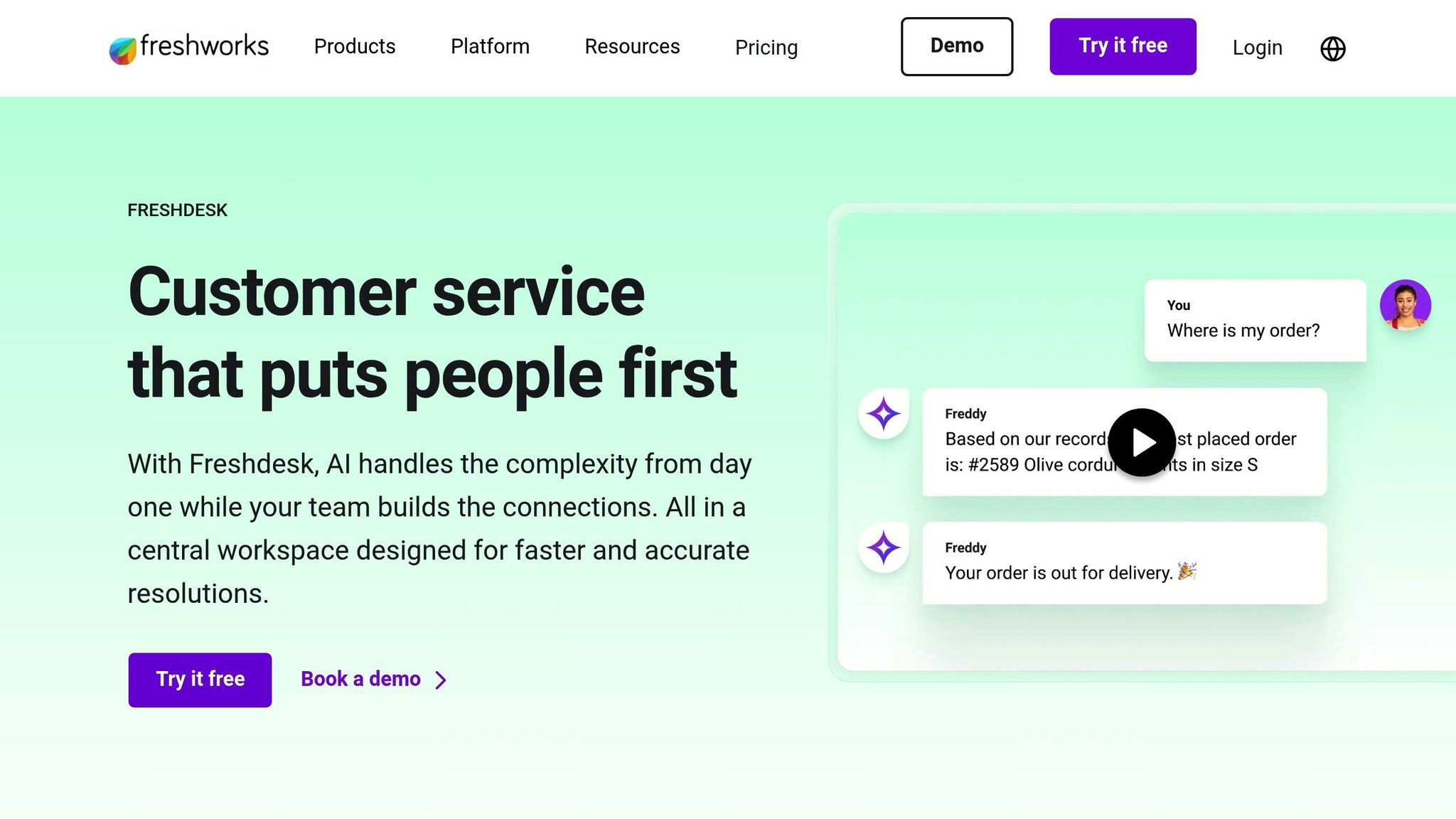
Freshdesk is a customer support platform that caters to e-commerce businesses with its AI-driven Freddy AI suite. Known for its strong integrations and automation tools, Freshdesk is designed to enhance support efficiency while tailoring interactions to individual customers.
Omnichannel Support
Freshdesk simplifies customer support by bringing inquiries from multiple channels - email, chat, phone, social media, and your e-commerce site - into a single ticketing system. This unified workspace gives agents a complete view of past conversations and order details, making it easier to provide accurate and timely support. This feature is especially valuable during peak shopping seasons when ticket volumes spike.
AI Capabilities
The Freddy AI Agent handles routine tasks like processing refunds, updating orders, and verifying details without needing human involvement. In 2025, it uses "Conversational Actions" to execute specific tasks, such as resolving common issues across various channels. Additionally, Freddy AI Copilot assists human agents by drafting responses and pulling up relevant knowledge articles within the workspace. While these AI tools are powerful, Freddy AI works best within the Freshworks ecosystem, and training it with external data can be a bit tricky.
E-commerce Integrations
Freshdesk integrates seamlessly with Shopify, allowing agents to manage tasks like canceling or refunding orders directly within the platform. This integration pulls in detailed customer information - order numbers, shipping addresses, payment methods, and product details - into support tickets, cutting down resolution times. For businesses using other platforms, it's essential to check compatibility, as Freshdesk's broader approach may require additional setup.
Pricing and Plans
Freshdesk's pricing starts at around $15 per agent per month. AI features are available as add-ons, with Freddy AI Agent priced at $100 per 1,000 sessions and Freddy AI Copilot starting at $29 per agent per month. A 14-day free trial is offered, giving businesses a chance to explore the platform before committing.
Scalability
Freshdesk is well-suited for growing e-commerce businesses, thanks to its automation features and AI tools that help manage increasing ticket volumes efficiently. However, as a general-purpose platform, it may require more configuration and maintenance compared to tools specifically built for e-commerce.
Next, we’ll explore another solution that takes a different approach to improving e-commerce support.
sbb-itb-204ca50
5. Tidio with Lyro AI
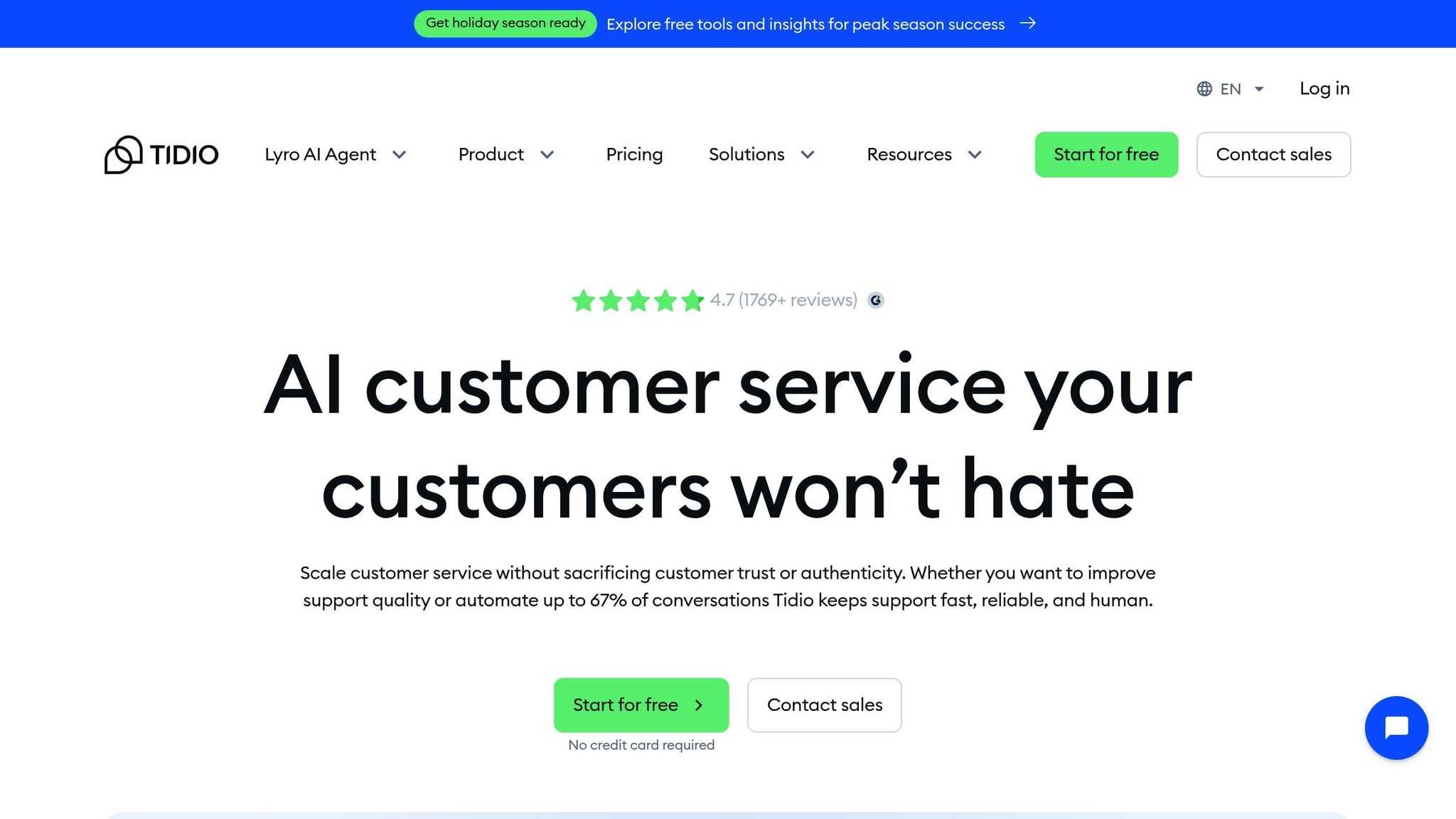
Tidio is a customer service platform that blends live chat, chatbots, and AI-driven automation to help e-commerce businesses handle customer interactions efficiently. One of its key offerings is Lyro AI, a conversational chatbot designed to answer common customer questions without requiring complicated setup or coding skills.
Omnichannel Support
Tidio consolidates messages from live chat, email, Messenger, and Instagram into one centralized inbox. This makes it easier for support teams to manage conversations without juggling multiple tools. For added convenience, the platform’s mobile app allows agents to respond while on the move, which is especially helpful for small e-commerce teams that need flexibility. However, Tidio focuses exclusively on chat-based communication.
AI Capabilities
Lyro AI uses natural language processing (NLP) to understand customer inquiries and respond with relevant answers. It learns from your website content, FAQ pages, and help center articles to address questions about topics like shipping policies, returns, product availability, and order tracking. The chatbot can manage multiple conversations at once, which is a huge help during busy periods by reducing wait times.
Setting up Lyro AI is straightforward, making it a great option for smaller teams without technical expertise. For more complex issues, the chatbot seamlessly hands off the conversation to a human agent, complete with the full chat history for context. Tidio also provides pre-built templates for tasks like recovering abandoned carts or recommending products, although these may require some manual adjustments to fit specific business needs.
E-commerce Integrations
Tidio integrates with popular platforms like Shopify, enabling personalized customer interactions by pulling data such as purchase history, cart details, and real-time order updates. It also works with other platforms like WooCommerce, BigCommerce, and Wix, though the depth of these integrations can vary. Additionally, it connects with email marketing tools like Mailchimp and Klaviyo, making it easier to turn chat interactions into leads and incorporate them into your marketing campaigns.
Pricing and Plans
Tidio offers a free plan that includes basic live chat and chatbot features. For businesses looking for more advanced options - like higher conversation limits, additional automation triggers, or access to the Lyro AI add-on - paid plans are available. These tiered pricing options are designed to meet the needs of growing e-commerce businesses, allowing them to scale their support capabilities as they expand.
Scalability
Tidio is an excellent choice for small to medium-sized e-commerce businesses seeking an affordable and easy-to-use customer support solution. Its intuitive interface and quick setup make it accessible, even for teams without technical know-how. However, as businesses grow and require more advanced features - such as detailed reporting, custom workflows, or deeper integrations - some limitations may become noticeable. Additionally, the conversation-based pricing model for Lyro AI can lead to higher costs if your business handles a large volume of interactions.
Up next, we’ll dive into another AI-powered tool that takes a different approach to e-commerce customer support.
6. Intercom with Fin AI
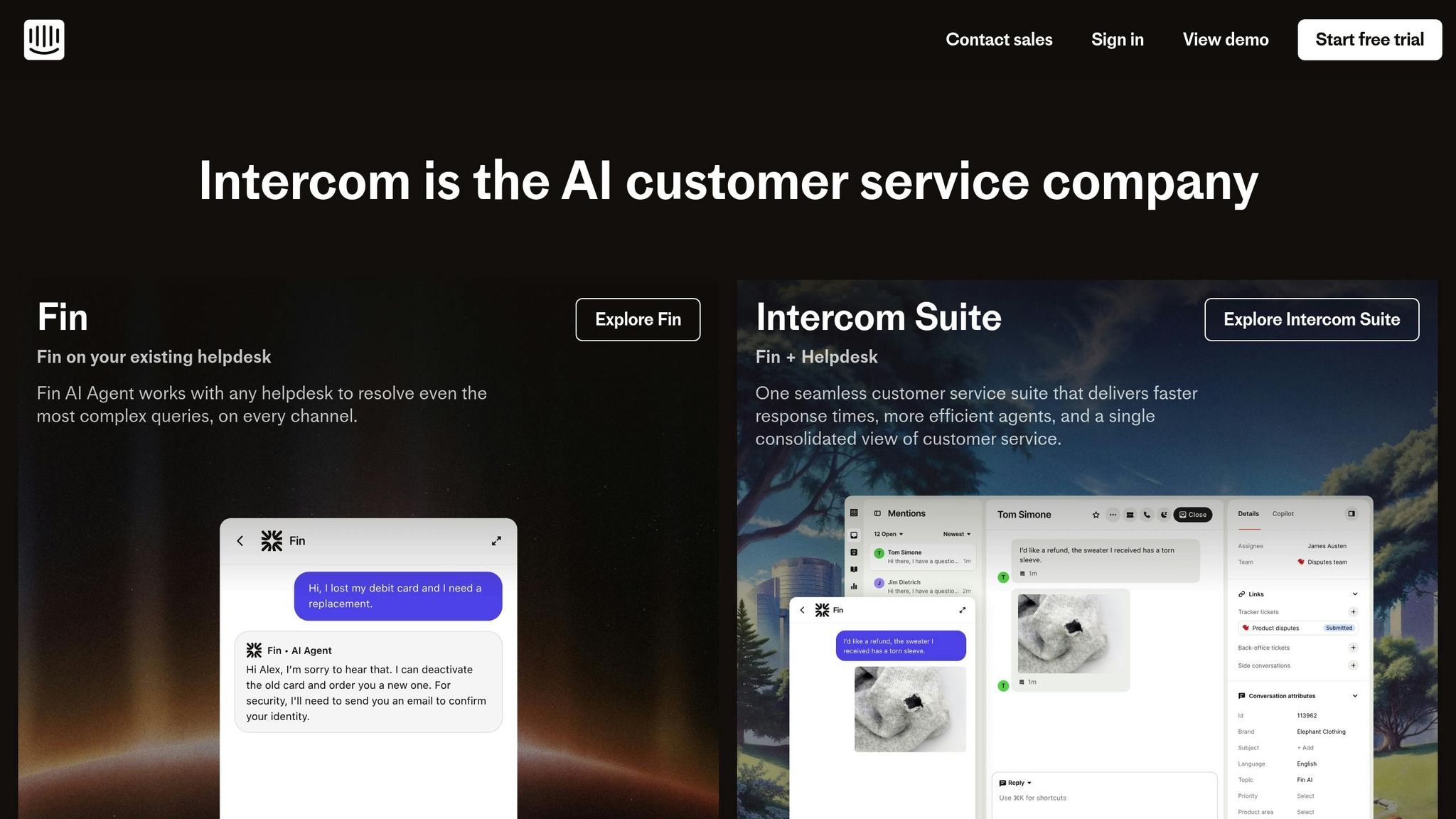
Intercom is a customer service platform that blends live chat, helpdesk functions, and AI technology. It features two key AI tools: the Fin AI Agent, designed to handle customer interactions, and the Fin AI Copilot, which supports human agents. Together, these tools help e-commerce businesses streamline routine inquiries while ensuring customers still enjoy a quality experience.
Omnichannel Support
The Fin AI Agent works seamlessly across multiple channels, including email, live chat, phone, and social media. This ensures customers receive consistent, AI-driven support no matter where they reach out. By integrating these tools across platforms, Intercom strengthens both automated and human-assisted responses.
AI Capabilities
The Fin AI Agent is equipped to manage complex, multi-step queries on its own, often resolving issues without needing a human agent. It’s powered by a proprietary engine that identifies trends, learns from specific knowledge bases, and verifies answers for accuracy before presenting them to customers.
On the other hand, the Fin AI Copilot is designed to assist human agents by drafting replies and summarizing conversations. Recent updates, such as Fin Tasks and MCP action connectors, have enhanced its ability to operate autonomously. The platform also allows businesses to customize AI behavior without requiring coding skills. Additionally, it provides round-the-clock multilingual support, covering over 45 languages with real-time translation capabilities. These features make it well-suited for handling the high demands of multi-channel e-commerce.
Strengths and Weaknesses
Klink.cloud stands out by offering a unified customer support solution tailored for e-commerce businesses. According to the platform's official description, it provides omnichannel support, covering telephony, social media, email, video calls, and messaging apps. Its AI-powered agents are designed to optimize workflows and route calls intelligently, which can save time and improve efficiency.
Another key advantage is its native integrations with e-commerce platforms and CRMs, making it easier to manage customer interactions seamlessly. The pricing model is flexible, ranging from a Free plan for individuals to Enterprise options for larger businesses, allowing companies of all sizes to find a suitable plan.
That said, these features come with factors businesses need to consider, especially when scaling their support operations. The platform's effectiveness depends on how well it aligns with your current support demands and future growth plans.
When evaluating AI-powered support tools like klink.cloud, it's crucial to assess your support volume, anticipated growth, and specific e-commerce requirements. Opting for a solution with strong omnichannel capabilities and integration options - such as klink.cloud - can help ensure your customer support evolves smoothly as your business grows.
Conclusion
Choosing the right AI support tool boils down to your business's size, budget, and specific needs. Each plan is tailored to address different operational scenarios.
For startups and small businesses, klink.cloud's Free plan is a solid starting point. It includes a unified inbox, CRM for up to 100 contacts, and multi-channel support - giving you a chance to explore omnichannel capabilities without spending a dime. If you need more, the Starter plan at $23 per user/month adds telephony features and increases CRM capacity to 10,000 contacts.
For mid-sized businesses handling higher support demands, the Growth plan at $69 per user/month steps up with unlimited CRM contacts, workflow automation, and IVR with rules-based routing - perfect for managing larger volumes efficiently.
Enterprises with complex workflows and high interaction volumes can benefit from the Enterprise plan. It offers advanced telephony options, seamless integrations with platforms like Shopify, Shopee, and Lazada, SSO authentication, and a guaranteed SLA to meet the needs of large-scale operations.
FAQs
How does klink.cloud improve customer support for e-commerce businesses?
klink.cloud empowers e-commerce businesses to provide quicker and more efficient customer support by automating essential tasks and simplifying communication workflows. Its intelligent routing ensures customers are connected to the right agents, while automated conversation assignments help minimize delays. Plus, smart automation tools streamline daily processes, making support teams more productive.
By bringing together conversations from multiple channels into a single platform, klink.cloud allows teams to manage all interactions in one place. This not only speeds up response times but also creates a smoother, more consistent customer experience. With these tools, businesses can expand their support operations without compromising on personalized, top-notch service.
What features make klink.cloud a great choice for businesses of all sizes?
klink.cloud caters to businesses of all sizes, providing tools that grow and adapt with your needs. Its standout features include a unified inbox that consolidates all customer interactions, omnichannel support for connecting across various platforms, and AI-driven automation to simplify workflows and boost efficiency.
On top of that, klink.cloud offers real-time analytics to help you make informed decisions, seamless app integrations to enhance productivity, and virtual numbers to improve communication. These tools empower businesses to tailor customer interactions, handle cases effectively, and deliver outstanding support at scale.
How does klink.cloud work with e-commerce platforms like Shopify to enhance customer support?
klink.cloud works effortlessly with e-commerce platforms like Shopify to deliver more streamlined and tailored customer interactions. By syncing directly with your online store, it centralizes communication, keeps track of customer inquiries, and ensures responses are timely and relevant.
This connection simplifies your workflow, making it easier to scale customer support without compromising on quality. With klink.cloud, you can improve customer satisfaction, build stronger relationships, and keep your business running smoothly.