
How E-commerce AI Agents Reduce Returns & Complaints
Returns and complaints are costly for e-commerce businesses, but AI agents are changing the game. By assisting customers before, during, and after their purchases, these tools help reduce return rates, resolve complaints faster, and improve customer satisfaction. Here's how:
- Pre-purchase guidance: AI suggests products based on browsing habits, provides real-time sizing and compatibility advice, and customizes product descriptions to reduce buyer confusion.
- Post-purchase efficiency: Automated systems handle returns in minutes, process refunds in days, and resolve up to 93% of customer queries without human intervention.
- Data-driven improvements: AI identifies patterns in returns and complaints, helping retailers fix issues like misleading descriptions or recurring product defects.
With tools like omnichannel platforms, AI integrates seamlessly across email, chat, and social media, ensuring a smooth customer experience. Businesses using AI report faster resolutions, lower costs, and fewer returns, making it an essential tool in today’s competitive e-commerce landscape.
The Secret to Lowering Return Rates in Ecommerce
The Cost of Returns and Complaints in US E-commerce
Returns and complaints aren’t just minor hassles - they can significantly cut into e-commerce profits. Let’s break down the financial and operational challenges tied to returns, as well as the reasons behind customer complaints.
Financial and Operational Costs of Returns
Returns in US e-commerce come with hefty price tags. The process of reverse logistics - getting items back to warehouses - is a major expense for retailers. Each return involves shipping costs, labor for inspections and restocking, and the risk of losing value if the product can’t be resold at full price.
Fashion and apparel retailers face unique hurdles. For instance, returned items that have been worn, washed, or damaged often can’t be sold as new. These products are either heavily discounted or written off completely. Electronics pose similar challenges, as returned gadgets often need testing and recertification before being resold, adding labor costs and delays.
Operational inefficiencies also take a toll. Customer service teams, warehouse staff, and accounting departments are often pulled away from growth-focused tasks to handle returns. This diversion of resources can slow down a company’s overall progress.
Timing plays a role, too. Products returned long after purchase may miss peak selling seasons, making them harder to sell. A winter coat returned in March, for example, has far less value than one returned during the colder months.
High return rates can also signal deeper issues, like misleading product descriptions, poor-quality images, unclear sizing information, or quality control problems. Until these root causes are addressed, the cycle of returns will continue.
Why Customers Return Products and File Complaints
Understanding why customers return items or lodge complaints can reveal opportunities for improvement.
One common issue is misleading product descriptions and images. If photos don’t accurately show a product’s color, texture, or size - or if descriptions lack key details - customers may end up disappointed when the item arrives.
Sizing inconsistencies are another headache, especially in apparel. Variations within or across brands leave customers guessing, which often leads to incorrect purchases and returns.
In categories like electronics and home goods, compatibility problems are a frequent cause of returns. Customers might expect a device to work seamlessly with their existing setup or a piece of furniture to fit perfectly in their space, only to find out it doesn’t.
Unmet expectations also play a big role. Sometimes, the product’s quality doesn’t match its price, or the advertised features don’t align with reality. For example, a customer might buy a "leather" bag expecting genuine leather, only to discover it’s made from synthetic materials, leading to disappointment and a return.
Delivery issues, such as damaged packaging, late shipments, or items left in unsafe locations, can also trigger returns and complaints - even if the product itself is fine.
US Customer Expectations Across Channels
American shoppers have high standards when it comes to how returns and complaints are handled. These expectations, shaped by years of customer-focused service from top retailers, span all touchpoints where customers interact with brands.
Speed matters. Customers expect quick responses and resolutions. For instance, a chat inquiry should be answered within minutes, and return requests should be processed swiftly, with refunds issued promptly. Delays can come across as disrespectful to the customer’s time and business.
Clear policies are non-negotiable. Shoppers want straightforward information about return windows, restocking fees, and refund processes before they buy. Hidden fees or overly complicated procedures can erode trust and lead to negative reviews.
Consistency is key. If a customer starts a return on a website, they expect to continue the process seamlessly through email or chat without repeating details. Disconnected systems that force customers to re-explain their situation only add to frustration and hurt the brand’s reputation.
Personalized service makes a difference. Customers value support that acknowledges their purchase history and previous interactions. Generic, scripted responses feel impersonal and often fail to address specific concerns.
Failing to meet these expectations can lead to more than just returns - customers may share their negative experiences online, impacting future sales. On the flip side, a smooth and efficient returns process can turn a potentially bad experience into a chance to showcase exceptional service.
Traditional, manual methods for managing returns and complaints are struggling to keep up with these rising expectations. To meet modern demands for speed and personalization, companies need smarter solutions, such as AI, to address issues before they escalate.
How AI Agents Reduce Returns Before Purchase
Tackling the challenge of high return rates, AI agents step in before customers even make a purchase, helping guide them toward products that align with their needs. By improving the buying process, these tools minimize the likelihood of returns.
Smarter Product Search and Recommendations
AI-driven search and recommendation systems offer shoppers a tailored experience by analyzing their browsing habits, purchase history, and feedback. Instead of generic results, customers see product suggestions fine-tuned to their preferences - and even past reasons for returns.
These tools go beyond simple keyword matching. They analyze return patterns to pinpoint why certain items are frequently sent back. For example, if a dress is often returned due to inaccurate color representation or a gadget because of compatibility issues, the AI adjusts how these products are displayed to customers.
Recent data shows that 39% of retailers use AI to identify products with high return rates and uncover the reasons behind them. Another 36% leverage AI to predict whether a specific customer might return an item based on their purchase and return history. This proactive strategy allows retailers to refine product details before a customer even adds an item to their cart.
Dynamic product descriptions play a big role here. Instead of offering one-size-fits-all details, AI customizes descriptions to highlight what matters most to each shopper. For example, a tech-savvy buyer might see detailed technical specs, while another might find a focus on ease of use. This level of personalization ensures clarity, reducing post-purchase regrets. In fact, 85% of shoppers say detailed descriptions and high-quality visuals are crucial in their decisions.
These adjustments not only improve the shopping experience but also lay the groundwork for smoother post-purchase resolutions.
Real-Time Assistance for Sizing and Compatibility
AI agents shine when it comes to addressing sizing and compatibility concerns at the moment shoppers need help.
For clothing, AI-powered sizing tools - used by brands like Calvin Klein and The North Face - offer personalized size recommendations. These tools analyze body measurements, past purchases, and fit preferences to suggest the best size. They can even warn shoppers when an item tends to run large or small, advising them to "order a size down" if necessary. Currently, 25% of retailers use AI for determining accurate clothing sizes, and this number is growing as the technology proves its value.
For electronics and home goods, compatibility checks work similarly. For instance, an AI tool might confirm whether a phone case fits a specific model or whether a piece of furniture will suit the dimensions of a room. IKEA’s augmented reality feature, launched in 2022, allows shoppers to use their smartphones to virtually place furniture in their homes, helping them visualize how items will look and fit.
These real-time solutions are often integrated into chat interfaces, product pages, or mobile apps. If a shopper adds multiple sizes of the same item to their cart, the AI might suggest they review the sizing guide or connect with customer service for assistance.
By addressing these issues proactively, AI not only reduces returns but also collects valuable data to improve future product offerings.
Spotting and Solving Systemic Issues
AI doesn’t just help individual shoppers; it also identifies broader patterns that lead to returns. By analyzing customer reviews, feedback, and return data, AI uncovers trends that might go unnoticed through manual analysis.
For example, if a jacket labeled as "navy blue" is frequently returned because customers say it looks black, the AI flags this for the merchandising team to update product photos. Similarly, if a popular shoe style is often returned due to a narrow fit, the system can prompt updates to the product description, suggesting customers consider a wider size.
AI also addresses incomplete or unclear product information. If customers repeatedly ask the same questions about an item’s functionality, the system might recommend adding video tutorials or improving the manual. And if damaged or defective products are a recurring issue, the AI highlights quality control problems that need immediate attention.
The technology even tracks customer behavior. For instance, it can identify "heavy returners" - shoppers who habitually buy multiple items and return most of them. Retailers like Walmart use AI to create trusted customer profiles and adjust their approach for these individuals. For example, the system may avoid offering discounts on low-margin items or provide extra guidance during the shopping process.
The real advantage here is speed. While manual analysis could take weeks to spot these patterns, AI can identify them in days - or even hours - allowing retailers to address issues before they affect more customers. This quick response turns potential problems into opportunities for improvement.
How AI Streamlines Returns and Complaint Resolution
After addressing pre-purchase concerns, AI takes customer service a step further by simplifying post-purchase processes. Whether it’s handling returns or resolving complaints, AI transforms what used to be time-consuming tasks into quick, hassle-free experiences. For U.S. shoppers, where fairness and transparency are key, this efficiency can make all the difference.
Automated Return Processing
AI handles the entire returns process seamlessly, from the moment a customer initiates a return to the issuance of a refund. For example, when a customer contacts support - via email, chat, or phone - the AI verifies their identity using details like email, phone number, or order ID. It then checks if the product qualifies for a return by ensuring it’s within the return window (usually 30 to 90 days in the U.S.) and meets any other conditions, such as product category rules. By applying these criteria consistently, AI eliminates human errors and inconsistencies.
One major U.S. retailer reported impressive results: AI reduced the return initiation process from 15 minutes to under 2 minutes, cut overall resolution times from more than 10 days to just 3–4 days, and automated 65% of return-related workflows - all while increasing customer satisfaction by 35%. Here’s how it works: Customers describe their issue in plain language, such as "This jacket is too small" or "The color doesn’t match the photo." The AI then offers appropriate solutions, like a full refund to the original payment method, store credit, or an exchange for a different size or color. Once the customer selects an option, the AI generates a prepaid shipping label with carriers like UPS, FedEx, or USPS and may even arrange a pickup if available in the customer’s ZIP code. The system also notifies the warehouse to prepare for the return and keeps customers updated throughout the process with real-time notifications.
AI-Powered Complaint Resolution
When customers encounter issues like late deliveries, wrong items, or damaged goods, AI steps in to assess urgency and sentiment. For instance, an upset customer might receive both a full refund and a discount on their next purchase, while a minor issue could be resolved with an updated delivery estimate and a small credit. The AI pulls data from various systems - order management, shipping, inventory, and payments - to verify the complaint and determine the best solution.
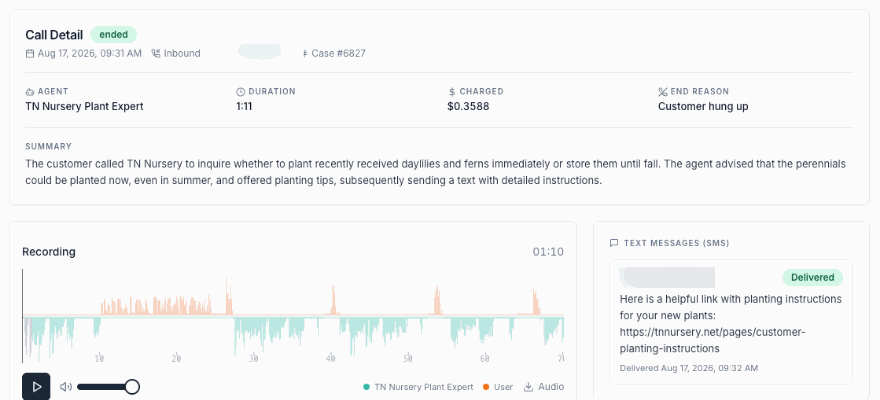
Take the example of a customer reporting, "My package never arrived." The AI reviews carrier tracking data, flags any discrepancies for fraud review, or instantly approves a replacement or refund in low-risk cases. This speed is game-changing, especially when you consider that U.S. consumers often spend up to nine hours resolving complex issues, with two-thirds expressing frustration over delays. In cases like damaged goods, the AI checks the order details, reviews the return policy (which might require photo evidence), and either requests more information or approves a replacement on the spot.
Data shows that up to 93% of customer queries can now be resolved entirely by AI. This shift not only saves time but also improves the overall customer experience by addressing problems quickly and efficiently.
Centralized Workflows with Omnichannel AI
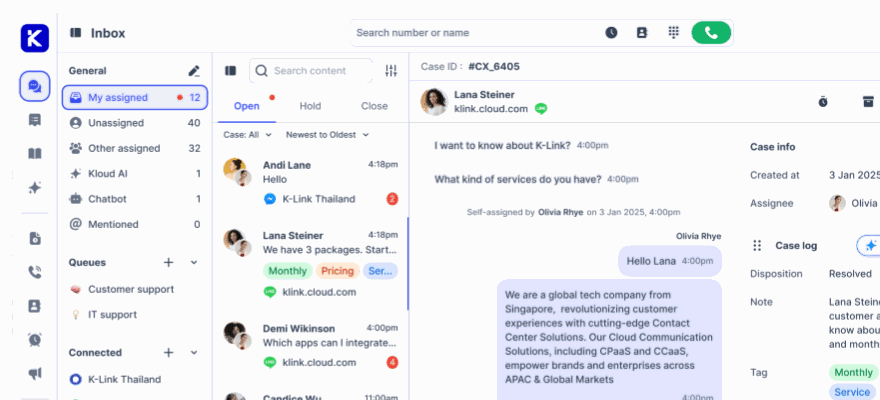
One of the biggest frustrations for U.S. shoppers is having to repeat their issue when switching between support channels - starting with an email, following up on Instagram, and then calling customer service. Over a third of consumers identify this as a major pain point. Omnichannel AI platforms solve this problem by consolidating all communications - whether through email, chat, SMS, social media, or phone - into a single, unified view.
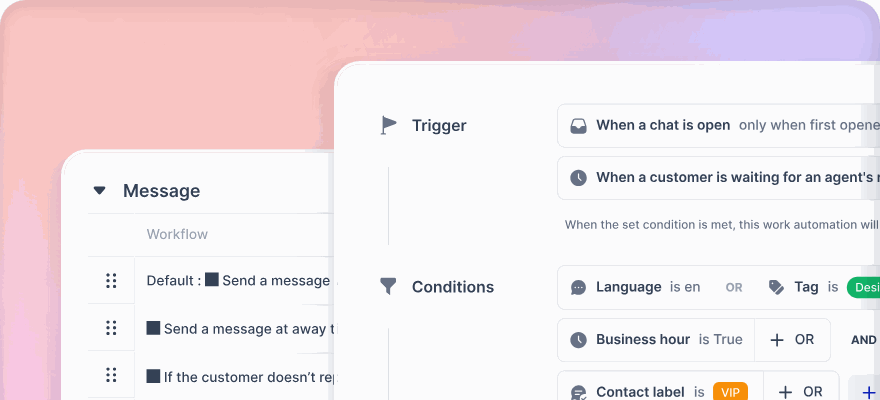
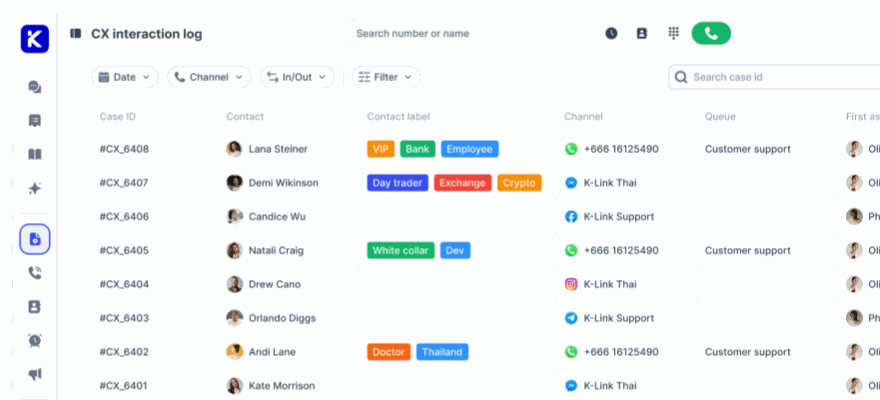
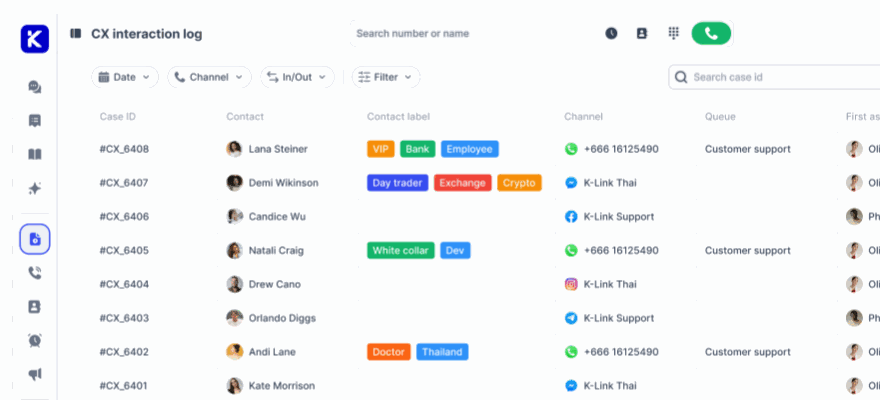
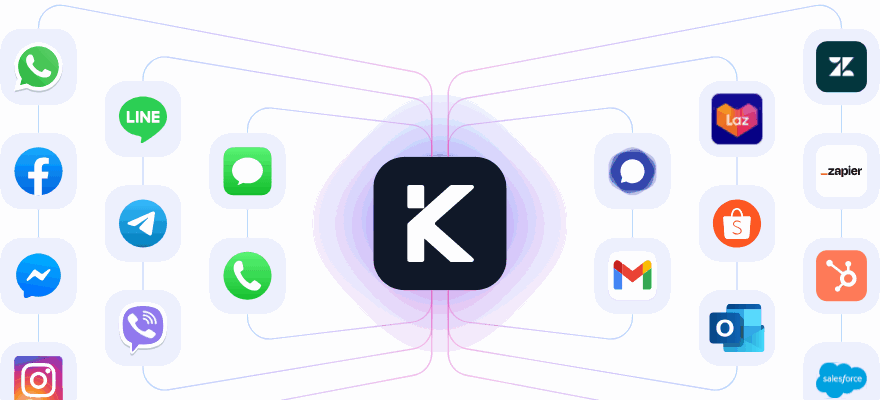
Platforms like klink.cloud, for instance, bring together conversations from tools like WhatsApp, Messenger, Gmail, Shopify, and Telegram into a single Unified Inbox. This setup allows AI and human agents to access the full context of a customer’s issue without jumping between systems. Automated routing ensures inquiries are handled appropriately: keywords like "return" paired with an order number might trigger a return workflow, while terms like "damaged" or "wrong item" combined with negative sentiment could escalate the case for further review. Every interaction is compiled into a comprehensive customer profile, giving agents a complete timeline of events.
The results speak for themselves. Companies using AI-assisted services report up to an 87% reduction in resolution times and significant cost savings, with AI handling up to 80% of routine inquiries. During peak holiday shopping periods, one retailer’s AI system managed triple the usual workload without additional staff. Beyond speed, this integration also reduces fraud - one retailer saw fraudulent return attempts drop by 25%, saving millions annually. By connecting seamlessly with tools like CRMs, billing systems, and order management platforms, the AI can issue refunds, update orders, and log complaints automatically. This streamlined approach not only resolves issues faster but also turns customer feedback into actionable insights for future improvements.
sbb-itb-204ca50
Turning Returns and Complaints into Actionable Data
AI has become a powerhouse in handling returns and complaints, but its real strength lies in transforming these interactions into meaningful insights. Returns and complaints aren’t just headaches - they’re opportunities to learn. Each return reason, complaint, or customer interaction provides valuable information about what’s working and what’s not in your e-commerce operation. By analyzing this data, AI helps uncover actionable insights that can shape and refine your business strategies.
Finding Patterns and Root Causes
One of AI's standout abilities is spotting patterns that might go unnoticed in manual reviews. By analyzing return data across your entire product catalog, AI can identify recurring issues. For instance, if a particular product has a high rate of returns due to sizing complaints, while similar items don’t, it’s a clear signal that something about that product needs attention.
AI goes deeper than surface-level trends. It can analyze clusters of complaints linked to specific suppliers or production batches and even track the timing of returns to flag unusual activity. Seasonal trends are another area where AI shines, as it can detect shifts in return rates that align with changes in customer purchasing behavior. Geographic patterns may also emerge, hinting at variations in how products are presented or described in different regions.
Additionally, AI monitors how customers interact with your support system. If certain issues frequently escalate to human intervention, it could indicate gaps in the automated resolution process or deeper operational challenges that need addressing.
Using Data to Improve Operations
The true value of these insights lies in how they’re used to drive improvements. For example, if customers repeatedly mention concerns about fabric quality, sizing, or unclear product images, AI can recommend updates to product descriptions, visuals, or size charts. Over time, as the system processes more feedback, it becomes better at interpreting diverse ways customers describe issues.
Aggregated return and complaint data also provide a powerful tool for working with suppliers. You can share precise insights about quality inconsistencies and use this information to make smarter inventory decisions, identifying products that consistently perform well or struggle to meet customer expectations.
These data-driven adjustments create a foundation for tracking improvements and measuring success.
Tracking Performance with Key Metrics
To gauge the impact of these updates, tracking key performance metrics is essential. One important metric is the return rate by product category, calculated as the percentage of returns relative to total sales. Comparing your rates to industry benchmarks and your own historical data can help pinpoint areas that need attention.
Another critical metric is the first-contact resolution rate, which measures the percentage of issues resolved during the first interaction. Breaking this down by issue type can highlight workflows that might require fine-tuning. Similarly, average resolution time - how long it takes to fully resolve an issue - can reveal potential bottlenecks, especially during peak demand periods. Comparing resolution times between cases handled by AI and those requiring human input can provide further insights.
Customer satisfaction scores (CSAT), gathered immediately after an issue is resolved, help assess whether faster service translates into happier customers. Monitoring the cost per resolution, which includes labor, processing, shipping, and overhead, helps quantify the financial benefits of automating routine tasks.
Another valuable metric is the repeat return rate, which tracks instances where customers repeatedly send back items. This can indicate mismatches between product offerings and customer expectations. Lastly, the revenue recovery rate, which measures how much revenue is retained through exchanges rather than refunds, offers a clear view of how effective your resolution strategies are financially.
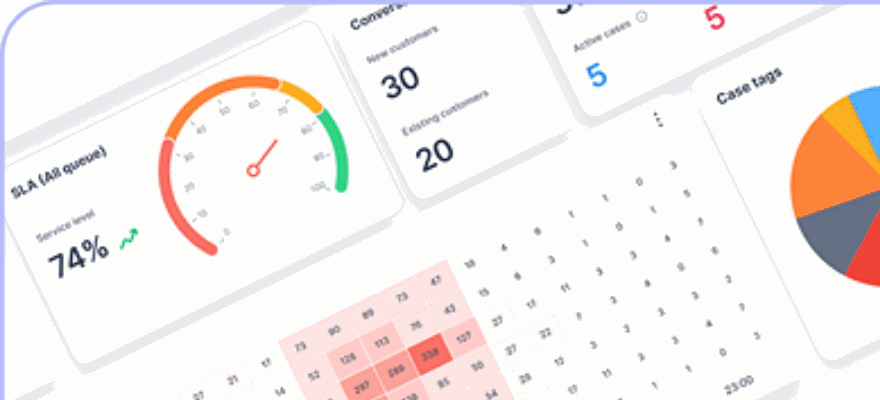
Platforms like klink.cloud simplify this process by offering real-time dashboards that consolidate these metrics across all communication channels. Their Performance Tracking & Reports feature - available in select plans - lets you monitor trends, compare periods, and assess which changes have the greatest impact on your bottom line.
Regularly reviewing these metrics - especially during the early stages of implementation - ensures ongoing improvement and helps create a smoother, more satisfying customer experience.
Deploying AI Agents on an Omnichannel Platform
Rolling out AI agents on an omnichannel platform takes more than just flipping a switch. It requires careful planning, a clear strategy, and the right infrastructure to connect all customer touchpoints. For example, a major e-commerce retailer successfully automated 65% of its return workflows, cutting resolution times from over 10 days to just 3–4 days by using a multi-agent AI system.
Think of this as more than a simple tech upgrade - it's a chance to reshape how your business handles one of its most challenging processes. With this in mind, the first step is preparing your systems and processes to ensure a smooth deployment.
Getting Ready for Implementation
Laying a solid foundation is crucial. Skipping this step can lead to headaches later.
Start with clean, structured data. AI agents rely on accurate information to make decisions, so you'll need consistent SKUs, standardized return reason codes, and reliable customer identifiers across all systems.
Next, define clear return and complaint policies in simple language. These policies should be detailed enough to translate into actionable rules. Include specifics like time windows (e.g., 30 days from delivery), product conditions (unopened with tags), exceptions (final sale items), and any restocking fees.
For seamless omnichannel support, ensure integrated communication channels. Email, SMS, web chat, in-app messaging, and social media DMs should all funnel into a central platform. Without this integration, customers might have to repeat themselves, and AI could miss critical context.
You'll also need to connect your e-commerce, order, warehouse, payment, and customer service systems via APIs. This allows AI agents to pull real-time order data, generate return labels, and process refunds automatically.
Don’t forget US-specific configurations like pricing in USD ($1,234.56), imperial measurements, local carrier tracking (USPS, UPS, FedEx), and proper time zone handling for orders and returns.
Lastly, prioritize security and access controls. Limit what your AI can access and act on, such as masking credit card details, capping refund amounts that don’t require human approval, and aligning with privacy regulations.
Implementation Steps
Implementing AI agents should be a phased process. Start small, then gradually expand capabilities.
Phase 1: Begin with low-risk, high-volume queries. Deploy AI to handle FAQs and order status inquiries through web chat and email. These interactions are straightforward since they rely on structured order data and documented policies. Use AI to triage customer requests, collecting basic details like order ID, email, and return reason before escalating to human agents. This step alone can significantly reduce handling times.
Phase 2: Move to automated return workflows. Once your AI reliably handles queries, let it initiate return requests, generate prepaid shipping labels for US carriers, and guide customers through the process. Tailor workflows for different product categories, like apparel versus electronics. Set up rules to auto-approve returns that meet clear criteria (e.g., unopened items returned within 30 days) and flag exceptions for human review.
Phase 3: Tackle complaints with personalization. Equip AI to propose solutions - refunds, store credits, replacements, or discount codes - within preset dollar limits. Include escalation triggers based on sentiment analysis or complexity. For example, if a message includes angry language or mentions legal action, route it to a senior agent. Personalize responses based on customer history; VIP customers might get faster approvals or more generous resolutions.
Phase 4: Activate advanced analytics and refine processes. Use AI to spot recurring issues by product, supplier, or region, and share insights with your operations team to address root causes. Regularly test variations in AI workflows - like how questions are phrased or how return forms are structured - and use performance data to fine-tune your approach.
Platforms like klink.cloud make this process easier by offering a unified dashboard to manage AI agents across all channels. Their smart workflow automation ensures seamless operations, while integrations with e-commerce platforms and CRM systems provide the context AI needs. The Performance Tracking & Reports feature (available in Growth and Enterprise plans) helps you monitor progress and identify areas for improvement.
Manual vs. AI-Driven Workflows
| Dimension | Manual Workflow | AI-Driven Workflow |
|---|---|---|
| Processing Time per Return | 10–15 minutes on average | 1–3 minutes for standard returns |
| End-to-End Resolution Time | 7–10+ days from request to refund | 3–4 days or less; some systems compress eligible refunds to ~48 hours |
| Customer Initiation Time | 10–15 minutes filling forms or waiting for agents | Under 2 minutes |
| Automation Rate | Limited automation; most steps require human action | 60–65%+ of workflows automated |
| Error Rate | Higher risk of misinterpretation and data entry mistakes | Significantly lower due to standardized rules |
| Fraud Detection | Reactive, case-by-case reviews | Proactive flagging of high-risk patterns |
| Cost per Interaction | Approximately $6.00 per human-handled interaction | Approximately $0.50 per AI-handled interaction |
| Peak Season Scalability | Requires hiring temporary staff | Can handle 3× seasonal peak load |
| Customer Satisfaction | Frustration due to delays and inconsistent responses | 35% improvement in satisfaction |
The benefits are clear. For instance, one major retailer reduced fraudulent return attempts by 25% after implementing AI-driven validation, saving millions annually. Faster processing, lower costs, and better fraud detection make the investment in AI worthwhile, often delivering a full return on investment within the first year.
Conclusion
Returns and complaints don't have to be a burden on your business or a source of frustration for your customers. AI agents offer a smart way to tackle these challenges head-on - cutting costs while improving the experience for US shoppers who expect fast, around-the-clock support and smooth service across all channels.
AI tools are making a real difference. They can lower online return rates by up to 35% by helping customers make better choices upfront. With features like improved search, personalized recommendations, and real-time answers to sizing or compatibility questions, shoppers are less likely to pick the wrong product. And when returns do happen, AI steps in to automate 65% of workflows, cutting resolution times from over 10 days to just 3–4 days. It even helps reduce fraud by 25%. These efficiencies translate into tangible benefits: McKinsey reports that AI-driven systems can reduce logistics costs by 15%, cut inventory levels by 35%, and generate 10–12% additional revenue. All of this adds up to stronger customer loyalty and satisfaction.
Today's US shoppers demand instant responses - 59% expect chatbot replies within 5 seconds, and 64% value 24/7 availability above all else. AI agents rise to the occasion, handling up to 80% of routine inquiries like order tracking and return requests. This frees up human agents to focus on more complex issues requiring empathy and judgment. The payoff? A 12–27% boost in customer satisfaction scores and more loyal customers.
But the benefits of AI go beyond speed. It creates a smarter feedback loop. Every return, complaint, or support interaction generates data that AI can analyze to uncover patterns - whether it's a high return rate for a specific product, recurring shipping problems in certain areas, or unclear product descriptions causing confusion. These insights can then be used to refine product pages, improve sizing guides, or address operational issues, preventing future problems before they arise.
Platforms like klink.cloud take this a step further by centralizing AI agents across all the channels US shoppers use - web chat, email, SMS, social media, and phone - into one cohesive system. With seamless integration into your e-commerce stack, order management, and logistics systems, AI agents can access real-time data, process refunds or exchanges automatically, and escalate complex cases to human agents with full context. The Performance Tracking & Reports feature lets you monitor key metrics like return rates, resolution times, and customer satisfaction, helping you fine-tune your strategy over time.
To turn returns and complaints into a competitive edge, start by auditing your data to identify the biggest pain points. Focus on one or two high-impact areas - like automating order tracking or streamlining the returns process - and track the results. Define success metrics that matter for your US operations, such as cost per contact (AI interactions average $0.50 compared to $6.00 for human agents), resolution times, and customer satisfaction scores. Then, choose an omnichannel platform that can seamlessly manage AI agents across every stage of the customer journey, from product discovery to post-purchase support.
FAQs
How do AI agents help reduce product returns with personalized recommendations?
AI agents take data analysis to the next level by crafting personalized product recommendations tailored to each customer's unique preferences. They analyze details like past purchases, browsing habits, and even return history to uncover patterns that help them suggest products customers are more likely to love.
This targeted approach not only makes shopping more enjoyable but also helps cut down on returns by matching customers with items that better fit their needs. The outcome? Happier shoppers and a smoother, more efficient e-commerce experience.
How do AI agents help fashion and electronics retailers reduce product returns?
AI tools are making a big impact in helping fashion and electronics retailers handle the tricky issue of product returns. By digging into customer feedback and return data, these systems can spot trends, like sizing problems, product defects, or unclear descriptions, and then suggest practical ways to fix them.
For example, they can help retailers fine-tune product descriptions, improve sizing recommendations, and tighten up quality control. On top of that, AI can provide personalized shopping suggestions, helping customers pick items that are a better fit for their preferences. This not only cuts down on returns but also boosts customer satisfaction and reduces frustration.
How can AI analytics help e-commerce businesses reduce returns and customer complaints?
AI analytics offers e-commerce businesses the ability to pinpoint recurring problems by diving into customer feedback, reviews, and return data. This insight helps businesses tackle common issues - like subpar product quality or unclear descriptions - before they snowball into larger numbers of complaints or returns.
Beyond that, AI can evaluate customer purchase histories and interactions to foresee potential problems and suggest proactive solutions. For instance, it might provide tailored product recommendations or enable real-time customer support. By addressing concerns early, businesses can enhance customer satisfaction and create a smoother shopping experience.