



AI in Customer Service: All You Need to Know
AI in Customer Service: All You Need to Know
Artificial Intelligence (AI) is no longer a buzzword—it’s a business imperative. In the realm of customer service, AI is transforming how companies engage with their customers, automate processes, and deliver more efficient and personalized experiences.
From intelligent chatbots to predictive analytics, AI in customer service offers powerful tools that enhance performance while reducing costs. If you’re exploring how to future-proof your support operations, this guide will walk you through everything you need to know about leveraging AI to your competitive advantage.
What is AI in Customer Service?
AI in customer service involves using advanced technologies like machine learning (ML), natural language processing (NLP), and automation to streamline customer interactions. These tools allow businesses to handle repetitive queries, provide instant responses, and assist human agents with real-time insights and recommendations.
AI doesn’t replace human support—it enhances it. By handling routine requests, AI frees up agents to focus on complex or emotionally sensitive issues, improving overall service quality.
Key Benefits of AI in Customer Support
1. 24/7 Availability
AI-powered virtual assistants and chatbots can engage with customers around the clock. This ensures that customer queries are addressed promptly, regardless of time zones or holidays—something increasingly expected by today’s global consumers.
In fact, a Salesforce study found that 64% of customers expect companies to respond to inquiries in real time, and AI plays a central role in meeting that demand.
2. Scalability and Cost Reduction
AI enables companies to scale support operations without a proportional increase in headcount. A single AI chatbot can manage thousands of conversations simultaneously, reducing wait times and overhead costs. Research from IBM estimates that chatbots can help businesses save up to 30% in customer support costs.
3. Enhanced Personalization
Through machine learning and data analysis, AI can provide personalized interactions by understanding customer history, behavior, and preferences. For example, AI can recommend products, suggest solutions, or predict customer needs based on previous interactions—leading to higher engagement and satisfaction.
4. Consistent and Accurate Responses
AI systems deliver standardized answers to frequently asked questions, ensuring consistency in messaging. This minimizes human error and ensures every customer receives accurate, up-to-date information.
Real-World Examples: AI in Action
Zurich Insurance Group
Zurich Insurance adopted an AI-powered CRM system to centralize customer data and integrate it with their existing support tools. As a result, their agents now access real-time customer insights and service histories instantly, which has reduced response times by over 70%. The outcome? Faster resolution and more satisfied policyholders.
Visa's AI Payment Assistant
Visa is investing in AI to enable smart agents that can initiate payments on behalf of users. By integrating AI with its global payment infrastructure, Visa aims to transform the way consumers shop online—providing a seamless, intelligent purchasing experience without requiring customers to lift a finger.
Common Use Cases of AI in Customer Service
- Chatbots and Virtual Assistants – Automate responses to FAQs and common issues.
- Sentiment Analysis – Understand customer emotions to prioritize urgent or negative interactions.
- Intelligent Routing – Route tickets to the best-suited agent based on query type, history, or sentiment.
- Speech Recognition and IVR – Improve self-service capabilities through voice-based interactions.
- Predictive Customer Insights – Anticipate churn, recommend next best actions, or identify upsell opportunities.
Challenges of AI Integration
Despite the clear benefits, implementing AI in customer service isn’t without its challenges.
Data Privacy and Security
Handling sensitive data requires robust security protocols. Companies must ensure their AI systems comply with regulations like GDPR or CCPA, and maintain transparency in how data is used.
Integration with Legacy Systems
Many organizations operate with outdated infrastructure, making AI integration complex. Successful implementation often requires API-driven platforms or cloud-based solutions that can seamlessly work with legacy systems.
Preserving the Human Touch
AI is excellent for efficiency, but human empathy is irreplaceable—especially for emotionally charged or nuanced situations. Businesses must strike the right balance between automation and human support to avoid depersonalization.
The Future of AI in Customer Experience
Looking ahead, the role of AI in customer service will expand far beyond reactive support.
- Proactive Service: AI will monitor customer behavior in real time and offer help before an issue arises—turning support from reactive to predictive.
- Voice AI and NLP Advancements: As NLP continues to improve, AI will engage in more natural conversations, making interactions feel less robotic.
- Hyper-personalization: With deeper integrations into CRMs and customer journey platforms, AI will tailor experiences at an individual level.
According to Gartner, by 2026, more than 80% of customer service and support organizations will use generative AI technology in some capacity, a leap from just 2% in 2023.
How klink.cloud Supports AI-Powered Customer Engagement
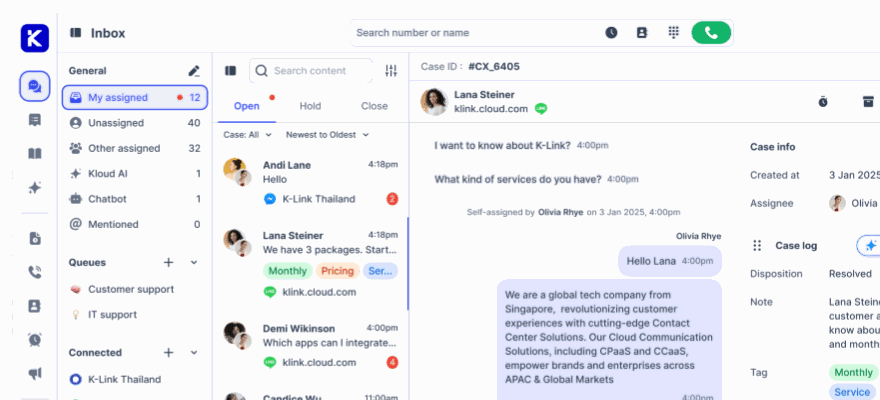
At K-LINK, we understand the power of intelligent customer support. Our platform, klink.cloud, integrates seamlessly with AI technologies to help businesses scale, personalize, and automate their support operations.
Key capabilities include:
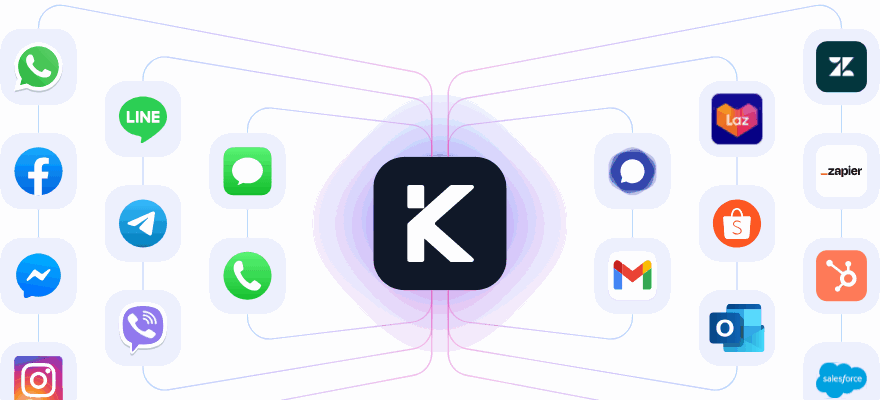
- Omnichannel AI chatbots with NLP
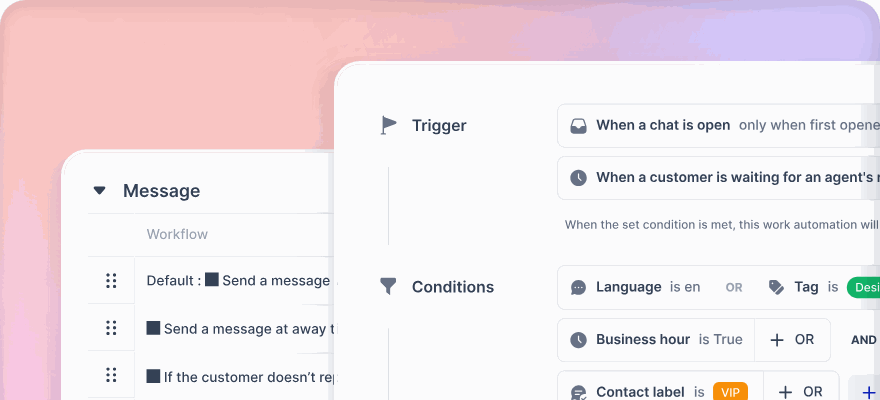
- Smart conversation routing and tagging
- Integration with machine learning APIs for predictive insights
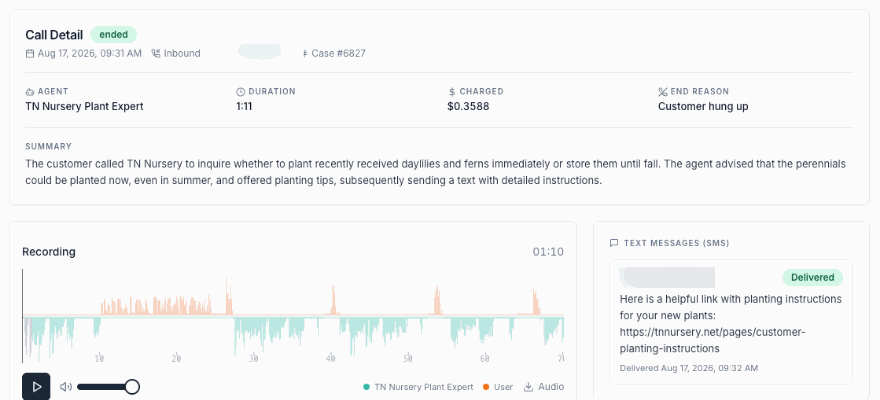
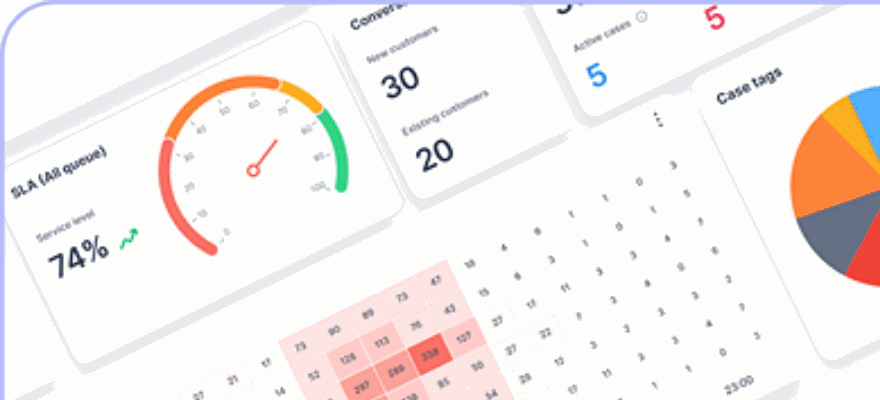
- Real-time agent dashboards and performance reports
- AI-enhanced call center workflows including speech analytics
Whether you're managing inquiries through WhatsApp, voice, email, or in-app chat, klink.cloud empowers you to deliver faster, smarter service—no matter the language, channel, or complexity.
Conclusion
AI is not the future of customer service—it’s the present. Companies that invest in AI-powered support tools are seeing measurable gains in efficiency, customer satisfaction, and operational agility. From intelligent chatbots to data-driven personalization, AI enables businesses to meet rising customer expectations while maintaining scalability and cost-effectiveness.
But success requires more than just deploying new tools. It demands strategy, integration, and a customer-first mindset.
By combining human empathy with AI efficiency—and leveraging platforms like klink.cloud—you’ll be well-positioned to create a customer experience that not only supports but delights.