How Yindii runs support across three markets from one desk
A surplus-food marketplace is judged in a very specific place: the pickup counter, at the end of the day, when a store has closed early or a bag is late. Get that moment wrong and you have not merely annoyed a customer. A meal goes in the bin, which is the one outcome the whole business exists to prevent.
Yindii, which describes itself as Asia's number one surplus-food app, runs support for three markets on klink.cloud. Its food heroes are answered on in-app chat, LINE and WhatsApp across Singapore, Thailand and Hong Kong, with a median resolution of about ten minutes and 88% of rated conversations ending satisfied.
The customer
Yindii's mission is to end food waste one meal at a time. Its 800,000 or more food heroes rescue unsold food from more than 1,400 partner brands, from Tops and Big C to Pret A Manger, at up to half price, together saving over a million meals and thousands of tons of CO2.
Every one of those rescues depends on a smooth pickup, in a different market, in a different app, often in a different language. Support is not a cost centre attached to that model. It is the part that decides whether the meal is actually saved.
The challenge: three markets, and a channel each
Yindii's customers do not all arrive the same way. In-app chat is everywhere, LINE is how Thailand messages, and WhatsApp is how Hong Kong and Singapore do. That is three markets and five channels, served by a lean team that cannot run a separate support tool per country without the cost of coordination eating the savings.
The requirement was one desk covering all of it: every market, every channel, every pickup problem answered fast enough that the food hero still makes it to the counter.
Where food heroes actually reach them
The channel mix shows why none of these could be dropped:
- In-app chat, 54%.
- LINE, 22%.
- WhatsApp, 17%.
- Email, 5%.
- Messenger, 2%.
Just over half the conversations start inside the app, which is what you would expect from a marketplace. The other half do not, and they are concentrated in the messengers that dominate particular markets. LINE is not a nice-to-have when a fifth of your conversations arrive on it.
The market split is similarly balanced: Singapore 45%, Thailand 33%, Hong Kong 22% of market-tagged conversations. No single country is small enough to treat as an afterthought, which is the case for one team rather than three.
How it works
- Three markets, one platform. Singapore, Thailand and Hong Kong in one workspace, each on the channels its food heroes actually use, so the team covers all three without a tool per country.
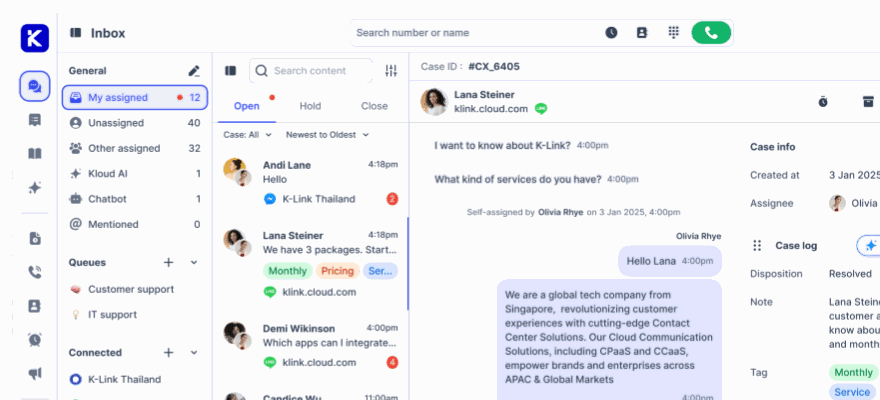
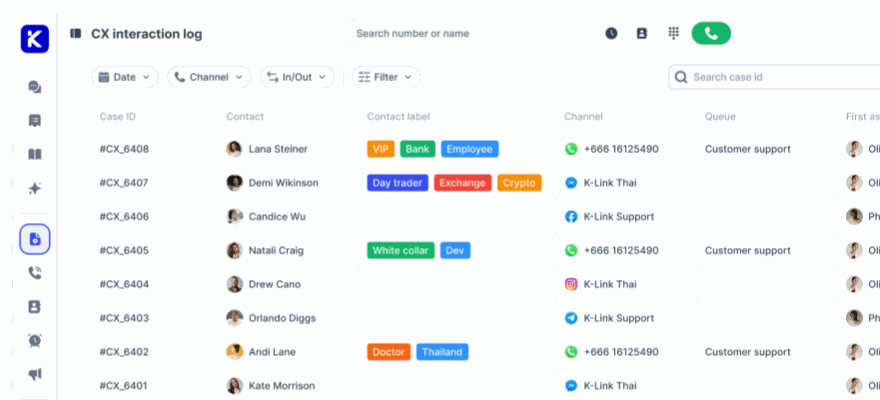
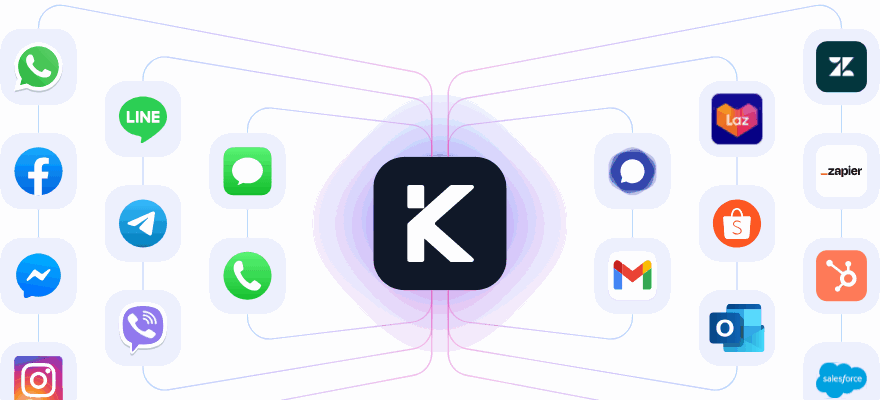
- Every channel unified. In-app chat, LINE and WhatsApp, plus email and Messenger, land in one inbox, so a pickup question is answered on whichever app the customer already had open.
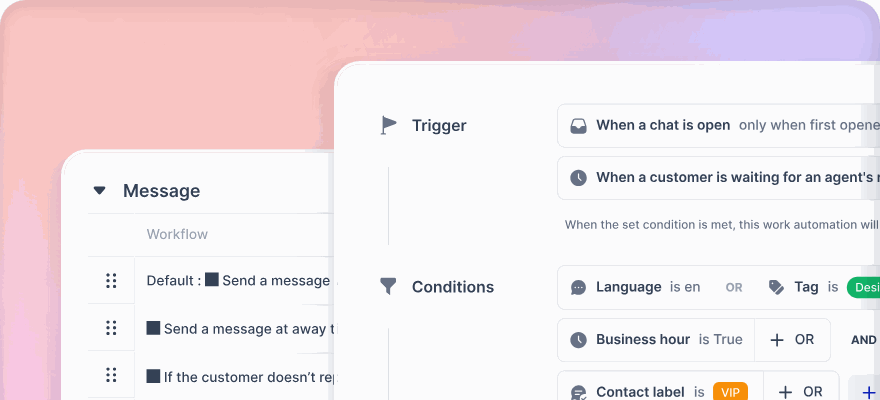
- Nothing left hanging. Orders, pickups and refunds are categorised, tracked and closed, so a conversation reaches an outcome rather than going quiet.
What food heroes actually write in about is narrow and repeatable: pickup help, order status, late pickups, refunds and re-credits, and referrals. Categorising them is what turns a support queue into a signal about which stores and which flows are causing the trouble.
The results
- About ten minutes median resolution.
- 88% of rated food heroes ended satisfied.
- 99.7% of conversations closed rather than left open.
The closure rate is the one to notice alongside the median. Ten minutes to a resolution is only meaningful if resolutions are what conversations actually reach, and at 99.7% almost nothing is quietly abandoned. For a marketplace, an unanswered thread is not a support metric. It is a meal that did not get collected.
Why it matters
Every rescue completed. Fast help when a pickup goes wrong keeps the food hero engaged and the meal out of the bin, so good support serves the mission directly rather than protecting it.
One team, three markets. Every market and channel in one workspace lets a lean team deliver consistent service across the region, without a tool or a team per country.
Service that matches the mission. A marketplace built on repeat behaviour lives or dies on whether the first bad pickup is also the last one. Satisfaction at 88% is what turns a one-time saver into a habitual one.
If you serve more than one market
Yindii's shape is common: several countries, a different dominant messenger in each, one team that cannot triple in size to match. The instinct is to run a support tool per market, and it works until the reporting no longer adds up and a customer who moves between countries has two histories.
klink.cloud brings every country, channel and language into one contact center, so a lean team can resolve quickly and keep customers coming back, wherever they are. Book a demo and we will map your markets and channels onto it.
About K-LINK. K-LINK is a global communication platform provider (CCaaS, UCaaS, CPaaS) headquartered in Singapore and operating across emerging markets. Its suite spans klink.cloud, the omnichannel customer experience platform for contact center teams, and Kai, the customer service AI agent across chat, messaging, email and voice.