White Label Contact Center Platform: What to Look For
Short answer: A white label contact center platform is a complete contact center (voice, messaging channels, AI agents and reporting) that you sell under your own brand. Your logo, colours and domain appear on the agent workspace and the customer-facing chat widget, you set the packaging and price, and you own the customer relationship. Before choosing one, check that branding covers everything your customers see, that voice and AI are part of the platform rather than add-ons, that each of your customers is separated cleanly, and that private cloud or on-premise deployment is available for regulated buyers. klink.cloud, the omnichannel inbox and cloud contact center from KLINK, offers a white label programme on these terms, with Kai as the AI agent inside it.
Building an omnichannel contact center from scratch means telephony, integrations for every messaging channel, AI agents, routing, reporting and security work, and then maintaining all of it as channels and regulations change. For an enterprise BPO, a telco, a managed service provider or a larger agency, branding a platform that already works is usually the faster way to market. This guide covers what to check before you put your name on one.
What is a white label contact center platform?
It is contact center software built by one company and sold by another as its own product. The partner's customers log in to a workspace that carries the partner's brand, talk to customers through a widget that carries the partner's brand, and are billed by the partner. The platform vendor stays in the background, providing the software, updates and an escalation route for platform issues.
The model suits organisations that already have a customer base and a recognised brand in their market. If you would rather keep the vendor's name on the product, a reseller arrangement is usually a better fit (see the comparison below).
What should the branding actually cover?
"White label" can mean anything from a logo in a corner to a product your customers would never connect to the original vendor. Ask exactly which surfaces carry your identity:
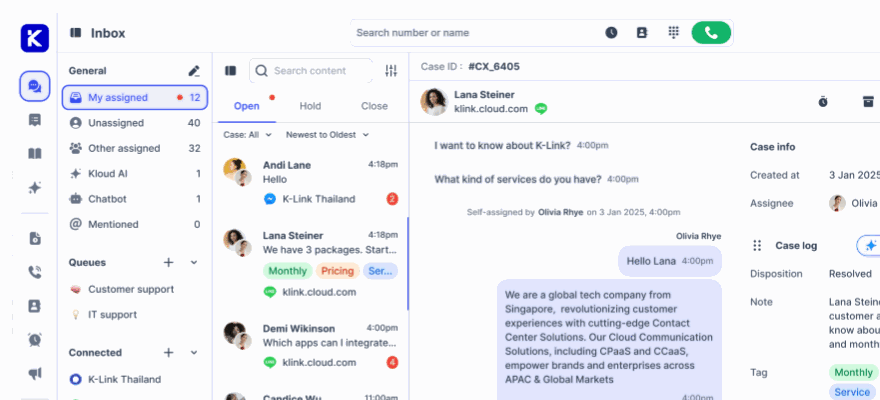
- The agent workspace. The web app your customers' agents and supervisors use every day should show your name, colours and domain.
- The customer-facing widget. The chat widget on websites and inside iOS and Android apps is what end customers see, so it matters most.
- Onboarding, support and documentation. If help articles and onboarding emails still carry the vendor's name, the product stops feeling like yours. Check whether you can publish documentation under your own name.
- Per-client styling. If you serve many customers, each may want its own widget colours, greeting, buttons and tone.
On the klink.cloud white label partner programme, your logo, colours and domain run across the workspace and the widget, the widget is branded for web, iOS and Android, and documentation is provided that you can put your name on.
Which features should be included rather than sold as add-ons?
What you brand should be a whole platform, not a chat box you still have to build around. At a minimum, look for:
- Real telephony. Inbound and outbound calls, IVR, call recording and live monitoring, with numbers in the markets you sell into. Calls should land in the same workspace as chats, not in a separate phone system. See klink.cloud cloud telephony.
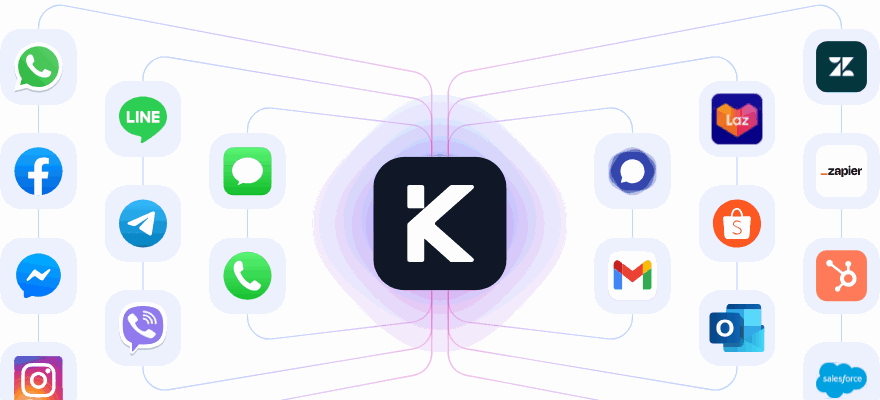
- The messaging channels your market uses. WhatsApp, LINE, Viber, Facebook Messenger, Telegram, email and web chat, depending on the country.
- AI agents on chat and voice. Your customers will ask for AI. It should come with the platform and carry your brand, not need a separate vendor. On klink.cloud, Kai, the AI agent, answers from each customer's own knowledge base, can take actions such as order lookups or bookings through webhooks, and hands the conversation to a person with the full history attached.
- Open APIs. REST APIs, webhooks and SDKs let your engineers build your own surfaces and integrations on top, which is where you differentiate.
How do you run many customers on one platform safely?
A white label partner is effectively running a contact center business for many clients at once. The platform has to keep them apart:
- Separation per customer. Queues, data, SLA targets and reporting should be scoped to each customer, so one client's backlog never appears in another's numbers.
- Role-based access. Your own staff may support several accounts. Roles should decide who can see which account, and within an account who can view, reply or reassign.
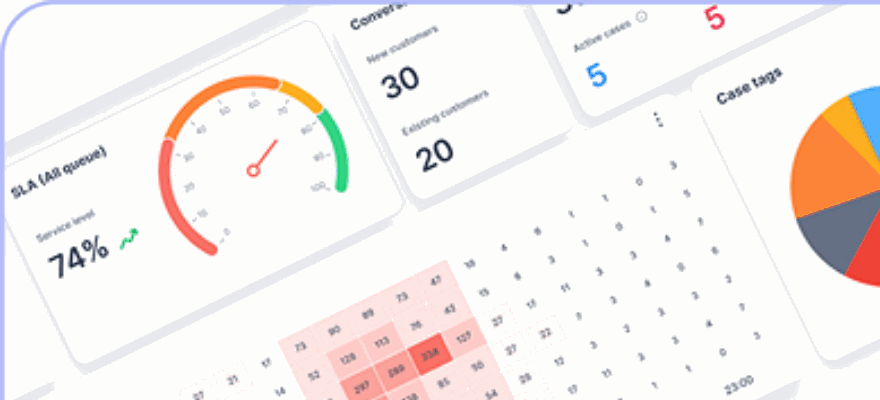
- Reports you can hand over. Each customer will want its own dashboards and exports for monthly reviews.
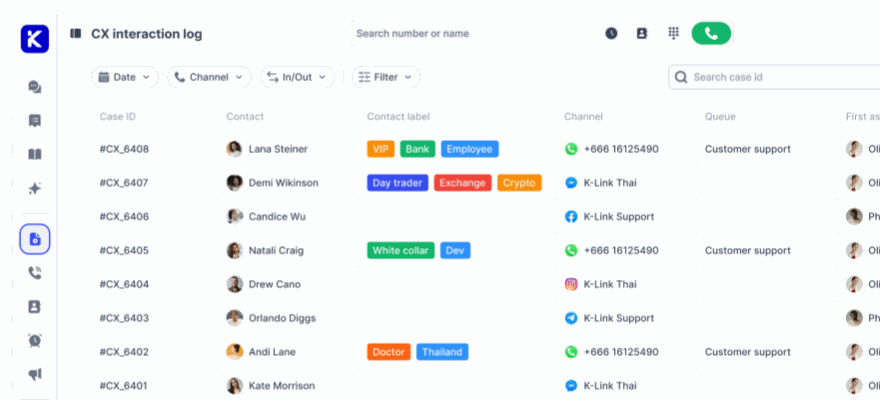
In klink.cloud, each queue is isolated: members of one queue do not see another queue's conversations, queue managers can assign and reassign, and queue agents reply only to conversations assigned to them. Roles control access across analytics, contacts, tickets, the inbox, CX logs, reports and settings. The same structure is what BPOs rely on, covered in more detail in our guide to contact center software for BPOs in the Philippines.
Can a white label platform be deployed in your own country or data centre?
For banking, insurance, telco and government tenders, deployment is often the deciding factor. Buyers may require data to stay in the country or inside their own infrastructure. Check whether the platform supports:
- Private cloud deployment on a major cloud provider in the region you need.
- On-premise or customer-managed environments where a tender demands it.
- Security certification that your customers' procurement teams will ask for, such as ISO/IEC 27001, the international standard for information security management systems.
klink.cloud supports private cloud and on-premise deployment, including in-country hosting, for white label partners. Its documentation lists Google Cloud and AWS as recommended environments and customer-managed private clouds as supported. The platform is ISO 27001 certified.
Can you keep your own carrier and phone numbers?
If you are a telco, or already hold voice contracts, you should not have to buy minutes through the platform vendor. Look for Bring Your Own Carrier (BYOC): your existing carrier connects to the platform over a SIP trunk, using the Session Initiation Protocol defined in RFC 3261, and calls flow through the contact center for routing, IVR, recording and reporting while you keep the numbers and the voice economics.
klink.cloud supports BYOC for white label partners, so your existing numbers, including landlines and extensions, connect over a SIP trunk and keep working with routing, recording and AI on the platform.
How is white label different from reselling?
Both let you sell a contact center to your customers, but the brand and the commitment differ:
| Reseller | White label partner | |
|---|---|---|
| Brand the customer sees | The vendor's (klink.cloud) | Yours |
| Who sets the price | You, from partner rates | You |
| Who owns the contract and invoice | You | You |
| First line support | You | You |
| Deployment options | Cloud, with private cloud or on-premise for regulated customers | Cloud, private cloud or on-premise, including in-country hosting |
| Commitment | Lower | Higher, in return for your own brand in the market |
If you want customer communication in your portfolio but do not need your own brand on it, the klink.cloud reseller programme offers partner rates, deal registration and technical enablement.
What does a white label contact center platform cost?
There is rarely a public price list, because cost depends on the deployment model, volume and market. For klink.cloud, the white label commercial model is worked out with you on a discovery call. You then set your own packaging and retail price in your market. For reference, the standard klink.cloud platform is billed per resolved conversation, with unlimited users and Kai included, rather than per seat.
When you compare vendors, ask how your own costs grow as your customers add agents. A per-seat cost underneath your offer can squeeze your margin every time a client grows.
How do you evaluate a white label platform before committing?
- Use it as an operator would. Set up a trial workspace and configure one realistic customer scenario end to end: channels, queues, an AI agent and a report.
- Check every branded surface. Log in as an agent and open the widget as an end customer. Note anywhere the vendor's name still appears.
- Test separation. Create two customers and confirm that a user scoped to one cannot see the other.
- Confirm deployment and certification in writing against the tenders you expect to bid on.
- Agree the escalation path. Know who you call when something breaks at platform level, and how quickly.
With klink.cloud you can create a free account and run the platform as an operator before the white label conversation starts.
FAQ
What is a white label contact center?
A contact center platform built by one company and sold by another under its own brand. The partner's logo, colours and domain appear on the agent workspace and customer widget, and the partner owns the pricing, contract and customer relationship.
Who is a white label contact center platform for?
Enterprise BPOs, telcos, managed service providers and larger agencies that already have customers and a brand in their market and want to sell a contact center as their own product rather than resell another company's name.
Can a white label contact center include AI agents?
It should. On klink.cloud, Kai chat and voice agents are included in the white label platform and carry your brand.
Can a white label platform run on-premise?
Some can. klink.cloud supports private cloud and on-premise deployment, including in-country hosting, which is often required for banking, insurance, telco and government work.
What is the difference between white label and reselling?
A reseller sells the vendor's product under the vendor's name. A white label partner sells its own branded product built on the vendor's platform. White label takes a higher commitment, and in return the brand your customers know is yours.
Can we use our own carrier with a white label contact center?
On klink.cloud, yes. Bring Your Own Carrier connects your existing numbers and carrier contracts over a SIP trunk, so you keep your voice economics.