Contact Center Software for BPOs in the Philippines: What to Look For
Short answer: Contact center software for a BPO in the Philippines has to run many client accounts on one platform without mixing them up. Each client needs its own queues, SLA targets, dispositions and reports, agents need access only to the accounts they cover, and voice, chat and email should sit in the same workspace so supervisors see one picture. It should also let you keep your own carrier, add AI agents for routine contacts, and price in a way that does not charge you for every seat you add during a ramp. klink.cloud, the omnichannel inbox and cloud contact center from KLINK, is built this way, with Kai as the AI agent inside it.
Many BPO floors in the Philippines serve clients in other countries, often several at once, across voice and digital channels. The software decision is less about features on a checklist and more about margin: how quickly a new client goes live, how much reporting work lands on supervisors each month, and how costs move when headcount changes. This guide covers what to check.
What should BPO contact center software do differently from in-house software?
An in-house support team has one brand, one set of rules and one manager to report to. A BPO has many. That changes the requirements:
- Separation per client. Each account needs its own queues, agents, managers, routing rules and service level targets, so one client's backlog never spills into another's numbers.
- Controlled visibility. An agent covering two accounts should never see a third. Look for roles that decide who can view, who can reply and who has full access, per queue.
- Per-client outcomes. Each client wants cases closed with its own dispositions and custom fields, not a generic list.
- Business hours per queue. An account covered nine to six should not be measured overnight.
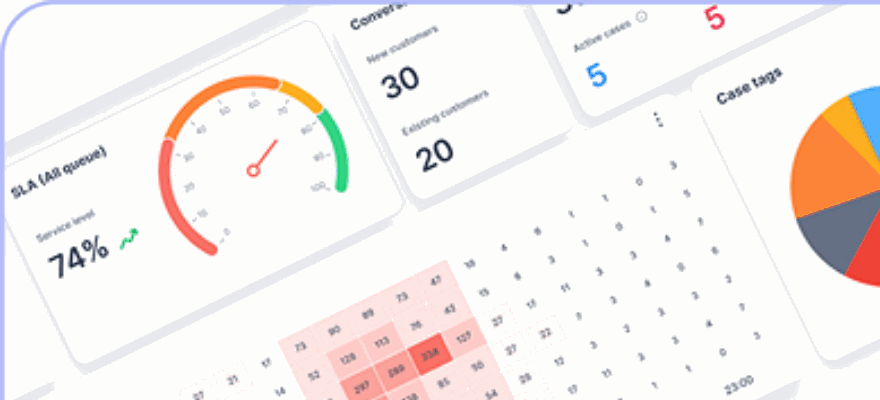
- Reports you can hand over. SLA attainment, abandon rate, CSAT and agent performance per client, exportable for the monthly review.
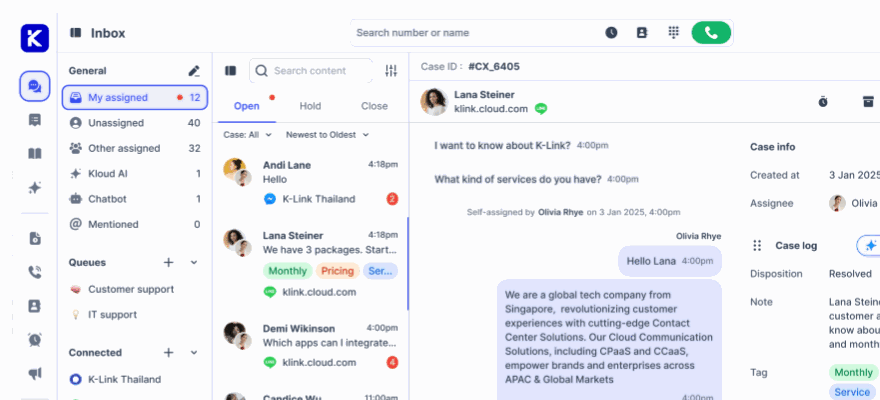
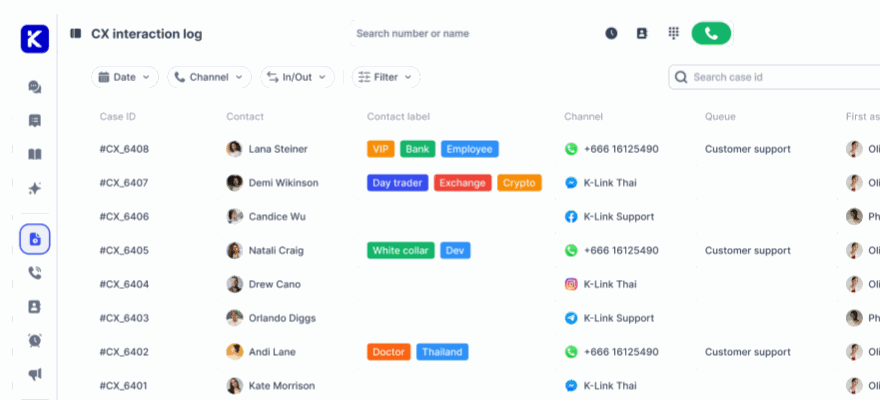
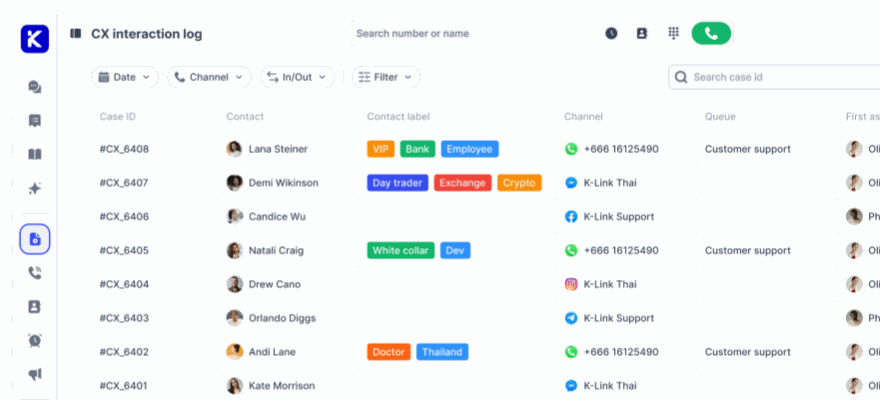
On klink.cloud, a new client is a configuration rather than a new tool: you create the queues, set SLA targets, connect the client's channels and point routing at the right team. See how klink.cloud handles BPO and outsourcing operations.
Which voice features matter most for a Philippine BPO floor?
Voice is still the core of most BPO programs, and it is where reporting breaks first when the phone system sits outside the main platform. Check for:
- Local numbers in your clients' markets. If you serve clients in the US, Europe or elsewhere in Asia Pacific, callers should see a local caller ID.
- Bring Your Own Carrier. Many BPOs already have carrier contracts or a PBX. You should be able to connect existing numbers or a SIP trunk instead of porting everything.
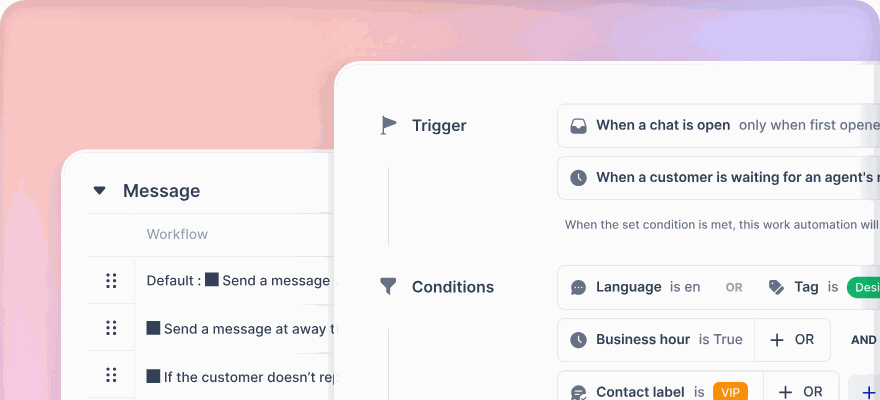
- Routing without a PBX project. IVR, skills and language based routing, queue callbacks and business hours should be set up in the same place as your chat rules.
- Call records you can defend. A Call Detail Record per call leg with ring time, queue wait, talk time and a link to the recording, so a disputed call can be reconstructed.
- Supervisor reports. Abandoned calls per queue, queue performance, agent call statistics, a live agent status board and service level tracking.
- Outbound. If you run collections or sales campaigns, an auto dialer that works a lead list and records the outcome of every call.
klink.cloud's cloud telephony covers each of these, with recordings and transcripts attached to the same case as the customer's chats.
How should a BPO use AI agents without risking the account?
AI agents can add capacity on routine contacts, but on a BPO floor the client relationship is at stake, so the rollout matters more than the model. A sensible approach:
- Start with one queue and one client. Pick high-volume, low-risk contacts such as order status, booking changes or opening hours.
- Decide what the AI may finish alone. Everything else goes to a person.
- Make the handover clean. The agent who picks up should see the whole conversation, so the customer never repeats themselves.
- Review every AI conversation. Each one should be logged with a transcript and an outcome, the same as a human case.
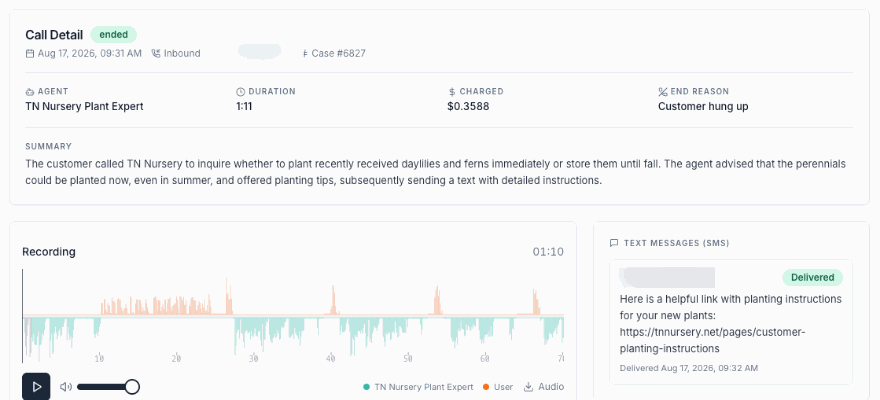
Kai, the AI agent inside klink.cloud, answers from the content you connect and can take actions through your systems over APIs. Kai Voice does the same on phone calls: it can look up an order mid call, text a link instead of reading it out, and hand over when it should not decide alone. Every AI call becomes a case with a summary, a recording, a timestamped transcript and the cost of the call. Chat channels such as Facebook Messenger work the same way; see our guide to AI agents for Facebook Messenger customer service.
For a deeper look at where the AI sits on the floor, what to automate first and how the handoff works, read the free field guide How AI Agents Work on a Real BPO Floor.
What security and privacy questions will clients ask?
Clients will ask how their customers' data is protected before they sign. In the Philippines, the Data Privacy Act of 2012 (Republic Act 10173) sets the rules for processing personal information and created the National Privacy Commission, which enforces it. Your clients may also bring their own regulatory requirements from their home markets.
When you evaluate software, ask:
- Is the vendor certified to ISO/IEC 27001, the international standard for information security management?
- Can recording, retention and permissions be configured per client?
- Is single sign-on available?
- Can the platform run in a private cloud or on premise when a client contract requires it?
KLINK is ISO 27001 certified and hosts klink.cloud on AWS. Single sign-on is available, and private cloud or on-premise deployment is offered on Enterprise plans.
How should a BPO compare contact center pricing?
Pricing models change how your margin behaves when headcount moves between campaigns. The common models are:
- Per agent seat, where cost rises with every agent you add, including during ramps and training.
- Per minute or per message, where cost follows traffic but can be hard to forecast.
- Per resolved conversation, where you pay for completed customer interactions.
klink.cloud uses the third model. Every plan includes unlimited users and Kai, with no separate AI licence, and you are billed per resolved conversation rather than per seat, so adding agents to a client team does not change the bill. See the klink.cloud pricing page for current plans. Carrier and telecom charges depend on your setup.
Can a BPO offer the platform under its own brand?
Some BPOs want to offer the contact center platform to clients as part of their own service. klink.cloud has a white label program for enterprise BPOs, with your brand on the agent workspace and the customer-facing chat widget, your own pricing, and private cloud or on-premise deployment where needed.
How do you choose the right software?
Test each shortlisted platform against a short checklist:
- Can you set up a new client with separate queues, SLAs, dispositions and reports without a new license or tool?
- Can you restrict which agents see which clients?
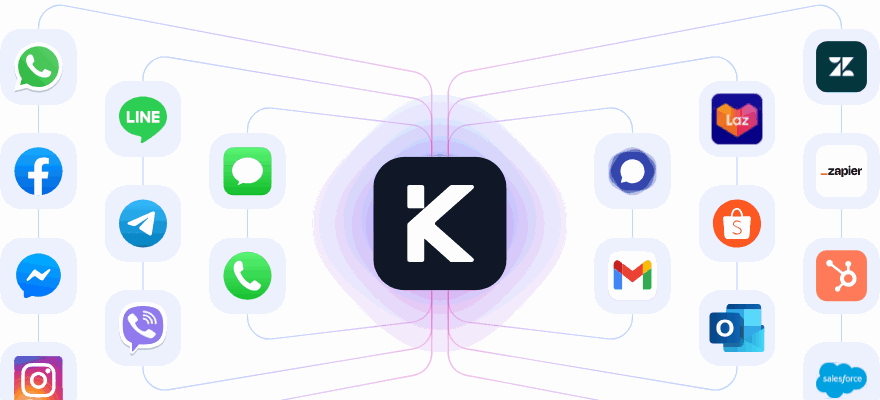
- Are voice, chat and email in one workspace with one customer history?
- Can you keep your existing carrier and numbers?
- Can an AI agent handle routine contacts and hand over with full context?
- Will the pricing model hold up when you ramp agents up or down?
- Does the vendor meet the security and privacy questions your clients will ask?
The quickest way to answer these is to model one client account. With klink.cloud you can set up a single client queue free and see the reporting you would hand over.
Frequently asked questions
What is the best contact center software for a BPO in the Philippines?
The best fit depends on your client mix and channels. Look for separate queues, SLAs and reports per client, role-based visibility, voice and chat in one workspace, your own carrier, and AI agents that hand over cleanly. klink.cloud covers all of these, with Kai included on every plan.
Can one platform serve several BPO clients without mixing their data and reports?
Yes, if it separates queues per client. On klink.cloud each client queue has its own agents, managers, routing, SLA targets, dispositions and custom fields, and every report can be filtered and exported per queue.
Can agents work on more than one client account?
Yes. Queue visibility and roles control who can see and who can reply, so an agent can cover two accounts without seeing a third. You can also cap the total open conversations per agent across every client queue.
Can we keep our existing carrier and phone numbers?
Yes. klink.cloud's Bring Your Own Carrier option connects your existing numbers, PBX or SIP trunk, and your telco continues to bill traffic as it does today.
Does klink.cloud support private cloud or on-premise deployment?
Yes. Private cloud and on-premise deployment are available on Enterprise plans, along with ISO 27001 certification and single sign-on.
How is klink.cloud priced for BPO teams?
klink.cloud bills per resolved conversation, not per agent seat. Every plan includes unlimited users and the Kai AI agent, so adding agents to a client team does not change the bill.