How One Wallet launched support in three languages, without a call center
A traveler asking for help is in an unusual position. They are mid-trip, in a foreign country, holding a phone, and often working in something other than their first language. What they do not do is ring a hotline. They message on whatever app is already open.
One Wallet is the all-in-one travel wallet for visitors to Thailand, and it went live with a support desk built for exactly that behaviour: six channels and three languages in one inbox, run by one small team, with no call center anywhere in it.
The customer
One Wallet's pitch is to pay like a local and explore like a pro. With a passport and an email address, a visitor can pay by QR anywhere, get an eSIM, exchange currency and book experiences, without cash, ATM fees or hidden conversion charges.
Its customers are international visitors arriving from all over the world. They need help in their own language, on the apps they already use, at any hour of a trip that might be their only one.
The challenge: a traveler's support is different
For a young fintech, the obvious answer to "be available everywhere, in every language" is not available. Staffing a multilingual call center, per channel, before you have a traveler base to justify it, is not something a launch budget does.
The requirement was therefore awkwardly shaped: be everywhere the travelers are, in every language they speak, from the day the wallet went live, without building a call center to do it.
Where travelers actually reach them
The channel mix is worth looking at, because it is not the one most people would predict for a mobile-first travel app:
- Email, 37%.
- In-app chat, 35%.
- Instagram, 12%.
- WhatsApp, 12%.
- Facebook, 4%.
Owned channels carry roughly three-quarters of the conversations, and social messaging the remaining quarter. That is close to the inverse of what a bank in a messaging-first market sees, and it is the argument for connecting everything rather than betting on the channel that seems obvious. A team that had staffed only WhatsApp because travelers are young and mobile would have been looking the wrong way, and a team that had staffed only email would have missed a quarter of its customers entirely.
How it works
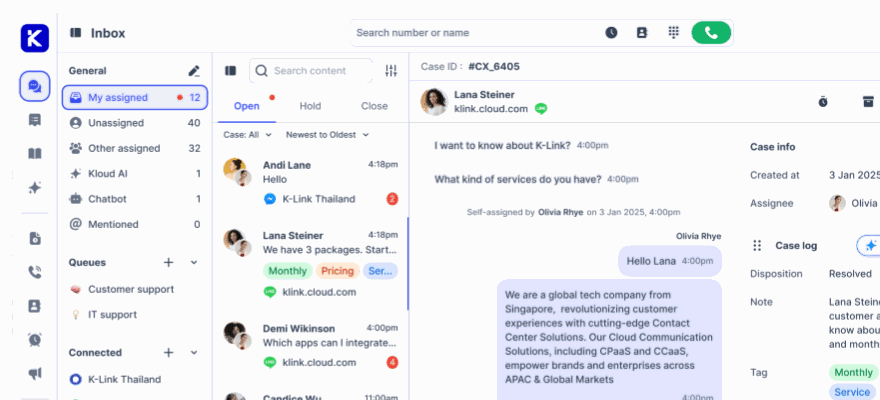
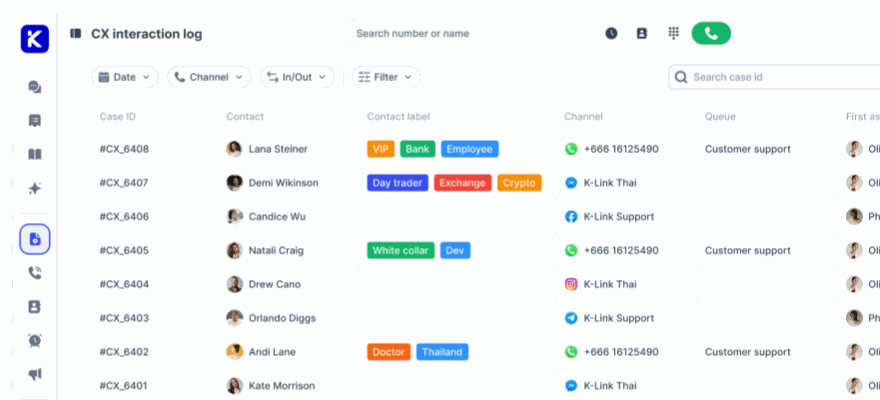
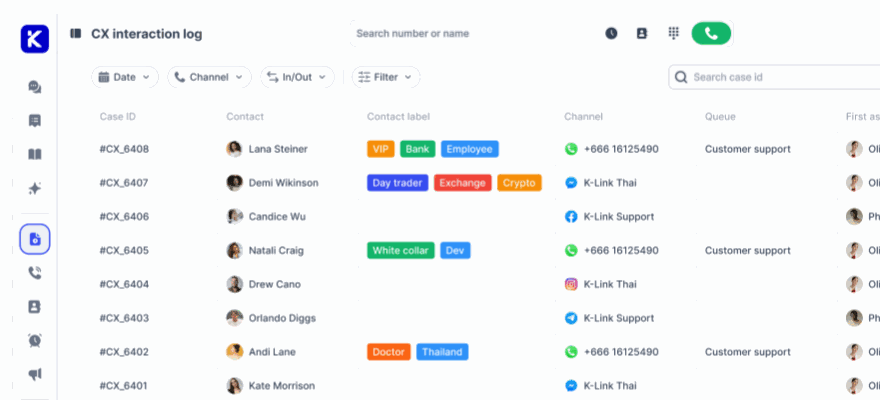
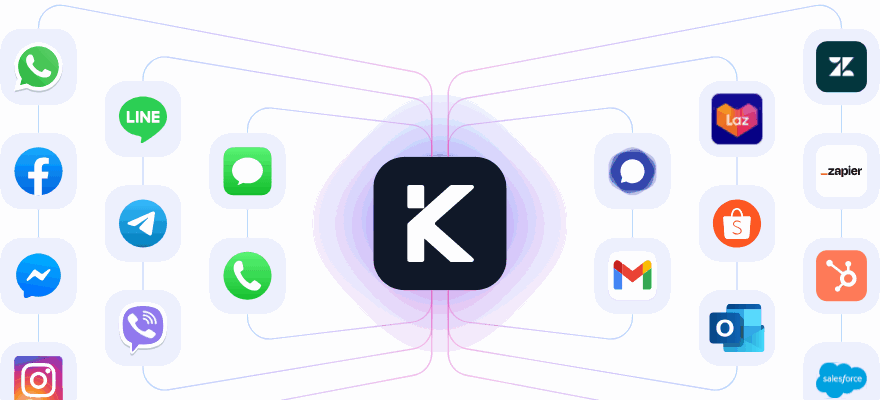
- One inbox, every app. Email, in-app chat, Instagram, WhatsApp, Facebook and Messenger in one workspace, so a small team sees every traveler's message in one place rather than in six.
- Three languages, one team. English, Russian and Thai handled side by side, without separate tools or separate teams per language, so a traveler is helped in the language they are comfortable in.
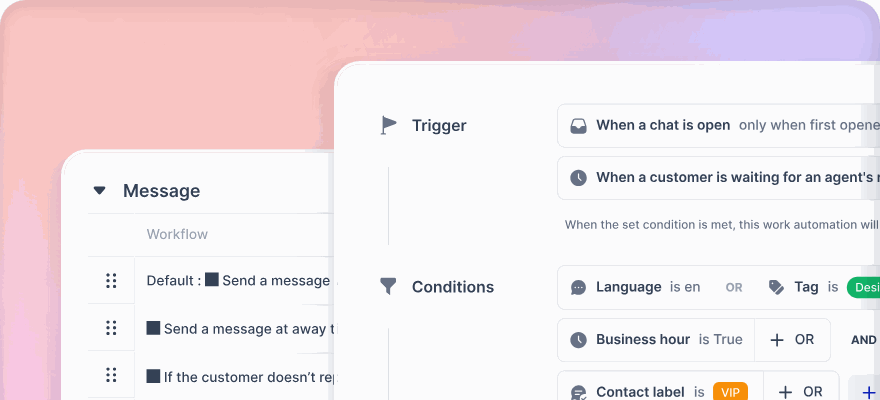
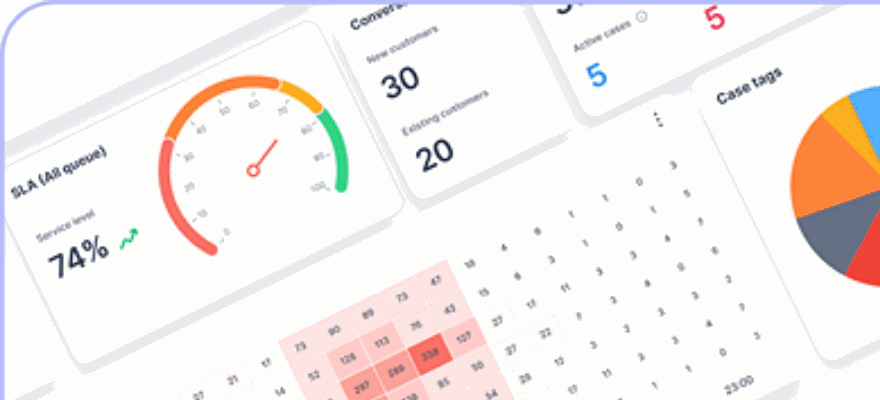
- Structured from day one. Every case is typed and categorised, from account and verification through to security and general help, so even a young operation runs with the discipline to know what it is being asked.
That third point is the one that is easy to skip at launch and expensive to retrofit. Categorising cases from the first week means the first product decisions informed by support data can happen in the first month, rather than after someone reconstructs a year of conversations by hand.
Why it matters
Travelers are answered where they already are. Being helped on WhatsApp, Instagram or in-app chat, in their own language, is the frictionless experience a travel app promises everywhere else in the product. Support is where that promise is easiest to break.
One small team, global reach. Every channel and language in one workspace, so a lean team serves visitors from anywhere without a call center or a stack of separate tools to reconcile.
Launch lean, scale later. Omnichannel and multilingual from day one, with room to add channels, automation and AI as the traveler base grows. The platform, not the headcount, is what carries the next language or the next channel.
If your customers arrive from everywhere
Any business serving an international audience meets this problem in some form: customers arriving from many countries, reaching you on whichever app they already have, expecting an answer in their own language, at an hour that is business hours for them and not for you.
klink.cloud gives you one multilingual support desk across every channel, so a lean team can deliver that without building a call center for it. Book a demo and we will map your channels and languages onto it.
About K-LINK. K-LINK is a global communication platform provider (CCaaS, UCaaS, CPaaS) headquartered in Singapore and operating across emerging markets. Its suite spans klink.cloud, the omnichannel customer experience platform for contact center teams, and Kai, the customer service AI agent across chat, messaging, email and voice.